
Latest world news
Pakistan: Supreme Court disqualify Nawaz Sharif for life


Tehreen-e-Insaaf leader says it doesn’t apply to him
In an unheard development, unprecedented in at least in the sub-continent, Pakistan Supreme Court has permanently disqualified former PM Nawaz Sahrif and alike to shed their political ambitions for life. The landmark verdict that will change the course of the country’s political history has, on Friday, ruled that disqualification handed down under Article 62 (1) (f) of the Constitution is for life.
According to Dawn the verdict was issued unanimously by all five judges of the bench. Former PM Nawaz Sharif was disqualified in the Panama papers case by a five-judge bench on July 28 under the same provisions of the country’s constitution.
The election for 342-seats of Majlis-e-Shoora (Parliament) is scheduled to be held in July this year. In the previous elections held in 2013, Pakistan Muslim league-Nawaz (PML-N) won 166 seats, Pakistan People’s Party (PPP), 42 seats while Pakistan Tehreen Insaf (PTI) won 35 seats.
Present Prime Minister Shahid Khaqan Abbasi was sworn-in on 1 August 2017 as a stop-gap arrangement by Nawaz Sharif, who was disqualified for the office by the Supreme court in July last year. At the time of his election as PM, Khaqani was called as an interim PM for 45 days.

Article 62(1) (f), sets the precondition for a member of parliament to be “sadiq and ameen” (honest and righteous). Likewise, Pakistan Tehreek-i-Insaf (PTI)’s leader Jahangir Tareen was disqualified on Dec 15, 2017 by a separate bench of the apex court under the same provision. PTI is headed by cricketer turned politician Imran Khan.
Following the Supreme Court verdict, former PM Nawaz Sharif and PTI leader Jahangir Tareen have been disqualified to hold public office till the courts’ respective declarations against them hold.
This is considered to be a major shock and embarrassment for Nawaz Sharif and country’s ruling party Pakistan Muslim League (Nawaz). Pakistan’s politicians have been complaining on earlier occasions about judiciary’s behavior being influenced by some agencies. However, none could substantiate such claims.
The decision, read out by Justice Umar Ata Bandial, stated that the disqualification of any member of parliament or a public servant under Article 62 (1)(f) in the future will be “permanent”. According to the constitutional provisions, such a person cannot contest elections or become a member of parliament.
Chief Justice Mian Saqib Nisar, who was heading the bench, remarked before the verdict was announced that the public deserves “leaders of good character”.
“The restriction imposed by Article 62 (1)(f) of the Constitution for the eligibility of a candidate for election to Parliament serves the public need and public interest for honest, upright, truthful, trustworthy and prudent elected representatives,” reads the judgement.
It says the judicial mechanism in Article 62 (1) (f) grants a fair opportunity for relief to a candidate under challenge to vindicate himself. “Therefore, the permanent incapacity of a candidate for election under Article 62 (1)(f) of the Constitution is not an arbitrary, excessive or unreasonable curtailment of his fundamental right under Article 17(2) of the Constitution.”
“In the result, we are inclined to hold that the incapacity created for failing to meet the qualifications under Article 62 (1)(f) of the Constitution imposes a permanent bar which remains in effect so long as the declaratory judgment supporting the conclusion of one of the delinquent kinds of conduct under Article 62 (1)(f) of the Constitution remains in effect” said Supreme Court.
The apex court indicated that this will not affect on Sharif and Tareen. It also directed that all 17 appeals and petitions challenging the length of disqualification under Article 62 (1)(f) for possessing fake degrees be fixed before appropriate benches “for decision in accordance with the law laid down in this judgment, keeping in view the respective facts and circumstances of each case”.
Hence, anybody who is not Sadiq and Ameen (honest and righteous), including those of declaring fake qualification documents will not be spared.
Justice Sheikh Azmat Saeed, a member of the bench who wrote an additional note in the judgment, observed that while a period of disqualification was specified in certain sub-articles of Article 63 of the Constitution, such a sunset clause is not found in Article 62(1) (f) because the framers of the Constitution chose not to do so.
Addressing the concern by some counsels of the petitioners that the lifetime ban resulting from Article 62 (1)(f) “may be disproportionate and a little harsh”, Justice Saeed maintained that such arguments were more suitable to be held in the parliament, rather than before the court.
“This aspect of the matter is rather ironic as several persons before us were or had been the Members of Majlis-e-Shoora (Parliament) at some point of time and may have passed the amendments, which now stand in their way,” he wrote.
“We […] can only interpret the Constitution, not amend or change it,” the judge emphasised.
Dawn reports that Mazhar Abbas, a senior journalist, while responding to the apex court’s ruling, said that the judgment will have political implications. “Nawaz Sharif will intensify his narrative and it will be difficult for [PML-N president] Shahbaz Sharif to take a different line from the one being taken by [his brother],” he said.
At the last hearing, Attorney General Ashtar Ausaf had told the bench that it was not the function of the courts to say that the disqualification under Article 62(1)(f) of the Constitution was for life or to provide a timeline for disqualification. The question should be best left for parliament to decide, he had argued.
The AG had also emphasized that the provision did not determine the length of disqualification, adding that the court would have to look into the matter on a case-to-case basis.

Meanwhile, PTI leader Jahangir Tareen, who was disqualified on December 15 last year by the apex Court under the same provisions of the constitution has said that the apex court’s Friday ruling on lifetime disqualification is “not applicable” in his case.
Responding through his tweet post, Tareen said “I always believed 62 1(f) to be for life but not applicable in my case. Full money trail provided of tax paid income, property declared in assets of children and not mine on advice of tax consultant. This was the only issue. My review is still pending and IA justice will prevail.”
The Friday ruling issued by the Pakistan’s Supreme Court has also indicated that present government could not influence its judgment through Attorney General. It has set an example for several democracies.









Latest world news
Magnitude 7 earthquake strikes Tibet after floods
A magnitude 7 earthquake struck northern Tibet on Thursday, October 22. The tremor came weeks after deadly flash floods and landslides hit the mountainous region near the Nepal-China border. Initial reports did not confirm casualties or damage from the earthquake.


Latest world news
Macron rejects Trump’s immigration claims over France riots
French President Emmanuel Macron criticised Donald Trump and other foreign leaders over their comments on France’s recent unrest. Macron rejected claims that the country was being overrun by migrants and Islamists, calling such assertions false.

Latest world news
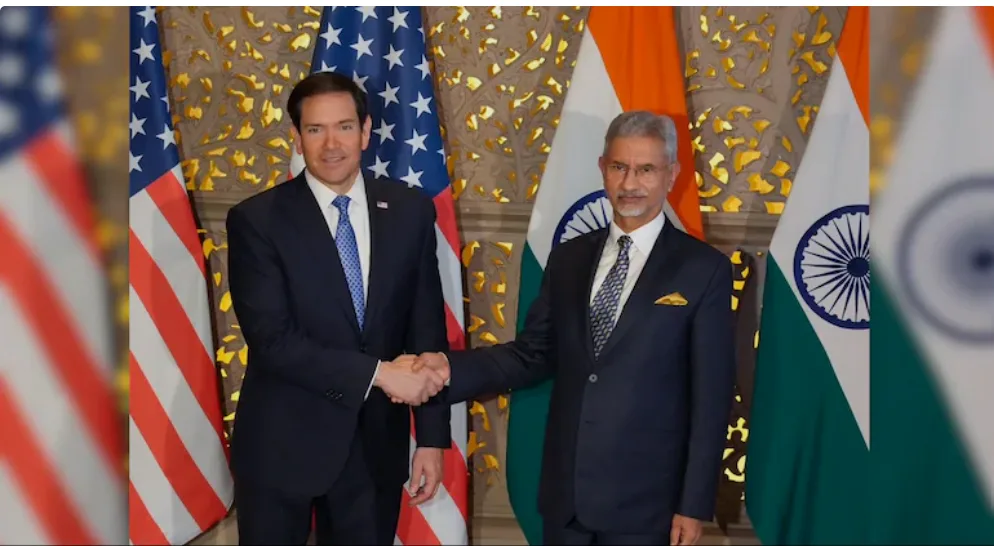
Marco Rubio says India and US share extraordinary alignment on key issues
US Secretary of State Marco Rubio said India and the United States share an extraordinary alignment on core issues, even though disagreements between the two countries may arise.

Punjab strike hits public services as 3 lakh employees and roadways workers protest

Two election commissioners complained against senior poll officer, RTI reveals

Om Prakash Mathur sworn in as Keralam Governor

PM Modi to inaugurate Rs 169-crore RBI data centre in Odisha on October 25

Delhi High Court rejects Neha Bora’s plea against peace bond notice

MEA responds after ITBP chief flags ongoing face-offs with China in Arunachal
Delhi High Court rejects Neha Bora’s plea against peace bond notice
PM Modi to inaugurate Rs 169-crore RBI data centre in Odisha on October 25
Om Prakash Mathur sworn in as Keralam Governor
Two election commissioners complained against senior poll officer, RTI reveals

Afghan Men Try To Hang With The Jet Engine Of The Aircraft in Kabul- Afghanistan News – Kabul News
Trending Top 10 News: 10000 Crore Fine on Flipkart, Apple to Launch Unique Feature, Hdfc Bank Job Ad

Trending Top 10 News: Nokia 6310, Apple sales, Bachpan ka Pyar Video Kid, Dainik Bhaskar IT Raid

Trending Top 10 News: Canada bans Indian flights, Rain in Delhi NCR, AIMIM Twitter hacked, Raj Kundra case

Trending Top 10 News: Shein India, Apple New Service, Pocket Oxygen, Oppo Launched New Phone
-
 India News19 hours ago
Punjab strike hits public services as 3 lakh employees and roadways workers protest
-
 India News19 hours ago
Two election commissioners complained against senior poll officer, RTI reveals
-
 India News8 hours ago
Om Prakash Mathur sworn in as Keralam Governor
-
 India News7 hours ago
PM Modi to inaugurate Rs 169-crore RBI data centre in Odisha on October 25
-
 India News6 hours ago
Delhi High Court rejects Neha Bora’s plea against peace bond notice
-
 India News6 hours ago
MEA responds after ITBP chief flags ongoing face-offs with China in Arunachal
