English हिन्दी
Connect with us

Latest world news

Russian tide turns towards Obama

Published

on

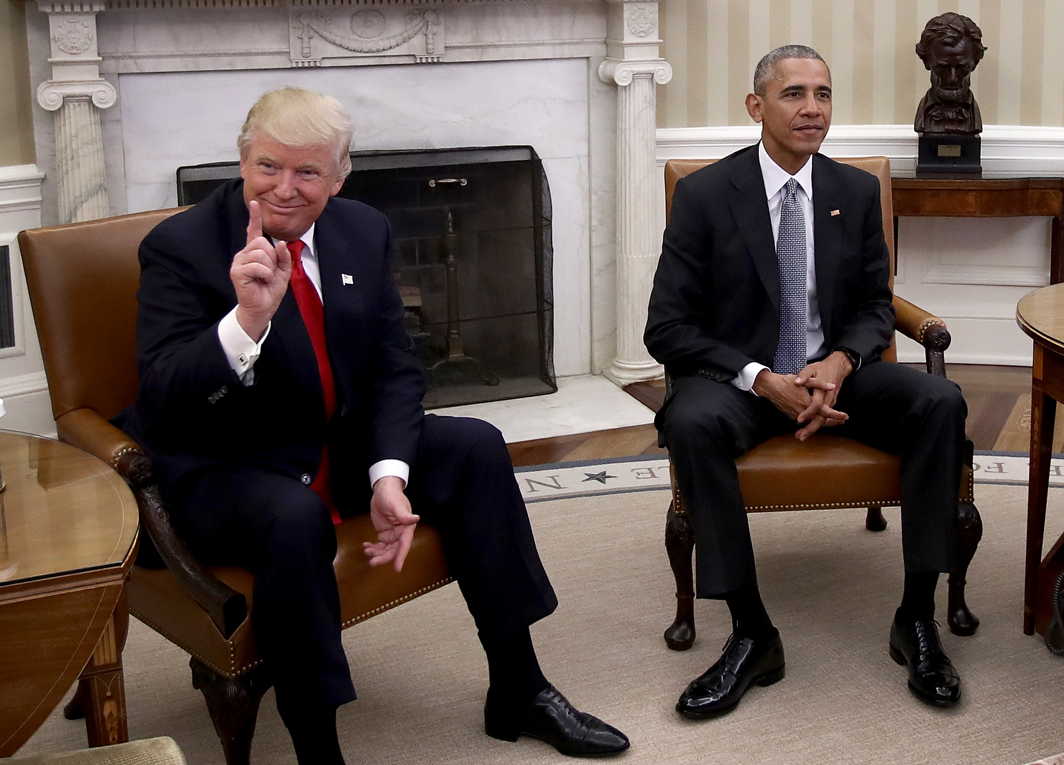
Donald trump and Obama

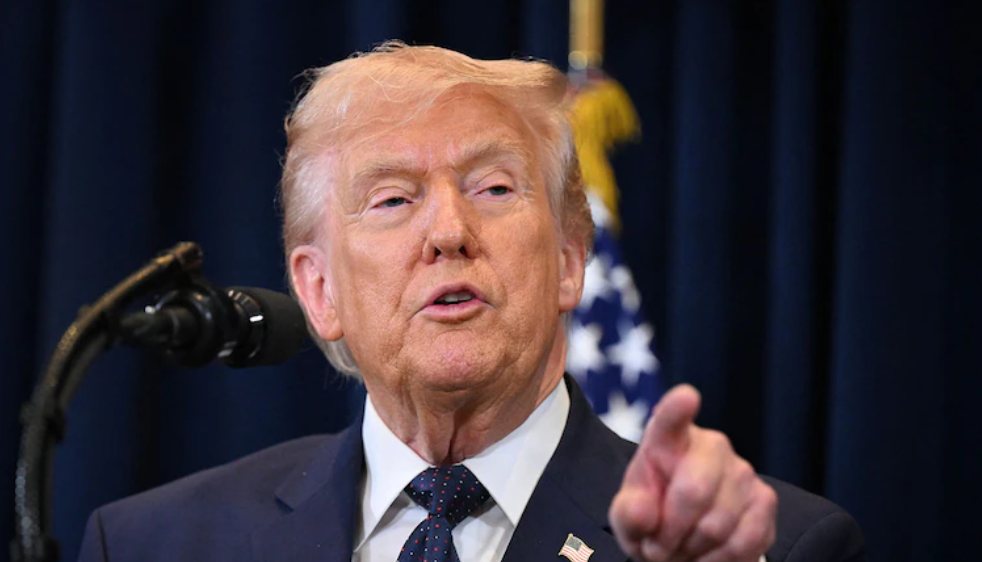
[vc_row][vc_column][vc_column_text]Trump questions Obama for not acting

President Donald Trump has now taken a sigh of relief. He may, to some extent, get rid of pressures about his election team’s close ties with Kremlin. The breather was recently provided by Washington Post by revealing that CIA had informed former President Barrack Obama about Russia’s attempt to influence 2016 election as early August last year, much before November polls.

Now Trump, who was facing investigation on his links with Russian government,   has questioned as to why Obama did nothing about it.

Trump tweeted “The CIA gave him information on Russia a long time before they even—before the election. And I hardly see it. It’s an amazing thing. To me in other words, the question is, if he had the information. Whey did’nt he do something about it? He should have done something about it. But you don’t read that. It’s quite sad”.

On Friday, Washington Post reported on the Obama administrtion’s efforts to punish Russian President Vladimir Putin for trying to sway presidential election in Trump’s favor, quoting a former Obama official saying the administration “sort of choked.”

The Washington Post report details as to how the CIA’s assessment that Putin was directly involved in a cyber campaign to disrupt and discredit US Presidential election in an effort to help Trump prompted Obama administration to debate dozens of options for deterring or punishing Russia.  The sources disclosed that proposals of cyber attack on Russian infrastructure, the release of CIA gathered material that might embarrass Putin and economic sanctions were discussed.

Much before the elections, Obama administration issued several warnings to Moscow about its activities. Even President Obama had directly mentioned to his Russian counterpart Vladimir Putin in September, it was revealed.

President Obama, however, approved modest punitive measures that include expulsion of a few dozen diplomats, closure of two Russian compounds and some symbolic economic sanctions. Planting of cyber weapons in Russia’s infrastructure, was still in the planning stages when Obama left the white House.

Since the story was broken on Friday, on the eve of the two-day weekend, the issue is expected to come under serious public debate next week. Experts believe that Washington Post has provided a big breather to the Trump administration by giving him an opportunity to question his predecessor Barack Obama for “not doing something” about it. [/vc_column_text][/vc_column][/vc_row]

Latest world news

US proposes ending H-4 work permits, Indian spouses face major impact

The US has proposed ending employment authorisation for certain H-4 spouses of H-1B visa holders, potentially affecting Indian families significantly.

Published

on

Donald Trump

The US government has proposed removing employment authorisation for certain H-4 dependent spouses of H-1B visa holders, a move that could significantly affect Indian families living in the country.

The proposal seeks to reverse a rule introduced in 2015 that allowed eligible H-4 spouses to obtain an Employment Authorisation Document (EAD) and work legally in the US. However, the proposal has not yet become a final rule.

Indian H-4 spouses could be among the hardest hit

Data on H-4 EAD applications from 2014 to 2017 showed that 93 per cent of approvals went to Indian nationals, while 94 per cent of those Indian beneficiaries were women.

Indian families could therefore face a significant impact if the proposal eventually takes effect. Indian nationals accounted for about 71 per cent of approved H-1B petitions in fiscal year 2024, according to data cited in the report.

What does the US proposal say?

The plan, listed on the US government’s regulatory information website, is titled “Removing H-4 Dependent Spouses From the Classes of Noncitizens Eligible for Employment Authorisation.”

The Department of Homeland Security has included it in its long-term regulatory agenda. No date has yet been set for its release as a formal proposed rule.

The proposal would reverse changes made under the 2015 rule that extended employment authorisation eligibility to certain H-4 dependent spouses.

H-4 work permits will not end immediately

The proposed change does not immediately take away the right to work from H-4 spouses.

For the proposal to become effective, the Department of Homeland Security would first have to publish a formal Notice of Proposed Rulemaking in the Federal Register. It would then have to allow public comments before issuing a final rule.

Until that process is completed, H-4 spouses holding valid EADs can continue working under the existing rules.

What is an H-4 visa?

An H-4 visa allows eligible spouses and children of H-1B visa holders to live in the US. The visa itself does not provide work authorisation.

Eligible H-4 spouses need a separate EAD to work legally. Under the current rules described in the report, this employment authorisation is available to spouses whose H-1B partners meet certain green-card-related requirements.

The latest proposal would seek to remove H-4 dependent spouses as a category eligible to request this employment authorisation.

Not the first attempt to change H-4 work rules

The US government had previously attempted to remove employment authorisation for certain H-4 spouses during Donald Trump’s first term.

That proposal was not finalised and was ultimately withdrawn in 2021. The latest proposal represents another attempt to reverse the H-4 EAD policy.

Continue Reading

India News

India became Vishwaguru through service, not power, says Mohan Bhagwat

RSS chief Mohan Bhagwat said India became a Vishwaguru through selfless service and its tradition of respecting diversity, rather than through power.

Published

on

Mohan Bhagwat

RSS chief Mohan Bhagwat said India’s standing in the world was built through its tradition of selfless service and humanitarian assistance, rather than through military or imperial power.

Addressing the “Hindu Vishwa Bandhu – Embrace the World in Friendship” gathering in Toronto, Bhagwat said India became a “Vishwaguru” (world teacher) through its character and service to humanity, rather than as a “Mahashakti” (superpower).

Bhagwat recalls India’s humanitarian tradition

Bhagwat cited historical examples of India providing refuge to people fleeing persecution and war. He recalled how the Maharaja of Jamnagar provided shelter and protection to Polish refugees during the Second World War until they could return safely.

He also referred to more recent humanitarian operations, saying Indian military transport aircraft had rescued citizens of seven other countries along with Indians during evacuations from a conflict zone in the Middle East.

The RSS chief said India has historically provided peaceful refuge to people belonging to different faiths, including Muslims, Christians, Jews and Parsis.

‘India never conquered any country’

Bhagwat contrasted India’s civilisational outreach with imperial expansion, saying Indian traditions focused on sharing knowledge rather than conquering territories.

He said Indian travellers historically reached different parts of the world but did not conquer countries. Instead, he said, they shared knowledge in areas including astronomy, Ayurveda and civilisational values.

Calling this tradition the “DNA of Bharat”, Bhagwat said India has continued to help people in distress, including in situations where assistance was not specifically requested.

Bhagwat stresses diversity and unity

Bhagwat also spoke about his understanding of the word “Hindu”, saying it cannot be defined by a particular language, form of worship or lifestyle. He said Hindus “respect all” and “accept all”.

He emphasised the need to respect and embrace diversity, describing it as an expression of an underlying unity.

According to Bhagwat, India’s ancient ethos recognises diversity as natural while treating unity as the fundamental reality.

He further invoked the philosophy of “Vasudhaiva Kutumbakam”, or the belief that the entire world is one family.

Bhagwat said that despite differences in appearance and other forms of diversity, people are essentially one and therefore serving others is a duty.

Continue Reading

Latest world news

Nepal to bury unidentified flood victims, DNA tests to help identify them later

Nepal will bury unidentified flood victims after collecting DNA samples, assigning identification numbers and recording burial locations.

Published

on

Nepal will begin burying unidentified and unclaimed bodies recovered from this week’s devastating flash floods, as authorities struggle with the deteriorating condition of the remains and limited facilities to store them.

At least 675 bodies have been recovered so far. Chitwan district, which borders India, has reported the highest number, with 233 bodies recovered.

Authorities decided to proceed with burials after health experts warned that the decomposition of bodies kept in temporary facilities could increase the risk of infection. In Chitwan, officials had been using a house as a temporary cooling centre, but the facility eventually ran out of space.

DNA samples collected before burial

Nepalese authorities are collecting DNA samples from unidentified bodies before they are buried. Each body is also being assigned a unique identification or reference number, along with details of its location.

The system is intended to allow relatives to identify and recover the remains later if a DNA match is established.

More than 100 bodies had undergone DNA profiling by Saturday afternoon and were ready for burial.

Burial sites designed for future exhumation

The burial pits are being dug about 1.5 metres deep, with a 40-centimetre gap between individual bodies. This arrangement is intended to make it possible to retrieve a specific body if its identity is established later.

The bodies are being placed in bags marked with their identification numbers. Concrete platforms and signboards will also be installed at burial sites to display the corresponding numbers.

Authorities also plan to document the burial process through photographs and video and geo-tag the burial locations.

How families can identify missing relatives

People searching for missing family members will be required to provide DNA samples at designated hospitals across Nepal.

Once the DNA results are available, health authorities will compare them with samples collected from the unidentified bodies. If a match is found, the corresponding identification number will be used to locate the burial site.

The police will then use their records to determine where the body was buried. The remains can subsequently be exhumed and handed over to the family.

Nepal Police has also uploaded details of unidentified and unclaimed bodies online to help with the identification process.

According to officials, 2,426 people, including hundreds of foreigners, remain missing in Nepal.

Continue Reading

Trending

© Copyright 2022 APNLIVE.com