
Latest world news
Saudi Arabia, Egypt to set up joint $10 b fund for mega-city


In a major bonhomie development between two major US allies in the Middle East, Saudi Arabia and Egypt have decided to set up a joint fund worth more than $ 10 billion to develop a megacity and business zone planned to be built by Riyadh on more than 1,000 square kms of land in the southern Sinai Peninsula, committed by Cairo.
Reuters quoted unnamed Saudi official saying that Egypt has committed land to a planned mega-city and business zone unveiled by Saudi Arabia last October. The territory along the Red Sea is part of a joint fund worth more than $10 billion and announced by the two countries late on Sunday during a visit to Cairo by Saudi Crown Prince Mohammed bin Salman, also known as MBS.
Read More:- Vision 2030: Saudi Crown Prince Unveils Dream City Project
Saudi Crown Prince arrived in Cairo on Sunday evening for a three-day visit and held meeting with President Abdel Fettah el-Sisi. He will travel to London and Washington after Cairo. This is his maiden foreign trip taking him to one of its closest allies in the region
Egypt, UAE and Bahrain had followed Riyadh’s suggestion for severing ties with Qatar in June last year.
Read More:- Saudi Arabia, UAE, Bahrain and Egypt snap ties with Qatar
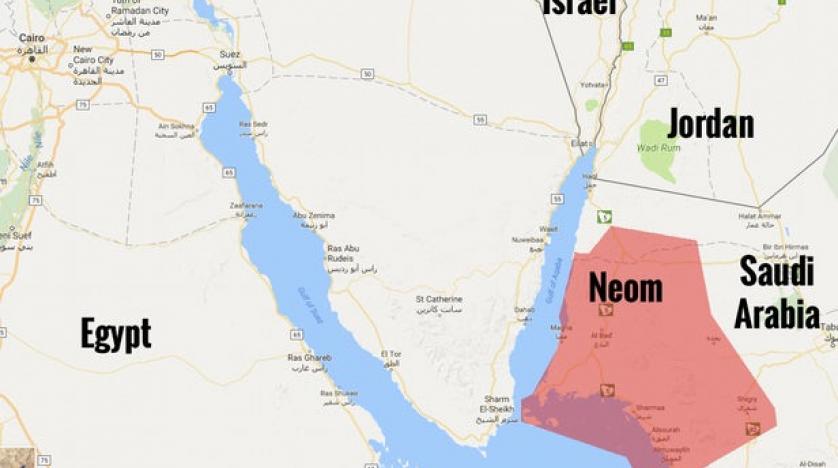
Prince Mohammed previously announced plans for the 26,500 square km zone, known as NEOM, with its own judicial system and legislation designed to attract international investors, at an international investment conference in Riyadh. The mega-city is supposed to focus on industries such as energy and water, biotechnology, food, advanced manufacturing and tourism.
The location of NEOM, close to Israeli territory and also Egyptian city of Sharm al-Sheikh, known for its beaches popular among western tourists coupled with ongoing cultural transformation under Crown Prince Mohammed bin Salman indicates the future scenario. The NEOM was originally conceived to develop across Saudi Arabia, Egypt and Jordan.
Saudi Arabia plans to build seven cities and tourism projects, while Egypt will focus on developing the existing resort cities of Sharm El Sheikh and Hurghada, the Saudi official said. The public and private investment in the area was eventually expected to $500 billion mark.
Saudi Arabia is known for its conventional and extremist Wahabi ideology. In recent months thousands of Wahabi preachers were reportedly detained. Videos of religious preachers’ detention even during their speeches in mosques were in public domain.
The Saudi official has also disclosed that the kingdom will also work with Egypt and Jordan to attract European cruise companies to operate in the Red Sea during the winter season. Riyadh is negotiating with seven important cruise companies.
Saudi Arabia will also set up 50 resorts and four small cities as part of a separate tourism initiative announced last August and backed by the country’s Public Investment Fund (PIF).
The Red Sea Project, made up of some 50 islands, will offer a nature reserve, diving on coral reefs and heritage sites. Construction will commence in 2019 and is scheduled to complete its first phase by late 2022.






Latest world news
S Jaishankar says India is a natural option for Russia amid Europe tensions
External Affairs Minister S Jaishankar said India remained a natural option for Russia as Moscow increasingly turned towards Asia amid strained relations with Europe. He highlighted the continuity of India-Russia ties and their significance for the balance of power in Asia.


Latest world news
Putin praises PM Modi, says he has very good ideas on Ukraine war
Russian President Vladimir Putin has praised Prime Minister Narendra Modi for repeatedly raising the need to end the Ukraine war, describing his ideas for a settlement as “very good”.

Latest world news
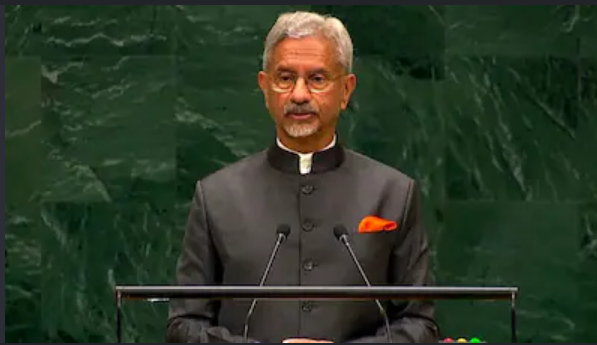
S Jaishankar calls Pakistan a “serial practitioner of terrorism” at UN
S Jaishankar criticised Pakistan at the UN General Assembly, referring to a “serial practitioner of terrorism” and warning against attempts to normalise terrorism.

CJP leaders Saurav Das, Ashutosh Ranka, Ajinkya Shinde sent to 5-day judicial custody

S Jaishankar says India is a natural option for Russia amid Europe tensions

PM Modi speaks to Mark Carney as India and Canada push to strengthen ties

Meerut murder: Muskaan Rastogi and Sahil Shukla get death sentence

Rahul Gandhi joins India Gate protest by Ankita Bhandari’s parents

Supreme Court questions EC over missing records in Sringeri election dispute
Rahul Gandhi joins India Gate protest by Ankita Bhandari’s parents
Meerut murder: Muskaan Rastogi and Sahil Shukla get death sentence
PM Modi speaks to Mark Carney as India and Canada push to strengthen ties
S Jaishankar says India is a natural option for Russia amid Europe tensions

Afghan Men Try To Hang With The Jet Engine Of The Aircraft in Kabul- Afghanistan News – Kabul News
Trending Top 10 News: 10000 Crore Fine on Flipkart, Apple to Launch Unique Feature, Hdfc Bank Job Ad

Trending Top 10 News: Nokia 6310, Apple sales, Bachpan ka Pyar Video Kid, Dainik Bhaskar IT Raid

Trending Top 10 News: Canada bans Indian flights, Rain in Delhi NCR, AIMIM Twitter hacked, Raj Kundra case

Trending Top 10 News: Shein India, Apple New Service, Pocket Oxygen, Oppo Launched New Phone
-
 India News23 hours ago
CJP leaders Saurav Das, Ashutosh Ranka, Ajinkya Shinde sent to 5-day judicial custody
-
 Latest world news23 hours ago
S Jaishankar says India is a natural option for Russia amid Europe tensions
-
 India News22 hours ago
PM Modi speaks to Mark Carney as India and Canada push to strengthen ties
-
 India News12 hours ago
Meerut murder: Muskaan Rastogi and Sahil Shukla get death sentence
-
 India News11 hours ago
Rahul Gandhi joins India Gate protest by Ankita Bhandari’s parents
-
 India News11 hours ago
Supreme Court questions EC over missing records in Sringeri election dispute
