
Latest world news
North Korean leader Kim meets South Korean high ranking officials


Agrees for Summit meeting with South Korean leader
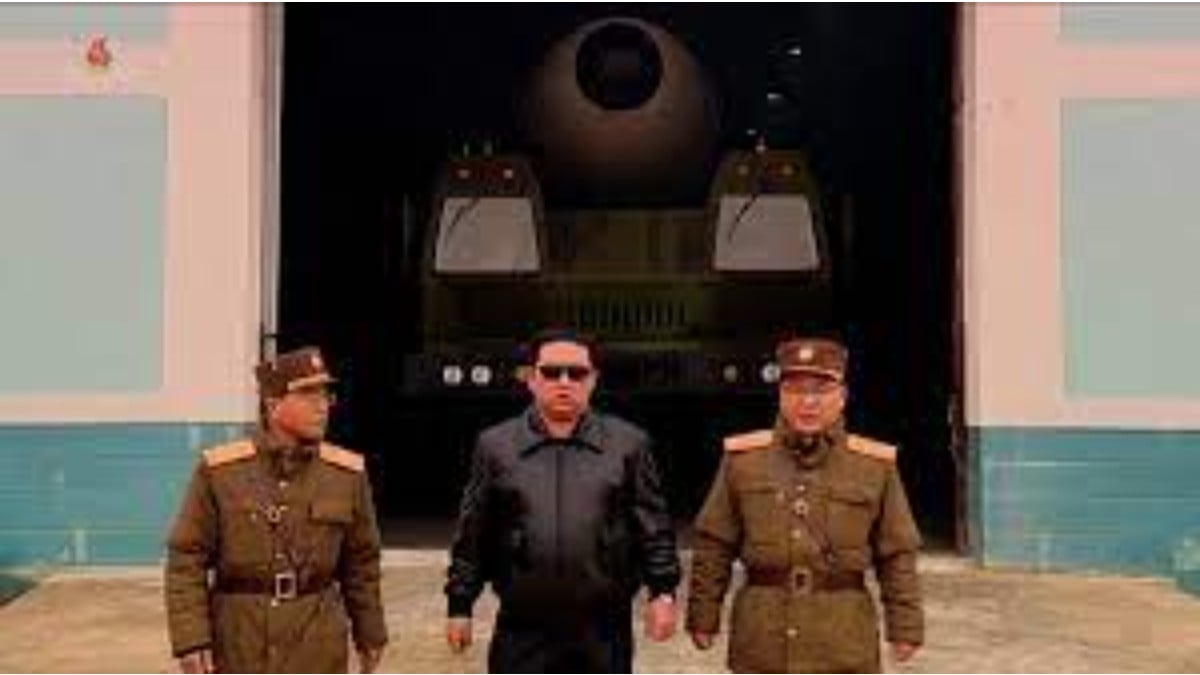
In a groundbreaking development, North Korean leader Kim Jong Un has met with South Korean delegation headed by its National Security Chief Jong Ui Yong, the special envoy of President Moon Jae-In and expressed desire to “write a new history of national reunification” in Pyongyang on Monday.
The visit of the South Korean high ranking delegation is followed by North Korean initiative of sending powerful delegation to South Korea during recently held winter Olympics in PyeongChang. Kim Jong Un’s sister Km Yo Jong and country’s vice president were leading the delegation. North Korean delegation had skipped a secret meeting with US Defence Secretary during the visit.
Read More: North Korea skips secret meeting with Mike Pence
According to North Korea official KCNAwatch, the South Korean delegation comprised with Jong Ui Yong, chief of the State Security Office of Chong Wa Dae, the official name of South Korean President’s palace, So Hun, director of the National Intelligence Service, Chon Hae Song, vice-minister of Unification; Kim Sang Gyun, vice-director of the National Intelligence Service and Yun Kon Yong, chief of the Office of State Affairs Situation of Chong Wa Dae.
During the meeting, Kim Jong Un, the North Korean leader was assisted by his administration’s senior officials including Kim Yong Chol, vice-chairman of the Central Committee of the Workers Party of Korea (WPK) and Kim Yo Jong, first vice department director of the Central Committee of the WPK.
Shaking hands of the special envoy and his party one by one, Kim warmly welcomed them on their visit to Pyongyang.
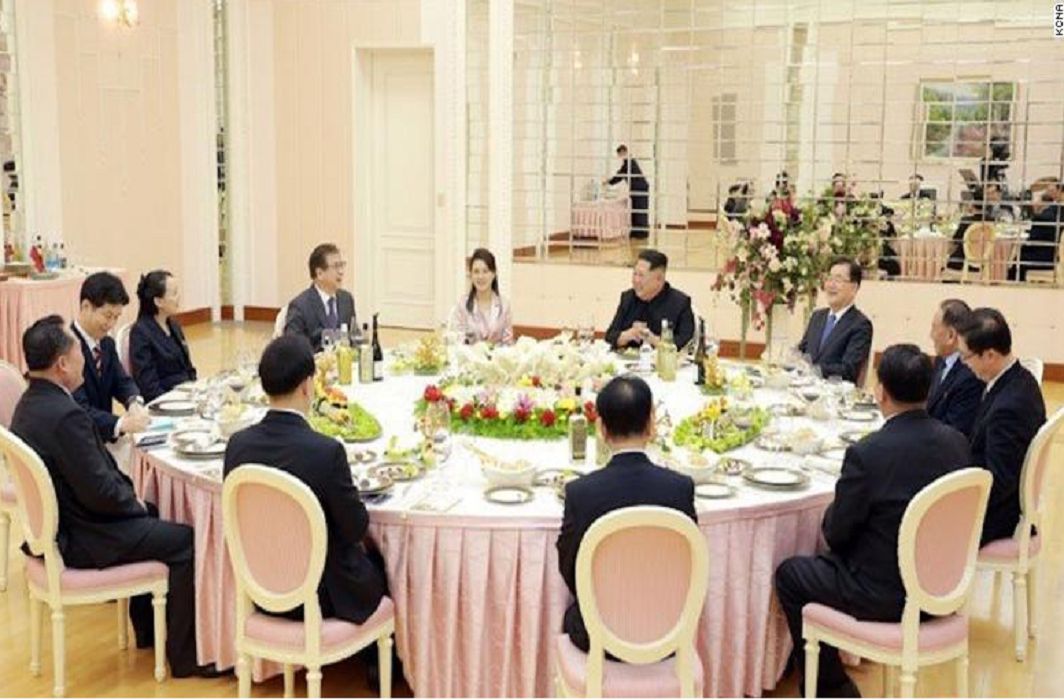
Jong Ui Yong, the Special envoy of South Korean leader handed over the personal letter of President Moon Jae In to North Korean leader Kim JOng Un. The members of the delegation thanked Kim for dispatching high-level delegation and various large-scale delegations with the 23rd Winter Olympics.
Read more: UN Secretary General welcomes North-South Korea talks
Responding to the gestures from South Korean officials Kim Jong Un said that “it is natural to be glad at the auspicious event of the fellow countrymen of the ‘same blood’ and help it. The Winter Olympics served as a very important occasion in demonstrating the stamina and prestige of ‘our nation’ at home and abroad and providing a good atmosphere of reconciliation, unity and dialogue between the north and the south.”
The official news agency, reports that Kim had an “openhearted talk with the party of the special envoy delegation of the south side over the issues arising in actively improving the north-south relations and ensuring peace and stability on the Korean Peninsula”.
Read more: Donald Trump slaps economic sanctions against North Korea
Kim reportedly clarified repeatedly that “it is our consistent and principled stand and his firm will to vigorously advance the north-south relations and write a new history of national reunification by the concerted efforts of our nation to be proud of in the world”.
Hearing the intention of South Korean President Moon Jae In for a summit from the special envoy of the south side, he exchanged views and made a “satisfactory agreement”. Kim gave instructions to the relevant officials to rapidly take practical steps for it.
Kim Jong Un also made an exchange of in-depth views on the issues for easing the acute military tensions on the Korean Peninsula and activating the versatile dialogue, contact, cooperation and exchange.
The talk between the Kim Jong Un and the visiting South Korean delegation took place in a compatriotic and sincere atmosphere. North Korean leader also held a photo session with the members of the delegation.
Read more: South Korea President to meet Kim Jong Un sister
During South Korea visit, Kim’s sister Km Yo Jong had handed over an official invitation to South Korean President Moon Jae-In to visit North Korea. Kim’s sister was the first member of the North’s ruling dynasty to visit South Korea since the Korean war ended in 1953.
Read More: UN: North Korea provides material for Syrian chemical weapons





Latest world news
S Jaishankar says India is a natural option for Russia amid Europe tensions
External Affairs Minister S Jaishankar said India remained a natural option for Russia as Moscow increasingly turned towards Asia amid strained relations with Europe. He highlighted the continuity of India-Russia ties and their significance for the balance of power in Asia.


Latest world news
Putin praises PM Modi, says he has very good ideas on Ukraine war
Russian President Vladimir Putin has praised Prime Minister Narendra Modi for repeatedly raising the need to end the Ukraine war, describing his ideas for a settlement as “very good”.

Latest world news
S Jaishankar calls Pakistan a “serial practitioner of terrorism” at UN
S Jaishankar criticised Pakistan at the UN General Assembly, referring to a “serial practitioner of terrorism” and warning against attempts to normalise terrorism.


Dhruv Rathee gets fresh summons in 2018 BJP IT cell video case

Nobody can browbeat judiciary, Chief Justice warns over Rahul Gandhi’s march

India-US trade deal first phase finalised, drafting underway

Election Commission orders voter roll revision in 17 states, UTs

Actor Imran Khan asked to leave India after CJP protest

Delhi Police offers 11-person limit for CJP’s Connaught Place protest
Actor Imran Khan asked to leave India after CJP protest
Election Commission orders voter roll revision in 17 states, UTs
India-US trade deal first phase finalised, drafting underway
Nobody can browbeat judiciary, Chief Justice warns over Rahul Gandhi’s march

Afghan Men Try To Hang With The Jet Engine Of The Aircraft in Kabul- Afghanistan News – Kabul News
Trending Top 10 News: 10000 Crore Fine on Flipkart, Apple to Launch Unique Feature, Hdfc Bank Job Ad

Trending Top 10 News: Nokia 6310, Apple sales, Bachpan ka Pyar Video Kid, Dainik Bhaskar IT Raid

Trending Top 10 News: Canada bans Indian flights, Rain in Delhi NCR, AIMIM Twitter hacked, Raj Kundra case

Trending Top 10 News: Shein India, Apple New Service, Pocket Oxygen, Oppo Launched New Phone
-
 India News13 hours ago
Dhruv Rathee gets fresh summons in 2018 BJP IT cell video case
-
 India News10 hours ago
Nobody can browbeat judiciary, Chief Justice warns over Rahul Gandhi’s march
-
 India News6 hours ago
India-US trade deal first phase finalised, drafting underway
-
 India News3 hours ago
Election Commission orders voter roll revision in 17 states, UTs
-
 India News3 hours ago
Actor Imran Khan asked to leave India after CJP protest
-
 India News2 hours ago
Delhi Police offers 11-person limit for CJP’s Connaught Place protest
