
Latest world news
Saudi Arabia expels Canadian Envoy, frozen new trade


In an major arm-twist diplomacy against external interference in its internal affairs, Saudi Arabia has ordered immediate expulsion of Canadian ambassador to the Kingdom Dennis Horak calling him “persona non-grata”, recalled its envoy from Ottawa “for consultations” and frozen all new trade in response to Canada’s vigorous calls for the release of jailed activists.
The sudden move by the Saudi Arabian government, currently run by Crown Prince Mohammed Bin-Salman, came on Monday morning in response to an official statement by Canadian government demanding the “immediate release” of human rights campaigners who were jailed in a new crackdown.
Saudi Press Agency (SPA), carried abnormally long statement saying, “The Ministry of Foreign Affairs in the Kingdom of Saudi Arabia has been made aware of the statement by the Canadian Minister of Foreign Affairs and the Canadian Embassy in the Kingdom, on the so-called civil society activists who have been detained, urging Saudi authorities to release them immediately.”
The statement further said, “The Saudi MFA has expressed disbelief by this negative unfounded comment, which was not based in any accurate or true information. The persons referred to were lawfully detained by the Public Prosecution for committing crimes punishable by applicable law, which also guaranteed the detainees’ rights and provided them with due process during the investigation and trial”.

The Ministry also affirmed that the Canadian statement is a blatant interference in the Kingdom’s domestic affairs, against basic international norms and all international protocols. It is a major, unacceptable affront to the Kingdom’s laws and judicial process, as well as a violation of the Kingdom’s sovereignty, the statement said.
Widening its canvass the Saudi Foreign Ministry addressed the international community saying, “Canada and all other nations need to know that they can’t claim to be more concerned than the Kingdom over its own citizens.”
It concluded saying, “The Kingdom of Saudi Arabia recalls the Ambassador of the Custodian of the Two Holy Mosques in Canada back to Riyadh for consultation and considers the Canadian Ambassador to Saudi Arabia as Persona-Non-Grata who must leave the Kingdom within the next 24 hours.”
Regarding its economic fallout, the Saudi Ministry of Foreign Affairs said, “The Kingdom will put on hold all new business and investment transactions with Canada while retaining its right to take further action.”
The move underscores a newly aggressive foreign policy after Canada said last week that it was “gravely concerned” over a new wave of arrests of women and human rights campaigners in the kingdom, including award-winning gender rights activist Samar Badawi.
Canadian foreign ministry tweeted on Friday, “We urge the Saudi authorities to immediately release them and all other peaceful #humanrights activists.”
According to reports, Samar Badawi was arrested along with fellow campaigner Nassima al-Sadah last week, the latest victims of what US based Human Rights Watch called an “unprecedented government crackdown on the women’s rights movement”.
Samar is a vocal campaigner for blogger Raif Badawi, her brother who was arrested in 2012 and sentenced to 1,000 lashes and 10 years in jail for “insulting Islam” in a case that sparked an international outcry.

According to AFP, on Saturday, Saudi Arabia announced detention of 17 people for “undermining” the kingdom’s security. Earlier last month, 11 people, mostly identified as women campaigners for the right to drive and to end the conservative male guardianship system.
Responding to Saudi action, Marie-Pier Baril, a spokeswoman for Canadian Foreign Minister Chrystia Freeland, said Canada was “seriously concerned” by Saudi Arabia’s actions.
She said, “Canada will always stand up for the protection of human rights, very much including women’s rights, and freedom of expression around the world. Our government will never hesitate to promote these values and believes that this dialogue is critical to international diplomacy.”
Saudi Arabia’s Crown Prince Mohammed Bin Salman, has introduced a string of reforms which include lifting a decades-long ban on women driving. However, he also pursued a hawkish foreign policy, including severing all ties with Qatar and aggression against Yemen’s Huthi rebels ,while cracking down on dissent at home.
In April, Canadian Prime Minister Justin Trudeau expressed his “serious concern” over the continued jailing of Badawi to Saudi King Salman.
Badawi’s wife Ensaf Haidar, who is currently heading Raif Badawi Foundation for Freedom, has been granted asylum by Canada, where she is raising their three children now aged 14, 13 and 10 as a single mother.
According to Canadian Ambassador to Saudi Arabia Dennis Horak’s message on the mission’s official website, “Saudi Arabia is currently Canada’s second largest export market for goods in the Middle East and also a leading market for consulting/engineering and other services”.
He further say, “One of the landmark features of our relationship with Saudi Arabia is the presence of some 16,000 Saudi students at Canadian educational institutions”.
Canadian Ambassador to Saudi Arabia also represents his country in Bahrain, Oman and Yemen. Saudi Arabian ambassador to Canada is Naif Bin Bandar Al-Sudairi.







Latest world news
S Jaishankar says India is a natural option for Russia amid Europe tensions
External Affairs Minister S Jaishankar said India remained a natural option for Russia as Moscow increasingly turned towards Asia amid strained relations with Europe. He highlighted the continuity of India-Russia ties and their significance for the balance of power in Asia.


Latest world news
Putin praises PM Modi, says he has very good ideas on Ukraine war
Russian President Vladimir Putin has praised Prime Minister Narendra Modi for repeatedly raising the need to end the Ukraine war, describing his ideas for a settlement as “very good”.

Latest world news
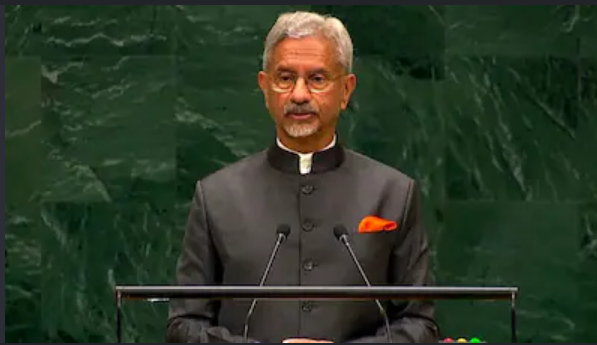
S Jaishankar calls Pakistan a “serial practitioner of terrorism” at UN
S Jaishankar criticised Pakistan at the UN General Assembly, referring to a “serial practitioner of terrorism” and warning against attempts to normalise terrorism.

CJP leaders Saurav Das, Ashutosh Ranka, Ajinkya Shinde sent to 5-day judicial custody

PM Modi speaks to Mark Carney as India and Canada push to strengthen ties

S Jaishankar says India is a natural option for Russia amid Europe tensions

Meerut murder: Muskaan Rastogi and Sahil Shukla get death sentence

Rahul Gandhi joins India Gate protest by Ankita Bhandari’s parents

Supreme Court questions EC over missing records in Sringeri election dispute
Rahul Gandhi joins India Gate protest by Ankita Bhandari’s parents
Meerut murder: Muskaan Rastogi and Sahil Shukla get death sentence
PM Modi speaks to Mark Carney as India and Canada push to strengthen ties
S Jaishankar says India is a natural option for Russia amid Europe tensions

Afghan Men Try To Hang With The Jet Engine Of The Aircraft in Kabul- Afghanistan News – Kabul News
Trending Top 10 News: 10000 Crore Fine on Flipkart, Apple to Launch Unique Feature, Hdfc Bank Job Ad

Trending Top 10 News: Nokia 6310, Apple sales, Bachpan ka Pyar Video Kid, Dainik Bhaskar IT Raid

Trending Top 10 News: Canada bans Indian flights, Rain in Delhi NCR, AIMIM Twitter hacked, Raj Kundra case

Trending Top 10 News: Shein India, Apple New Service, Pocket Oxygen, Oppo Launched New Phone
-
 India News17 hours ago
CJP leaders Saurav Das, Ashutosh Ranka, Ajinkya Shinde sent to 5-day judicial custody
-
 India News17 hours ago
PM Modi speaks to Mark Carney as India and Canada push to strengthen ties
-
 Latest world news17 hours ago
S Jaishankar says India is a natural option for Russia amid Europe tensions
-
 India News6 hours ago
Meerut murder: Muskaan Rastogi and Sahil Shukla get death sentence
-
 India News5 hours ago
Rahul Gandhi joins India Gate protest by Ankita Bhandari’s parents
-
 India News5 hours ago
Supreme Court questions EC over missing records in Sringeri election dispute
