
Latest world news
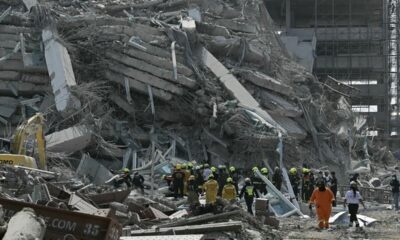
Indonesia Earthquake: 91 Killed, Hundreds Injured, Thousands Building Collapsed


Rescue Operations Continue, Week-Long Emergency Announced
The death toll in a powerful earthquake that hit West Nausa Tenggara and Bali, Indonesia on Sunday evening has climbed to 91, the National Disaster Mitigation Agency (BNPB) announced in a press conference in Jakarta on Monday.
According to The Jakarta Post, North Lombok regency suffered the largest number of fatalities with 72 people killed, while Bali recorded two fatalities. Most victims were killed from falling buildings, the disaster management agency said.
According to BNPB spokesperson Sutopo Purwo Nugroho, a week-long emergency status has been declared by the government for East and North Lombok regencies.
 As of Monday afternoon, 209 people have been reported injured and thousands of buildings, including schools and hospitals, damaged. He said, “We estimate the number of victims will rise.”
North and East Lombok saw the most damages, with 80 percent of the buildings in several areas completely demolished by the 7-magnitude earthquake. The sources said that the earthquake on Sunday evening was the main shock while the smaller one on July 29 was the “foreshock”.
The powerful earthquake sent thousands of Lombok residents and tourists scrambling outdoors, where many spent the night because strong aftershocks including one of 5.3-magnitude continued to rattle the island. Many areas in Lombok remained without electricity on Monday.
Meanwhile country’s President Joko “Jokowi” Widodo has ordered his aides to focus on providing disaster relief in West Nusa Tenggara province. He has ordered Wiranto, the minister for coordination political, legal and security affairs, who was on Lombok for a meeting at the time of the earthquake, to communicate with various institutions on the matter, including BNPB, Social Affairs Ministry and the National Police to help people affected by the disaster and provide logistic support.
The news sources in Jakarta say that hundreds of bloodied and bandaged victims were treated outside damaged hospitals in the main city Mataram and other hard-hit parts of the island. Patients lay on beds under makeshift wards set up under tents, surrounded by drip stands and monitors.
 Another Monday morning report says that the ferry service from Bali to Lombok in West Nusa Tenggara has resumed operations after being halted on Sunday evening following a 7-magnitude earthquake on the island.
Indonesian security forces and emergency workers were busy in rescue operations searching for survivors under the rubble of houses, mosques and schools which were among thousands of buildings destroyed in the disaster.
K.Shanmugam, the Home Minister of Singapore, who was in Lombok for a conference at the time of the earthquake, described on his Facebook post how his hotel room on the 10th floor shook violently. He said, “Walls cracked, it was quite impossible to stand up.”











Latest world news
S Jaishankar says India is a natural option for Russia amid Europe tensions
External Affairs Minister S Jaishankar said India remained a natural option for Russia as Moscow increasingly turned towards Asia amid strained relations with Europe. He highlighted the continuity of India-Russia ties and their significance for the balance of power in Asia.


Latest world news
Putin praises PM Modi, says he has very good ideas on Ukraine war
Russian President Vladimir Putin has praised Prime Minister Narendra Modi for repeatedly raising the need to end the Ukraine war, describing his ideas for a settlement as “very good”.

Latest world news
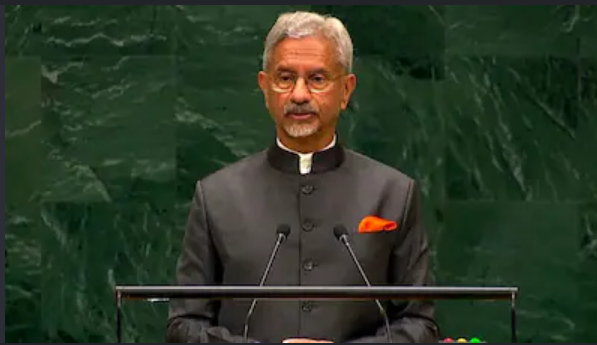
S Jaishankar calls Pakistan a “serial practitioner of terrorism” at UN
S Jaishankar criticised Pakistan at the UN General Assembly, referring to a “serial practitioner of terrorism” and warning against attempts to normalise terrorism.

Supreme Court stays defamation case against Rahul Gandhi over PM Modi remarks

Rahul Gandhi hosts high tea for INDIA bloc after Gyanesh Kumar protests

L Murugan quits Union ministry to strengthen BJP in Tamil Nadu

Amit Shah attacks Rahul Gandhi over Congress poll losses, questions SIR row

BJP focuses on religion as opposition pushes BDM strategy in UP

PM Modi speaks to Mark Carney as India and Canada push to strengthen ties

S Jaishankar says India is a natural option for Russia amid Europe tensions

CJP leaders Saurav Das, Ashutosh Ranka, Ajinkya Shinde sent to 5-day judicial custody
BJP focuses on religion as opposition pushes BDM strategy in UP
L Murugan quits Union ministry to strengthen BJP in Tamil Nadu

Afghan Men Try To Hang With The Jet Engine Of The Aircraft in Kabul- Afghanistan News – Kabul News
Trending Top 10 News: 10000 Crore Fine on Flipkart, Apple to Launch Unique Feature, Hdfc Bank Job Ad

Trending Top 10 News: Nokia 6310, Apple sales, Bachpan ka Pyar Video Kid, Dainik Bhaskar IT Raid

Trending Top 10 News: Canada bans Indian flights, Rain in Delhi NCR, AIMIM Twitter hacked, Raj Kundra case

Trending Top 10 News: Shein India, Apple New Service, Pocket Oxygen, Oppo Launched New Phone
-
 India News23 hours ago
Supreme Court stays defamation case against Rahul Gandhi over PM Modi remarks
-
 India News15 hours ago
Rahul Gandhi hosts high tea for INDIA bloc after Gyanesh Kumar protests
-
 India News14 hours ago
L Murugan quits Union ministry to strengthen BJP in Tamil Nadu
-
 India News14 hours ago
Amit Shah attacks Rahul Gandhi over Congress poll losses, questions SIR row
-
 India News13 hours ago
BJP focuses on religion as opposition pushes BDM strategy in UP
-
 India News2 hours ago
CJP leaders Saurav Das, Ashutosh Ranka, Ajinkya Shinde sent to 5-day judicial custody
-
 Latest world news2 hours ago
S Jaishankar says India is a natural option for Russia amid Europe tensions
-
 India News2 hours ago
PM Modi speaks to Mark Carney as India and Canada push to strengthen ties
