
Latest world news
Six dead, 230 injured as protest creates havoc in Islamabad


[vc_row][vc_column][vc_column_text]Protest erupted over a hastily-abandoned amendment to the oath taken by law minister Zahid Hamid
With the Pakistan military hesitant to react at government’s call for help, the anti-blasphemy protest in Islamabad turned violent on Sunday – as security forces failed to disperse Islamist protestors from the streets in Islamabad.
While hundreds of protestors continue blocking the roads and intersections – which connects Islamabad and neighboring Rawalpindi, paralyzing Pakistan’s key cities for weeks (since November 8) – security forces attempts to handle the situation made it more tense – as infuriated protestors torched vehicles and threw stones.
With the protest intensifying with each passing day, at least six people were killed and 230 injured before the forces retreated from the Islamabad streets late on Saturday. While the local hospitals have confirmed that most of the injured Islamists have already been released 20 protestors are still admitted with serious injuries.
The nationwide protest in Islamabad erupted over a hastily-abandoned amendment to the oath taken by Pakistan’s law minister Zahid Hamid. Demanding for the resignation of the minister, Islamist protestors linked it to blasphemy – claiming that the oath was softened to enable the participation of Ahmadis, who are not taken as Muslim community in the country.
While the country’s military had been ruling Pakistan for almost half of its 70-year history, no official military response or armored vehicles had been deployed in the streets till Saturday. However, according to the country’s interior ministry, the federal government had authorized to deploy “sufficient troops” to “control law and order” in the capital.
Adding more confusion to the tension, private television broadcasts remained blocked and social media sites were restricted.
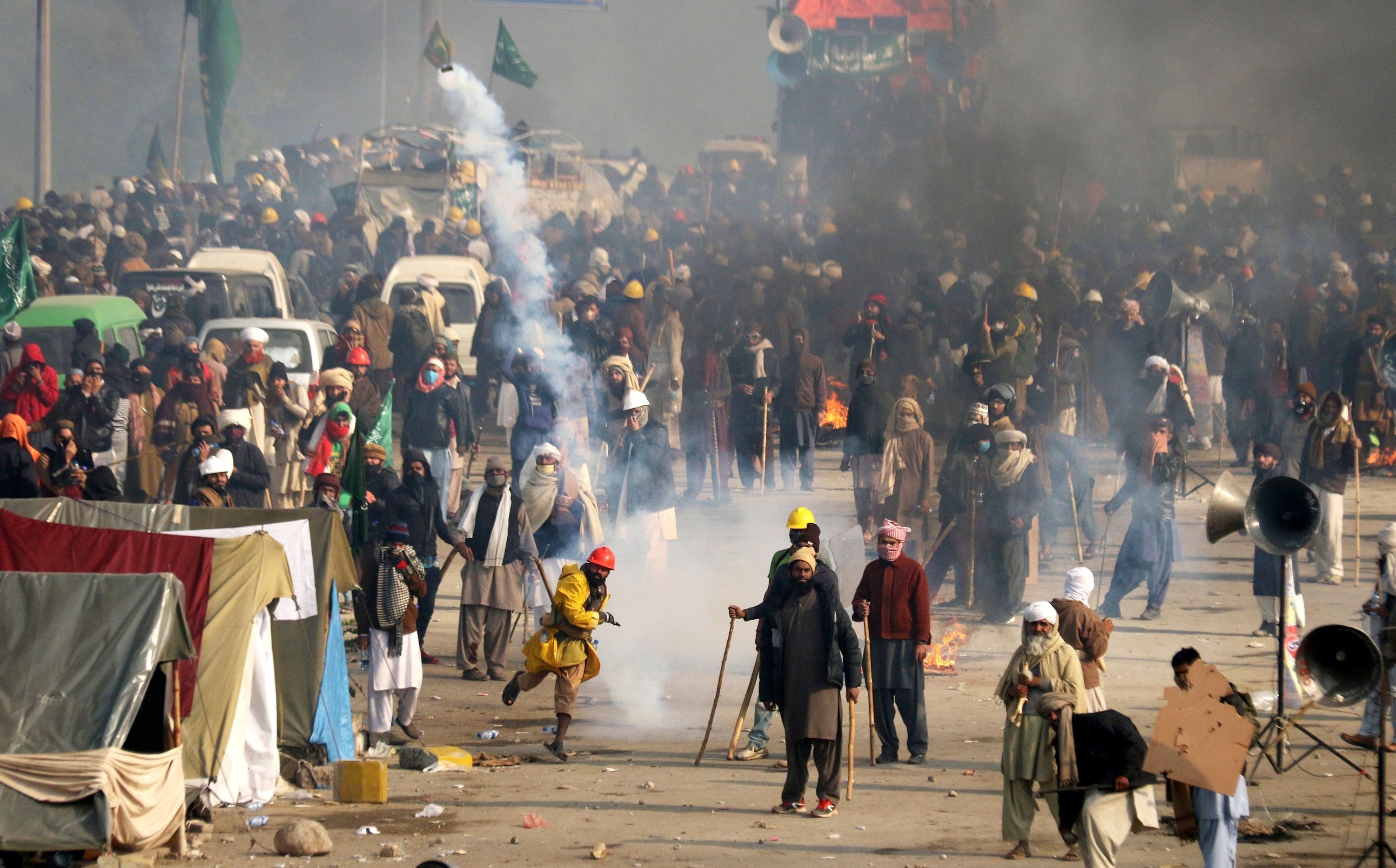
Stating that the only channel working on the television is the state owned Pakistan TV – which also is featuring a children’s program – Naeem – a resident at Islamabad market – told AFP, “I don’t have any clue what is happening. Only Allah is running this country.”
Another local resident, Shadman Sharar Shohan, wrote over a post on Facebook, “Police, administration should be bolder on decision making next time. This Incompetent govt. has made blunder on everything.”
Similar protests have also erupted in Karachi where clashes between security forces and protestors have left at least 27 injured – including 22 people with gunshot injuries.[/vc_column_text][/vc_column][/vc_row]






Latest world news
S Jaishankar says India is a natural option for Russia amid Europe tensions
External Affairs Minister S Jaishankar said India remained a natural option for Russia as Moscow increasingly turned towards Asia amid strained relations with Europe. He highlighted the continuity of India-Russia ties and their significance for the balance of power in Asia.


Latest world news
Putin praises PM Modi, says he has very good ideas on Ukraine war
Russian President Vladimir Putin has praised Prime Minister Narendra Modi for repeatedly raising the need to end the Ukraine war, describing his ideas for a settlement as “very good”.

Latest world news
S Jaishankar calls Pakistan a “serial practitioner of terrorism” at UN
S Jaishankar criticised Pakistan at the UN General Assembly, referring to a “serial practitioner of terrorism” and warning against attempts to normalise terrorism.


CJP leaders Saurav Das, Ashutosh Ranka, Ajinkya Shinde sent to 5-day judicial custody

S Jaishankar says India is a natural option for Russia amid Europe tensions

PM Modi speaks to Mark Carney as India and Canada push to strengthen ties

Meerut murder: Muskaan Rastogi and Sahil Shukla get death sentence

Rahul Gandhi joins India Gate protest by Ankita Bhandari’s parents

Supreme Court questions EC over missing records in Sringeri election dispute
Rahul Gandhi joins India Gate protest by Ankita Bhandari’s parents
Meerut murder: Muskaan Rastogi and Sahil Shukla get death sentence
PM Modi speaks to Mark Carney as India and Canada push to strengthen ties
S Jaishankar says India is a natural option for Russia amid Europe tensions

Afghan Men Try To Hang With The Jet Engine Of The Aircraft in Kabul- Afghanistan News – Kabul News
Trending Top 10 News: 10000 Crore Fine on Flipkart, Apple to Launch Unique Feature, Hdfc Bank Job Ad

Trending Top 10 News: Nokia 6310, Apple sales, Bachpan ka Pyar Video Kid, Dainik Bhaskar IT Raid

Trending Top 10 News: Canada bans Indian flights, Rain in Delhi NCR, AIMIM Twitter hacked, Raj Kundra case

Trending Top 10 News: Shein India, Apple New Service, Pocket Oxygen, Oppo Launched New Phone
-
 India News22 hours ago
CJP leaders Saurav Das, Ashutosh Ranka, Ajinkya Shinde sent to 5-day judicial custody
-
 Latest world news22 hours ago
S Jaishankar says India is a natural option for Russia amid Europe tensions
-
 India News21 hours ago
PM Modi speaks to Mark Carney as India and Canada push to strengthen ties
-
 India News11 hours ago
Meerut murder: Muskaan Rastogi and Sahil Shukla get death sentence
-
 India News10 hours ago
Rahul Gandhi joins India Gate protest by Ankita Bhandari’s parents
-
 India News9 hours ago
Supreme Court questions EC over missing records in Sringeri election dispute
