English हिन्दी
Connect with us

Latest world news

Spain’s Ceuta migrant crisis: 34 dead as 60,000 cross from Morocco in 24 hours

At least 34 migrants have died and around 60,000 crossed into Spain’s Ceuta from Morocco within 24 hours, prompting a major security response and diplomatic reactions across Europe.

Published

on

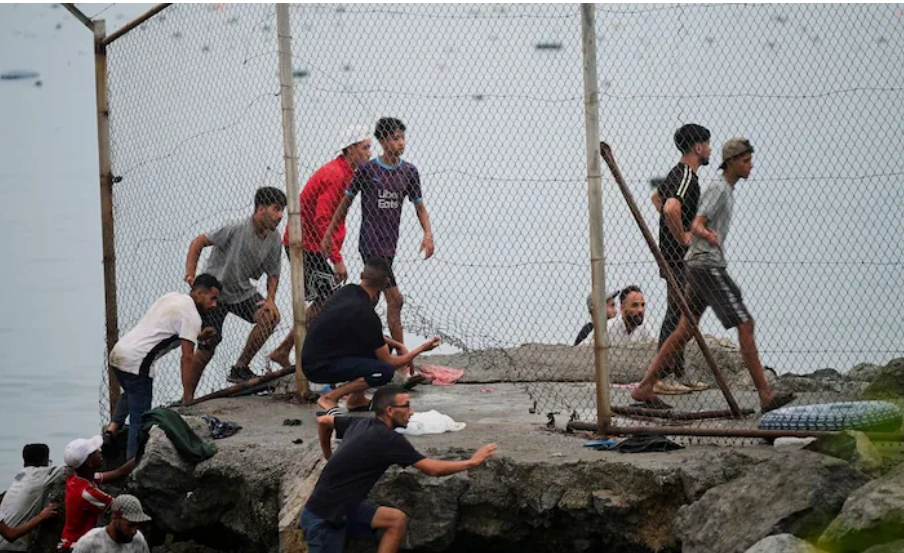
At least 34 migrants have died while attempting to cross from Morocco into the Spanish enclave of Ceuta, as Spain faces one of its biggest border challenges in recent years.

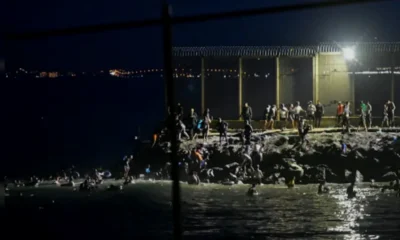
According to Ceuta regional president Juan Jesus Vivas, around 60,000 migrants entered the Spanish territory from Morocco within the past 24 hours. The situation has escalated rapidly since Thursday, with security personnel confronting large groups attempting to enter the enclave.

Spanish Prime Minister Pedro Sanchez travelled to Ceuta on Friday, where he condemned the breach of the border and described the incident as a violation of Spain’s territorial integrity.

Sanchez blamed human smuggling networks for encouraging dangerous migration attempts, saying traffickers exploit vulnerable people and put their lives at risk.

Spain says many migrants have already returned

Spain’s Interior Ministry said nearly half of those who crossed into Ceuta have already returned to Morocco. The ministry also released footage showing people walking back through a border gate separating the two territories.

To strengthen border security, the Spanish government has deployed additional troops, police personnel, divers, drones and boats in and around Ceuta.

Videos circulating on Thursday showed thousands of migrants crossing into the Spanish enclave, highlighting the scale of the sudden influx.

Crisis sparks diplomatic tensions across Europe

The large-scale movement of migrants has triggered diplomatic reactions across Europe. Germany, Italy and Finland criticised the situation, while France tightened border checks with Spain.
European Commission President Ursula von der Leyen described the scenes in Ceuta as unacceptable in a social media post, stressing that entry into the European Union must comply with established rules.

An EU official later said there was no evidence of migrants moving onward from Ceuta into mainland Europe.

Italy also called for Spain to be suspended from the Schengen free-travel area, with Finland and Denmark expressing support for the proposal. France and the United Kingdom said they were ready to assist Spain in managing the crisis.

Donald Trump comments on Ceuta crisis

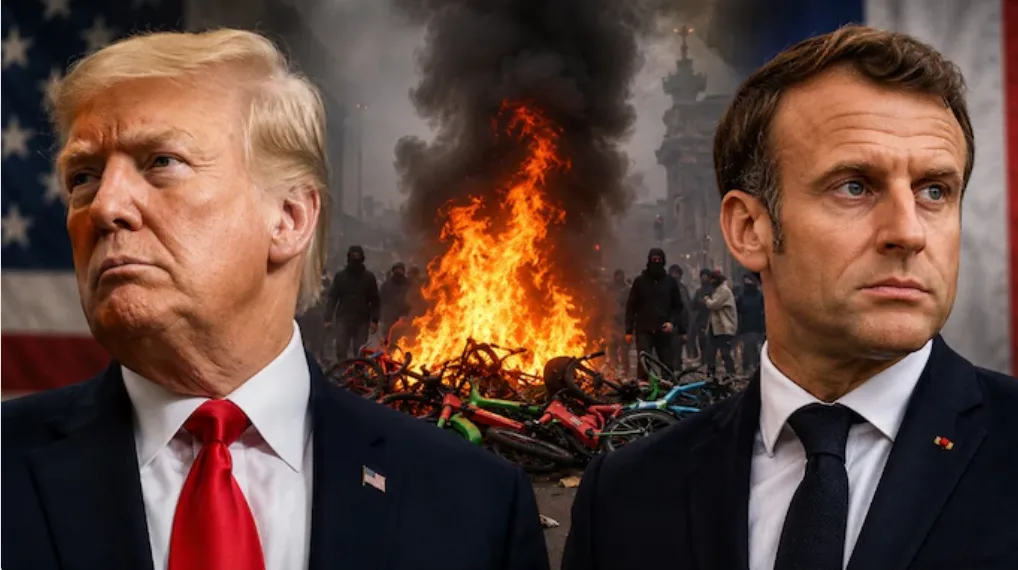
US President Donald Trump also reacted to the developments, using the situation to criticise the Democratic Party’s immigration policies.

According to Fox News, Trump said the United States could face a similar situation if Democrats return to power, using the events in Ceuta as a warning about border security.

Latest world news

PM Modi meets Japanese Defence Minister, pushes India-Japan security ties

PM Modi met Japanese Defence Minister Shinjiro Koizumi in New Delhi and discussed strengthening India-Japan defence and security cooperation.

Published

on

Prime Minister Narendra Modi on Thursday, August 20, met Japanese Defence Minister Shinjiro Koizumi in New Delhi and discussed ways to further strengthen defence and security cooperation between India and Japan.

During the meeting, Modi outlined his vision for strengthening the India-Japan Special Strategic and Global Partnership and highlighted the importance of closer defence and security ties in promoting peace, stability and prosperity in the Indo-Pacific and beyond.

PM Modi recalls India-Japan summit discussions

During his meeting with Koizumi, Modi recalled his detailed discussions with Japanese Prime Minister Sanae Takaichi during her visit to India for the 16th India-Japan Annual Summit in July 2026.

The prime minister also appreciated the steady momentum in defence cooperation between the two countries.

According to a statement from the Prime Minister’s Office, Koizumi, who is on an official visit to India, called on Modi on Thursday.

Focus on defence cooperation and Make in India

Modi also highlighted opportunities for Japanese companies and startups to partner with Indian firms in the defence sector.

The discussions included possibilities for co-development and co-production under the Make in India initiative, according to the statement.

Later, Modi said in a post on X that he had an “excellent conversation” with Koizumi on deepening defence and security ties between India and Japan.

He said the Special Strategic and Global Partnership between the two countries is an important anchor for peace, stability and prosperity in the Indo-Pacific and beyond.

Japan reaffirms commitment to deeper ties

Koizumi briefed Modi on the progress of bilateral defence cooperation during the meeting.

The Japanese Defence Minister also reaffirmed Japan’s continued commitment to deepening ties with India, the Prime Minister’s Office said.

Continue Reading

Latest world news

Trump warns Iran’s trading partners of economic action: India’s exports to take a hit?

Trump’s warning against countries supporting Iran could create payment, shipping and logistics challenges for Indian exporters.

Published

on

Donald Trump

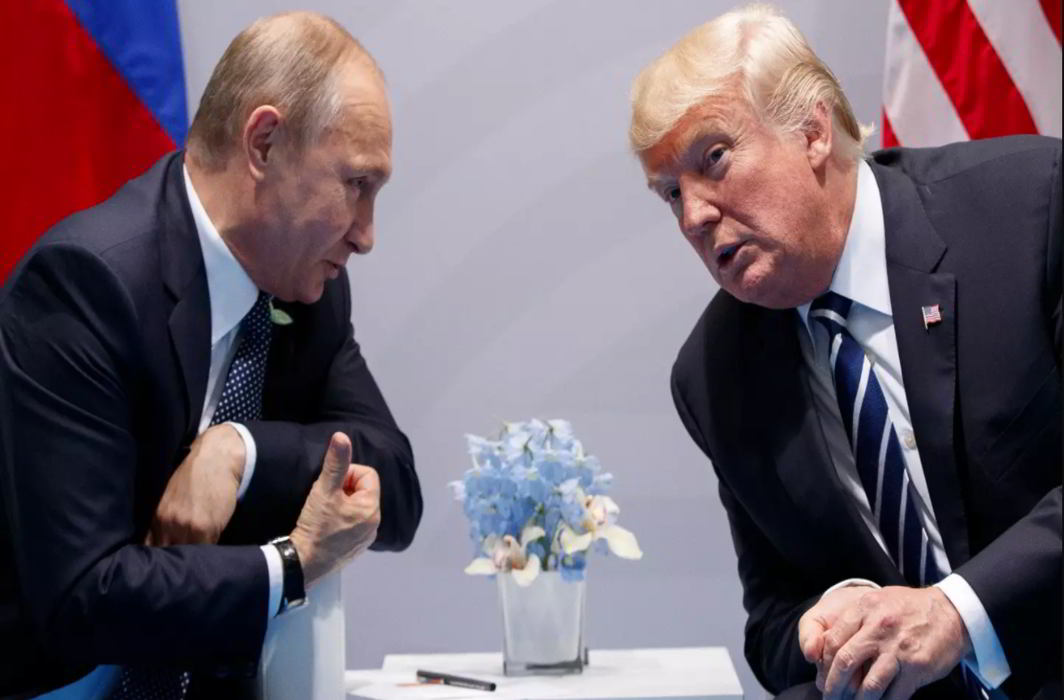
US President Donald Trump has warned countries, financial institutions and businesses against providing Iran with what he called an “economic lifeline”, saying those that continue supporting Tehran could face “TREMENDOUS” economic consequences.

Trump’s warning comes as the United States steps up economic pressure on Iran. For India, the development could have implications for exporters, particularly those shipping agricultural products, food items and pharmaceuticals to the Iranian market.

India’s trade with Iran has already declined sharply over the years. However, Indian exporters continue to maintain a trade surplus with Tehran, making the potential impact of tighter US sanctions an issue to watch.

What did Trump say about Iran?

Trump has announced what he described as the “most crushing economic operation” against Iran and said the US would pursue economic warfare and isolation against Tehran.

His warning extends beyond Iran itself. Trump said countries, financial institutions and businesses that provide Tehran with financial or commercial support could face severe consequences.

The activities cited in his warning include oil smuggling, cash transfers, currency swap lines, exchange houses, ship registries and front companies.

“This will be an ECONOMIC D-DAY, and we need all of our Allies to stand with the United States of America to isolate, and defeat, the Iran threat,” Trump said.

He also warned that countries allowing their financial institutions, businesses, airports or government entities to support Iran could face “TREMENDOUS Economic Consequences”.

How much does India trade with Iran?

India remains an important trading partner of Iran, although bilateral trade has fallen significantly from previous levels.

According to data from the Indian Embassy in Tehran cited in the report, India’s exports to Iran stood at $1.25 billion in 2025-26, while imports from Iran were around $370 million. This gave India a trade surplus of approximately $880 million.

The scale of bilateral trade is considerably smaller than it was several years ago.

In 2018-19, India-Iran trade was worth $17.03 billion. India’s imports from Iran stood at $13.53 billion that year, while exports were $3.51 billion.

By 2024-25, total bilateral trade had fallen to $1.68 billion.

This sharp decline means India’s overall economic exposure to Iran is now relatively limited compared with the size of the Indian economy. However, businesses that continue to depend on the Iranian market could still face difficulties if US sanctions and enforcement are tightened.

What does India export to Iran?

India’s trade relationship with Iran extends beyond energy.

Major Indian exports to Iran include:

  • Basmati rice
  • Tea
  • Sugar
  • Fresh fruits
  • Drugs and pharmaceuticals
  • Spices
  • Cereals and other food products

Iran also exports products including pistachios, dates, apples and kiwis to India.

Any disruption to this trade could therefore affect businesses involved in agricultural products, food items and pharmaceuticals.

Why could Trump’s warning affect Indian exporters?

The immediate risk is not necessarily that India’s entire trade with Iran will stop.

Instead, Indian exporters could face greater difficulties with payments, shipping and logistics if the US expands sanctions or increases enforcement against businesses and financial institutions dealing with Tehran.

Shipping disruptions and higher freight costs could add to the pressure. The Strait of Hormuz remains a key pressure point, while vessel rerouting, elevated freight rates and tighter container availability can increase the cost and complexity of international trade.

For exporters with direct exposure to Iran, such disruptions could make shipments more expensive and payments more complicated.

India’s exports are finding other markets

India’s broader export performance provides some cushion against a potential slowdown in trade with Iran.

India’s merchandise exports reached a record $44.24 billion in July, representing a 19.6 per cent increase from a year earlier, according to the figures cited in the report.

Engineering goods exports rose 17.7 per cent to $12.24 billion, while electronics exports jumped 57.4 per cent to around $5.9 billion.

Exports to the Middle East also increased 8.6 per cent to $5.7 billion.

India has also been expanding its trade across several other markets. In July, exports to China increased 64.57 per cent year-on-year to $2.2 billion, while shipments to Singapore rose 83.7 per cent to $1.6 billion.

Exports to the US increased 12.85 per cent to $9.02 billion.

The diversification of India’s export markets could help businesses reduce their dependence on individual markets if geopolitical tensions disrupt trade with Iran.

Will Trump’s Iran warning hurt India?

Trump’s warning could affect Indian exporters doing business with Iran through higher shipping costs, payment complications and weaker demand if economic pressure on Tehran intensifies.

The impact is likely to be more significant for businesses with direct exposure to the Iranian market than for the Indian economy as a whole.

India-Iran trade has already contracted substantially from its earlier levels. With Indian exporters increasingly accessing markets across regions including ASEAN, Africa, South Asia and North-East Asia, India may be better placed to absorb the impact of any further disruption in Iran trade.

Continue Reading

Latest world news

India-Nepal military ties in focus as Army Chief General Dhiraj Seth meets Nepal PM

Indian Army Chief General Dhiraj Seth met Nepal PM Balendra Shah in Kathmandu and discussed mutual interests and ways to strengthen bilateral military ties.

Published

on

Indian Army Chief General Dhiraj Seth on Tuesday met Nepal Prime Minister and Defence Minister Balendra Shah in Kathmandu, with the two sides discussing matters of mutual interest and ways to strengthen military-to-military relations.

The meeting took place at the Office of the Prime Minister and Council of Ministers in Singha Durbar. Indian Ambassador to Nepal Naveen Srivastava was also present.

According to sources at the Prime Minister’s secretariat, discussions focused on bilateral interests and strengthening military relations between the two neighbouring countries.

General Dhiraj Seth’s Nepal visit

General Seth is on a four-day official visit to Nepal at the invitation of Nepal Army chief General Ashok Raj Sigdel. During the visit, he was conferred the honorary rank of General of the Nepali Army by President Ramchandra Paudel at a ceremony on Monday.

India and Nepal have followed a longstanding tradition since 1950 of conferring the honorary rank of General on each other’s army chiefs. The practice reflects the reciprocal military ties between the two countries.

General Seth also held bilateral talks with General Sigdel at the Nepal Army Headquarters on Monday. The discussions covered matters of mutual interest.

On Tuesday, General Seth also offered prayers at the Pashupatinath Temple in Kathmandu, according to Nepal Army sources.

India-Nepal ties amid border concerns

The meeting comes amid some unease in relations between India and Nepal, including differences over the Lipulekh, Limpiyadhura and Kalapani areas.

Earlier this year, Nepal Prime Minister Balendra Shah said in Parliament that he had learnt about Nepal’s territories being “encroached” upon by India. He also said Kathmandu was discussing the longstanding border issue with India and was in contact with China and the UK.

New Delhi subsequently rejected any role for third parties in resolving the India-Nepal boundary dispute.

Nepal and India have traditionally maintained close political, economic and people-to-people ties. Shah has not yet visited either India or China as prime minister, while Nepal’s Foreign Minister Shisir Khanal visited New Delhi and Beijing in June.

Earlier this month, Shah also held a one-on-one meeting with Indian Ambassador Naveen Srivastava and stressed the importance of strengthening Nepal’s historic relationship with India.

The Indian Embassy in Kathmandu said General Seth’s visit reaffirmed the “unique and time-tested defence relations” between India and Nepal, rooted in shared values, mutual trust and longstanding military-to-military ties.

Continue Reading

Trending

© Copyright 2022 APNLIVE.com