English हिन्दी
Connect with us

Latest world news

China warns US over Taiwan issue, says don’t play with fire

Published

on

China US trade war

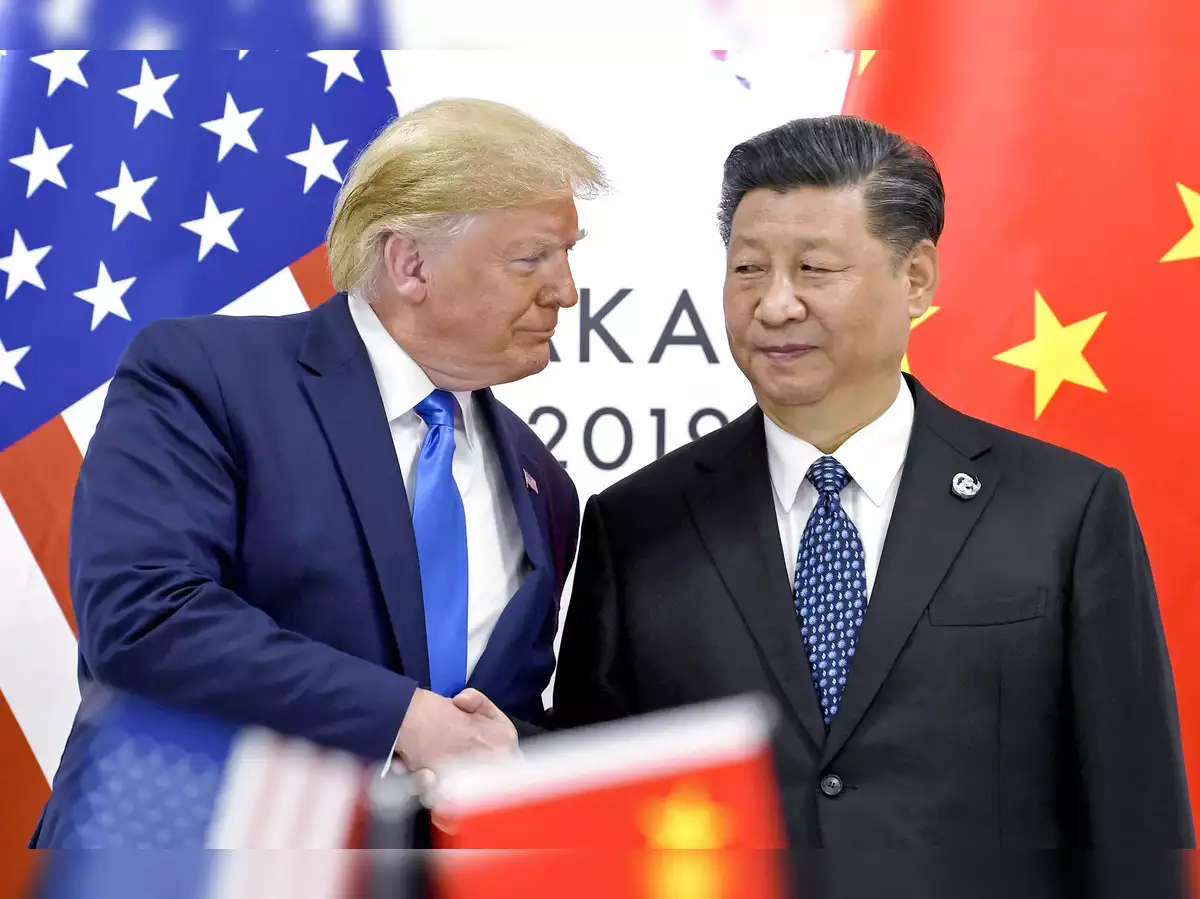
China on Sunday issued a stern warning to the United States, urging it to “avoid playing with fire” over Taiwan, and lodged formal protests with Washington in response to remarks made by US Defence Secretary Pete Hegseth at the Shangri-La Dialogue in Singapore.

Hegseth claimed that China was “credibly preparing” to use military force to disrupt Asia’s power balance, accusing the Chinese military of developing capabilities for a potential invasion of Taiwan and conducting rehearsals for such an operation.

A Chinese Foreign Ministry spokesperson condemned Hegseth’s statements, saying, “Hegseth ignored the region’s calls for peace and development, promoting a Cold War mindset and bloc confrontation.

His defamatory allegations vilify China and falsely portray it as a threat.” China expressed “strong dissatisfaction” and “firm opposition,” stating it had made “solemn representations” to the US. The spokesperson added, “The US is the true global hegemon and the primary destabilising force in the Asia-Pacific.”

The ministry accused the US of deploying offensive weapons in the South China Sea to advance its “Indo-Pacific Strategy,” escalating tensions and turning the region into a “powder keg,” which has caused alarm among neighbouring countries.

It reiterated that Taiwan is an internal matter for China, asserting, “No foreign nation has the right to interfere. The US must abandon any notion of using Taiwan as a tool to contain China and refrain from reckless actions.”

China views Taiwan as a breakaway province, while Taipei maintains its independence. Beijing dismissed concerns about restrictions on freedom of navigation or overflight in the South China Sea, stating it has “never” been an issue.

The ministry emphasised China’s preference for resolving disputes through dialogue and consultation while safeguarding its territorial sovereignty and maritime rights legally.

Labelling the US as the chief disruptor of peace in the South China Sea, China called on Washington to respect regional efforts to maintain stability, cease actions that undermine peace, avoid inflaming conflicts, and refrain from further escalating tensions.

Continue Reading

Latest world news

US-Iran talks move closer as $300 billion investment proposal emerges

The United States and Iran are said to be nearing a preliminary agreement that could include sanctions relief, access to frozen Iranian assets, a Lebanon ceasefire framework and a proposed $300 billion reconstruction-linked investment plan.

Published

on

The United States and Iran are reportedly edging closer to a preliminary agreement that could temporarily ease tensions in the Middle East while opening the door for wider negotiations on Iran’s nuclear programme, sanctions relief and regional security.

According to reports, the evolving framework may include discussions around a proposed $300 billion reconstruction and investment mechanism for Iran if a final agreement is eventually reached. The proposal is said to involve international investment support facilitated with US backing.

Lebanon and Strait of Hormuz among major discussion points

One of the key elements under discussion reportedly concerns reducing hostilities involving Israel and Hezbollah in Lebanon. The issue has emerged as a sensitive component of the broader negotiations, especially amid continued military activity in the region.

The talks are also focused on restoring commercial shipping movement through the Strait of Hormuz, a globally significant energy corridor disrupted during the ongoing conflict. Reports suggest Iran may be expected to help restore safe maritime navigation, while the United States could gradually ease aspects of its blockade depending on progress during negotiations.

Sanctions relief and frozen assets under consideration

Negotiators are also reportedly discussing phased sanctions relief and potential access to billions of dollars in Iranian funds frozen abroad. Iran has long demanded the release of such assets as part of any broader understanding with Washington.

The draft understanding is also expected to include commitments related to Iran’s nuclear activities, including further negotiations on enriched uranium stockpiles and assurances linked to nuclear weapons development.

Key differences still remain unresolved

Despite signs of progress, several differences reportedly remain unresolved between the two sides. Questions continue over the exact wording of the proposed framework, the duration of any ceasefire arrangement and the timeline for easing restrictions in the Strait of Hormuz.

Reports also indicate that mediation efforts involving regional actors, including Pakistan and Qatar, have played a major role in facilitating indirect talks between Washington and Tehran.

While officials from both sides have signalled progress, no final agreement has yet been formally announced.

Continue Reading

Latest world news

US carries out fresh strikes in Iran, downing drones near strategic Strait of Hormuz

The US military launched overnight defensive strikes targeting an Iranian military facility and shot down four attack drones near the Strait of Hormuz, highlighting the vulnerability of ongoing peace negotiations.

Published

on

Donald Trump statement

The US military launched overnight strikes inside Iran, targeting a military installation and intercepting multiple attack drones near the critical Strait of Hormuz. The operation comes amid intense diplomatic efforts to end a three-month-old war that has severely impacted global energy markets.

According to media reports citing US officials who spoke on condition of anonymity, American forces shot down four one-way attack drones. Additionally, a ground control facility located in the southern Iranian port city of Bandar Abbas—which was reportedly preparing to launch a fifth drone—was struck. Local residents in Iran reported hearing three distinct explosions east of Bandar Abbas around 1:30 AM local time, prompting the temporary activation of local air defense systems.

Focus on maintaining the ceasefire

US Central Command later confirmed the targeted actions, stating that the intercepted drones posed an immediate threat to American personnel and commercial shipping vessels operating near the strategic waterway. Officials described the intervention as a measured, defensive response aimed strictly at safeguarding international transit routes and preserving the active, yet fragile, ceasefire arrangement.

The Strait of Hormuz serves as a vital artery for global commerce, accounting for nearly one-fifth of global oil shipments before hostitilies erupted on February 28.

Strains on ongoing diplomatic talks

These recent military developments occurred against the backdrop of sensitive negotiations aimed at formalizing a permanent peace agreement. Earlier this week, the US conducted similar self-defense strikes against vessels allegedly deployed to lay naval mines, drawing sharp condemnation from Tehran, which labelled those actions a breach of the ceasefire.

Diplomatic tensions were further compounded on Wednesday when US President Donald Trump publicly dismissed reports claiming that Iran and Oman would jointly manage shipping operations through the Strait of Hormuz under a proposed peace deal, asserting instead that the international waterway must remain entirely open.

Continue Reading

Latest world news

Byju’s founder Byju Raveendran sentenced to six months in jail by Singapore court over asset orders

In a major setback, a Singapore court has sentenced Byju’s founder Byju Raveendran to six months in prison for contempt after he failed to comply with multiple court orders regarding his assets.

Published

on

In a massive legal blow to the founder of the failed Indian educational technology firm Think & Learn Pvt (better known as Byju’s), a Singapore court has sentenced Byju Raveendran to six months in jail for contempt of court.

The court ordered the jail term after concluding that Raveendran had deliberately disobeyed multiple judicial directives regarding his personal assets, dating as far back as April 2024.

Disobedience of asset orders leads to prison sentence

According to people familiar with the matter, the Singapore court has instructed Raveendran to immediately surrender himself to the officials. Alongside the six-month prison sentence, the Byju’s founder has been ordered to pay legal costs amounting to S$90,000 (approximately $70,500). Furthermore, he has been mandated to provide documents verifying his official legal ownership of Beeaar Investco Pte, a corporate entity that holds equity shares in a related firm.

At the time of reporting, it remains unclear whether Raveendran is currently residing in Singapore or located elsewhere, and he did not immediately respond to requests for comment.

Escalating global legal battles

This sentencing marks the latest and perhaps most severe setback for the entrepreneur, who once achieved billionaire status amid a massive wave of global capital flowing into Indian start-ups. Today, Raveendran is being rigorously pursued by foreign investors across international jurisdictions. This includes intensifying legal battles in the United States, where global lenders are actively trying to recover heavy financial losses stemming from a defaulted $1.2 billion loan.

Media reports indicate that the ongoing Singapore court proceedings represent a broadening web of legal and financial crises following the operational collapse of the once-celebrated edtech giant.

Continue Reading

Trending

© Copyright 2022 APNLIVE.com