English हिन्दी
Connect with us

Latest world news

US eases Russian oil tariff proposal, offering relief to India and China

A revised US Senate Russia sanctions bill lowers the proposed tariff on countries importing Russian energy from 500% to 100%, easing potential trade pressure on India and China.

Published

on

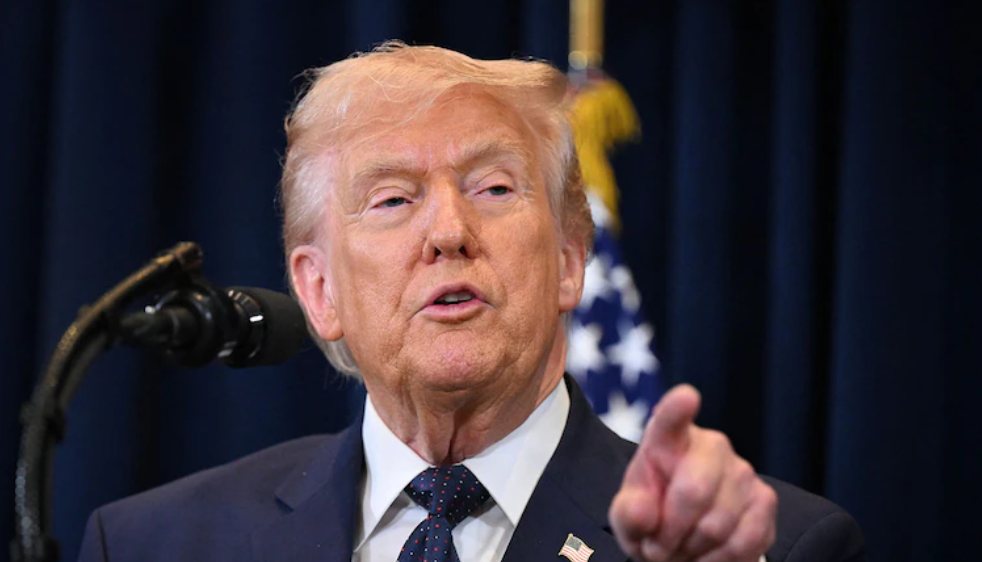
Donald Trump

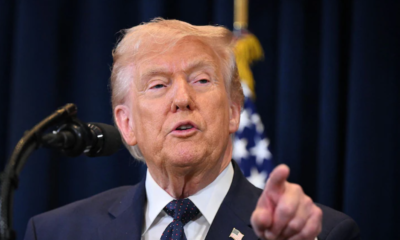
India and China have received a significant respite after US lawmakers revised a bipartisan Russia sanctions bill, reducing the proposed tariff on countries importing Russian energy from a blanket 500% to a maximum of 100%.

The revised legislation, backed by late Republican Senator Lindsey Graham and Democratic Senator Richard Blumenthal, would authorise US President Donald Trump to impose tariffs of up to 100% on major buyers of Russian oil and natural gas if the bill becomes law.

Revised bill lowers tariff proposal

The original proposal sought to impose a 500% tariff on countries continuing to purchase Russian energy. Under the updated version, the tariff has been capped at 100% for the top purchasers of Russian oil and natural gas.

The legislation is intended to increase economic pressure on Moscow over its ongoing war in Ukraine by discouraging countries from relying on Russian energy supplies.

India and China are among the world’s largest buyers of Russian crude oil. Other major purchasers include Slovakia, Hungary and Azerbaijan. In the natural gas segment, China, France, Japan, Hungary and Belgium rank among the leading importers.

Exemptions included in updated draft

The revised bill introduces an exemption for countries that import less than 15% of Russia’s natural gas exports and are making substantial efforts to reduce those imports. If the provision is retained, countries such as Japan, France, Hungary and Belgium could qualify for relief.

The legislation also proposes sanctions targeting Russia’s shadow tanker fleet, major financial institutions including the Central Bank of Russia, and key state-backed energy projects such as Yamal LNG and Arctic LNG projects 1, 2 and 3.

Additionally, the bill allows the US President to waive sanctions if doing so is considered to be in the national interest.

Negotiations led to softer provisions

According to a Senate aide quoted by media, several provisions were moderated following months of negotiations aimed at securing support from President Donald Trump.

The aide said the revised bill represents the version that has broad backing and is most likely to advance through Congress while maintaining pressure on Russia.

The legislation, originally introduced in April 2025 by Lindsey Graham and Richard Blumenthal, is expected to attract additional bipartisan support.

Trump optimistic about passage

President Trump said at the White House that the legislation could also be expanded to include sanctions targeting Iran and Hezbollah, describing it as a potentially significant measure.

He expressed confidence that the bill could eventually become law, describing it as an initiative that Senator Graham strongly supported.

However, Senator Blumenthal urged lawmakers to move ahead with the current version instead of broadening its scope, arguing that additional targets could complicate the bill’s progress.

Latest Science News

Indian-origin astronaut Anil Menon begins first mission to International Space Station

Indian-origin NASA astronaut Anil Menon has launched aboard Soyuz MS-29 on his first mission to the International Space Station, where he is expected to spend around eight months conducting research.

Published

on

Indian-origin NASA astronaut Anil Menon has embarked on his first journey into space after successfully launching aboard Russia’s Soyuz MS-29 spacecraft to the International Space Station (ISS).

The mission lifted off from the historic Baikonur Cosmodrome in Kazakhstan at 8:17 PM on Tuesday. Menon was accompanied by Russian cosmonauts Pyotr Dubrov and Anna Kikina as the three-member crew began their expedition to the orbiting laboratory.

Crew to spend about eight months aboard ISS

The Soyuz MS-29 spacecraft is expected to dock with the International Space Station a little over three hours after launch. Once aboard the ISS, the crew will carry out a range of scientific research and technology demonstration projects during their mission.

The expedition is scheduled to last approximately eight months, with the crew expected to return to Earth in 2027 after completing their planned activities in orbit.

Menon’s maiden spaceflight marks a significant milestone in his astronaut career as he joins the International Space Station crew for long-duration research and operational work.

Continue Reading

Latest world news

India launches official campaign for UN Security Council 2028-29 seat with SHANTI initiative

India has formally launched its campaign for a non-permanent UN Security Council seat for the 2028-29 term, with External Affairs Minister S Jaishankar unveiling the ‘SHANTI’ initiative at the UN headquarters.

Published

on

UN Security Council

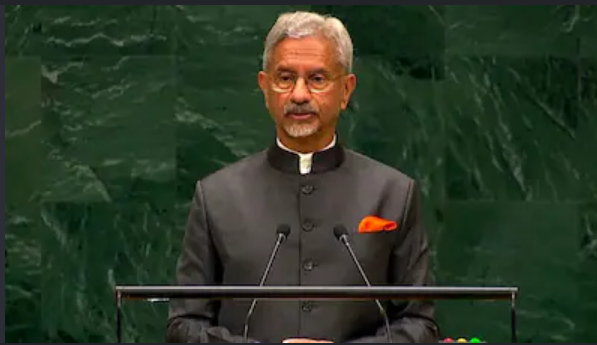
India on Monday formally launched its campaign for a non-permanent seat on the United Nations Security Council (UNSC) for the 2028-29 term, with External Affairs Minister S Jaishankar unveiling the country’s official campaign, ‘SHANTI: India for the United Nations Security Council 2028-29. Norms, Trust, Integrity,’ at the UN headquarters in New York.

The launch event was attended by UN ambassadors, diplomats and officials. India said its engagement with the United Nations is guided by the principle of ‘SHANTI’, which stands for Securing Holistic Advancement through Norms, Trust, Integrity.

India previously served as a non-permanent member of the 15-nation Security Council during the 2021-22 term.

India to contest against Tajikistan for Asia-Pacific seat

The election for the 2028-29 term is scheduled to take place in June next year, when India and Tajikistan will compete for the lone non-permanent seat allocated to the Asia-Pacific Group.

During his visit, Jaishankar is also scheduled to meet UN Secretary-General Antonio Guterres. The New York visit follows his tour of Qatar, Bahrain, Kuwait and Oman from July 5 to July 10. He will later travel to Brussels to attend the third India-EU Trade and Technology Council meeting and hold discussions with European Union and Belgian counterparts on July 14-15.

India reiterates demand for UN Security Council reforms

India’s campaign comes at a time of ongoing global geopolitical challenges, including the Ukraine war, the Gaza conflict and the US-Israel military action against Iran.

Last week, Prime Minister Narendra Modi, while addressing the Parliament of Indonesia, said the changing global order requires developing nations to have greater participation in international decision-making. He reiterated that reforms to the UN Security Council can no longer be delayed.

India has consistently advocated for comprehensive reforms of the Security Council, arguing that the body, established in 1945, no longer reflects present-day geopolitical realities. New Delhi has maintained that it deserves permanent membership and has called for expansion in both the permanent and non-permanent categories.

India has also cautioned that expanding only the non-permanent membership without addressing the structure of permanent members would not substantially reform the Council’s decision-making process.

Last month, India’s Permanent Representative to the United Nations, Ambassador Harish Parvathaneni, said the principle that “nothing is agreed until everything is agreed” should not be used to delay long-pending reforms. He also accused supporters of maintaining the status quo of using the approach to preserve existing inequities within the Security Council.

Continue Reading

Latest world news

US-Iran tensions escalate as Tehran claims drone fleet destroyed in Bahrain

Iran claimed it destroyed a US military drone fleet in Bahrain after fresh American strikes targeted multiple sites across the country, further escalating tensions in the Gulf region.

Published

on

The military confrontation between the United States and Iran intensified on Sunday as both countries exchanged fresh attacks across the Gulf region. Iran claimed it destroyed a US military drone fleet in Bahrain after Washington launched another round of strikes targeting multiple military sites inside the country.

The latest escalation comes amid growing tensions over the strategically important Strait of Hormuz, a key global shipping route for oil and natural gas exports.

US says fresh strikes targeted Iran’s military capabilities

The US Central Command (CENTCOM) said it carried out precision strikes on dozens of targets across Iran to weaken Tehran’s ability to threaten international shipping passing through the Strait of Hormuz.

According to the US military, the targets included Iranian air defence systems, coastal radar installations, missile and drone infrastructure, and small military boats. CENTCOM also said it deployed fighter aircraft, naval vessels, one-way attack aerial drones and one-way attack sea drones during the operation.

US officials said the latest offensive followed an alleged attack by Iran’s Islamic Revolutionary Guard Corps (IRGC) on a commercial vessel transiting the Strait of Hormuz. Washington has maintained that the strikes were intended to protect maritime security in the region.

US President Donald Trump also defended the operation, saying the American military had carried out extensive strikes against Iranian targets.

Iran claims attacks on US military bases

Iran responded by announcing strikes on several American military installations across the Gulf. Iranian state media reported that US bases in Bahrain, Kuwait, Qatar, Jordan and Oman came under attack as Tehran expanded its military response.

Iran’s IRNA news agency claimed that drone operations were continuing against American positions and alleged that an entire US military drone fleet stationed in Bahrain had been destroyed. However, the United States has not confirmed this claim.

In a statement, the IRGC said its aerospace forces targeted helicopter maintenance facilities, a hangar housing a P-8 surveillance aircraft and a US military drone command-and-control centre. Iranian media also reported attacks on defence systems, bunkers and support shelters at US facilities in Kuwait, including the Ali Al Salem and Ahmad Al-Jaber air bases.

Casualties reported in Iran

Iranian authorities said at least one person was killed and four others were injured after a projectile struck an agricultural water pumping station in Mahshahr in Khuzestan province.

According to local officials, the person killed was a security guard stationed at the facility. Iranian authorities said the attack occurred during the early hours of Sunday.

Explosions reported across multiple provinces

Iranian media reported explosions in several provinces following the latest US strikes.

In Hormozgan province, blasts were reported in Jask, Sirik, Qeshm Island and Bandar Abbas, where several radar installations and military facilities are located.

Explosions were also reported in Omidiyeh, Mahshahr, Behbahan, Dezful and areas near Ahvaz in Khuzestan province. Additional strikes were reported near Chabahar in Sistan-Baluchestan province and around Khondab in Markazi province, where Iran’s heavy water facilities are situated.

Diplomatic efforts face setback

Tehran said the latest US attacks had rendered months of diplomatic efforts ineffective, signalling a further deterioration in relations between the two countries.

The latest exchange of strikes has heightened concerns over regional stability and the security of maritime traffic through the Strait of Hormuz, one of the world’s most important energy corridors.

Continue Reading

Trending

© Copyright 2022 APNLIVE.com