English हिन्दी
Connect with us

Latest world news

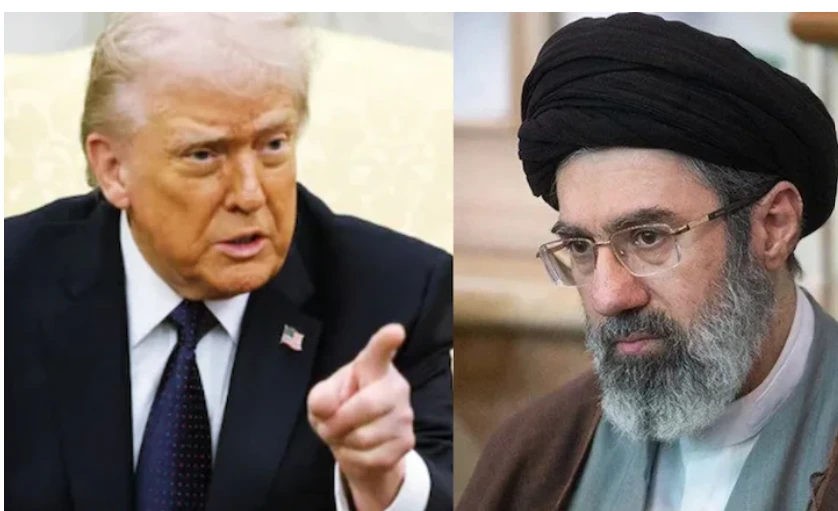
US-Iran talks move closer as $300 billion investment proposal emerges

The United States and Iran are said to be nearing a preliminary agreement that could include sanctions relief, access to frozen Iranian assets, a Lebanon ceasefire framework and a proposed $300 billion reconstruction-linked investment plan.

Published

on

The United States and Iran are reportedly edging closer to a preliminary agreement that could temporarily ease tensions in the Middle East while opening the door for wider negotiations on Iran’s nuclear programme, sanctions relief and regional security.

According to reports, the evolving framework may include discussions around a proposed $300 billion reconstruction and investment mechanism for Iran if a final agreement is eventually reached. The proposal is said to involve international investment support facilitated with US backing.

Lebanon and Strait of Hormuz among major discussion points

One of the key elements under discussion reportedly concerns reducing hostilities involving Israel and Hezbollah in Lebanon. The issue has emerged as a sensitive component of the broader negotiations, especially amid continued military activity in the region.

The talks are also focused on restoring commercial shipping movement through the Strait of Hormuz, a globally significant energy corridor disrupted during the ongoing conflict. Reports suggest Iran may be expected to help restore safe maritime navigation, while the United States could gradually ease aspects of its blockade depending on progress during negotiations.

Sanctions relief and frozen assets under consideration

Negotiators are also reportedly discussing phased sanctions relief and potential access to billions of dollars in Iranian funds frozen abroad. Iran has long demanded the release of such assets as part of any broader understanding with Washington.

The draft understanding is also expected to include commitments related to Iran’s nuclear activities, including further negotiations on enriched uranium stockpiles and assurances linked to nuclear weapons development.

Key differences still remain unresolved

Despite signs of progress, several differences reportedly remain unresolved between the two sides. Questions continue over the exact wording of the proposed framework, the duration of any ceasefire arrangement and the timeline for easing restrictions in the Strait of Hormuz.

Reports also indicate that mediation efforts involving regional actors, including Pakistan and Qatar, have played a major role in facilitating indirect talks between Washington and Tehran.

While officials from both sides have signalled progress, no final agreement has yet been formally announced.

Latest world news

US pauses visa interviews worldwide amid new screening training

The US has paused or rescheduled visa appointments worldwide as consular officers undergo training focused on comprehensive immigration screening.

Published

on

Donald Trump

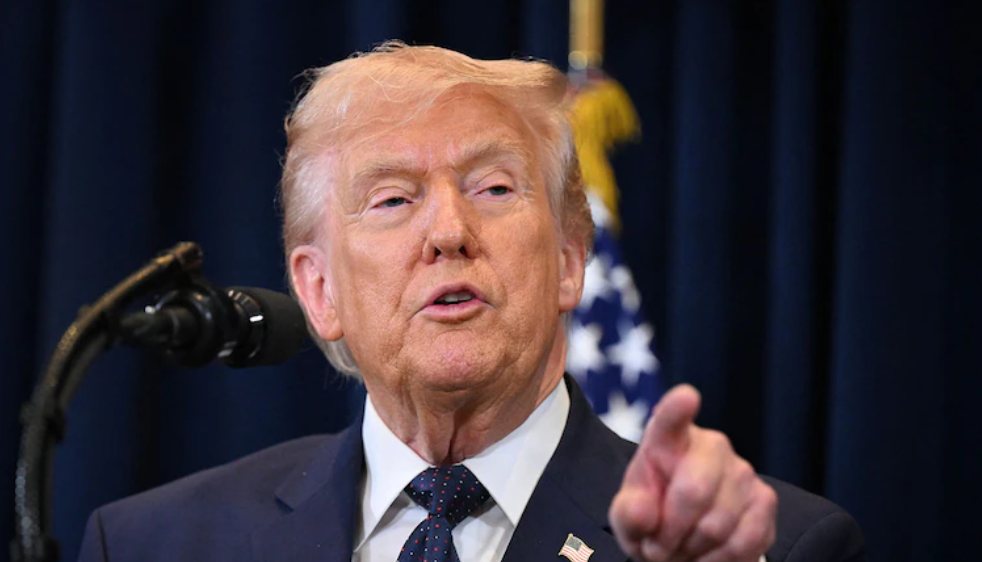
The Trump administration has paused or rescheduled visa appointments at US embassies and consulates worldwide as the State Department conducts a global training initiative for consular officers.

The State Department said visa service appointments are being adjusted to accommodate the training across its overseas diplomatic posts. The initiative is aimed at helping officers screen applicants who may be considered likely to become dependent on US public benefits and at ensuring visa applications are evaluated comprehensively and consistently.

There is currently no specific timeline for how long the changes to visa appointments will continue.

Visa applicants receive rescheduling notices

Some immigrant visa applicants who already had interviews scheduled at US embassies and consulates have reportedly received emails informing them that their appointments would be rescheduled.

The applicants were told that they would receive further communication regarding a new interview date.

The development comes as the Trump administration continues its broader immigration crackdown, which has included visa and green card revocations and rejection of applications on various grounds.

Trump administration steps up immigration scrutiny

The administration has also begun a White House review of a proposal to overhaul the H-1B visa programme. The proposal has been classified as economically significant and could affect the employment-based immigration route used by thousands of Indian professionals.

Separately, the administration plans to revoke the visas of around 200,000 foreigners who entered the US for tourism or business but later sought to remain in the country by applying for asylum, according to the report.

The immigration crackdown has also faced legal challenges. A US judge recently struck down a policy that suspended the issuance of immigrant visas to applicants from 75 countries, ruling that the policy exceeded Secretary of State Marco Rubio’s statutory authority.

Continue Reading

Latest world news

Iran pushes back against new US sanctions, warns of possible retaliation

Iran has warned of retaliation after the US widened economic sanctions, with Tehran saying it is prepared to counter Washington’s pressure and maintain ties with major trading partners.

Published

on

Iran has threatened retaliation following the United States’ decision to widen economic sanctions against Tehran, with senior officials insisting that the new measures will not easily isolate the country from its major trading partners.

Iranian Parliament Speaker Mohammad Bagher Ghalibaf dismissed the latest US pressure, arguing that Washington was not in a position to further restrict Iran’s economic ties with other nations. He also said Iran’s trading partners had indicated that they would not be swayed by the US statements.

The comments came after US Treasury Secretary Scott Bessent announced measures aimed at cutting off Iran’s economic lifeline. He warned that countries continuing to trade with Iran could eventually face restrictions that would affect their access to the dollar-based financial system.

However, Bessent did not identify the countries that could face such penalties or specify when they would be imposed. The US Treasury Department separately announced sanctions against 60 individuals, entities and vessels.

Notably, the sanctions list did not include Chinese financial institutions suspected of helping facilitate Iran’s oil trade. China remains Iran’s biggest trading partner.

Tehran says it is ready to counter US pressure

Following the US announcement, Ghalibaf said Iran’s partners were not taking Washington’s latest statements seriously.

Iranian Economy Minister Ali Madanizadeh also said Tehran was “fully prepared” to deal with the expanded sanctions. He argued that Iran had developed its own economic tools after years of sanctions and warned that its response could extend beyond defence.

Madanizadeh further said that neither China nor Russia had accepted the US measures and predicted that other countries would also resist Washington’s pressure.

Iran has also warned of possible military retaliation and indicated that it could further reduce oil exports from the Gulf if its infrastructure comes under threat.

Iran warns of attacks on US interests and energy routes

Brigadier General Hossein Mohebbi, a spokesperson for Iran’s Islamic Revolutionary Guard Corps, warned that Iran could deliver heavy blows against US vital interests and energy chokepoints if its infrastructure is threatened.

The warning comes amid continued tensions involving shipping and energy routes in the region. Tehran has previously indicated that it could use its military capabilities and control over strategically important areas to respond to threats.

What is the current situation in the Iran conflict?

The conflict remains unresolved despite a reduction in major strikes in recent weeks. The US administration is continuing to pursue economic pressure against Tehran while also seeking ways to address Iranian attacks on ships in the Gulf and, through its allies, in the Red Sea.

The conflict has placed further pressure on energy markets, while years of US and international sanctions have already caused significant economic difficulties for Iran.

Iran’s conventional military capabilities have also been affected by the conflict. However, Tehran is reported to retain missile and drone capabilities that could threaten Gulf neighbours and shipping through the Strait of Hormuz.

The condition of Iran’s nuclear programme remains unclear, while the US and Israel continue to seek its dismantling.

Continue Reading

Latest world news

US plans proposed $103,265 H-1B fee hike, Indians among those affected

The US is planning to propose a $103,265 H-1B visa fee, along with possible changes to F-1 OPT and the H-1B grace period.

Published

on

donald-trump

The US Department of Homeland Security is planning to propose a major increase in the H-1B visa fee to $103,265, according to a notice posted in the Federal Register on Monday.

The proposed changes could significantly increase the cost of employing foreign nationals in the United States if they are implemented. They could also affect students moving from universities into employment and employers sponsoring H-1B workers.

The proposals are particularly significant for Indians, who accounted for 71 per cent of H-1B beneficiaries among the petitions approved by the US Citizenship and Immigration Services in 2024.

Proposed H-1B and OPT fees

The Trump administration is planning new fees related to the H-1B and F-1 Optional Practical Training (OPT) programmes.

According to immigration services firm Fragomen, the proposed rules have already moved through the White House Office of Management and Budget (OMB).

Fragomen said a proposed rule concerning an OPT fee was sent to the OMB on August 20 and was under review. A separate proposal concerning a fee on certain H-1B petitions was received by the OMB and cleared review on August 19.

The contents of the proposed regulations have not yet been officially released.

Fragomen also noted that the Department of Homeland Security could propose a $100,000 fee on OPT applications. The proposed H-1B fee could also be linked to ongoing legal proceedings concerning the administration’s previously blocked $100,000 H-1B petition fee.

Indians account for over 70% of H-1B beneficiaries

The proposed fee increase could have a substantial impact on Indian nationals because they make up the largest share of H-1B beneficiaries.

US Citizenship and Immigration Services approved 399,402 H-1B petitions in 2024, with Indian-born beneficiaries accounting for 71 per cent of them.

If the proposed regulations are eventually implemented, the higher costs could affect foreign workers as well as US employers that sponsor H-1B employees.

More than 5.2 million people of Indian origin live in the United States, according to recent estimates based on US Census data.

Proposed end to 60-day H-1B grace period

The potential fee increases come alongside another proposed immigration change affecting H-1B workers.

Earlier this month, the Department of Homeland Security proposed eliminating the existing 60-day grace period for certain H-1B workers whose employment ends before their authorised period of stay expires.

Under the proposal, affected workers and their dependants could be required to leave the US almost immediately if the regulation is finalised.

The proposed change would remove the existing 60-day grace period for certain workers and their dependants when the employment supporting their immigration status ends before their authorised stay expires.

Continue Reading

Trending

© Copyright 2022 APNLIVE.com