
Latest world news
Vatican top-diplomat visits inter-Korean border


Amidst ongoing efforts to bring peace in the Korean Peninsula with June 12 Singapore summit between US President Donald Trump and North Korean leader Kim Jong un preceded by two meetings between the top leaders of North and South Korea, Christian world leader has made entry into the peace process.
Archbishop Paul Richard Gallagher, the Vatican’s secretary for relations with states, visited the Roman Catholic Church of Military Ordinariate of Korea construction site at the inter Korean border village Panmunjom on Thursday and voiced optimism for the diplomacy to foster a lasting peace on the peninsula. He said “many good things” will be achieved despite challenges down the road.
Read More:West meets the East in historic summit in Singapore
The top Vatican diplomat delivered a message of hope for Koreans, as he toured the Joint Security Area (JSA) close to the heavily fortified inter-Korean border.
Responding to a question from a journalist associated with South Korea’s official Yonhap news agency, the Vatican official said, “Of course, it is a very historic period, a period of hope and the Holy Father is supporting that movement.”
 Archbishop Gallagher said, “We don’t have any doubt that there will be many challenges and many difficulties ahead, but the determination that the Korean people have always shown in determining their future, I am sure with the prayers and support of Christians and other men and women in good faith around the world that many good things will be achieved in the coming months. We pray for that.”
The Seoul based The Korean Times reports that Vatican official’s visit to the demilitarized zone between North and South Korea came amid “brisk diplomacy by Seoul and Washington to persuade Pyongyang to renounce its nuclear ambitions and work together to build a solid peace regime after years of the communist state’s provocations”.

Asked to offer a separate message for North Koreans, the diplomat said, “Humanity has always got to move forward. He said, “We move forward, facing our challenges. Whatever side of the border we may be on, whatever situation we find ourselves in, we have to try and work for advancing the development of society.”
Read More: India, major powers welcome Trump-Kim summit
“I am sure that there will be much good that will come in everything that is happening throughout the Korean Peninsula and around … with friendly countries and partners of Korea this time,” he added.
At the invitation of the South Korean government, Gallagher arrived in Seoul on Wednesday for a six-day trip, including talks with President Moon Jae-in, Foreign Minister Kang Kyung-wha and other top officials.

In 2014, Pope Francis appointed Gallagher the Vatican’s first British foreign minister. He was previously the Holy See’s ambassador to Guatemala and Australia.
Pope Francis is the 266th and current Pope and sovereign of the Vatican City State. He is the first from the Americans, the first from the Southern Hemisphere and the first pope from outside Europe since the Syrian Gregory III, who reigned in the 8th century.





Latest world news
S Jaishankar says India is a natural option for Russia amid Europe tensions
External Affairs Minister S Jaishankar said India remained a natural option for Russia as Moscow increasingly turned towards Asia amid strained relations with Europe. He highlighted the continuity of India-Russia ties and their significance for the balance of power in Asia.


Latest world news
Putin praises PM Modi, says he has very good ideas on Ukraine war
Russian President Vladimir Putin has praised Prime Minister Narendra Modi for repeatedly raising the need to end the Ukraine war, describing his ideas for a settlement as “very good”.

Latest world news
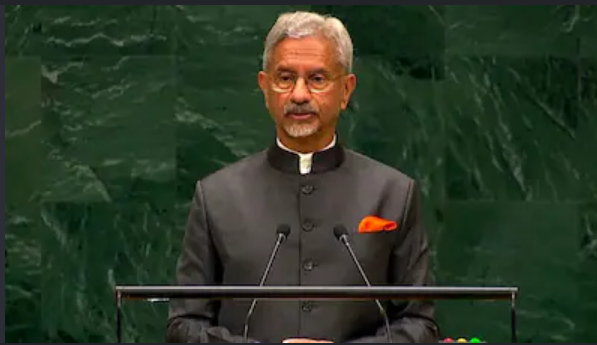
S Jaishankar calls Pakistan a “serial practitioner of terrorism” at UN
S Jaishankar criticised Pakistan at the UN General Assembly, referring to a “serial practitioner of terrorism” and warning against attempts to normalise terrorism.

Dhruv Rathee gets fresh summons in 2018 BJP IT cell video case

Nobody can browbeat judiciary, Chief Justice warns over Rahul Gandhi’s march

India-US trade deal first phase finalised, drafting underway

Election Commission orders voter roll revision in 17 states, UTs

Actor Imran Khan asked to leave India after CJP protest

Delhi Police offers 11-person limit for CJP’s Connaught Place protest
Actor Imran Khan asked to leave India after CJP protest
Election Commission orders voter roll revision in 17 states, UTs
India-US trade deal first phase finalised, drafting underway
Nobody can browbeat judiciary, Chief Justice warns over Rahul Gandhi’s march

Afghan Men Try To Hang With The Jet Engine Of The Aircraft in Kabul- Afghanistan News – Kabul News
Trending Top 10 News: 10000 Crore Fine on Flipkart, Apple to Launch Unique Feature, Hdfc Bank Job Ad

Trending Top 10 News: Nokia 6310, Apple sales, Bachpan ka Pyar Video Kid, Dainik Bhaskar IT Raid

Trending Top 10 News: Canada bans Indian flights, Rain in Delhi NCR, AIMIM Twitter hacked, Raj Kundra case

Trending Top 10 News: Shein India, Apple New Service, Pocket Oxygen, Oppo Launched New Phone
-
 India News13 hours ago
Dhruv Rathee gets fresh summons in 2018 BJP IT cell video case
-
 India News10 hours ago
Nobody can browbeat judiciary, Chief Justice warns over Rahul Gandhi’s march
-
 India News6 hours ago
India-US trade deal first phase finalised, drafting underway
-
 India News3 hours ago
Election Commission orders voter roll revision in 17 states, UTs
-
 India News3 hours ago
Actor Imran Khan asked to leave India after CJP protest
-
 India News2 hours ago
Delhi Police offers 11-person limit for CJP’s Connaught Place protest
