English हिन्दी
Connect with us

Latest world news

Trump may meet Xi in South Korea amid tariff tensions

US President Donald Trump is considering a South Korea visit for the APEC summit next month, where he may meet Chinese President Xi Jinping as tariff talks continue.

Published

on

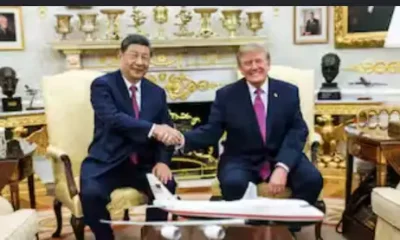
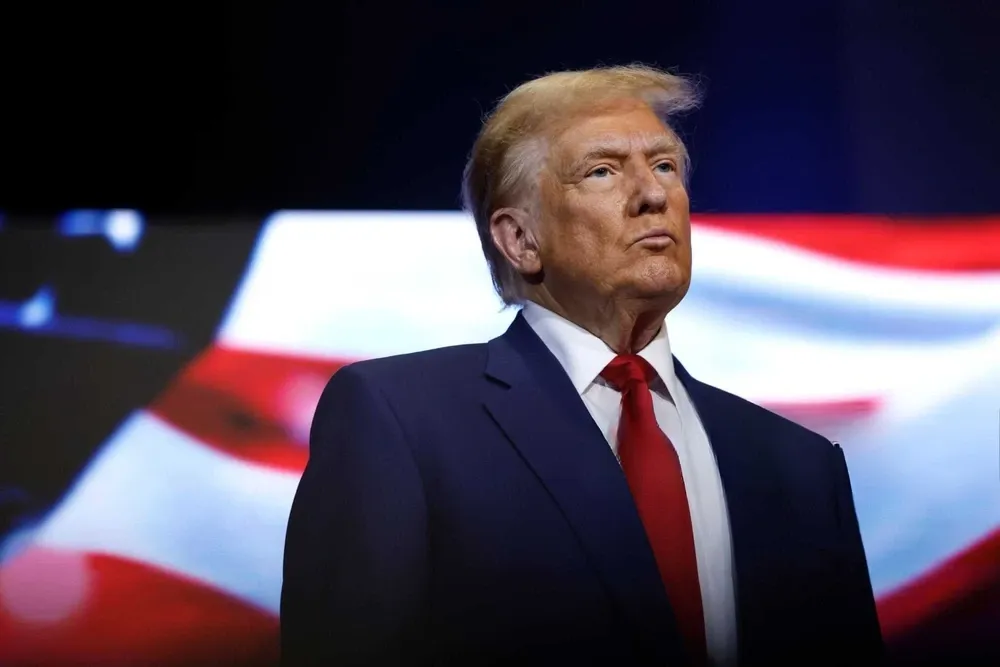
US President Donald Trump is considering a visit to South Korea next month, where he may hold a bilateral meeting with Chinese President Xi Jinping on the sidelines of the Asia-Pacific Economic Cooperation (APEC) summit, according to officials.

Talks on possible meeting with Xi Jinping

Officials said discussions are underway for a Trump-Xi meeting in Gyeongju, where the APEC summit will be held between late October and early November. However, no final decision has been made. The US administration views the summit as an opportunity to engage on trade, defence, and civil nuclear cooperation, while also exploring new avenues for economic investments in the US.

Kim Jong Un factor in play

Trump may also get an opportunity to meet North Korean leader Kim Jong Un, though his participation at the summit is uncertain. South Korean President Lee Jae Myung has already extended an invitation to Trump, suggesting that APEC could serve as a platform for renewed dialogue with Pyongyang.

During recent remarks, Trump said he was open to talks with Kim. “I will do that, and we’ll have talks. He’d like to meet with me,” Trump stated.

Tariffs and strained ties

The potential meeting comes amid ongoing trade tensions between Washington and Beijing. Trump imposed a 145% tariff on Chinese imports earlier this year, while China retaliated with a 125% levy on US goods. Though tariffs were set to return to peak levels last month, Trump signed an executive order pausing the increase until November as negotiations continue.

Trump’s remarks on China-Russia-India ties

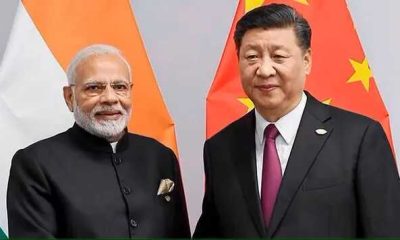
The move follows Trump’s criticism of a recent gathering in Beijing, where Xi hosted Kim Jong Un, Russian President Vladimir Putin, and Prime Minister Narendra Modi alongside China’s military parade. Trump reacted sharply on social media, writing, “Looks like we’ve lost India and Russia to deepest, darkest China. May they have a long and prosperous future together!”

Despite the rhetoric, Trump maintained that his personal ties with the leaders remain strong, saying, “My relationship with all of them is very good. We’re going to find out how good it is over the next week or two.”

Latest world news

Trump warns of new tariffs on India over US rice dumping concerns

US President Donald Trump has suggested fresh tariffs on India’s rice exports, citing concerns from American farmers and ongoing trade negotiations.

Published

on

US President Donald Trump has signalled the possibility of fresh tariffs on agricultural imports from India, raising concerns over rice shipments that he says are hurting American farmers. His remarks came during a White House meeting where he unveiled a multi-billion-dollar relief package for domestic growers, while criticising imports from India and other Asian suppliers.

India cited during discussion on US rice market pressures

Trump referred directly to India after a Louisiana producer described imported rice as damaging to southern farmers. When informed that Indian companies owned two major retail rice brands in the US, Trump responded that tariffs could “solve the problem in two minutes,” reiterating his belief that some countries were “dumping” products unfairly.

He argued that such measures were necessary to stabilise America’s farm economy, stating that domestic growers were facing pressure from low commodity prices and inflation. The President said the administration’s farm assistance plan — worth USD 12 billion — would be funded by tariff revenues collected from trading partners.

Possible action on Canadian fertiliser imports

Along with India, Trump also indicated tariff action could extend to fertiliser imports from Canada, suggesting such steps would boost local production.

India–US farm trade continues to expand

India exports basmati rice, other rice varieties, spices and marine products to the US, while importing almonds, cotton and pulses. However, issues around subsidies, market access and WTO disputes — particularly those involving rice and sugar — have periodically strained trade negotiations.

Continue Reading

Latest world news

Mary Millben calls PM Modi most important leader in geopolitics, urges US reset

Mary Millben has described Prime Minister Narendra Modi as the most important leader in global geopolitics, urging the US to recalibrate its approach after the Modi-Putin summit.

Published

on

pm modi speech

African American singer and long-time India admirer Mary Millben has hailed Prime Minister Narendra Modi as the “most influential and most important leader in geopolitics”, while urging the United States to recalibrate its approach towards India. Her remarks came during an interview where she also praised the outcomes of the recent Modi-Putin summit in New Delhi.

Millben praises PM Modi’s strategic diplomacy

Millben said the Prime Minister handled his meeting with Russian President Vladimir Putin with “strategic discipline”, particularly on sensitive areas such as defence and energy. She contrasted Modi’s diplomatic tone with Putin’s more direct focus on oil and defence cooperation.

According to her, the meeting reflected a “deep alliance” between India and Russia, one that should be understood within India’s growing global influence.

She emphasised that Modi’s decisions remain rooted in national interest:
“At the end of the day, the Prime Minister is going to do what is best for India.”

Calls out US approach, urges reset

Millben, who is closely connected with former US President Donald Trump’s team, criticised Washington’s recent approach to India on trade, calling it “too aggressive” and at times resembling “a bullying approach.”

She argued that such missteps have contributed to India deepening engagements with major global powers, including Russia and China.

Millben urged the US to view the Modi-Putin summit as a moment for introspection:
“Invite the Prime Minister to the United States, sit down, break bread, apologise, and repair the relationship.”

She suggested that rebuilding ties would also strengthen US interests, including efforts toward resolving the Russia-Ukraine conflict, adding that Modi is “the only leader who can really be a mediator.”

Modi’s global stature highlighted

Millben reiterated that PM Modi currently stands at the centre of global political dynamics:
“The Prime Minister… is to date the most influential and the most important leader in geopolitics. That’s irrefutable.”

She said Modi’s leadership and diplomatic outreach—on display during the recent summit—have “solidified his legitimacy and global confidence.”

US elections on global radar

The singer also noted that global leaders are watching the US election timeline closely, acknowledging that upcoming political developments in Washington could shape diplomatic strategies worldwide.

Millben expressed confidence in both Trump and Modi, saying their long-standing friendship could help repair ties if approached with sincerity.

Continue Reading

Latest world news

Asim Munir appointed Pakistan’s first Chief of Defence Forces, to serve 5-year term

Field Marshal Asim Munir has been appointed Pakistan’s first Chief of Defence Forces, consolidating top military authority under a new constitutional amendment.

Published

on

Pakistan has named Field Marshal Syed Asim Munir as its first Chief of Defence Forces (CDF), marking a major restructuring in the country’s military command. The appointment was approved by President Asif Ali Zardari following a formal recommendation from Prime Minister Shehbaz Sharif.

Munir to hold dual charge as COAS and CDF

According to the President’s office, Munir will serve concurrently as Chief of the Army Staff (COAS) and Chief of Defence Forces for a five-year tenure. The creation of the CDF role — introduced under the 27th Constitutional Amendment — aims to centralise top-level military authority.

This decision comes after days of speculation due to delays in issuing the official notification, which was originally expected on November 29, the day Munir’s previous three-year term as army chief ended.

Former Indian security official Tilak Devasher had earlier commented to media that the Prime Minister appeared to be avoiding issuing the notification, leading to confusion within Pakistan’s military command structure.

Zardari also approves extension for Air Chief

Alongside Munir’s elevation, President Zardari approved a two-year service extension for Air Chief Marshal Zaheer Ahmad Babar Sidhu, effective from March 2026. The President extended his best wishes to both officers.

Munir, promoted to Field Marshal earlier this year, becomes only the second military officer in Pakistan’s history to hold this rank — the first being Gen. Ayub Khan.

Continue Reading

Trending

© Copyright 2022 APNLIVE.com