Covid-19 vaccine: Centre raises interval between Covishield jabs upto 8 weeks
The Health Ministry on Monday revised the interval between the first and second dose of Covishield vaccine to 4-8 weeks from the existing 4-6 weeks in its ongoing vaccination drive against the coronavirus.

The Central government has written to States and Union Territories stating that in view of the emerging scientific evidence, the interval between two doses of a specific Covid-19 vaccine, Covishield, has been revisited by the National Technical Advisory Group on Immunization (NTAGI) and subsequently by National Expert Group on Vaccine Administration for Covid-19.
The revised interval between two doses of Covid-19 vaccine is only applicable to Serum Institute of India’s Covishield not to Bharat Biotech’s Covaxin. The instruction has gone out after the evidence showed that protection was enhanced if the second dose of Covishield was administered between six and eight weeks but not later than that.
According to data from trials of AZD1222 in other countries, the efficacy of the vaccine increased when the second dose was given more than six weeks after the first Its efficacy was around 54.9% when the second dose was given after less than six weeks of the first dose. It increased to 59.9% when the second dose was given after 6-8 weeks and increased to 63.7% when the second dose was at 9-11 weeks. The efficacy further jumped to 82.4% when the dosing interval stretched to 12 weeks or more.
The government has taken up the step to partly address the concerns that vaccinations, despite the increase in sessions are not proceeding fast enough. The longer window between the two shots could potentially mean that more doses are freed up for a larger number of people to get their first dose of the vaccine sooner.
The move came in the middle of the nationwide second phase of vaccination, in which people above 60 and those over 45 with comorbidities are being inoculated.The increase in intervals between the shot will also make it easier for the priority group population, which mostly consists of the elderly, to be vaccinated.
The decision is most likely to also boost the efficiency of the current vaccination campaign as it will allow hospitals and clinics to give out more first doses to people instead of worrying about stocking adequate supplies for second doses for the time being.
Maharashtra MLC Polls: Congress retains Nagpur seat, hits back at Modi and Fadnavis
Congress retained the Nagpur graduates’ seat in Maharashtra’s Legislative Council elections, with Abhijit Wanjari defeating BJP’s Sudhakar Kohale. The result prompted Congress leaders to target Prime Minister Narendra Modi and Chief Minister Devendra Fadnavis over their earlier social media posts.
Congress has retained the Nagpur graduates’ constituency in Maharashtra’s Legislative Council elections, with sitting MLC Abhijit Wanjari defeating the Bharatiya Janata Party’s Sudhakar Kohale by 3,271 votes. The result also gave the Congress an opportunity to target Prime Minister Narendra Modi and Maharashtra Chief Minister Devendra Fadnavis over their earlier remarks about the party’s performance in the polls.
Wanjari secured 67,231 votes against Kohale’s 63,960, retaining the seat after a closely contested election. The counting process, which began on Tuesday morning, continued for more than 40 hours before the result was finalised in the early hours of Thursday.
The Nagpur constituency carries political significance as the city is home to the headquarters of the Rashtriya Swayamsevak Sangh (RSS) and is also the home turf of Fadnavis and Union Minister Nitin Gadkari.
How Congress turned the contest around in Nagpur
The contest remained tight during the initial counting rounds. Kohale was ahead after the second round, with 60,924 first-preference votes against Wanjari’s 56,630. Independent candidate Nitesh Karale had received 24,249 votes at that stage.
As no candidate secured the required quota to win outright, the counting proceeded to second-preference votes. Wanjari eventually moved ahead and secured victory by a margin of 3,271 votes.
The outcome allowed Congress to retain the constituency, which Wanjari had also won in the previous election.
Congress targets Modi and Fadnavis over social media posts
Congress leaders used the Nagpur result to respond to earlier social media remarks by Modi and Fadnavis suggesting that the party had failed to win any seats.
Fadnavis had posted that Congress had received a “big fat zero” in the elections. The Maharashtra Congress unit subsequently shared a screenshot of the deleted post and criticised the chief minister for commenting before all results had been finalised.
The state Congress unit also took a dig at Fadnavis over the deletion of his post. Party leaders argued that the final outcome in Nagpur contradicted the earlier claim about Congress drawing a blank.
Modi had also mocked Congress over its expected performance in the elections. Following Wanjari’s victory, Congress leaders said the result had overturned that narrative.
The political exchanges came against the backdrop of a closely fought contest in Nagpur, where BJP leaders had campaigned for Kohale.
Maha Vikas Aghadi wins three of five MLC seats
The Nagpur result was part of elections to five Maharashtra Legislative Council constituencies held on October 23. The opposition Maha Vikas Aghadi (MVA) won three seats, while the ruling Mahayuti alliance secured two.
The results were as follows:
Pune graduates’ constituency: Harshada Deshmukh-Jadhav of the Nationalist Congress Party (Sharadchandra Pawar) won.
Pune teachers’ constituency: BJP candidate Kaustubh Gawade won.
Nagpur graduates’ constituency: Congress candidate Abhijit Wanjari retained the seat.
Amravati teachers’ constituency: Kiran Sarnaik of the Shiv Sena won.
Chhatrapati Sambhajinagar graduates’ constituency: NCP (Sharadchandra Pawar) candidate Dr Pratap Sinh Patil won.
The results gave the opposition alliance three of the five seats, while the BJP and Shiv Sena, both part of the ruling Mahayuti alliance, secured one seat each.
Wanjari’s victory was particularly notable because of Nagpur’s political importance to the BJP. However, the result concerned the graduates’ constituency and should not be interpreted as a verdict on the entire state or a prediction of future election outcomes.
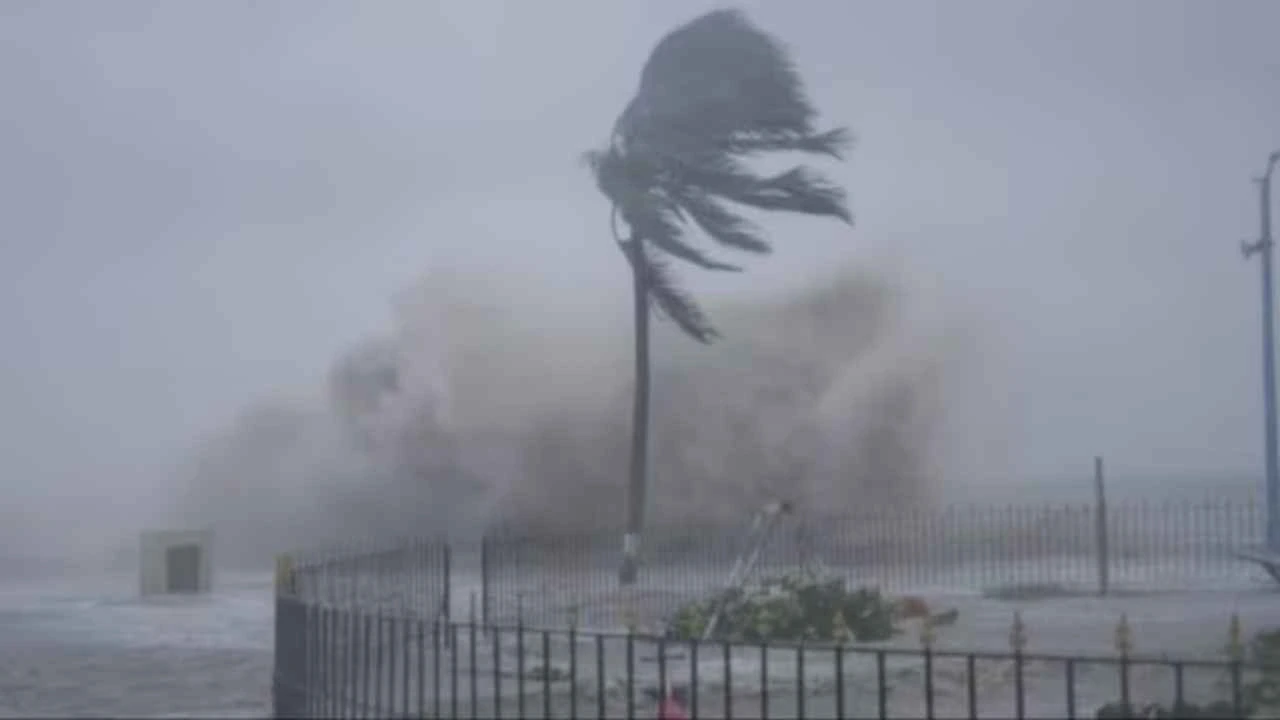
Several parts of India are expected to experience changing weather conditions on Thursday, October 29, as Cyclone Arnab and associated weather systems influence rainfall across different regions. The India Meteorological Department (IMD) has forecast rain in several states, including Uttar Pradesh, Bihar, Jharkhand, Odisha, Chhattisgarh and Madhya Pradesh.
Delhi-NCR is also likely to experience rain accompanied by thunderstorms, along with a fall in temperatures. Meanwhile, parts of eastern India are expected to receive heavy to very heavy rainfall, making the latest weather forecast important for residents and commuters.
According to the report, rainfall alerts cover several regions across eastern, central, northern and southern India. The intensity and timing of rainfall are expected to vary from one state to another.
Delhi-NCR weather forecast for October 29
Delhi and the National Capital Region are expected to see a change in weather, with rain and thunderstorms forecast over the coming days. Temperatures are also likely to fall, bringing cooler conditions during the morning and evening.
The report puts Delhi’s maximum temperature for October 29 at around 26 degrees Celsius and the minimum at approximately 17 degrees Celsius. Rain is also forecast for October 30, when temperatures could remain around 26 degrees Celsius and 18 degrees Celsius, respectively.
Air quality remains another concern in the capital. The report cited Central Pollution Control Board (CPCB) readings showing elevated AQI levels at several monitoring stations, including Patparganj at 291, Sirifort at 290 and Pusa at 285. These readings indicate poor to very poor air quality across the reported locations.
Uttar Pradesh may see rain, thunderstorms
Uttar Pradesh is among the states expected to experience unsettled weather on October 29. The forecast indicates the possibility of heavy rainfall in parts of eastern Uttar Pradesh, accompanied by thunderstorms, lightning and strong winds.
Wind speeds of 40-50 kmph are mentioned in the report for affected areas. Western Uttar Pradesh may also experience rainfall and thunderstorms, although conditions may differ across districts.
Residents should follow local weather alerts, particularly where thunderstorms, lightning or strong winds are forecast.
Bihar weather update
Bihar is expected to receive widespread rainfall between October 29 and October 31, according to the report. Heavy rain is possible at isolated locations on Thursday, with thunderstorms, lightning and strong winds also forecast.
The intensity of rainfall may vary across the state. Residents should keep track of official weather advisories as conditions develop.
West Bengal rainfall forecast
Parts of West Bengal may continue to experience heavy rainfall under the influence of Cyclone Arnab.
The report identifies East Midnapore, South 24 Parganas, Jhargram, West Midnapore, Bankura and Purulia among the districts where heavy rain is possible until Friday morning. Heavy rainfall is also forecast in the sub-Himalayan districts of Darjeeling, Kalimpong, Jalpaiguri and Alipurduar until Saturday morning.
These are forecasts, and the actual distribution and intensity of rainfall may vary by location.
Odisha under heavy rainfall alerts
Odisha is among the states facing significant rainfall concerns associated with Cyclone Arnab. The report identifies Ganjam, Gajapati, Rayagada, Koraput, Malkangiri and Nabarangpur as districts receiving particular attention from the authorities.
The report also describes preparations to move people from low-lying and landslide-prone areas to relief camps. It states that schools and anganwadi centres in 16 of the state’s 30 districts were scheduled to remain closed on October 29.
An IMD red alert for extremely heavy rainfall is reported for Nabarangpur, Rayagada, Koraput, Malkangiri, Gajapati and Ganjam, with winds of 50-70 kmph also forecast in affected areas.
Jharkhand issues school closures amid rain
Rainfall linked to Cyclone Arnab has also affected Jharkhand. According to the report, authorities in West Singhbhum, East Singhbhum and Simdega ordered schools to remain closed on Wednesday and Thursday.
The IMD has issued rainfall alerts for several districts, including Ranchi, Khunti, Simdega, Gumla, Lohardaga, Seraikela-Kharsawan, East Singhbhum and West Singhbhum.
The report also identifies orange alerts for districts including Garhwa, Palamu, Latehar, Lohardaga, Gumla, Simdega and West Singhbhum. Residents should consult local administration updates for district-specific instructions.
State-wise weather forecast for October 29
The NDTV report provides the following broad outlook for rainfall across India:
Delhi-NCR, Haryana, Chandigarh, West Bengal, Sikkim, Andaman and Nicobar Islands
Light rainfall
Rajasthan, Punjab, Uttarakhand, Himachal Pradesh, Jammu and Kashmir, Ladakh, Assam, Meghalaya, Arunachal Pradesh, Nagaland, Manipur, Mizoram, Tripura, Konkan, Goa, Madhya Maharashtra, Telangana and Kerala
These categories reflect the broad forecast summarised in the report. They should not be interpreted as uniform conditions across every district within each state.
What residents should keep in mind
People in areas forecast to receive heavy rain should monitor official IMD bulletins and local administration advisories. During thunderstorms, it is advisable to avoid exposed locations and take shelter in a safe building. Residents in low-lying or landslide-prone areas should follow evacuation instructions issued by local authorities.
For Delhi-NCR, changing weather does not automatically mean that air pollution will improve everywhere. Residents should check current local AQI readings rather than relying on rainfall forecasts alone.
PM Modi takes a dig at Congress after zero wins in MLC bypolls
Prime Minister Narendra Modi took a swipe at Congress after the party failed to win a single seat in Legislative Council by-elections across four states. He highlighted that the elections were conducted using ballot papers.
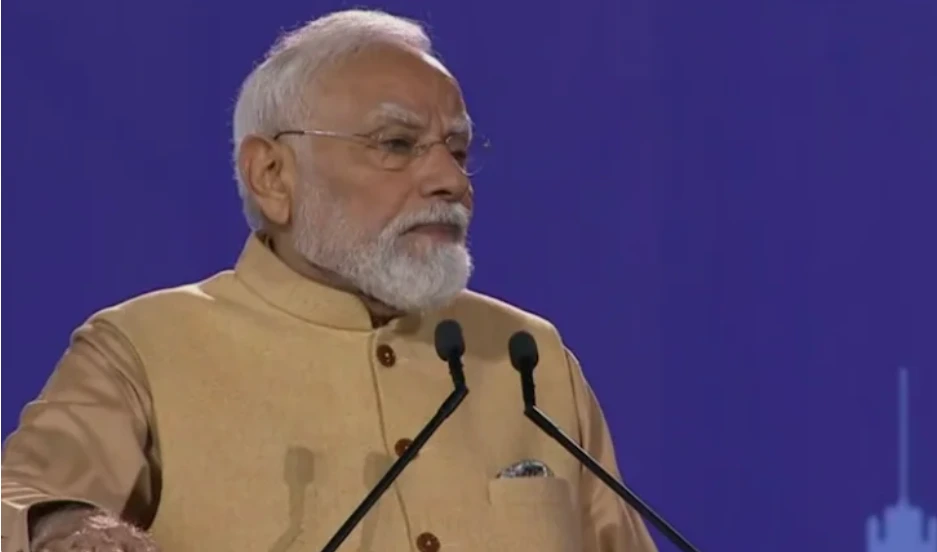
Prime Minister Narendra Modi took a swipe at the Congress on Wednesday after the party failed to win any seats in Legislative Council by-elections held across four states. Referring to the use of ballot papers in the elections, the Prime Minister questioned the party’s performance in the contests.
The by-elections covered 28 Legislative Council seats across Uttar Pradesh, Maharashtra, Bihar and Karnataka. Congress contested 12 seats, including four that it had previously held, but failed to secure a victory in any of them, according to the reported results.
The setback was particularly notable in Karnataka, where Congress is in power but did not win any of the four Legislative Council seats contested in the state.
What PM Modi said about the MLC election results
In a post on X, Modi referred to the elections held across the four states and highlighted that ballot papers had been used for voting.
MLC elections in 28 seats across 4 big states – Uttar Pradesh, Maharashtra, Bihar and Karnataka.
“MLC elections in 28 seats across 4 big states – Uttar Pradesh, Maharashtra, Bihar and Karnataka. Elections held using ballot papers. Guess how many seats Congress won?” the Prime Minister wrote.
He accompanied the post with a monocle emoji, adding a mocking tone to his question about the party’s performance.
The reference to ballot papers came amid the Congress’s broader objections to electronic voting machines and its demands for a return to paper ballots. Modi’s post drew attention to the party’s failure to win any of the seats it contested in these particular elections.
Congress draws a blank across four states
The Legislative Council by-elections covered constituencies in Uttar Pradesh, Maharashtra, Bihar and Karnataka.
Congress contested 12 of the 28 seats but could not secure a win. Four of the seats it contested had previously been held by the party.
Karnataka emerged as a significant setback for Congress, which governs the state. The party failed to win any of the four seats contested there.
The overall outcome provided the context for Modi’s remarks, which linked the election results to the use of ballot papers rather than electronic voting machines.
Why the ballot paper reference matters
Congress has raised concerns about the use of electronic voting machines and called for a return to ballot papers. Modi’s post drew a contrast between those demands and the party’s performance in elections conducted using paper ballots.
However, the results of these Legislative Council by-elections relate to the specific seats contested across the four states. They do not, by themselves, establish any broader conclusion about the integrity of other elections or the merits of different voting systems.
The Prime Minister’s remarks were a political swipe at Congress following its performance in the MLC bypolls.
APN News is today the most watched and the most credible and respected news channel in India. APN has been at the forefront of every single news revolution. The channel is being recognized for its in-depth, analytical reportage and hard hitting discussions on burning issues; without any bias or vested interests.