128th anniversary of Swami Vivekananda’s iconic speech at World’s Parliament of Religion in Chicago, a look at the entire speech
Swami Vivekananda is best known in the United States for his iconic speech in the World’s Parliament of Religions in 1893. Through his speech, he introduced Hinduism to America and called for an end to fanaticism.
Swami Vivekananda is best known in the United States for his iconic speech in the World’s Parliament of Religions in 1893. Through his speech, he introduced Hinduism to America and called for an end to fanaticism. September 11, 2021, marks the 128th anniversary of his groundbreaking speech in the US.
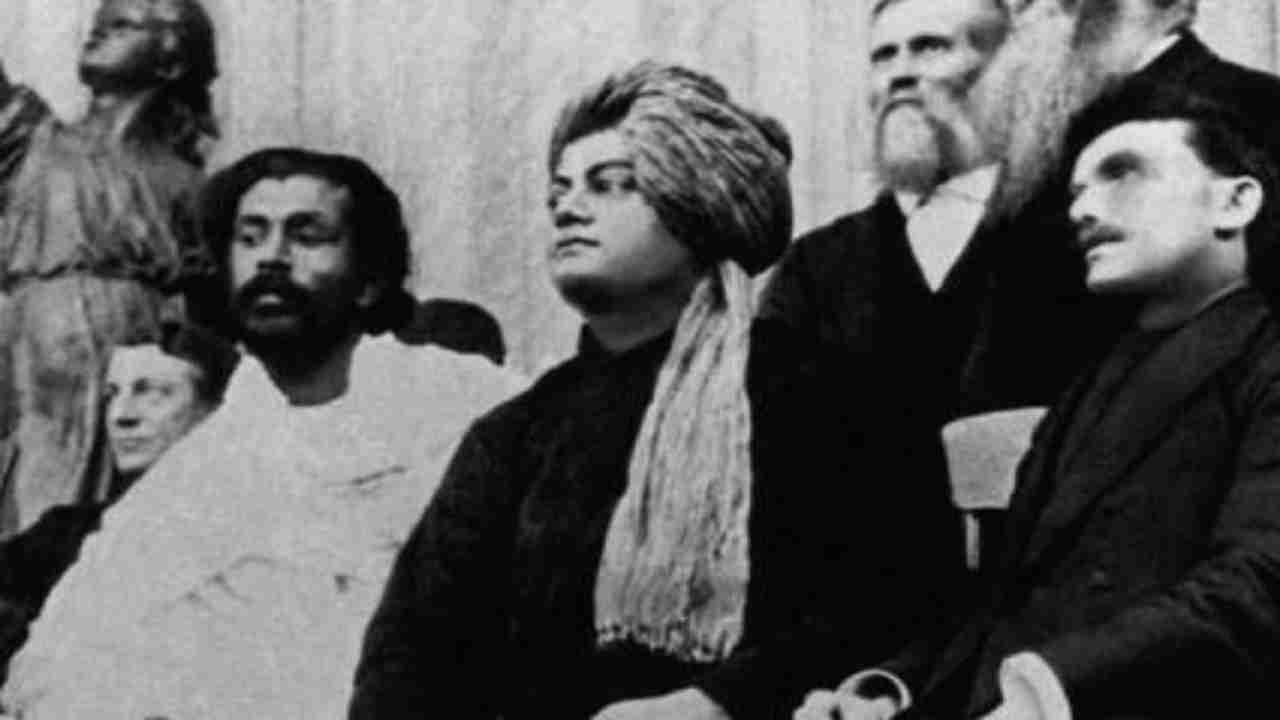
PM Modi recalls Swami Vivekanada’s speech:
Prime Minister of India, Narendra Modi, on Saturday recalled the speech and said that its spirit has the potential to create a more just, prosperous, and inclusive planet. “Recalling Swami Vivekananda’s iconic 1893 speech at Chicago, which beautifully demonstrated the salience of Indian culture. The spirit of his speech has the potential to create a more just, prosperous and inclusive planet”, he tweeted.
Recalling Swami Vivekananda’s iconic 1893 speech at Chicago, which beautifully demonstrated the salience of Indian culture. The spirit of his speech has the potential to create a more just, prosperous and inclusive planet. https://t.co/1iz7OgAWm3
In his speech at the World Religion Conference, Swami Vivekananda addressed the audience as Sisters and Brothers of America. They had spoken about the basic things to follow in life to make it worth living. He mentioned about country’s pride, love towards all religions, science and religion, roots of Hinduism, and other vital things.
On the anniversary 128th anniversary of Swami Vivekananda’s speech, let’s have a look at the entire speech:
Sisters and Brothers of America.
It fills my heart with joy unspeakable to rise in response to the warm and cordial welcome which you have given us. l thank you in the name of the most ancient order of monks in the world; I thank you in the name of the mother of religions, and I thank you in the name of the millions and millions of Hindu people of all classes and sects.
My thanks, also, to some of the speakers on this platform who, referring to the delegates from the Orient, have told you that these men from far-off nations may well claim the honor of bearing to different lands the idea of toleration.
I am proud to belong to a religion that has taught the world both tolerance and universal acceptance. We believe not only in universal toleration, but we accept all religions as true. I am proud to belong to a nation that has sheltered the persecuted and the refugees of all religions and all nations of the earth.
I am proud to tell you that we have gathered in our bosom the purest remnant of the Israelites, who came to southern India and took refuge with us in the very year in which their holy temple was shattered to pieces by Roman tyranny. I am proud to belong to the religion which has sheltered and is still fostering the remnant of the grand Zoroastrian nation.
I will quote to you, brethren, a few lines from a hymn which I remember to have repeated from my earliest boyhood, which is every day repeated by millions of human beings:
As the different streams having their sources in different places all mingle their water in the sea, so, O Lord, the different paths which men take through different tendencies, various though they appear, crooked or straight, all lead to thee.
The present convention, which is one of the most august assemblies ever held, is in itself a vindication, a declaration to the world, of the wonderful doctrine preached in the Gita:
Whosoever comes to Me, through whatsoever form, I reach him; all men are struggling through paths which in the end lead to me.
Sectarianism, bigotry, and its horrible descendant, fanaticism, have long possessed this beautiful earth. They have filled the earth with violence, drenched it often and often with human blood, destroyed civilization, and sent whole nations to despair.
Had it not been for these horrible demons, human society would be far more advanced than it is now. But their time comes; and I fervently hope that the bell that tolled this morning in honor of this convention may be the death-knell of all fanaticism, of all persecutions with the sword or with the pen, and of all uncharitable feelings between persons wending their way to the same goal.
The World’s Parliament of Religions has become an accomplished fact, and the merciful Father has helped those who labored to bring it into existence and crowned with success their most unselfish labor.
My thanks to those noble souls whose large hearts and love of truth first dreamed this wonderful dream and then realized it. My thanks to the shower of liberal sentiments that has overflowed this platform. My thanks to this enlightened audience for their uniform kindness to me and for their appreciation of every thought that tends to smooth the friction of religions.
A few jarring notes were heard from time to time in this harmony. My special thanks to them, for they have, by their striking contrast, made general harmony the sweeter.
Much has been said of the common ground of religious unity. I am not going just now to venture my own theory. But if anyone here hopes that this unity will come by the triumph of any one of the religions and the destruction of the others, to him I say, “Brother, yours is an impossible hope.”
Do I wish that the Christian would become Hindu? God forbid. Do I wish that the Hindu or Buddhist would become Christian? God forbid.
The seed is put in the ground, and earth and air, and water are placed around it. Does the seed become the earth, or the air, or the water? No. It becomes a plant. It develops after the law of its own growth, assimilates the air, the earth, and the water, converts them into plant substances, and grows into a plant.
Similar is the case with religion. The Christian is not to become a Hindu or a Buddhist, nor a Hindu or a Buddhist to become a Christian. But each must assimilate the spirit of the others and yet preserve his individuality and grow according to his own law of growth.
If the Parliament of Religions has shown anything to the world, it is this: It has proved to the world that holiness, purity, and charity are not the exclusive possessions of any church in the world and that every system has produced men and women of the most exalted character.
In the face of this evidence, if anybody dreams of the exclusive survival of his own religion and the destruction of the others, I pity him from the bottom of my heart, and point out to him that upon the banner of every religion will soon be written in spite of resistance- Help and not fight, Assimilation and not Destruction, Harmony and Peace and not Dissension.
Centre reassures farmers as India-US trade deal nears completion
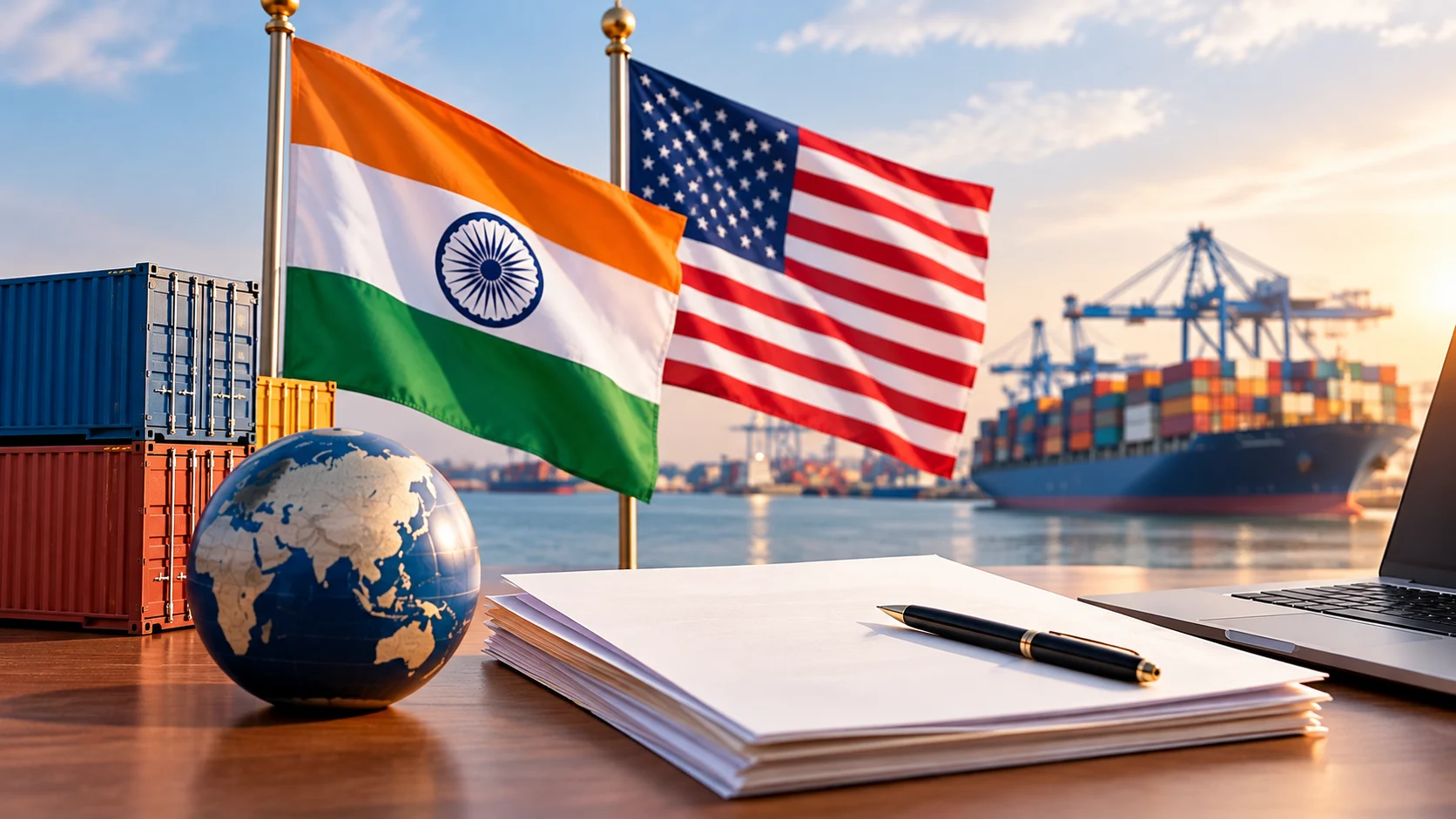
The Centre has assured farmers that the upcoming India-US trade deal will not harm agriculture or dairy, while creating new export opportunities for India.
As India and the United States move closer to finalising a major bilateral trade agreement, the Centre has sought to reassure farmers that their interests remain fully protected. Senior ministers on Wednesday said the proposed pact does not compromise sensitive sectors such as agriculture and dairy, while opening new avenues for Indian exports.
Union Minister for Agriculture and Farmers’ Welfare Shivraj Singh Chouhan dismissed opposition allegations that the deal could adversely affect domestic farmers. Speaking to the media in New Delhi, he said the agreement poses no risk to staple food grains, millets, fruits or dairy products.
“Farmers’ interests are paramount and non-negotiable,” Chouhan said, asserting that the government has ensured no provision allows sudden or disruptive entry of foreign agricultural products into Indian markets. He added that safeguards for both small and large farmers remain firmly in place.
Chouhan underlined that key agricultural commodities continue to be protected and that existing measures shielding Indian farmers from unfair competition will remain unchanged. According to him, the agreement has been shaped under the leadership of Prime Minister Narendra Modi, with a clear focus on development and national interest.
Addressing concerns sparked by a recent social media post from a US official regarding greater access for American farm products, the Agriculture Minister said the matter had already been clarified in Parliament by Commerce Minister Piyush Goyal. He reiterated that India has not opened its markets in a way that would put pressure on domestic producers.
At the same time, the government highlighted potential gains for Indian exports. Reduced tariffs under the agreement are expected to benefit sectors such as rice, spices and textiles. Chouhan pointed out that India already exports rice to multiple countries, including the US, with shipments valued at around Rs 63,000 crore. Increased textile exports, he added, would directly support cotton-growing farmers and allied industries.
External Affairs Minister S Jaishankar also indicated that the trade agreement is now in its final stages. In a post on X following his visit to the United States, he described the negotiations as productive and said the deal would mark a new phase in bilateral relations. He noted progress in areas such as critical minerals, while signalling deeper engagement in defence, energy and strategic cooperation.
Officials view the agreement as part of a broader effort to strengthen India-US economic and strategic ties amid global uncertainty. While detailed provisions are yet to be made public, the Centre has reiterated that farmer welfare remains at the heart of the negotiations.
In an emotional appeal, Chouhan referred to farmers as the nation’s “Annadata” and said serving them was equivalent to worship. He assured that the government would continue to stand firmly with farmers as India charts a new course in its trade relationship with the United States.
Punjab AAP leader Lucky Oberoi shot dead in daylight attack in Jalandhar
AAP leader Lucky Oberoi was killed in a daylight shooting in Punjab’s Jalandhar after attackers fired multiple bullets at him while he was inside his car.
AAP leader Lucky Oberoi was shot dead in a broad daylight attack in Punjab’s Jalandhar on Friday after unidentified assailants opened fire at him near a gurdwara in the city.
According to initial information, Oberoi was inside his car near the Gurdwara Sahib in the Model Town area when attackers arrived on a two-wheeler and fired multiple rounds at him. Five bullets reportedly hit him during the attack.
He was rushed to a private hospital immediately after the shooting, but doctors declared him dead due to the severity of his injuries.
Attack near gurdwara, police launch investigation
As per preliminary details, Oberoi was parking his vehicle outside the gurdwara when the attackers struck. The shooting triggered panic in the area, prompting an immediate response from the local police.
A police team reached the spot soon after receiving information and has launched an investigation into the incident. Efforts are underway to identify the attackers and determine the motive behind the killing.
Political reactions after killing
Following the incident, Leader of Opposition in the Punjab Legislative Assembly, Partap Singh Bajwa, strongly criticised the state government, alleging a collapse of law and order in Punjab.
In a post on X, Bajwa said the daylight killing of an AAP leader outside a gurdwara reflected the deteriorating security situation in the state. He questioned the government’s ability to protect citizens, claiming that fear and gang violence were gripping Punjab under the current administration.
Background
Lucky Oberoi was associated with the Aam Aadmi Party in Punjab. His wife had earlier contested municipal elections as an AAP candidate but did not win.
Prime Minister Narendra Modi will interact with students from across the country on Friday at 10 am as part of the annual Pariksha Pe Charcha (PPC) programme. The 2026 edition continues the initiative’s focus on reducing exam-related stress and encouraging students to prioritise learning over pressure.
In a message shared on X, the Prime Minister invited students, parents and teachers to watch Pariksha Pe Charcha 2026, noting that this year’s discussions will cover topics related to examinations, the importance of staying stress-free and maintaining focus on learning. He described the programme as a platform he enjoys, as it allows him to engage directly with young minds from different parts of the country.
Aligned with NEP 2020 vision
The Pariksha Pe Charcha initiative aligns with the National Education Policy 2020, which emphasises holistic development, mental well-being and a supportive learning environment. The programme seeks to transform how examinations are perceived by fostering confidence, positivity and celebrating the exam season as a learning festival rather than a source of anxiety.
According to an official release from the Ministry of Education, the Prime Minister has also shared his views on examinations and student well-being in his book Exam Warriors. Available in multiple languages as well as Braille, the book highlights the importance of self-belief and open conversations around stress so that children can enjoy a balanced and fulfilling childhood.
Student participation in pre-event activities
Conceptualised by the Prime Minister, Pariksha Pe Charcha introduces new and engaging elements every year. In the lead-up to the 2026 edition, several student-focused activities were organised across schools nationwide. These included the Swadeshi Sankalp Daud, a student-led run or walk promoting the spirit of self-reliance, along with quiz and writing competitions conducted at selected Kendriya Vidyalayas on Parakram Diwas.
The Ministry of Education stated that approximately 4.81 crore students participated in these pre-event activities, reflecting the scale and reach of the initiative.
APN News is today the most watched and the most credible and respected news channel in India. APN has been at the forefront of every single news revolution. The channel is being recognized for its in-depth, analytical reportage and hard hitting discussions on burning issues; without any bias or vested interests.