English हिन्दी
Connect with us

Latest world news

French Communist Office: “Does Anyone Live Here Anymore?”

Published

on

French Communist Office: “Does Anyone Live Here Anymore?”
[vc_row][vc_column][vc_column_text]

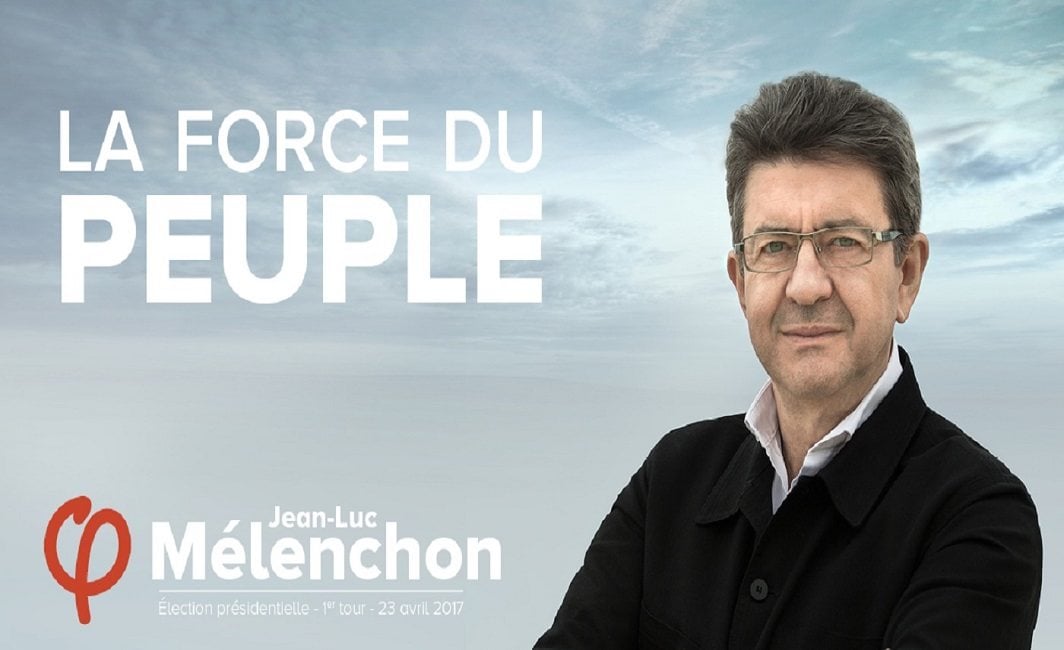
After supporting Jean-Luc Melenchon in the presidential polls, communists in France have gone their own way in elections to the National Assembly by contesting against him.

By Saeed Naqvi

Imagination conjures up sounds of the organ as I stand in the shadow of that brooding architectural wonder. It feels like I am at a service for the repose of the dead.

I am brought back suddenly, as in an abrupt Bunuel sequence, by a bearded, kindly looking receptionist, directing me almost in slow motion, towards the elevator to the fifth floor where Laurent Perea, from the International Department of the French Communist Party, a tall, burly man, ushers me into a room, which overlooks a terrace with puddles and bird dropping and torn awnings.

Intimations of mortality are not in the DNA of political parties – unlike, human beings. When the great Brazilian architect, Oscar Niemeyer, builder of Brasilia, set about diligently building the iconic headquarters of the Communist Party of France, from 1967 to 1981, he was firmly in possession of the party’s self-esteem. The great Georges Marchais was the party General Secretary towards the end of the architectural enterprise. The nine-floor giant arc, dominates Place du Colonel Fabien, a legendary figure of French resistance against the Nazis. Nearby, to this day surprisingly, is the Stalingrad square.

Faded associations came alive suddenly when the Left candidate Jean-Luc Melenchon, sprinted so fast on the straight that he found himself among the top four candidates. He was a rank outsider. And yet, 600,000 more votes and he would have been among the two candidates for the crucial run-off. French history could have taken a turn.

Well, the cookie crumbled differently. A 39-year-old Emmanuel Macron mostly old wine in a new, opaque bottle, won. He heads a movement, En Marche, March Forward but does not have a party. Come the critical June 10, elections to the 577-member National Assembly, all the defeated parties with residual cadres will rush to help Macron block Marine Le Pen, who does have motivated cadres in the drill for far-right politics.

To use a football image, does Melenchon have to be “marked” in the assembly elections? He is fielding candidates in most of the constituencies. Most people outside France appear not to have registered a cardinal point: the French Communist Party (CPF) is also running helter skelter to field as many candidates as Melenchon.

How have cooperative relations during the presidential election given way to conflict? There are deep differences in interpreting the mandate. Melenchon believes the 19.6 per cent vote he received as presidential candidate should be credited to him. The party places some of the credit at the door of its cadres.

It is a complicated tussle. Let me explain. There are, for instance, 101 “departments” – a department is greater than a district and smaller than a state.

Laurent Perea, who greeted me on the fifth floor, happens to be the Mayor in Dordogne which has four assembly seats. Melenchon insists his influence in Dordogne is paramount and therefore all four seats must go to him. CPF says they should split two seats each. At this level of bickering, talks between Melenchon and CPF collapsed last week.

The appeal of Melenchon, like that of Pablo Iglesias of Podemos in Spain, comes not from having timidly followed some party discipline but for pitching it audaciously for unambiguous change, within the Left framework but innovatively, without being hemmed in by rules.

In the Indian context, if, say Kanhaiya Kumar, the former president of the JNU students’ union, were to break loose from CPI affiliations, he would have the Pablo Iglesias-Melenchon potential. By universal consent, Melenchon is the best speaker in French public life. Kanhaiya Kumar, likewise, has left even right-wing audiences mesmerised by this oratory.

Rather than stride along the straight and narrow, Melenchon projected himself as a friend of the late Hugo Chavez of Venezuela; he incorporates into his rhetoric Cuba, the Bolivarian revolution. While the romance was on, CPF tolerated Melenchon’s Bolivarian flourishes. But today the comrade from Pondicherry, P. Dassardane openly chastises President Maduro’s “dictatorship”. Forgotten are the “machinations of US imperialism” against the Venezuelan revolution.

With this level of hostility between the party and the candidate, even their respective sympathisers are not expecting more than a handful of members in the Assembly.

If Melenchon ends up with respectable double digit figures in the House, it will be to the credit of La France Insoumise or Unbowing France which he launched late last year. The one lakh CPF membership was called into urgent session to consider the critical issue: should CPF support Melenchon? Party secretary-general, Pierre Laurent threw his vote behind Unbowing France. Never did he suspect that it was “Unbowing” Melenchon the party was supporting.

Should Melenchon zoom ahead of the party which once supported him, Pierre Laurent will, from the loneliness of the secretary-general’s room, once occupied by Marchais, contemplate the future of the party and the building.

Mirza Rafi Sauda’s description of a deserted palace, shares the mood of Shelley’s Ozymandias.

Sauda describes a voice echoing through the corridors:

“Does anyone live here anymore?”

[/vc_column_text][/vc_column][/vc_row]

Latest world news

Trump approves nearly $9 billion weapons sales to Israel, UAE and other allies amid Iran tensions

The US has fast-tracked nearly $9 billion in weapons sales to Israel, UAE and other allies as tensions linked to the Iran conflict continue despite a fragile ceasefire.

Published

on

Donald Trump statement

The United States has approved nearly $9 billion worth of weapons sales to key Middle Eastern allies, including Israel and the United Arab Emirates, amid ongoing tensions linked to the Iran conflict.

The decision, cleared by the administration of Donald Trump, includes expedited military transfers to Israel, the UAE, Qatar, and Kuwait. The approvals were granted under an emergency provision, allowing authorities to bypass the usual congressional review process.

Emergency clearance amid ongoing conflict

Officials said the move was necessary due to the evolving security situation in the region, particularly as the conflict involving Iran continues despite a fragile ceasefire. The war, which began earlier in 2026, has heightened instability across West Asia.

US Secretary of State Marco Rubio invoked emergency powers to fast-track the deals, citing urgent defence requirements for allied nations.

What the arms package includes

The approved package includes a mix of advanced defence systems and precision weapons:

  • Patriot missile defence replenishments worth over $4 billion for Qatar
  • Precision-guided weapon systems for multiple countries
  • Integrated battle command systems for Kuwait
  • Additional advanced weapons support for Israel and the UAE

The total value of these deals is estimated at over $8.6 billion, often rounded to nearly $9 billion.

Timing linked to iran war

The approval comes nearly nine weeks into the conflict involving the US, Israel, and Iran, with tensions still high despite a ceasefire that has been in place for several weeks.

Analysts note that the move signals continued US military backing for its regional allies, particularly in strengthening air defence and precision strike capabilities during uncertain conditions.

Criticism and concerns

The decision to bypass congressional oversight has drawn criticism from some quarters, particularly over transparency and the broader implications of increasing arms supplies in a conflict-prone region.

Continue Reading

Latest world news

Trump and Putin hold over 90-minute call, discuss Iran war and Ukraine conflict

Trump and Putin held a 90-minute call focusing on Iran tensions and the Ukraine conflict, with warnings over escalation and talks of ceasefire.

Published

on

Vladimir Putin and Donald Trump

US President Donald Trump and Russian President Vladimir Putin held a phone conversation lasting more than 90 minutes, focusing on escalating tensions in the Middle East and the ongoing war in Ukraine.

According to official statements, the discussion was described as “frank and businesslike,” with both leaders addressing key global security concerns. A major part of the conversation centred on the situation involving Iran and developments in the Persian Gulf.

Putin supported Trump’s decision to extend the ceasefire related to Iran, suggesting that continued restraint could create space for negotiations and help stabilise the region. However, he also issued a strong warning, stating that renewed military action by the United States or Israel could lead to “extremely damaging consequences” not only for Iran but for the wider international community.

Ukraine conflict also discussed

The leaders also discussed the ongoing war in Ukraine, which has continued for several years since Russia’s invasion in 2022. During the call, there were indications of potential efforts toward a temporary ceasefire, although no final agreement has been confirmed.

Reports suggest that the idea of a short-term pause in hostilities was explored, possibly linked to upcoming symbolic dates, but significant differences between the parties remain unresolved.

Focus on diplomacy amid global tensions

The call highlights ongoing diplomatic engagement between Washington and Moscow at a time of heightened geopolitical tensions involving both the Middle East and Eastern Europe.

While both sides acknowledged the importance of dialogue, the situation on the ground in both conflict zones remains complex, with no immediate resolution in sight.

Continue Reading

Latest world news

Trump rejects Iran peace plan as tensions rise, Tehran signals military readiness

Trump rejects Iran’s peace plan, keeping focus on nuclear concerns as Tehran signals readiness and tensions continue to rise.

Published

on

Donald Trump statement

U.S. President Donald Trump has rejected a proposal from Iran aimed at easing ongoing tensions, signaling a continued deadlock between the two countries.

The proposal reportedly included steps linked to easing restrictions around the Strait of Hormuz, a key global oil route. However, the United States declined the offer, maintaining that any agreement must address concerns related to Iran’s nuclear programme.

Washington has made it clear that resolving nuclear issues remains a priority and that partial measures without broader commitments will not be accepted.

Nuclear issue remains central

The U.S. position continues to focus on preventing Iran from advancing its nuclear capabilities. Officials believe that without a comprehensive agreement, temporary arrangements could delay a long-term resolution.

The rejection of the proposal indicates that negotiations remain stalled, with both sides holding firm on key demands.

Iran issues warning

Following the rejection, Iranian officials have issued strong statements, indicating readiness to respond if pressure from the U.S. continues.

Reports suggest that Iran has asserted its military preparedness, warning that any escalation could lead to serious consequences. The remarks reflect growing tensions as diplomatic efforts struggle to produce results.

Rising geopolitical tension

The situation remains volatile, with both countries engaged in a prolonged standoff. Measures such as restrictions on trade routes and strategic pressure points continue to impact the broader region.

The Strait of Hormuz remains a critical factor in the conflict, given its importance for global energy supplies.

Outlook uncertain

With no immediate breakthrough in sight, tensions between the United States and Iran are expected to persist. The lack of agreement on key issues, particularly the nuclear programme, continues to hinder progress toward de-escalation.

Continue Reading

Trending

© Copyright 2022 APNLIVE.com