Education
National Education Day: Know about the first education minister of India Maulana Abul Kalam Azad and the changes our education system went through in recent times
Today is the National Education Day and since 2008, November 11 has been recognized as National Education Day to commemorate the birth anniversary of Abul Kalam Ghulam Muhiyuddin, India’s first education minister.

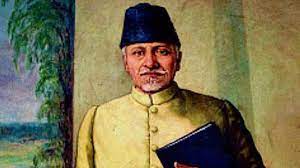
Today is the National Education Day and since 2008, November 11 has been recognized as National Education Day to commemorate the birth anniversary of Abul Kalam Ghulam Muhiyuddin, India’s first education minister. He was the education minister of independent India from 1947 until 1958 and was known as Maulana Abul Kalam Azad.
In 1992, Maulana Abul Kalam Azad was honoured for India’s highest civilian award, the Bharat Ratna.
What are the latest National Education Policies?
In India, National Education Policies (NEP) have completed one year on July 29, 2020. To meet the challenging needs and demands of Indian and International education standards, it was revised after 34 years.
In just one year, there were a lot of changes in the curricula of schools to include the subjects like financial literacy and artificial intelligence.
In schools and universities, the mother tongue or a regional language has been implemented on a temporary basis as the medium of teaching. This was comprised of engineering courses, and a few institutes have been selected to execute this project in the 2021-22 academic year.
The fundamental goal of NEP 2020 was to de-emphasize the importance of Class 10 and Class 12 board exams. As a result, starting in 2022, the Central Board of Secondary Education’s board exams will include a large amount of multiple-choice and analytical questions.
According to those familiar with the situation, the administration will announce a detailed policy framework on the changes in board exams by the end of the year. Multidisciplinary streams have begun across institutes, with holistic education being one of the primary goals of NEP 2020. This means that engineering colleges will offer courses in commerce and humanities in addition to technical areas.
While there has been significant progress on curriculum modifications and the adoption of regional languages, other critical reforms are still pending, such as permitting multinational institutes to establish up campuses in India and allowing flexible entry and exit for college students.
How online and smart classes have changed our life?
Liberated from the centuries-old shackles of books, chalk, and blackboard, knowledge blossomed. On young awakened minds, fresh light of awareness emerged when online and smart classes emerged as a boon to the students. As a new generation of students saw (instead of hearing) the classroom as an exciting place to be, it became a fascinating place to be in.
Online and smart classes did something no one had ever imagined, they brought technology into the classroom. It provided a comprehensive portfolio of world-class digital modules or lessons (consisting of 2D and 3D animations, graphics, audio, and video) on every subject across the K12 spectrum, which the teacher could easily access and project in the classroom, enlightening and describing abstract and difficult concepts with liquid clarity.

The internet was clearly intended to make learning and research easier. And right now, it’s doing a great job then it’s ever done. Online learning and smart classes have made it easier to understand education better, especially in 2020.
Furthermore, e-learning sites such as Skillshare, Udemy, and others can be seen in a steady increase in their user base, owing to the ease of learning online and the convenience that comes with it.








Education
MCC announces NEET UG Counselling 2026 dates, check complete schedule
The Medical Counselling Committee has released the NEET UG Counselling 2026 schedule. Round 1 registration will begin on August 5, followed by four counselling phases, including the Online Stray Vacancy Round.


India News
Indian Army Agniveer CEE Result 2026 declared, ARO-wise merit list released
The Indian Army has announced the Agniveer CEE Result 2026. Candidates can now download the ARO-wise merit list and check their eligibility for the next stages of recruitment.

Education
Board exam marks may get 50% weightage in NEET, JEE admissions under proposed reforms
The Centre is considering giving 50% weightage to board exam marks in admissions based on NEET and JEE. The proposal is part of broader education reforms aimed at reducing exam stress and improving fairness in the admission process.


PM Modi-Xi meeting: Xi says India, China can learn from each other’s strengths

UN backs PM Modi’s push for urgent UNSC reform
UN backs PM Modi’s push for urgent UNSC reform
PM Modi-Xi meeting: Xi says India, China can learn from each other’s strengths

Bank holiday on September 14: Banks closed in these cities

China says it will properly handle differences with India ahead of Modi-Xi talks

Iran President Pezeshkian says country will not bow to US, Israel

Afghan Men Try To Hang With The Jet Engine Of The Aircraft in Kabul- Afghanistan News – Kabul News
Trending Top 10 News: 10000 Crore Fine on Flipkart, Apple to Launch Unique Feature, Hdfc Bank Job Ad

Trending Top 10 News: Nokia 6310, Apple sales, Bachpan ka Pyar Video Kid, Dainik Bhaskar IT Raid

Trending Top 10 News: Canada bans Indian flights, Rain in Delhi NCR, AIMIM Twitter hacked, Raj Kundra case