English हिन्दी
Connect with us

Education

CBSE Class 10th science term 1 board exam: Important 20 assertion reason questions and answers for tomorrow’s exam

Tomorrow is the CBSE Science exam and to make it easier for you all who studies at the last moment, we’ve compiled 20 important assertion reason based questions that can help you top your exam.

Published

on

CBSE Students

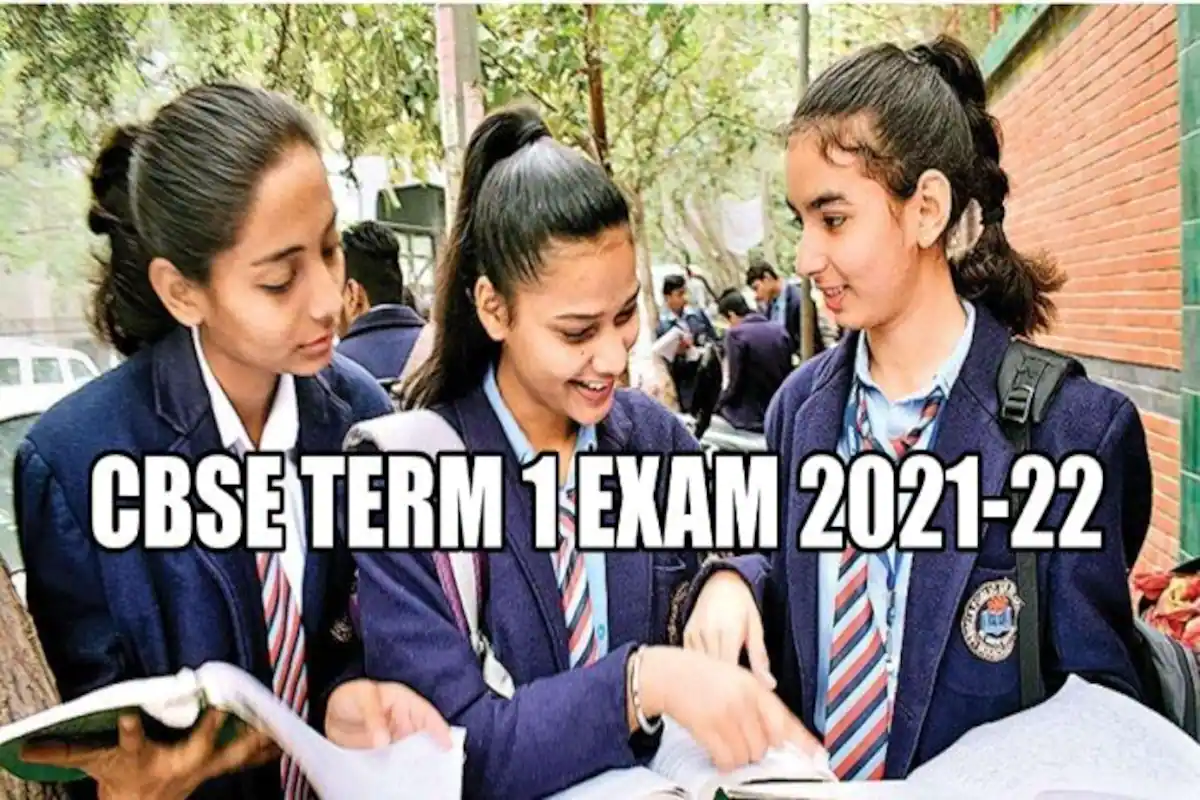
Preparing for exams from the beginning of the session is not what students really do and they only study when the tensions of board exams hit them. Then you all know, instead of studying the chapters thoroughly, students look for important questions and answers so that they can prepare themselves with the best.

Not to worry, we are your saviours for tomorrow’s exam. As you all know CBSE is conducting class 10th board exams term 1. The board examination conducted the first exam for class 10th i.e. Social Science yesterday.

Tomorrow is the Science exam and to make it easier for you all who studies at the last moment, we’ve compiled 20 important assertion reason based questions from chapter 1 that can help you top your exam.

Chapter 1 – Chemical Reactions And Equations

In the following questions, a statement of assertion (A) is followed by a statement of the reason (R). Mark the correct choice as:

a) Both A and R are true and R is the correct explanation of A.

(b) Both A and R are true but R is not the correct explanation of A.

(c) A is true but R is false.

(d) A is false but R is true.

  1. Assertion (A): Decomposition of vegetable matter into compost is an example of exothermic reactions.

Reason (R): Exothermic reactions are those reactions in which heat is evolved.

2. Assertion (A): When HCl is added to zinc granules, a chemical reaction occurs.

Reason (R): The evolution of a gas and change in colour indicate that the chemical reaction is taking place.

3. Assertion (A): Calcium carbonate when heated gives calcium oxide and water.

Reason (R): On heating calcium carbonate, a decomposition reaction takes place.

4. Assertion (A): Brown fumes are produced when lead nitrate is heated.

Reason (R): Nitrogen dioxide gas is produced as a by-product due to the decomposition of lead nitrate.

5. Assertion (A): White silver chloride turns grey in sunlight.

Reason (R): Decomposition of silver chloride in presence of sunlight takes place to form silver metal and chlorine gas.

6. Assertion (A): Pungent smelling gas is produced when sulphur burns in the air.

Reason (R): Sulphur trioxide is formed on reaction of sulphur with oxygen.

7. Assertion (A): In a reaction of copper with oxygen, copper serves as a reducing agent.

Reason (R): The substance which gains oxygen in a chemical reaction acts as a reducing agent.

8. Assertion (A): In the electrolysis of water, the volume of hydrogen liberated is twice the volume of oxygen ……formed.

Reason (R): Water (H,0) has hydrogen and oxygen in the ratio of 1:2 by volume.

9. Assertion (A): Corrosion of iron is commonly known as rusting.

Reason (R): Corrosion of iron occurs in presence of water and air.

10. Assertion (A): The balancing of chemical equations is based on the law of conservation of mass.

Reason (R): Total mass of reactants is equal to the total mass of products.

11. Assertion (A): In a balanced chemical equation, the total mass of the reactants is equal to the total mass of the products.

Reason (R): Mass can neither be created nor destroyed during a chemical change.

12. Assertion (A): Iron articles are painted so as to prevent them from rusting.

Reason (R): When the surface of iron is coated with paint, its surface does not come in contact with oxygen and moisture therefore rusting does not take place.

13. Assertion (A): Chemical reaction changes the physical and chemical state of a substance.

Reason (R): When an electric current is passed through water (liquid), it decomposes to produce hydrogen and

oxygen gases.

14. Assertion (A): When calcium carbonate is heated, it decomposes to give calcium oxide and carbon dioxide.

Reason (R): The decomposition reaction takes place on the application of heat, therefore, it is an endothermic reaction.

Read Also: Delhi Nursery Admissions 2022-23 schedule released: Check admission process, important dates and criteria here

15. Assertion (A): Zinc reacts with sulphuric acid to form zinc sulphate and hydrogen gas and it is a displacement reaction.

Reason (R): Zinc reacts with oxygen to form zinc oxide.

16. Assertion (A): Chips manufacturers usually Ilush bags of chips with a gas such as nitrogen to prevent the chips from getting oxidised.

Reason (R): This increases the taste of the chips and helps in their digestion.

17. Assertion (A): Exposure of silver chloride to sunlight for a long duration turns grey due to the formation of silver by decomposition of silver chloride.

Reason (R): In this process, sublimation of silver chloride takes place.

18. Assertion (A): Rusting of iron metal is the most common form of corrosion.

Reason (R): The effect of rusting of iron can be reversed if they are left open in sunlight.

19. Assertion (A): AgBr is used on photographic and X-ray film.

Reason (R): AgBr is photosensitive and changes to Ag and bromine in presence of sunlight and undergoes decomposition reaction.

20. Assertion (A): Magnesium ribbon keeps on burning in an atmosphere of nitrogen.

Reason (R): Magnesium reacts with nitrogen to form magnesium nitride and this reaction is a combination reaction.

Answers

  1. a
  2. b
  3. d
  4. a
  5. a
  6. c
  7. a
  8. c
  9. b
  10. a
  11. a
  12. a
  13. b
  14. b
  15. b
  16. c
  17. c
  18. c
  19. a
  20. a

Continue Reading

Education

CBSE class 10 result 2026 out, who can appear for second board exam explained

CBSE has announced Class 10 results 2026 and introduced clear rules for the second board exam. Here’s who is eligible and who is not.

Published

on

Result

The Central Board of Secondary Education (CBSE) has announced the Class 10 results for 2026, along with key guidelines for students who wish to appear in the second board examination under the newly introduced two-exam policy.

As per the updated system aligned with the National Education Policy (NEP) 2020, students now have an opportunity to improve their performance in selected subjects through a second exam scheduled later in the same academic year.

Who is eligible for second board exam

CBSE has laid down specific conditions for students to appear in the second board examination:

  • It is mandatory for students to appear in the first board exam
  • Students must have appeared in at least three subjects in the main exam
  • Those who have passed can opt for improvement in up to three subjects
  • Students in the compartment category are also eligible to appear
  • Improvement is allowed only in subjects already taken in the first exam

The second exam allows students to improve marks in subjects such as Science, Mathematics, Social Science, and languages.

Who is not eligible

Certain categories of students will not be allowed to appear in the second board exam:

  • Students who did not appear in three or more subjects
  • Those who failed in three or more subjects
  • Students placed in specific non-eligible categories by the board

Such students will have to reappear in the next main examination cycle instead.

Important rules students must note

CBSE has also clarified several important rules:

  • Change of subjects is not permitted in the second exam
  • No corrections in student data will be allowed
  • Schools will submit the list of candidates for the second exam
  • Students can improve performance in a maximum of three subjects

The board aims to reduce exam pressure and give students flexibility to improve scores within the same academic year.

Continue Reading

Education

CBSE 10th result 2026 expected soon, students advised to prepare DigiLocker access

CBSE is likely to announce Class 10 result 2026 soon in April. Students can check scores on official websites, DigiLocker, and UMANG app.

Published

on

CBSE 10th result 2026

The Central Board of Secondary Education is expected to declare the Class 10 board examination result for 2026 soon, with indications pointing toward an announcement in April. However, the board has not yet confirmed the official date and time.

Students who appeared for the examination are advised to stay prepared and keep their login credentials ready, as the result can be released at any time once the final process is completed.

Result likely earlier than usual

Unlike previous years when CBSE results were typically released in May, the 2026 Class 10 result is expected earlier. The shift is linked to changes in the examination system, including the introduction of multiple exam phases during the academic year.

The board conducted the Class 10 examinations between February 17 and March 11, 2026, with lakhs of students participating across the country.

Where to check CBSE 10th result 2026

Once declared, students will be able to access their results through multiple official platforms, including:

  • Official websites such as cbse.gov.in and results.cbse.nic.in
  • DigiLocker platform for digital marksheets
  • UMANG mobile application

These platforms are expected to host the result simultaneously to ensure smooth access for students.

Advisory for students before result declaration

Students have been advised not to wait until the result day to complete formalities. They should create and verify their DigiLocker accounts in advance to avoid last-minute issues.

Digital marksheets made available through DigiLocker will be considered valid and can be used for further admission and documentation purposes.

Steps to check scorecard

After the result is announced, students can follow these steps:

  1. Visit the official CBSE result website
  2. Click on the Class 10 result link
  3. Enter roll number and required details
  4. Submit and view the result
  5. Download or print the marksheet for future use

Students are advised to carefully verify all details mentioned in the scorecard after downloading it.

Continue Reading

Education

CBSE 10th, 12th results 2026 expected soon, class 10 likely first

CBSE may release Class 10 results before the end of April 2026, while Class 12 results are expected in May.

Published

on

Results

No official date yet, results may be released anytime

The Central Board of Secondary Education (CBSE) is expected to announce the Class 10 and Class 12 board exam results for 2026 soon, although an official date and time have not yet been confirmed.

As per the latest updates, Class 10 results are likely to be declared before the last week of April, while Class 12 results may follow by the second week of May. The earlier timeline is being considered due to the introduction of a second examination phase scheduled in May this year.

This year, Class 10 results are expected to be released first, followed by Class 12 results.

Over 40 lakh students await results

The CBSE board exams for 2026 began on February 17. Class 10 exams concluded on March 11, while Class 12 exams ended on April 10.

More than 43 lakh students appeared for the exams this year, including around 25 lakh in Class 10 and over 18 lakh in Class 12, making it one of the largest school-level examinations in the country.

Where to check CBSE results 2026

Once declared, students will be able to check their results on official platforms such as:

  • results.cbse.nic.in
  • cbse.gov.in
  • results.nic.in
  • DigiLocker
  • UMANG app

Students will need details such as roll number, school number, admit card ID, date of birth, and security pin to access their marksheets.

Passing marks and key details

To pass the CBSE board exams, students must secure a minimum of 33% marks overall. In some cases, grace marks may be awarded to students who fall short by a small margin.

Digital marksheets and certificates will also be made available on DigiLocker shortly after the declaration of results.

Continue Reading

Trending

© Copyright 2022 APNLIVE.com