
India News
Chief of Defence Staff: From powers to eligibility criteria to tenure, here’s what we know
Chief of Defence Staff (CDS) is the military head and chairman of the Chiefs of Staff Committee of the Indian Armed Forces. Read to know its powers, eligibility criteria, tenure and more.

By Kritika Bobal
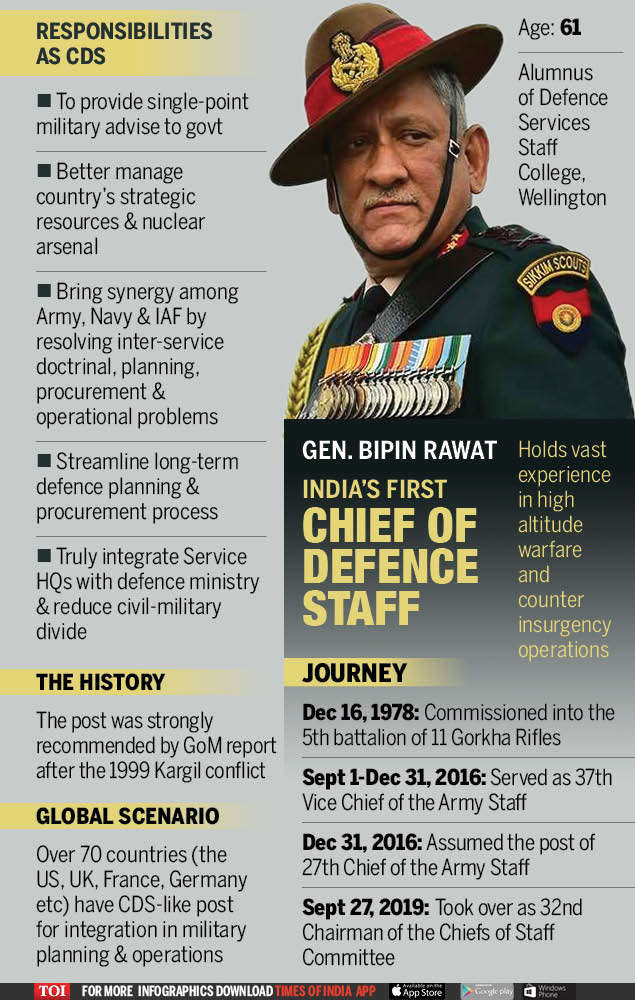
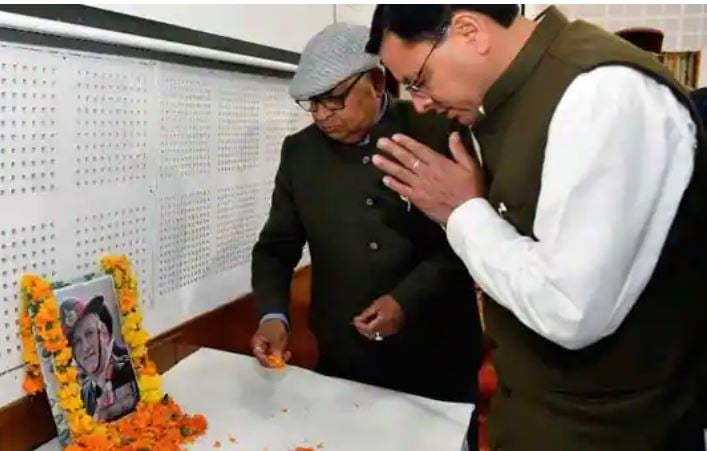
The untimely demise of General Bipin Rawat, India’s first Chief of Defence Staff (CDS) in the IAF helicopter crash in Tamil Nadu throws up multiple challenges for the BJP government to who will fill the place of the highest level of the military hierarchy.
With one year remaining in his tenure, it is the biggest task for the government to whom to hand over the top army position and choose the next Chief of Defence Staff (CDS).
In January 2020, General Rawat had taken over the charge as India’s first Chief of Defence Staff.
Who is CDS? Why is it a dual-hatted role: What does that mean?
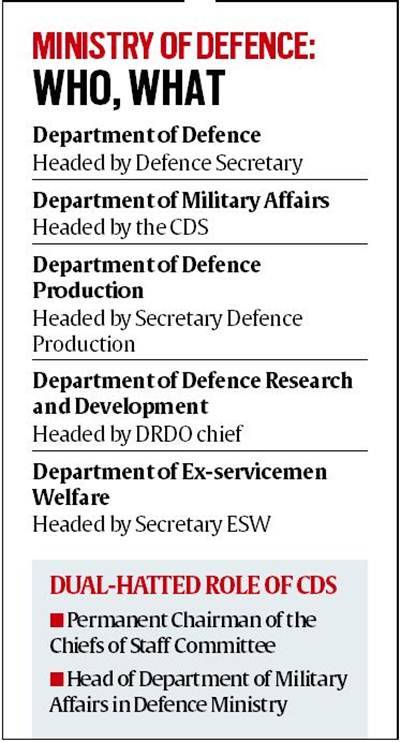
Chief of Defence Staff (CDS) is the military head and chairman of the Chiefs of Staff Committee of the Indian Armed Forces- Army, Navy, and Air Force. CDS is considered a dual-hatted role because CDS wears two hats- One he is the permanent Chairman of the Chiefs of Staff Committee which includes the three service chiefs and the other as head of the ministry’s newly created Department of Military Affairs (DMA).
Does CDS command the three service chiefs?
No. The three service chiefs- Army, Navy, and Air Force continues to advise the Defence Ministry on matters concerning their respective services. So, the government has also stated that the CDS does not have any military authority, including command over the three service chiefs. The service chiefs, on the other hand, are serving the Chiefs of Staff Committee, which is chaired by the CDS.
Have the Indian Army, Navy, and Air Force lost any powers to CDS?
No, none of the service chiefs’ powers, including advising the government, have been transferred to the CDS. The three service chiefs continue to carry out the orders of the Defence Ministry, which is responsible for drafting them, obtaining government approval, and communicating them to the defense services for implementation.
Powers of Chief of Defence Staff
- He is the Defense Minister’s Principal Military Advisor on all tri-Services issues.
- He serves as the Atomic Command Authority’s military advisor.
- The CDS does not have any military authority.
- The CDS is a member of the Defense Acquisition Council, which is chaired by the Defense Minister.
- He is the permanent chairman of the Chiefs of Staff Committee.
- CDS also serves as the head of the Department of Military Affairs.
Eligibility Criteria for CDS
Officers who are qualified for the CDS must possess a four-star General rank in the Indian Army or an equivalent position in the Indian Air Force (Air Chief Marshal) or the Indian Navy (Admiral), according to the guidelines.
As a result, all three service chiefs and the Commander-in-Chief of the Indian Army, Indian Air Force, and Indian Navy commands are entitled to become a CDS.
Tenure of Chief of Defence Staff
A CDS can now serve until the age of 65 under new military standards. The three Service heads will serve until they reach the age of 62 or three years, whichever is earlier.
Who is likely to be appointed as the next CDS?
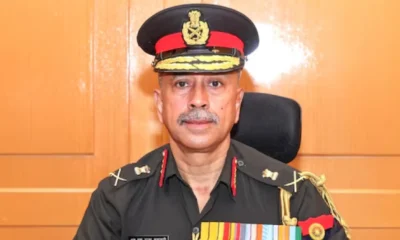
Army Chief General MM Naravane, Indian Air Force Chief Air Chief Marshal VR Chaudhari, and Navy Chief Admiral R Hari Kumar are all being considered for the position of CDS. MM Naravane is the frontrunner for the post of CDS among the three candidates.



India News
Journalist files police complaint against Rahul Gandhi over push allegation
Journalist Richa Parashar has filed a criminal complaint against Rahul Gandhi and others, alleging that she was pushed while covering the Opposition’s march to the Supreme Court. The Congress has denied the allegation.

India News
Delhi court orders release of CJP founder Abhijeet Dipke
A Delhi court on Saturday ordered the conditional release of Cockroach Janta Party founder Abhijeet Dipke, who was detained and subsequently arrested ahead of a planned protest march at Connaught Place.
India News
Anirudh Ravichander to marry Kavya Maran in November, reception on November 21
Anirudh Ravichander and Kavya Maran are set to marry in November, with their Chennai wedding reception scheduled for November 21.


LK Advani, 98, hospitalised in Delhi with chest infection
Trump waives Russia-related sanctions, tariffs in relief for India

ED summons Pinarayi Vijayan in money laundering case

Anirudh Ravichander to marry Kavya Maran in November, reception on November 21

Delhi court orders release of CJP founder Abhijeet Dipke

Journalist files police complaint against Rahul Gandhi over push allegation
Delhi court orders release of CJP founder Abhijeet Dipke
Anirudh Ravichander to marry Kavya Maran in November, reception on November 21
ED summons Pinarayi Vijayan in money laundering case
LK Advani, 98, hospitalised in Delhi with chest infection

Afghan Men Try To Hang With The Jet Engine Of The Aircraft in Kabul- Afghanistan News – Kabul News
Trending Top 10 News: 10000 Crore Fine on Flipkart, Apple to Launch Unique Feature, Hdfc Bank Job Ad

Trending Top 10 News: Nokia 6310, Apple sales, Bachpan ka Pyar Video Kid, Dainik Bhaskar IT Raid

Trending Top 10 News: Canada bans Indian flights, Rain in Delhi NCR, AIMIM Twitter hacked, Raj Kundra case

Trending Top 10 News: Shein India, Apple New Service, Pocket Oxygen, Oppo Launched New Phone
-
 India News21 hours ago
LK Advani, 98, hospitalised in Delhi with chest infection
-
Latest world news21 hours ago
Trump waives Russia-related sanctions, tariffs in relief for India
-
 India News20 hours ago
ED summons Pinarayi Vijayan in money laundering case
-
 India News10 hours ago
Anirudh Ravichander to marry Kavya Maran in November, reception on November 21
-
 India News10 hours ago
Delhi court orders release of CJP founder Abhijeet Dipke
-
 India News8 hours ago
Journalist files police complaint against Rahul Gandhi over push allegation
