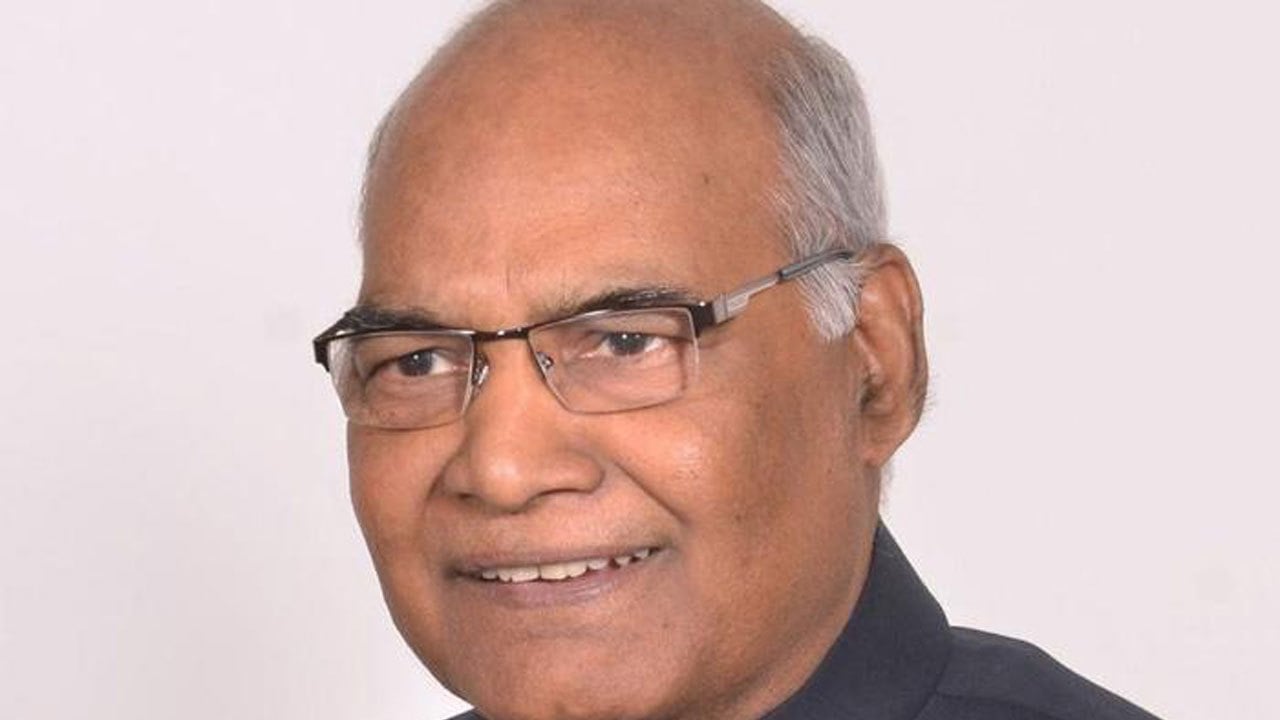
[vc_row][vc_column][vc_column_text]As India celebrates 70 years of independence tomorrow, President Ram Nath Kovind, in his first speech Independence Day eve speech after being sworn in last month, talked about the importance of caring and of sharing, and of inter-dependence in society. He stressed upon the need for partnership between citizens and government, of the need for citizens to help build a law-abiding society and achieve the goals of a New India.
He said while the government is implementing GST to eliminate multiple taxes and simplify transactions, “it is for each of us to make this an essential part of our everyday transactions and business culture.” “I am happy that the transition to the GST system has been smooth,” he added.
“In the year 2022, our country will complete 75 years of Independence. It is our national resolve to attain certain desired milestones for a New India by then,” he said, outlining what he meant by New India: “There are some obvious parameters – like a house for every family, power on demand, better roads and telecom, a modern railway network, rapid and sustained growth.
“New India must be a society rushing towards the future, but also a compassionate society. A compassionate society where the traditionally disadvantaged, whether SCs, STs or OBCs, are part of our national developmental process. I am confident that a strong partnership between citizens and the government will allow us to meet the goals of New India… Poverty and New India are simply not compatible.”
He spoke of demonetisation and appreciated the people’s “immense patience and understanding in the days following demonetisation” and their “whole-hearted support in the battle against corruption and black money”.
He said demonetisation has boosted efforts to build an honest society and “this spirit and this momentum” must be sustained.
Here is the full text of the President’s speech:
Dear Fellow Citizens engaged in the task of nation building
My greetings to you as we complete 70 years of our Independence
Our country will be celebrating its 71st Independence Day tomorrow. On the eve of this anniversary I extend my good wishes to all of you.
On August 15, 1947, we became a free nation. Sovereignty and the responsibility for our destiny moved from the British crown to the people of India. Some have called this process a “transfer of power”.
It was much more than that. It was the culmination of a dream for our country – a dream seen by our forefathers and freedom fighters. We were free to imagine and build our nation anew.
It is crucial to understand that this dream for a free India was rooted in our ordinary villages, in the well-being of our poor and underprivileged, and in the all-round development of our country.
For this we owe so much to the countless freedom fighters who made great sacrifices to bring us here.
Chennamma, the Rani of Kittur. Lakshmibai of Jhansi. Matangini Hazra, the heroine and martyr of the Quit India Movement. There are so many examples.
Matangini Hazra was an elderly woman, into her 70s. She was shot by the colonial police in Tamluk, in Bengal, while leading a peaceful protest march. She died with “Vande Mataram” on her lips and with the hope of a free India in her heart.
Freedom fighters like Sardar Bhagat Singh, Chandrashekhar Azad, Ram Prasad Bismil, Ashfaqullah Khan, Birsa Munda and thousands of others gave their lives for us. We can never forget them.
From the earliest days of our freedom struggle, we were blessed with a galaxy of revolutionary leaders who guided our country.
They spoke of not just political freedom. Mahatma Gandhi emphasised the moral character of India and of Indian society. The principles that Gandhiji spoke about are relevant even today.
Gandhiji was not alone in this nationwide struggle for freedom and reform. Netaji Subhas Chandra Bose exhorted our people, saying: “Give me blood and I will give you freedom”. At his word, millions of Indians joined the freedom movement under his leadership and gave their all.
Nehruji emphasised that India’s age-old heritage and traditions – so dear to us – could co-exist with technology and a quest to modernise our society.
Sardar Patel instilled in us the importance of national unity and integrity. And of a disciplined national character.
Babasaheb Bhim Rao Ambedkar urged upon us the virtues of constitutional governance, of the rule of law – and of the vital need for education.
I have given only a few examples of illustrious leaders. I could give you many more. The generation that brought us to freedom was diverse. They were men and women who represented all parts of our country and a variety of political and social thought.
We need to draw inspiration from such brave freedom fighters, many of whom sacrificed even their lives for the country. We need to invoke the same spirit today in the task of nation building.
The stress on the moral basis of policy and action, belief in unity and discipline, faith in a synthesis of heritage and science, and promotion of the rule of law and of education – all of it was located in a partnership between citizen and government.
That is how our nation has been built – by a partnership between citizen and government, between individual and society, between a family and the wider community.
Fellow Citizens
A tradition I remember from my childhood was that when there was a wedding in any one family, the entire village shared the responsibility and contributed. Regardless of the caste or community, the bride became the daughter of not just a single family but of the entire village.
Neighbours and others living in the village looked after guests, and took charge of different arrangements. Contributions came from many families. One family would send food-grains for the wedding, another would send vegetables, a third would arrive with some other item.
There was a sense of caring and of sharing, and of interdependence. If you helped your neighbours in their times of need, they instinctively helped you in turn.
Today, in big cities we may not even know our neighbours. Whether in cities or villages, it is important to renew that sense of caring and sharing. This will make us a gentler and happier society and help us understand each other with greater empathy.
Fellow Citizens
This spirit of empathy and of social service and volunteerism is very much alive in India. There are so many people and organisations that work quietly and diligently for the poor and the disadvantaged.
They could be running schools for street children, caring for stray animals and birds, and providing water to hard-to-reach tribal communities in remote areas. Or cleaning rivers and public places. They are nation builders in action, and we need to draw inspiration from them.
We should also work with unity and purpose to ensure that the benefits of government policies reach all sections of society. For this, the partnership between citizens and government remains essential:
- The government has started the Swachchh Bharat campaign – but it is for each of us to ensure a Swachchh Bharat
- The government is building toilets or helping build toilets – but it is for each of us to use those toilets and make India open-defecation free
- The government is enabling communication infrastructure – but it is for each of us to use the Internet for the right purposes: to bridge knowledge gaps, create opportunities, and enhance educational and information access
- The government is promoting the idea of Beti Bachao–Beti Padhao – but it is for each of us to ensure that our daughters are not discriminated against and get the best education
- The government can frame laws and strengthen law enforcement – but it is for each of us to be a law-abiding citizen. And to build a law-abiding society
- The government is pushing transparency and eliminating corruption in public recruitment and procurement – but it is for each of us to answer to our inner conscience in everyday life
- The government is implementing GST to eliminate multiple taxes and simplify transactions – but it is for each of us to make this an essential part of our everyday transactions and business culture
I am happy that the transition to the GST system has been smooth. It should be a matter of pride for all of us that the taxes we pay are used for nation building – to help the poor and the marginalised, to build rural and urban infrastructure, and to strengthen our border defences.
Fellow Citizens
In the year 2022, our country will complete 75 years of Independence. It is our national resolve to attain certain desired milestones for a New India by then.
When we speak of a New India, what do we mean? There are some obvious parameters – like a house for every family, power on demand, better roads and telecom, a modern railway network, rapid and sustained growth.
And yet there is more. New India must include that integral humanist component that is in our DNA, and which has defined our country and our civilisation. New India must be a society rushing towards the future, but also a compassionate society.
- A compassionate society where the traditionally disadvantaged, whether SCs, STs or OBCs, are part of our national developmental process
- A compassionate society where populations in our frontier areas and states, who may sometimes feel a sense of alienation, are embraced as our brothers and sisters
- A compassionate society where the deprived child, the aged and the ailing senior citizen, and the poor and the under-privileged are always in our thought – not an afterthought. And where we take special care to ensure that our divyang brothers and sisters get equal opportunities in all walks of life
- A compassionate and egalitarian society that does not discriminate on gender or religious background
- A compassionate society that enriches our human capital and equips our young people by promoting accessible, affordable and world-class educational institutions. And where quality health-care and nutrition are not a challenge
It is only with all this that we will build the New India we can cherish – where every Indian is equipped to fulfil his or her potential and do so in a manner that leaves each one of us content and happy. And helps each of us contribute to society and our country.
I am confident that a strong partnership between citizens and the government will allow us to meet the goals of New India.
Your immense patience and understanding in the days following demonetisation – and your whole-hearted support in the battle against corruption and black money – reflected a responsible and enlightened society.
Demonetisation has boosted our efforts to build an honest society. We must sustain this spirit and this momentum.
Fellow Citizens
There is also need to adopt technology. We must use technology to empower our people and achieve the goal of poverty elimination in a single generation. Poverty and New India are simply not compatible.
Today, the world is looking at India with admiration. Our country is seen as a responsible global citizen, a growing economy, and a solution provider to various international challenges – such as climate change, disasters, conflicts, humanitarian crises, radicalism and terrorism.
The Tokyo Olympics of 2020 offer another opportunity for us to raise our standing in the world’s eyes. Over the coming three years, we should absorb ourselves in this national mission. Government agencies, sports bodies and business enterprises need to join hands to identify and support our talented sportspersons and provide them world-class training facilities – so that they can be even more successful in Tokyo.
As citizens and children of India – whether we live at home or abroad – we must ask ourselves how we can add to our country’s pride.
Fellow Citizens
It is natural for us to think of our families, but we must also think of society. We must heed the call for that extra degree of selflessness, that extra something beyond just duty. A mother who nurtures and brings up her child is not just doing a duty. She is displaying a unique selflessness.
- Our soldiers who guard our borders, on a hot day in the desert or high up on a cold mountain, are not just doing their duty. They are displaying an extra degree of selflessness
- Our police and paramilitary forces that brave death to combat terrorism or crime and keep us safe are not just doing their duty. They are displaying an extra degree of selflessness
- Our farmers who labour under extremely tough conditions to grow food to feed fellow Indians whom they have never met, and who live in the other corner of the country, are not just doing a job. They are displaying an extra degree of selflessness
- After natural disasters, so many motivated people, civil society groups and public agencies work day-and-night in rescue and relief operations. They display an extra degree of selflessness
Can each of us not imbibe this spirit of selflessness?
We can and we have.
On an appeal from the Prime Minister, more than one crore families voluntarily gave up their LPG fuel subsidy – so that a gas cylinder could reach the kitchen of a poorer family of fellow Indians. And so that members of that family, particularly women, were saved from smoke from chulhas that damaged their eyes and lungs.
I salute those families that gave up their subsidy. No law or government order made them do what they did. Their response came from within.
We should draw inspiration from these families. Each of us must find a way to give back to society. Each of us must choose one thing we can do to help another, less-fortunate Indian.
The single most critical factor for building our nation is to equip our coming generation. We need to ensure that not one child is left behind. As such I would urge you, as fellow nation builders, to help educate less-privileged children in our society. Help teach a child other than your own. Enrol and pay the school fees or buy the books of at least one child other than your own. Just one!
Our India is at the door of great achievements. In a few years, we will become a fully literate society. We must set the bar higher, and aim to become a fully educated society.
We are all stake-holders in this mission. If we achieve it, our country will change before our eyes. And we will become agents of this defining change.
Two thousand five hundred years ago Gautam Buddha said, “अप्पदीपोभव … Be a lamp unto yourself …” If we follow his teachings, acting together, with the passion of our freedom movement, we can collectively be the 125 crore lamps that light up the path to a New India.
Once more, I wish all of you the very best on the eve of our 71st Independence Day.
Jai Hind, Vande Matram[/vc_column_text][/vc_column][/vc_row]