
India News
Upload list of all missing children on website, SC tells NCRB

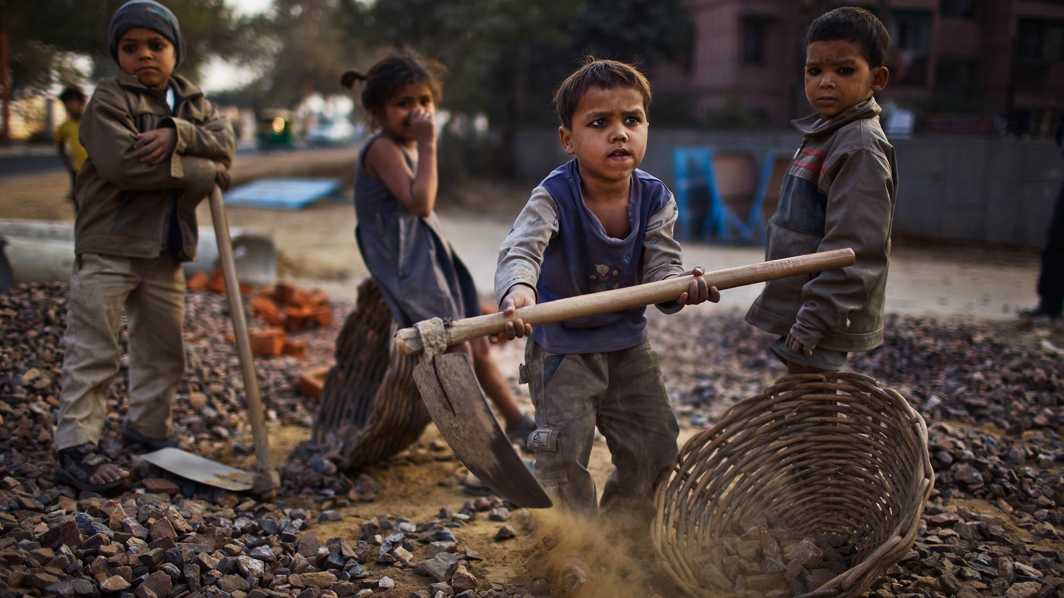
Vacancies in National Commission for Protection of Child Rights not filled, court not amused
The Supreme Court bench of Justices Madan B Lokur and Deepak Gupta, on Tuesday (September 5), directed that the National Crime Records Bureau (NCRB) must upload a list of all missing children on its website after duly verifying the records from various police stations and missing person squads.
Hearing a petition filed by Nobel laureate Kailash Satyarthi’s NGO Bachpan Bachao Andolan (BBA), the court was surprised to find that National Commission for Protection of Child Rights (NCPCR), set up in March 2007 under The Commissions for Protection of Child Rights (CPCR) Act, 2005, has remained a quasi-defunct body. Since its establishment, no adequate representation of administrative officers has taken place.
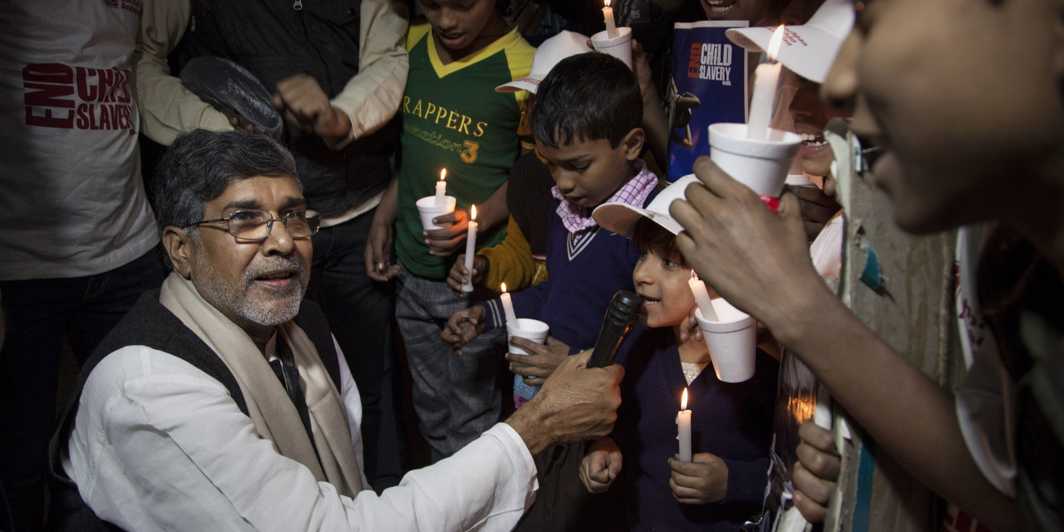
The petition has been filed by Nobel laureate Kailash Satyarthi’s NGO, Bachpan Bachao Andolan
This was revealed when counsel Maninder Singh, appearing for Union of India, highlighted issues regarding non-fulfillment of vacancies in NCPCR. The court said that this has to be done.
The PIL had been filed for the welfare of missing children found across the country and also to find ways to track them. The PIL also talked about kidnapped children and of stopping child trafficking.
The National Human Rights Commission has said that two interim directions may be given with regard to these matters, namely (1) mandatory recording of First Information Report (FIR) with regard to missing children and (2) formation of Special Juvenile Police Units in different states, in accordance with the provisions of Section 63 of the Juvenile Justice (Care and Protection of Children) Act, 2000, as amended in 2006.
The bench had given some directions on September 24, 2014. They were:
* Registration of all First Information Reports (FIRs)
* Create a number of police stations with one police officer designated as a Juvenile Welfare Officer
* Appointment of para-legal volunteers
* Presence of network of NGOs for tracing and reintegrating missing children.
* Provision for photograph of every found/recovered child to be taken by the police.
* Formulation of Standard Operating Procedure to handle the cases of missing children.
* Cases handed over to the Anti-Human Trafficking Unit in each State.
* Status reports filed by Anti-Human Trafficking Unit.
* Registration of all FIRs within a month from the date of communication of this order.
* Shelter Homes or After-care Homes set up by the state governments. Funds provided by the state government infrastructure provided by the state government.
On Tuesday, senior advocate Phulka Singh, appearing for BBA, requested the court to set up a monitoring committee under the aegis of the Child Welfare Committee, Ministry of Child and Women Development, to report and make sure that a FIR is registered.
At this, Justice Lokur clarified that this is the job of the police authorities. “We can’t ask the Child Welfare Committee to look after the registration of first information report.”
Singh also suggested the court to direct the NCRB to place the list of all those children who are missing all over the India on its site.









India News
Delhi deploys 25,000 personnel, installs CCTV cameras ahead of CJP march
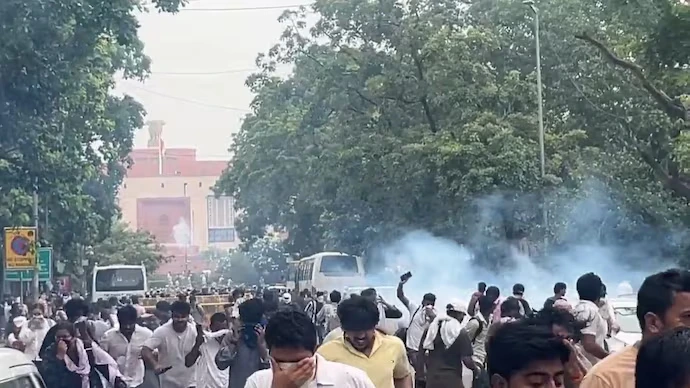
More than 25,000 police and paramilitary personnel have been deployed in Delhi ahead of the CJP’s planned protest march at Connaught Place. Authorities have also imposed restrictions and stepped up CCTV surveillance.

India News
Mallikarjun Kharge’s ‘Your Friends’ jab at Rahul Gandhi over congress exits
Congress president Mallikarjun Kharge took a dig at Rahul Gandhi after the Leader of the Opposition reportedly described former party leaders Jyotiraditya Scindia and Ghulam Nabi Azad as among those who had left the Congress.

India News
Delhi Police offers 11-person limit for CJP’s Connaught Place protest
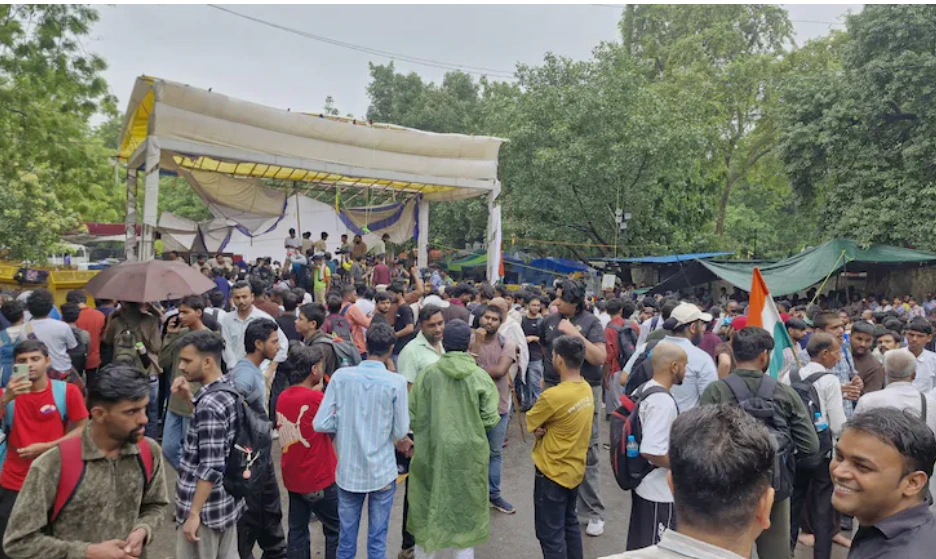
Delhi Police has offered to facilitate a group of 11 people at Central Park in Connaught Place for the Cockroach Janata Party’s October 16 protest, while warning that violations of prohibitory orders could invite legal action.

India-US trade deal first phase finalised, drafting underway

Election Commission orders voter roll revision in 17 states, UTs

Delhi Police offers 11-person limit for CJP’s Connaught Place protest

Actor Imran Khan asked to leave India after CJP protest

Mallikarjun Kharge’s ‘Your Friends’ jab at Rahul Gandhi over congress exits

Magnitude 7 earthquake strikes Russia’s Kamchatka Peninsula

Delhi deploys 25,000 personnel, installs CCTV cameras ahead of CJP march
Mallikarjun Kharge’s ‘Your Friends’ jab at Rahul Gandhi over congress exits
Delhi Police offers 11-person limit for CJP’s Connaught Place protest
Actor Imran Khan asked to leave India after CJP protest

Afghan Men Try To Hang With The Jet Engine Of The Aircraft in Kabul- Afghanistan News – Kabul News
Trending Top 10 News: 10000 Crore Fine on Flipkart, Apple to Launch Unique Feature, Hdfc Bank Job Ad

Trending Top 10 News: Nokia 6310, Apple sales, Bachpan ka Pyar Video Kid, Dainik Bhaskar IT Raid

Trending Top 10 News: Canada bans Indian flights, Rain in Delhi NCR, AIMIM Twitter hacked, Raj Kundra case

Trending Top 10 News: Shein India, Apple New Service, Pocket Oxygen, Oppo Launched New Phone
-
 India News24 hours ago
India-US trade deal first phase finalised, drafting underway
-
 India News22 hours ago
Election Commission orders voter roll revision in 17 states, UTs
-
 India News20 hours ago
Delhi Police offers 11-person limit for CJP’s Connaught Place protest
-
 India News21 hours ago
Actor Imran Khan asked to leave India after CJP protest
-
 India News8 hours ago
Mallikarjun Kharge’s ‘Your Friends’ jab at Rahul Gandhi over congress exits
-
 India News8 hours ago
Delhi deploys 25,000 personnel, installs CCTV cameras ahead of CJP march
-
 Latest world news8 hours ago
Magnitude 7 earthquake strikes Russia’s Kamchatka Peninsula
