English हिन्दी
Connect with us

India News

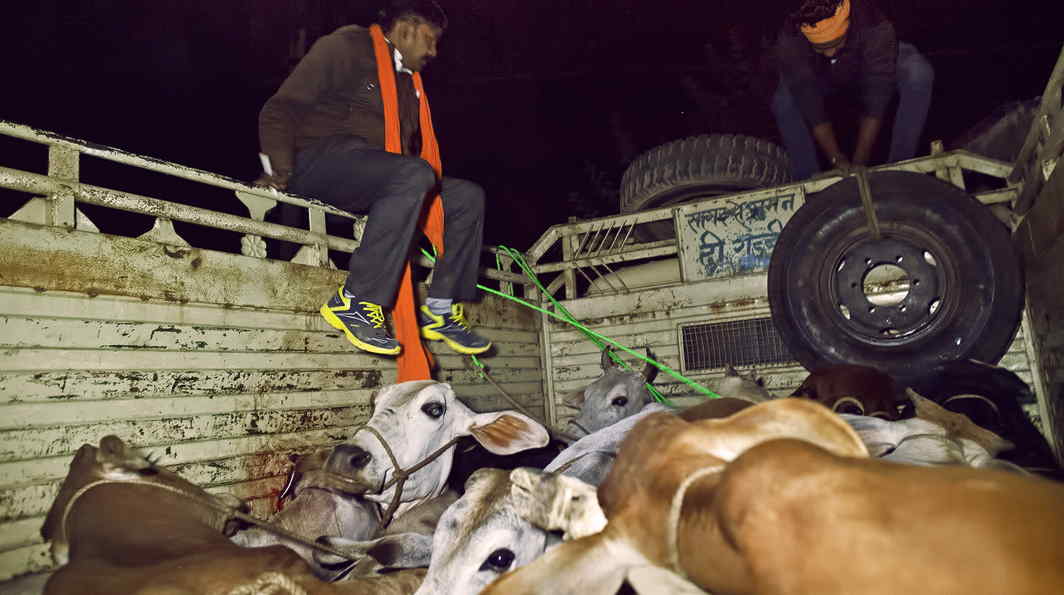
SC asks states to nominate officers to check cow vigilantism

Published

on

[vc_row][vc_column][vc_column_text]Centre asked to specify its role under Article 256 on what it can do to ask states to rein in gau rakshaks

The Supreme Court, on Wednesday, asked all States and Union Territories to appoint district-wise nodal police officers to crackdown and prosecute cow vigilante groups who engage in violence and mayhem.

Four BJP-ruled States of Haryana, Rajasthan, Maharashtra, and Gujarat accepted the apex court’s suggestion to appoint dedicated nodal police officers in the rank of Deputy Superintendent of Police (DSP) to prevent cow vigilantes or gau rakshaks, as they call themselves, from “taking the law or becoming the law unto themselves.”

During proceedings in the case being heard by the Supreme Court bench of Chief Justice Dipak Misra and Justices AM Khanwilkar and Amitava Roy, senior advocate Indira Jaising, appearing for Mahatma Gandhi’s grandson Tushar Gandhi, an intervener in the case, said that the state has a great responsibility to ensure that FIRs be lodged and also ensure that people do not take law into their own hands. She submitted that the Union of India should issue notifications and guidelines for the same.

The Bench directed that the officers appointed by the states to check cow vigilantism should take prompt action in any case of deviation. It was also directed that the states should submit to the court, within a week, the names of the officers who have been nominated for the purpose.

Indira Jaising also raised the issue of inspection of vehicles on highways. This will also have to be taken care of by the states. The affidavit will have to be filed by the chief secretary of the state after consultation with the respective inspector general of police.

Over the past three years, India has seen a sharp rise in incidents of mob lynchings and cow vigilantism especially directed towards Muslims and Dalits. Jaising argued that the Centre cannot shrug its constitutional responsibility as enshrined under Article 256 to instruct the States to take necessary legal steps to save innocent human lives from fury of lynch mobs. The Bench then asked the Centre to respond to Jaising’s submission “in the spirit of co-operative federalism.”

The court has directed Additional Solicitor General Mehta to take instructions from the Centre, to specify its role under Article 256, as sought by Jaising, and the suo moto steps that the Centre would take to prevent any future incidents of violence.

Arguing that several incidents of lynch mobs and gau rakshaks attacking citizens had occurred along highways, Jaising also said that the States should take steps to initiate highway patrolling.

The court directed Chief Secretaries and the Directors General of Police of all states to consult each other and respond to the court on this issue while the Centre has also been asked to indicate its views.

The court posted the case for hearing on September 21.[/vc_column_text][/vc_column][/vc_row]

India News

MEA responds after ITBP chief flags ongoing face-offs with China in Arunachal

India said deviations by Chinese forces from established patrolling patterns periodically disturb the situation along the Line of Actual Control, as the government addressed remarks by the ITBP chief about ongoing face-offs in Arunachal Pradesh.

Published

on

MEA

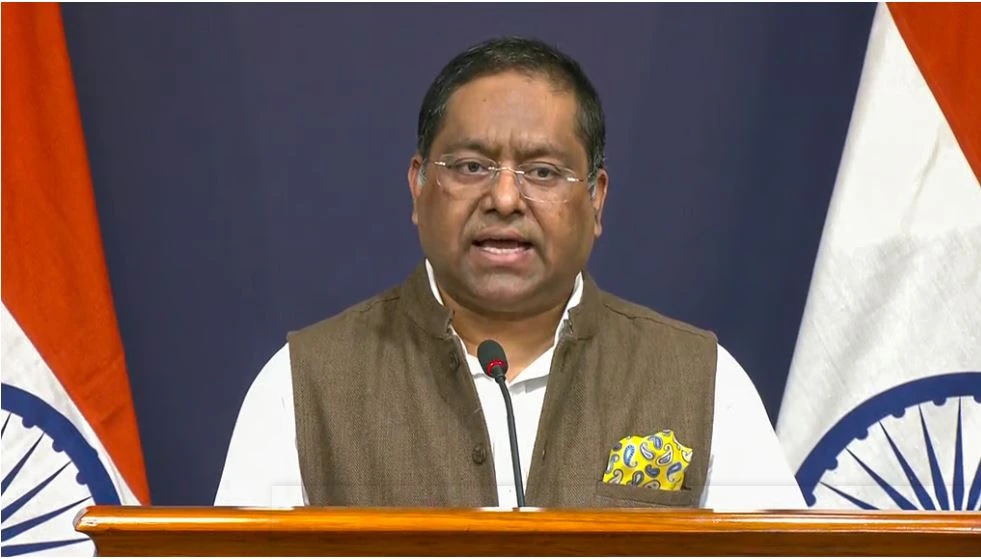
India on Friday said that deviations by Chinese forces from established patrolling patterns periodically disturb the situation along the Line of Actual Control (LAC). The Ministry of External Affairs (MEA) made the remarks amid reports of continuing face-offs between Indian and Chinese forces at multiple locations in Arunachal Pradesh.

MEA spokesperson Randhir Jaiswal addressed the issue during a regular media briefing on October 23, following remarks by Indo-Tibetan Border Police (ITBP) Director General Shatrujeet Kapur about the ongoing confrontations along the border.

“As we have noted in the past, the situation in the India-China border areas gets disturbed from time to time when Chinese forces diverge from established patrolling patterns,” Jaiswal said.

He also reiterated that maintaining peace and tranquillity in the border areas was essential for the overall development of bilateral relations between India and China.

MEA stresses diplomatic and military engagement

Jaiswal said India and China continued to use existing diplomatic and military mechanisms to resolve outstanding issues and prevent misunderstandings and miscalculations along the LAC.

He added that both countries had agreed to discuss ways to improve their understanding of the LAC in appropriate areas to strengthen border management.

The spokesperson did not elaborate on the specific confrontations mentioned by the ITBP chief, with further questions on the details referred to the Ministry of Defence, according to reporting on the briefing.

ITBP chief confirms ongoing face-offs in Arunachal Pradesh

A day before the MEA briefing, Kapur said face-offs between Indian and Chinese forces had occurred at several locations in Arunachal Pradesh in recent days and that the situation was continuing.

Speaking to ITBP personnel at a base in Alwar, Rajasthan, on Thursday, Kapur also discussed the force’s efforts to strengthen its operational capabilities along the border.

He said the ITBP had mobilised its newly raised Shaurya commando unit during the ongoing face-offs. He also highlighted the creation of drone platoons for border units and the development of a new training course to prepare personnel for battles similar to the 2020 Galwan Valley clash.

The remarks came as the ITBP continued its modernisation efforts, including a greater focus on specialised training and emerging warfare technologies.

Border management remains central to India-China ties

The latest statements underline the importance India places on maintaining peace along the disputed boundary while addressing unresolved issues through diplomatic and military channels.

India and China have continued engagements aimed at managing tensions along the LAC. However, reported confrontations at multiple locations in Arunachal Pradesh have brought the border situation back into focus.

The MEA reiterated that peace and tranquillity along the border remained essential for the broader development of bilateral relations, while emphasising continued engagement to improve border management.

Continue Reading

India News

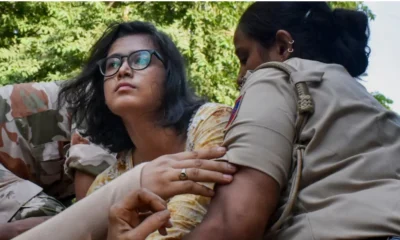
Delhi High Court rejects Neha Bora’s plea against peace bond notice

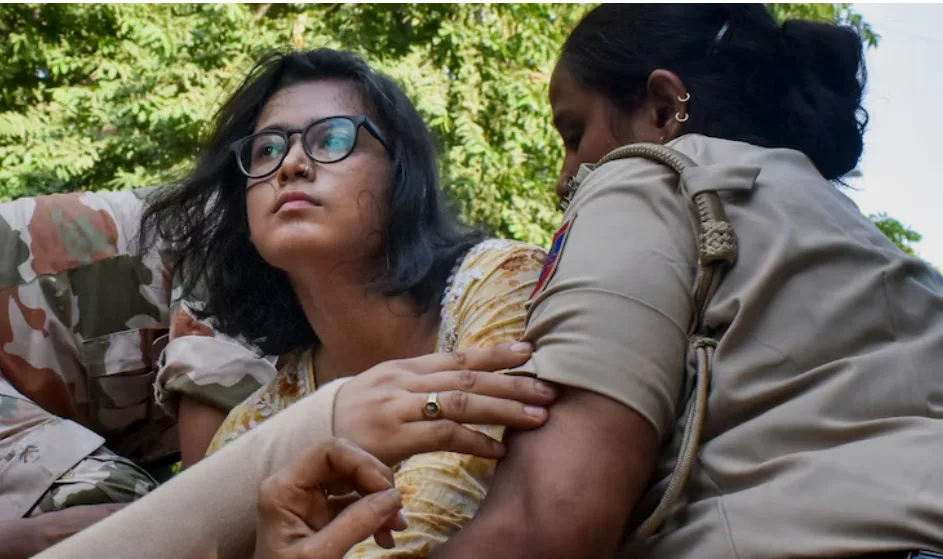
The Delhi High Court has rejected AISA president Neha Bora’s petition challenging a police notice requiring her to execute a peace bond following her participation in recent protests in the national capital.
Published

on

The Delhi High Court has rejected a petition filed by All India Students’ Association (AISA) president Neha Bora challenging a police notice that required her to execute a peace bond before a special executive magistrate.

Justice Subramonium Prasad pronounced the order on Friday, October 23, after reserving the verdict following arguments from both sides a day earlier.

The notice, issued by the Special Executive Magistrate in New Delhi district on October 17, directed Bora to appear before the magistrate and execute a personal bond of Rs. 10,000 with one surety to maintain peace.

The proceedings stemmed from her participation in protests in the national capital, including a gathering at Mandi House on October 16, amid demonstrations over alleged electoral fraud.

Why Neha Bora challenged the notice

Bora approached the High Court seeking to challenge the notice, arguing that it was ambiguous and factually incorrect. Her petition also alleged that the proceedings infringed her fundamental rights under Articles 19 and 21 of the Constitution.

She contended that the notice did not provide sufficient material to establish a likelihood of a breach of peace. It also failed to specify the period, occasion or event in connection with which the authorities apprehended such a breach, according to her petition.

Bora’s counsel further argued that she had organised a separate gathering at Mandi House and was not involved in the Cockroach Janta Party’s protest call at Central Park in Connaught Place on October 16.

The petition sought relief against the notice and the proceedings arising from it.

What the police told the court

During the hearing, Additional Solicitor General Chetan Sharma, appearing for the Delhi Police, referred to 12 instances of alleged violations involving Bora and argued that the proceedings were preventive in nature.

The police also referred to a gathering at which activist Prashant Bhushan and Cockroach Janta Party leaders allegedly called for a change of regime.

Bora’s counsel countered that she had attended a separate protest at Mandi House and that statements made at a gathering could not automatically be attributed to her.

The arguments centred on the basis for initiating preventive proceedings and the allegations cited in the notice.

Neha Bora was detained during a protest on October 16

Bora was detained on October 16 while taking part in a flag march with AISA activists demanding the resignation of Chief Election Commissioner Gyanesh Kumar. She was released at around 6 am on October 17.

The peace bond notice was issued on October 17, the day she was released from detention. It directed her to appear before the special executive magistrate and explain why she should not be required to furnish the bond.

The notice referred to allegations including raising slogans during the Mandi House protest, participating in repeated protest-related activities around Jantar Mantar despite prohibitory orders, and encouraging people to join an unauthorised demonstration at Central Park in Connaught Place.

Bora disputed aspects of the allegations in her court petition, including the claim that she had instigated people to participate in the Central Park demonstration.

What happens after the court’s decision

With the High Court rejecting Bora’s petition, she has not obtained the relief she sought against the police notice. The notice requiring her to execute the peace bond remains in effect, according to reports on the court’s decision.

The dismissal concerns her challenge to the notice. The allegations cited in the preventive proceedings should not, by themselves, be treated as findings that she committed an offence.

Continue Reading

India News

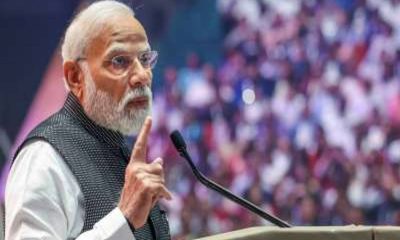
PM Modi to inaugurate Rs 169-crore RBI data centre in Odisha on October 25

Prime Minister Narendra Modi is scheduled to visit Odisha on October 25 to inaugurate the Reserve Bank of India’s Rs. 169-crore data centre in Jatni, near Bhubaneswar.

Published

on

Prime Minister Narendra Modi is scheduled to visit Odisha on October 25 to inaugurate the Reserve Bank of India’s (RBI) Rs. 169-crore data centre at Info Valley-II in Jatni, on the outskirts of Bhubaneswar.

According to the tentative itinerary shared by the Odisha Chief Secretary’s office, the Prime Minister is expected to arrive at Biju Patnaik International Airport in Bhubaneswar at around 4:30 pm aboard a special Indian Air Force aircraft. He will then travel by helicopter to the Khurda helipad before proceeding by road to the RBI facility for the inauguration.

The Prime Minister is likely to spend around an hour at the facility before returning to Bhubaneswar and departing from the state at approximately 6:30 pm.

RBI data centre to strengthen financial infrastructure

Spread across 18.55 acres, the new data centre is designed to strengthen the RBI’s data management, disaster recovery, cybersecurity and business continuity capabilities.

The facility will support critical central banking functions, including currency management, payment and settlement systems, and regulatory operations. It is also expected to serve as a backup to the RBI’s existing data centre in Navi Mumbai.

The new facility will be the RBI’s second data centre of this kind, following its existing centre in Navi Mumbai.

Why the data centre is located in Jatni

The site at Info Valley-II was selected for its geographical stability. According to an official, its location away from seismically active zones and high-risk international border areas is intended to reduce exposure to natural disasters and geopolitical vulnerabilities.

The project is intended to help maintain the continuity of essential RBI operations while strengthening the security and resilience of India’s financial infrastructure.

The foundation stone for the facility was laid by then RBI Governor Shaktikanta Das on March 22, 2023.

PM Modi’s ninth Odisha visit since 2024

The October 25 programme is expected to be Prime Minister Modi’s ninth visit to Odisha since the BJP government was formed in the state in 2024, according to Odisha BJP vice-president Jatin Mohanty.

Chief Minister Mohan Charan Majhi and Chief Secretary Anu Garg have reviewed preparations for the Prime Minister’s scheduled visit.

The inauguration is part of efforts to strengthen Odisha’s digital infrastructure. The project is also expected to support the state’s ambitions in technology and electronics manufacturing, as stated by the BJP leader.

Continue Reading

Trending

© Copyright 2022 APNLIVE.com