English हिन्दी
Connect with us

Latest Politics News

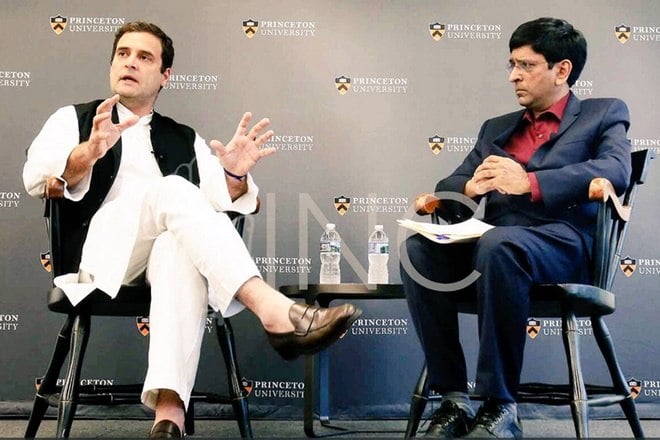
At Princeton University, RaGa lauds NaMo’s Make in India but criticizes its implementation

Published

on

At Princeton University, RaGa lauds NaMo’s Make in India but criticizes its implementation
[vc_row][vc_column][vc_column_text]Congress VP says anger building up in India against Modi government for failing to deliver on promise of generating employment

Days after he lashed out at Prime Minister Narendra Modi’s government on its failure to resuscitate India’s economy while addressing students at the University of California, Berkeley, Congress vice president Rahul Gandhion Tuesday, gave a back handed compliment to the Indian Premier over his Make-in-India campaign.

Interacting with students at the prestigious Princeton University’s Woodrow Wilson School in New Jersey, Gandhi conceded that he appreciated Modi’s Make-in-India initiative but promptly qualified his praise by asserting that the scheme wasn’t targeting the right sector of India’s economy.

“I like the Make-in-India concept but they are not targeting whom they should. My implementation and focus would be slightly different,” the Congress vice president said, while adding: “PM Modi feels large businesses should be targeted. I feel medium and small companies should be targeted. That is where the jobs are going to come from.”

In a rare display of the political intellect that he is seldom credited to have, Gandhi used Modi’s flagship scheme to highlight how even a good program could fail to achieve desired results if it targets the wrong sector.

Gandhi used the Make-in-India scheme to underscore the government’s failure in creating jobs – a major promise that Modi and his BJP had made during the Lok Sabha poll campaign in 2014 – and said that “there is anger building up in India right now” over the Centre’s inability in creating employment opportunities.

Gandhi sought to draw a parallel between the elevation of Modi and India’s Prime Minister and Donald Trump as President of the United States by asserting that the aspiration of the youth to get proper employment is what contributed in a big way to the meteoric political rise of the two leaders.

“I think the central reason why Modi arose and to an extent why Trump came, is the question of jobs in India and in the US. There is a large part of our population that simply does not have jobs and cannot see a future. And, so they are feeling pain and have supported these type of leaders.”

The Nehru-Gandhi scion who had attracted massive criticism from the BJP last week when he told students at Berkeley that India functions through its dynasts, chose to stay focused on issues related to job creation and aspirations of the youth during his interaction at Princeton.[/vc_column_text][vc_raw_html]JTIwJTNDYmxvY2txdW90ZSUyMGNsYXNzJTNEJTIydHdpdHRlci10d2VldCUyMiUyMGRhdGEtbGFuZyUzRCUyMmVuJTIyJTNFJTNDcCUyMGxhbmclM0QlMjJlbiUyMiUyMGRpciUzRCUyMmx0ciUyMiUzRVdBVENIJTNBQ29uZ3Jlc3MlMjBWUCUyMFJhaHVsJTIwR2FuZGhpJTI2JTIzMzklM0JzJTIwaW50ZXJhY3Rpb24lMjAlMjZhbXAlM0IlMjBRJTI2YW1wJTNCQSUyMGF0JTIwJTNDYSUyMGhyZWYlM0QlMjJodHRwcyUzQSUyRiUyRnR3aXR0ZXIuY29tJTJGUHJpbmNldG9uJTIyJTNFJTQwUHJpbmNldG9uJTNDJTJGYSUzRSUyNiUyMzM5JTNCcyUyMENlbnRyZSUyMGZvciUyMEludGVybmF0aW9uYWwlMjBTZWN1cml0eSUyMFN0dWRpZXMlMjAlM0NhJTIwaHJlZiUzRCUyMmh0dHBzJTNBJTJGJTJGdHdpdHRlci5jb20lMkZoYXNodGFnJTJGUkdpblVTJTNGc3JjJTNEaGFzaCUyMiUzRSUyM1JHaW5VUyUzQyUyRmElM0UlM0NhJTIwaHJlZiUzRCUyMmh0dHBzJTNBJTJGJTJGdC5jbyUyRnJpc2F1OWZpZGolMjIlM0VodHRwcyUzQSUyRiUyRnQuY28lMkZyaXNhdTlmaWRqJTNDJTJGYSUzRSUzQyUyRnAlM0UlMjZtZGFzaCUzQiUyMENvbmdyZXNzJTIwJTI4JTQwSU5DSW5kaWElMjklMjAlM0NhJTIwaHJlZiUzRCUyMmh0dHBzJTNBJTJGJTJGdHdpdHRlci5jb20lMkZJTkNJbmRpYSUyRnN0YXR1cyUyRjkxMDMxMjM2MzI2OTY2MDY3MiUyMiUzRVNlcHRlbWJlciUyMDIwJTJDJTIwMjAxNyUzQyUyRmElM0UlM0MlMkZibG9ja3F1b3RlJTNFJTBBJTNDc2NyaXB0JTIwYXN5bmMlMjBzcmMlM0QlMjIlMkYlMkZwbGF0Zm9ybS50d2l0dGVyLmNvbSUyRndpZGdldHMuanMlMjIlMjBjaGFyc2V0JTNEJTIydXRmLTglMjIlM0UlM0MlMkZzY3JpcHQlM0U=[/vc_raw_html][vc_column_text]Just as he had candidly admitted at UC, Berkeley that the Congress had become “arrogant” in 2012, Gandhi once again made an introspective remark, claiming that his party was “unable” to deliver on the front of creating employment but said that the same was now true of the Modi government.

The attack was in a way an escalation of what Gandhi had said at Berkeley a few days ago. “Currently, we are not producing enough jobs… 30,000 new youngsters are joining the job market every single day and yet the government is only creating 500 jobs a day. And this doesn’t include the massive pool of already unemployed youngsters,” Gandhi had said earlier.

On Tuesday, the Congress vice president added the facet of disenchantment among the youth against the Modi regime to his argument. “Those same people who got angry with us because we couldn’t deliver on those 30,000 jobs (a day) are going to get angry with Modi. The central question is resolving that problem. My main issue with Modi is that he diverts that issue and points the finger somewhere else instead of saying ‘listen we have a problem’,” Gandhi said.

The Congress vice president identified “the politics of polarisation” as a central challenge for India. “In the 21st century, if you leave some people out of your vision, you are asking for trouble. New ideas would come, new different visions would develop. So, to me, central challenge in India is politics of polarisation where you pit one community against other and you create spaces for other people to come in,” he said.

“There is a belt of 100 million tribal people who do not feel comfortable with the vision (of the BJP). There are a number of States in India, which don’t want a single vision forced down their throat. There are minority communities, they do not feel that they are the part of the vision. So that’s where the real danger is,” Gandhi added.[/vc_column_text][/vc_column][/vc_row]

India News

PM Modi assures no discrimination in women’s quota, delimitation debate intensifies in Parliament

PM Narendra Modi has assured that women’s reservation will be implemented without discrimination, amid a heated debate over delimitation in Parliament.

Published

on

PM modi

Prime Minister Narendra Modi has assured that there will be no discrimination in the implementation of women’s reservation, as Parliament witnessed a sharp debate over the proposed linkage between the quota and delimitation exercise.

During the ongoing special session, the government reiterated its commitment to ensuring fair representation while addressing concerns raised by opposition parties regarding the timing and structure of the legislation.

The proposed framework aims to reserve 33 percent of seats for women in the Lok Sabha and state assemblies. However, its implementation is tied to a fresh delimitation exercise, which is expected after the next census.

Opposition questions timing and intent

Opposition leaders have raised concerns that linking the women’s quota to delimitation could delay its implementation. They argue that the process of redrawing constituencies may push the actual rollout further into the future.

The issue has triggered a broader political confrontation, with multiple parties questioning whether the move could alter representation across states.

Some critics have also alleged that the delimitation exercise could disproportionately benefit certain regions based on population, a charge the government has rejected.

Government reiterates commitment to fair implementation

Responding to these concerns, the Centre has maintained that the reforms are necessary to ensure accurate and updated representation based on population data.

Leaders from the ruling side have repeatedly emphasized that the process will be carried out transparently and without bias. The assurance that there will be “no discrimination” is aimed at addressing fears among states and opposition parties.

The debate marks a key moment in Parliament, with both sides engaging in intense exchanges over one of the most significant electoral reforms in recent years.

Continue Reading

India News

Give all tickets to Muslim women, Amit Shah says, attacking Akhilesh Yadav on sub-quota demand

A sharp exchange between Amit Shah and Akhilesh Yadav in Parliament over sub-quota for Muslim women highlights key divisions on women’s reservation implementation.

Published

on

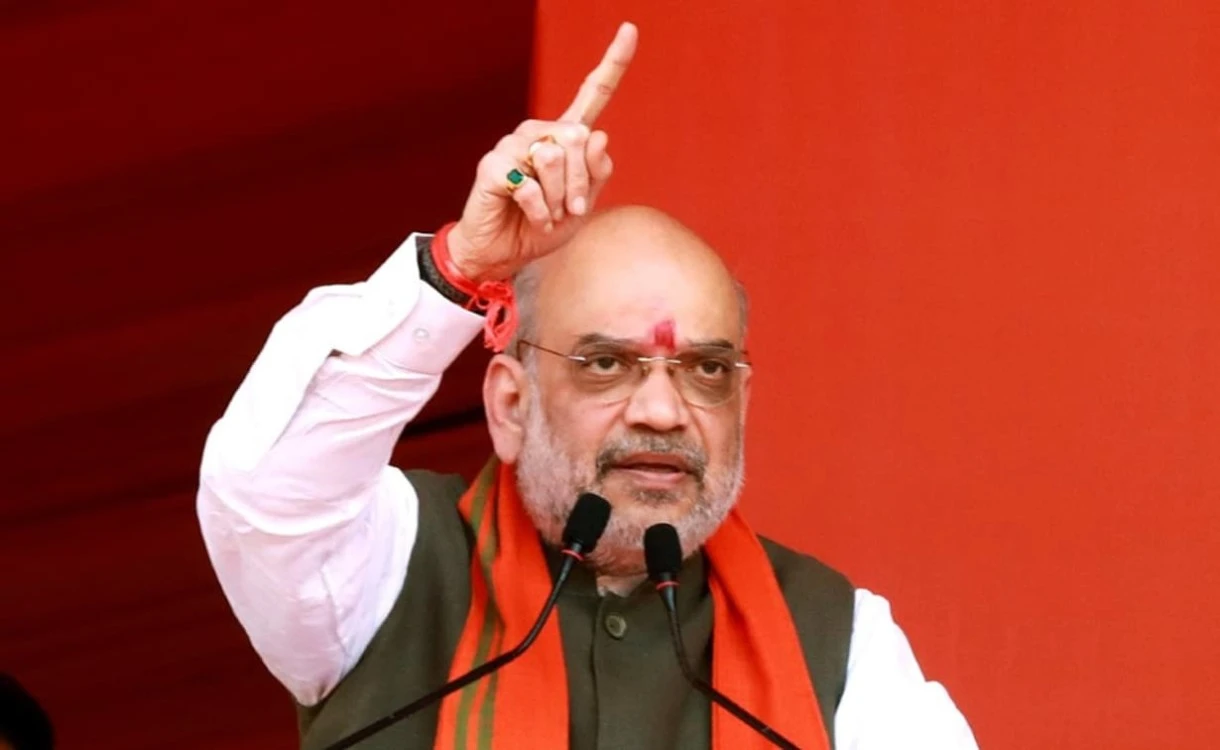
A heated exchange broke out in Parliament during discussions on the women’s reservation framework, with Union Home Minister Amit Shah and Samajwadi Party chief Akhilesh Yadav locking horns over the demand for a sub-quota for Muslim women.

The debate unfolded as the government pushed forward key legislative measures to implement 33% reservation for women in the Lok Sabha and state assemblies.

Akhilesh Yadav argued that the proposed reservation must ensure representation for women from marginalised communities, including Other Backward Classes (OBCs) and Muslim women. He said that without such provisions, large sections could remain excluded from political participation.

He also questioned the timing of the bill, alleging that the Centre was avoiding a caste census. According to him, a census would lead to renewed demands for caste-based reservations, which the government is reluctant to address.

Government rejects religion-based quota

Responding to the demand, Amit Shah made it clear that reservation based on religion is not permitted under the Constitution.

He stated that any proposal to provide quota to Muslims on religious grounds would be unconstitutional, firmly rejecting the idea of a separate sub-quota for Muslim women within the broader reservation framework.

The government has maintained that the existing framework already includes provisions for Scheduled Castes (SC) and Scheduled Tribes (ST) women within the overall reservation structure.

Wider political divide over implementation

The issue of sub-categorisation within the women’s quota has emerged as a major flashpoint, even as most opposition parties broadly support the idea of women’s reservation.

Samajwadi Party leaders reiterated that their support for the bill depends on inclusion of OBC and minority women, while the government continues to defend its constitutional position.

The debate is part of a broader discussion during the special Parliament session, where multiple bills linked to delimitation and implementation of the women’s quota are being taken up.

Continue Reading

India News

Raghav Chadha’s security withdrawn by Punjab amid AAP rift, Centre steps in with cover

Punjab withdraws Raghav Chadha’s security amid party tensions, Centre offers fresh protection.

Published

on

The Punjab government has withdrawn the Z+ category security cover provided to Raghav Chadha, amid an ongoing rift within the Aam Aadmi Party.

According to sources, the security personnel deployed by Punjab Police have been asked to report back, marking a significant development in the political dispute involving the Rajya Sabha MP.

The move comes shortly after Chadha was removed from his position as deputy leader of the party in the Rajya Sabha, signalling deepening differences between him and the party leadership.

Centre offers fresh security arrangement

Soon after the withdrawal, the Ministry of Home Affairs stepped in to provide security cover to Chadha.

Sources indicate that he will now receive Z-category security in Delhi and Punjab, while a Y-category cover may be provided in other parts of the country.

This shift ensures continued protection for the MP despite the withdrawal of state-provided security.

Fallout linked to political disagreement

The development is part of a broader fallout between Chadha and his party. He was recently replaced as deputy leader in the Rajya Sabha, with the party reportedly expressing dissatisfaction over his political approach and conduct in Parliament.

Chadha, however, has denied the allegations, calling them baseless and asserting that his focus has been on raising public issues rather than engaging in political confrontation.

Growing divide within party ranks

Once considered a close associate of Arvind Kejriwal and a prominent face of the party, Chadha’s recent removal from key roles and the withdrawal of his security underline a widening internal divide.

He is among the few leaders in the party who have recently found themselves at odds with the leadership, indicating shifting dynamics within the organisation.

Continue Reading

Trending

© Copyright 2022 APNLIVE.com