English हिन्दी
Connect with us

India News

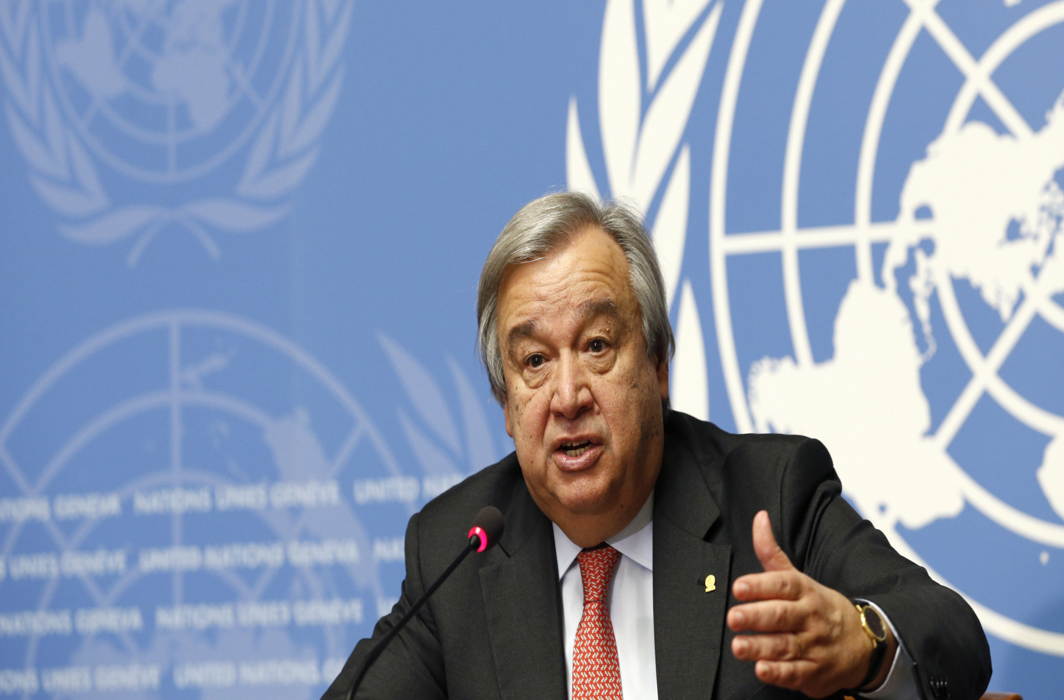
Naxalites continue to use children to fight in Jharkhand, Chhattisgarh: UN chief

Published

on

UN chief

[vc_row][vc_column][vc_column_text]The UN Secretary General’s annual report on Children and Armed Conflict says children being coerced by naxals to work as couriers, informants, fighters

In a report that paints an abysmal picture of the state of Indian children in areas infested by naxalites, the United Nations Secretary General Antonio Guterres has said that the “UN continued to receive reports of the recruitment and use of children by armed groups, including the Naxalites, in particular in Chhattisgarh and Jharkhand.”

The remarks made in the UN chief’s annual report titled Children and Armed Conflict which was released in New York on Thursday by Virginia Gamba, Special Representative of the UN Secretary General for Children and Armed Conflict are, however, qualified with the rider that says: “Owing to access restrictions for monitoring and reporting, the United Nations was unable to verify these incidents.”

While the latest report has collated data of incidents involving children in areas affected by armed conflicts in 20 countries across the globe during the period from January to December 2016, a similar report released by the then UN chief Ban Ki-moon for the corresponding period of the previous year had red-flagged the same issue.

However, the latest report shows that the prevalence of the use of children by Naxalites and other armed groups had come down to only two Indian states compared to six in 2015.

The 2015 Children in Armed Conflict report had said: “children were coerced to join children’s units (“Bal Dasta”), where they were trained and used as couriers and informants, to plant improvised explosive devices and in front-line operations against national security forces…The United Nations continued to receive reports of the recruitment and use of children as young as 6 years of age by armed groups, including the Naxalites, in Bihar, Chhattisgarh, Jharkhand, Maharashtra, Odisha and West Bengal.”

The report released by Gamba on Thursday says: “Armed groups reportedly resorted to abduction and threats against parents in order to recruit children, who subsequently underwent military training and served as messengers, informants or guards in child squads.”

The report recounts some reported incidents to endorse the claims. It says: “In March, the police relocated 23 children under threat of abduction by armed groups in Gumla district, Jharkhand, and supported their enrolment in schools. However, unverified reports suggest that police may be using children formerly associated with armed groups as informants, potentially making them targets for retaliation.”

The UN Secretary General had in 2015 asserted that the “abduction of children, especially girls, by armed groups was a serious concern” and that these children “are subjected to further grave violations and abuses, and have been forced to serve in combat functions, exposed to sexual violence and, reportedly, used as human shields.”

The latest report claims that “Children continued to be killed and injured in the context of operations of national security forces against Maoist armed groups” and quotes data collected from the India’s Union Ministry of Home Affairs to say: “the number of civilians killed in these encounters increased to 213, compared with 171 in 2015”.

The UN chief notes further that information provided by the Indian government suggests that “at least 30 schools were burned and partially destroyed by armed groups in Jammu and Kashmir. In addition, government reports confirmed the military use of four schools by security forces in that region for several weeks.”

In what the report terms as a “troubling development”, Guterres says: “Maoists were allegedly running several schools in Chhattisgarh and included combat training as part of their curriculum.”

The UN chief says further that “in the light of persistent reports of the recruitment and use of children by armed groups, I call upon the (Indian) Government to develop appropriate mechanisms to protect children from recruitment (by naxalites and other armed groups), as well as to separate and reintegrate recruited children.”

Guterres has assured that the UN “stands ready to assist (the Indian government) in this process.”[/vc_column_text][/vc_column][/vc_row]

India News

Centre orders probe into IndiGo crisis, expects normal flight operations in three days

Amid record cancellations by IndiGo, the Centre has ordered a high-level inquiry and expects flight schedules to stabilise by Saturday, with full normalcy in three days.

Published

on

indigo

The Centre has initiated a high-level inquiry into the massive disruption of IndiGo’s operations, with the government projecting that flight schedules will begin stabilising by Saturday and full normalisation is expected within three days. The announcement comes as cancellations by the airline crossed 500 for the second consecutive day, severely impacting passengers across major airports.

Civil Aviation Minister Ram Mohan Naidu said the government has directed urgent measures to ensure swift restoration of services. Within minutes of his statement, the aviation regulator DGCA announced the formation of a four-member committee to examine the circumstances leading to the delays and cancellations.

DGCA forms committee as cancellations spark scrutiny

The DGCA said IndiGo was given sufficient time to implement revised Flight Duty Time Limitations (FDTL), yet the airline recorded the highest number of cancellations in November. The regulator added that the pattern suggested gaps in the carrier’s internal oversight and preparedness, warranting an independent probe.

The committee will review the sequence of events that triggered disruptions and recommend measures to prevent a recurrence.

Flight duty rules relaxed; minister defends move

Amid criticism from the Opposition and experts, the DGCA temporarily suspended certain FDTL rules, increasing pilot duty limits from 12 to 14 hours. The changes were widely questioned, with allegations that the government was yielding to pressure from IndiGo.

Naidu defended the decision, stating the move was taken solely to safeguard passengers and that safety standards would not be compromised.
He reiterated that passenger care and convenience remain the top priority.

Assurance of refunds, real-time updates, and support

Highlighting steps taken to ease passenger distress, the minister said airlines must:

  • Provide accurate, real-time updates before travellers leave for airports
  • Initiate automatic refunds for cancelled flights without requiring follow-ups
  • Arrange hotel accommodation for passengers stranded for extended periods

Senior citizens and persons with disabilities have been accorded special priority, including access to lounges and additional assistance. Refreshments and essential services are to be provided to all affected travellers.

Inquiry to determine accountability

The government said the high-level probe will identify what went wrong at IndiGo, establish responsibility, and recommend systemic corrections to ensure such disruptions do not occur again.

Continue Reading

India News

India and Russia vow to walk together against terrorism, reaffirm strategic partnership

PM Modi and President Putin reaffirm India-Russia unity against terrorism, deepen energy and trade cooperation, and discuss peace efforts amid the Ukraine conflict.

Published

on

Prime Minister Narendra Modi and Russian President Vladimir Putin on Friday underlined that India and Russia “walk together in the fight against terrorism,” reinforcing a decades-old strategic partnership that remains steady amid global geopolitical churn. The leaders issued the joint statement following talks at Hyderabad House in Delhi, where they also announced steps to boost trade, economic cooperation, and energy collaboration.

India-Russia stand firm on counter-terror cooperation

PM Modi described President Putin as a “dear friend” and highlighted Moscow’s consistent support to India on counter-terror efforts. Russia had earlier strongly condemned the terror attack in Jammu and Kashmir’s Pahalgam, allegedly linked to Pakistan-based Jaish-e-Mohammed, and reiterated solidarity with India’s fight against terrorism in all forms.

The joint remarks emphasized that the bilateral friendship, rooted in trust and mutual respect, has remained resilient for decades despite global challenges.

Focus on energy, trade and use of national currencies

A key highlight of the engagement was Russia reaffirming “uninterrupted shipments” of fuel to India. PM Modi expressed gratitude for Russia’s commitment, noting energy cooperation as a crucial pillar of the relationship. While he did not specifically mention oil purchases, given ongoing Western pressure, he emphasised cooperation in civil nuclear and clean energy.

The two countries also discussed expanding economic ties, including a possible free trade agreement. President Putin said bilateral trade was being targeted to reach USD 100 billion, and acknowledged progress toward using national currencies for payments — a remark expected to draw global attention.

Putin shares peace plan insights on Ukraine conflict

Putin briefed the Prime Minister on Russia’s perspective for a peaceful resolution to the ongoing Ukraine war and appreciated India’s continued role as a “champion of peace.” PM Modi reiterated India’s consistent position on dialogue and diplomacy.

Agreements across jobs, health, shipping and minerals

Officials exchanged multiple agreements covering employment mobility, health, shipping, chemicals and cooperation in critical minerals — further broadening the strategic footprint of the partnership.

Continue Reading

India News

RBI cuts repo rate to 5.25%, paving the way for cheaper loans

The RBI has cut the repo rate to 5.25%, aiming to support growth as inflation softens. The central bank also raised GDP projections and announced liquidity-boosting measures.

Published

on

Reserve Bank of India

The Reserve Bank of India (RBI) reduced the key repo rate by 25 basis points to 5.25% on Thursday, signalling relief for borrowers as banks are expected to offer lower EMIs on home and vehicle loans. Governor Sanjay Malhotra announced the move after the conclusion of the three-day Monetary Policy Committee (MPC) meeting.

RBI prioritises growth as inflation eases

Malhotra said the decision was unanimous, with the central bank choosing to focus on supporting economic momentum despite concerns over a weak rupee. The repo rate was earlier cut in June from 6% to 5.5% amid easing inflation trends.

The RBI now projects Consumer Price Index (CPI) inflation at 2% for FY2025-26, significantly softer than earlier estimates. For the first quarter of FY2026-27, inflation is expected at 3.9%, lower than the previous projection. The governor noted that rising precious metal prices may contribute to the headline CPI, but overall risks to inflation remain balanced.

GDP outlook strengthened

In a strong upward revision, the central bank increased the GDP forecast for the current financial year to 7.3%, previously estimated at 6.8%. Growth for the October–December quarter has also been revised to 6.7%.

The last quarter registered a six-quarter high expansion of 8.2%, reflecting resilient demand and steady credit flow.

“The growth-inflation balance continues to offer policy space,” Malhotra said, reiterating that the RBI’s stance remains neutral.

Other key decisions

Alongside the repo rate cut, the RBI announced adjustments to key policy corridors:

  • Standing Deposit Facility (SDF): 5%
  • Marginal Standing Facility (MSF): 5.5%

To improve liquidity and strengthen monetary transmission, the RBI will conduct forex swaps and purchase ₹1 lakh crore worth of government bonds through Open Market Operations (OMO).

RBI reviews a challenging year

Reflecting on 2025, Malhotra said the year delivered strong growth and moderate inflation even as global trade and geopolitical uncertainties persisted. He added that bank credit and retail lending remained healthy, providing support to the economy.

Continue Reading

Trending

© Copyright 2022 APNLIVE.com