English हिन्दी
Connect with us

India News

SC decries sex with minor bride as a “discriminatory, capricious and punishable act”

Published

on

[vc_row][vc_column][vc_column_text]Apex court verdict is only on the issue of sex between husband and wife who is aged between 15 and 18 years, not on larger issue of marital rape

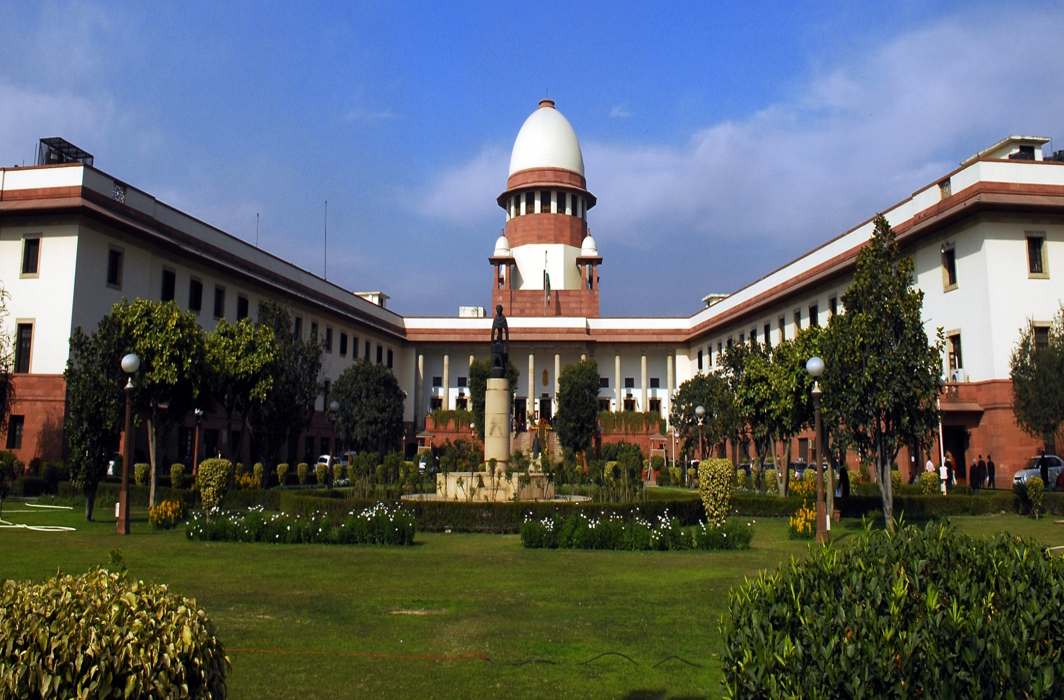
In a landmark order, a Supreme Court bench of Justices Madan B Lokur and Deepak Gupta has decided that a husband’s having sex with his wife who is aged between 15 and 18 years is a punishable offence under the Indian Penal Code (IPC) – as amended by the Criminal Law (Amendment) Act, 2013. The bench directed that the police can arrest and prosecute the husband if the wife complains.

This is the verdict that the Bench delivered on Wednesday (October 11), but the top court also made it clear that it has not dealt with the issue of marital rape. That issue is being heard at the Delhi High Court, so the apex court has not moved into that realm. In case of marital rape, age ceases to be an issue. This is a specific area within the wider issue of marital rape.

In giving its verdict, the apex court clearly stated that Exception 2 to Section 375 of the IPC (law on rape) was “discriminatory, capricious and arbitrary under Article 14” (which provides for equality before the law and equal protection… and prohibits discrimination on grounds of religion, race, caste, sex or place of birth, or any of them) of the Indian Constitution as well as under the POCSO Act.

The Bench also observed in its judgment that the states and the Centre must make some guidelines related to this. The case came up through a writ petition filed by an NGO Independent Thought, questioning the constitutionality of a provision permitting a man to have physical relationship with his wife if she is aged between 15 and 18 years.

The Bench also expressed its concern over the practice of child marriage, observing that social justice laws are not being implemented with the spirit with which they have been enacted. It said the government has to take action to stop the mass child marriages that take place on the occasion of Akshay Tritiya and other such religious occasions.

Explaining the reading down of Exception 2 of the section, the Bench said: “The exception in rape law under the IPC is contrary to other statutes, violates bodily integrity of girl child.”

The Supreme Court had completed its hearing on the issue on September 6 and had reserved its judgment.

While the Supreme Court Bench clarified that it had not dealt with marital rape, the NGO’s contention in its writ was that this act of the husband, without the consent of the bride, needs to also be termed marital rape.

In fact, it was clear in the argument of advocate Rana Mukerjee, for the Union of India, that the age of consent was important. He had said: “The Law Commission’s 77th report makes a provision for the girl to report any sexual offence, directly to highest police authorities. From the 13th Law Commission report pertaining to consent to have sexual intercourse, a committee was formed which raised the age of consent from 16 to 18years.”

“A committee formed under Justice Verma relied on this reference and recommended a compulsory age of 18 years to have sexual intercourse,” the counsel had said. However, Mukerjee had virtually contradicted himself in placing before the court the position of the government, when he had said: “Consideration of rape in marriages would weaken traditional family values in India, and that marriage presumes consent.”

Then, as a backup thought, he had said that 15 to 18 years is a qualified age to have sexual intercourse. Even, Muslim Law recognises 15 years as the age of puberty.

This assumption that marriage presumes consent has not gone down well with the court. Not only does it run in the face of age of consent (18), it also presumes that even if the bride refuses to have sex the law will assume that she has consented.

All of that has been struck down by the court on Wednesday.

-India Legal Bureau

[/vc_column_text][/vc_column][/vc_row]

India News

Pawan Khera faces fresh setback as Supreme Court refuses relief in passport row case

Congress leader Pawan Khera faces fresh setback as Supreme Court refuses interim relief and directs him to seek bail from Guwahati High Court.

Published

on

Pawan Khera

Congress leader Pawan Khera suffered another legal setback on Friday after the Supreme Court of India declined to extend protection in a case linked to his remarks about Himanta Biswa Sarma’s wife.

A bench of the apex court refused to interfere with an earlier order that had stayed the transit anticipatory bail granted to Khera by the Telangana High Court. This decision leaves the Congress leader open to possible arrest by Assam Police in connection with the case.

During the hearing, Khera’s counsel sought interim protection, but the court declined the request and advised him to approach the appropriate court in Assam for relief. The bench clarified that the Guwahati High Court should decide any bail plea independently and on its merits.

“Am I a terrorist?” remark during hearing

While seeking protection, Khera’s legal team expressed concern over the urgency of the situation. In court, his counsel remarked, “Am I a terrorist?” highlighting the plea for temporary relief until a fresh bail application could be filed.

The Supreme Court also raised concerns over the submission of incorrect documents during the proceedings, adding another layer to the legal complications faced by the Congress leader.

Case linked to remarks on CM’s wife

The case stems from a press conference held earlier this month, where Khera made allegations regarding the citizenship status and financial assets of the Assam Chief Minister’s wife, Riniki Bhuyan Sharma.

He had claimed that she possessed multiple passports and owned undisclosed overseas properties. These allegations were strongly denied by the Chief Minister’s family, who termed them fabricated and misleading.

Legal battle intensifies

Earlier, the Telangana High Court had granted Khera temporary transit anticipatory bail, allowing him time to seek relief from a competent court in Assam. However, the Supreme Court stayed that order following a challenge by Assam authorities, escalating the legal battle.

With the latest ruling, Khera is now expected to move the Guwahati High Court for anticipatory bail as the case continues to unfold.

Continue Reading

India News

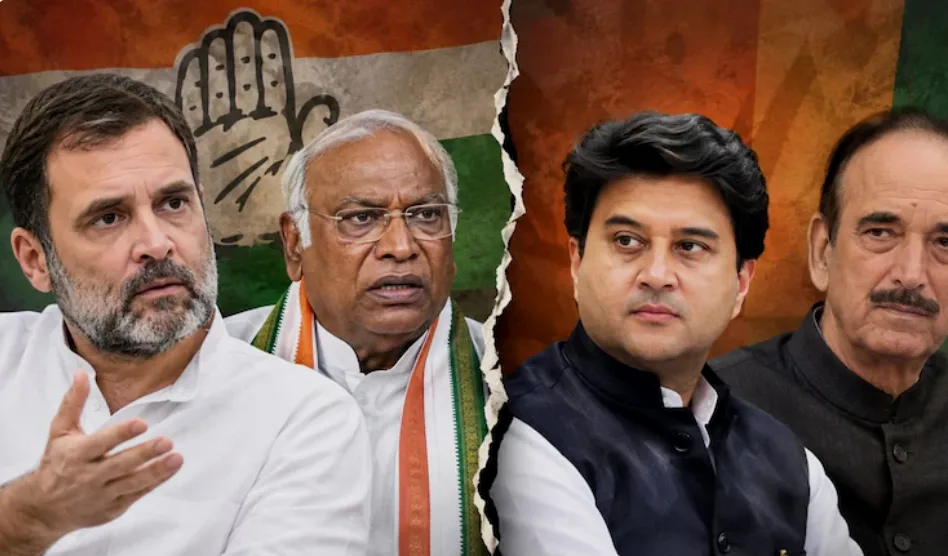
Congress suspends 5 Haryana MLAs over cross-voting in Rajya Sabha polls

Congress suspends five Haryana MLAs for cross-voting in Rajya Sabha elections, citing serious indiscipline and anti-party activities.

Published

on

The Congress has suspended five of its MLAs in Haryana for cross-voting during the recent Rajya Sabha elections, taking disciplinary action over what it described as “anti-party activities”.

The move came after the state unit reviewed the conduct of certain legislators during the polls, where some were found to have voted against the party’s authorised candidate.

Five MLAs suspended after disciplinary process

According to party sources, the MLAs were issued show-cause notices seeking an explanation for their actions. After reviewing their responses, the Congress disciplinary committee recommended suspension.

The decision was approved by the party leadership, including Congress president Mallikarjun Kharge, and has been implemented with immediate effect.

Party calls it ‘grave indiscipline’

Haryana Congress chief Udai Bhan said the action was necessary to uphold party discipline, stressing that defying the official party line during elections weakens organisational unity.

He said the party takes such violations seriously and will continue to act against any form of indiscipline.

Leadership backs strict action

Senior Congress leader and Leader of Opposition Bhupinder Singh Hooda supported the decision, saying it was taken after due consideration.

He noted that while Rajya Sabha elections are conducted through an open ballot system, allowing legislators some flexibility, the party retains the authority to initiate internal disciplinary action in cases of deviation.

Background

The action follows cross-voting reported during the recent Rajya Sabha elections in Haryana, which led to internal concerns within the party. The development has highlighted organisational challenges and prompted the leadership to take corrective steps to reinforce discipline.

Continue Reading

India News

Harivansh set to be elected Rajya Sabha Deputy Chairperson unopposed

Harivansh is set to be elected unopposed as Rajya Sabha Deputy Chairman after no opposition nominations were filed before the deadline.

Published

on

Former Rajya Sabha Deputy Chairman Harivansh is set to be re-elected to the same post unopposed in the election due to be held later today.
The date has been fixed by the Chairman under the relevant rules governing the conduct of business in the Upper House.
According to sources, the deadline for submitting motions for the election was 12 noon on April 16. A total of five notices were received within the stipulated time, all proposing Harivansh for the post.

Multiple nominations, single candidate
The motions were submitted by members across parties, including Jagat Prakash Nadda, Nitin Nabin, Nirmala Sitharaman, Sanjay Kumar Jha, and Jayant Chaudhary, each backed by seconding members.
All five motions explicitly state that Harivansh be chosen as the Deputy Chairman of the Rajya Sabha.

No opposition nomination filed

Notably, no motion was submitted by the Opposition before the deadline. This effectively clears the path for a unanimous election, as there is no contest for the position.
As per parliamentary procedure, motions will be taken up one by one. Once any one motion is adopted by the House, the remaining motions will not be put to vote.

Likely to be elected by voice vote
In line with established practice, the first motion — expected to be moved by Nadda — may be adopted through a voice vote. Following this, the Chairman will formally declare Harivansh as elected Deputy Chairman.
After the declaration, Harivansh will be escorted to the Chair by members from both the Treasury and Opposition benches, adhering to parliamentary convention.

Continue Reading

Trending

© Copyright 2022 APNLIVE.com