English हिन्दी
Connect with us

India News

India imposes ban on wheat exports with immediate effect to control rising prices in country

The central government has banned the export of all wheat from the country. The decision comes a day after annual consumer price inflation hit an eight-year high of 7.79 percent in April.

Published

on

wheat export ban

The central government has banned the export of all wheat from the country. The decision comes a day after annual consumer price inflation hit an eight-year high of 7.79 percent in April. In addition, retail food inflation has risen to 8.38 percent.
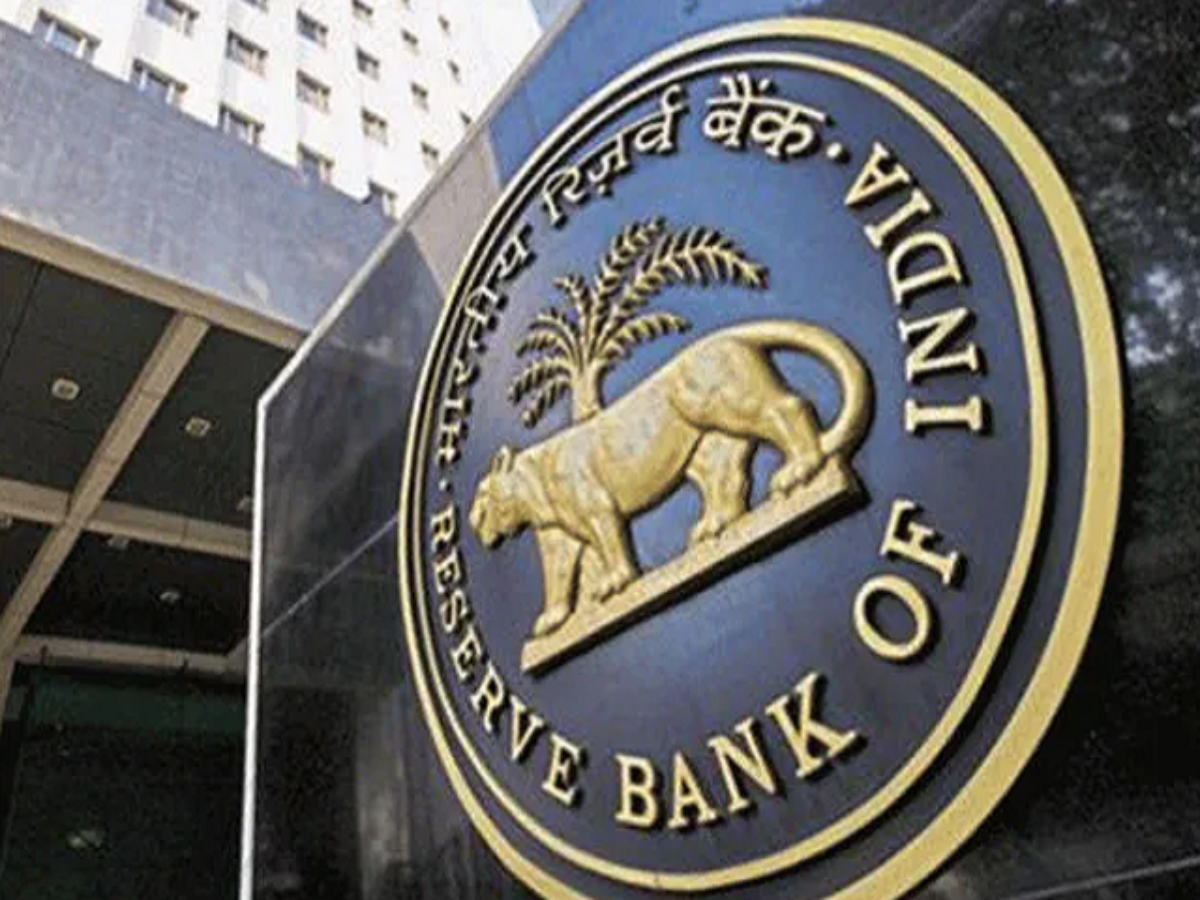
In a new order, the export of all wheat, including high protein durum and normal soft bread varieties, has been shifted from ‘free’ to ‘prohibited’ category with effect from May 13. The commerce department notification said that from now, only two types of shipments will be allowed.

The first is on the basis of permission granted by the Government of India to other countries to meet their food security needs, and on the basis of requests from their governments.

Second are the exports under transitional arrangements where an irrevocable credit note has been issued on or before the date of this notification, subject to production of such documentary evidence as prescribed.

Read Also: Mundka fire: At least 27 dead, 12 injured in tragedy; 2 held as building didn’t have fire clearance; rescue operation underway

Drop in Purchases

It is said that the government procurement of wheat is decreasing. There is a possibility that procurement of wheat by government agencies will come down to a 15-year low this time from the highest so far last year in the current marketing season. This time around 18.5 million tonnes (MT) will likely be procured.

This figure will be the lowest since the procurement of 11.1 million tonnes in 2007-08. Farmers mostly sell from April to mid-May, although government wheat procurement technically extends until June and the marketing season until the following March.

Moreover, this will be the first time that wheat procured from the new crop (18.5 million tonnes) is less than the public stock at the start of the marketing season (19 million). Fresh purchases have always been higher than the opening balance stock.

This was also the case during the last two low procurement years of 2006-2007 and 2007-2008. This year will be an exception and in stark contrast to 2021-22, which saw unprecedented levels of both opening stock (27.3 million tonnes) and procurement (43.3 million tonnes).

There are two main reasons why procurement has dropped to a 15-year low this time around. These are export demand and low production.

Gyanvapi Masjid Case: 52-member team enters mosque, videography survey resumed amid tight security

IPL 2022: Mohammed Siraj, Josh Hazlewood concede 100 runs together in 6 overs, fans troll RCB bowling, say will trust Siraj in wheelchair over Hazlewood at death

India News

Telegram CEO Pavel Durov criticises India restriction, says leak networks shifted to other apps

Telegram founder Pavel Durov has responded to India’s temporary restriction on the platform ahead of the NEET-UG 2026 re-examination, arguing that the move affected ordinary users without stopping alleged leak networks.

Published

on

Telegram founder and CEO Pavel Durov has criticised India’s decision to temporarily restrict access to the messaging platform, arguing that the move failed to curb alleged exam leak operations and instead affected millions of legitimate users.

The restriction was imposed ahead of the NEET-UG 2026 re-examination as authorities sought to prevent the spread of leaked exam-related material and disrupt networks allegedly involved in malpractice.

In a public response, Durov said the action had inconvenienced a large number of users across India while those responsible for sharing leaked content had simply migrated to alternative platforms.

According to Durov, restricting access to Telegram did not eliminate the problem authorities were trying to address. He claimed that groups involved in distributing exam-related leaks quickly shifted their activities elsewhere, raising questions about the effectiveness of platform-specific restrictions.

The temporary curbs were announced by the government in the lead-up to the NEET-UG re-test scheduled for June 21. Officials said the move was aimed at safeguarding the integrity of the examination process following concerns about the circulation of leaked material online.

The restriction is currently expected to remain in place until June 22.

Durov also stressed that millions of Indian users rely on Telegram for communication, education, business activities and community engagement. He argued that measures targeting an entire platform can have wider consequences for users who have no connection to alleged wrongdoing.

The government’s action came amid broader efforts to prevent cheating and malpractice in competitive examinations. Authorities have been closely monitoring digital platforms and messaging services after reports that exam-related content was being circulated through online channels.

The debate has sparked discussions about how governments and technology platforms should balance examination security with access to digital communication services. While officials maintain that strong measures are necessary to protect the fairness of high-stakes examinations, critics argue that restrictions on entire platforms may not effectively stop determined offenders.

For now, Telegram remains at the centre of the discussion as authorities continue efforts to ensure a fair and secure conduct of the NEET-UG 2026 re-examination.

Continue Reading

India News

Telegram restricted ahead of NEET-UG re-exam, NTA backs move to curb exam fraud

NTA has welcomed the Centre’s decision to temporarily restrict Telegram ahead of the NEET-UG 2026 re-examination, citing the need to prevent fraud and misinformation.

Published

on

NEET

The Centre has imposed temporary restrictions on messaging platform Telegram ahead of the NEET-UG 2026 re-examination, with the National Testing Agency (NTA) welcoming the decision as part of efforts to prevent exam-related fraud and misinformation.

The temporary curbs will remain in place until June 22, a day after the NEET-UG re-exam scheduled for June 21. Authorities said the action was taken following concerns that the platform was being misused by cheating networks and individuals circulating misleading claims related to the examination.

NTA says move aimed at protecting exam integrity

According to the NTA, the restrictions are intended to safeguard candidates from fraudulent activities and false information that could affect the fairness of the examination process. The agency stated that maintaining the integrity of the re-examination remains a priority as lakhs of students prepare to appear for the test.

The NEET-UG re-exam is being conducted after the original examination was cancelled amid allegations of question paper leaks and irregularities. Since then, authorities have been monitoring online platforms for suspicious activity and misleading content targeting candidates.

Restrictions linked to concerns over fake paper leak claims

In recent weeks, several reports surfaced about Telegram channels allegedly offering access to leaked examination papers. The NTA had repeatedly advised students not to trust such claims and referred suspicious links and posts for verification by cybercrime authorities. No official confirmation of any genuine leaked re-exam paper had been issued.

Authorities believe the temporary restrictions will help limit the spread of fake content and reduce opportunities for organised exam fraud in the days leading up to the re-test.

Wider efforts to secure the re-examination

The government and examination authorities have introduced several measures ahead of the re-exam, including monitoring social media platforms and creating channels for reporting suspicious claims related to NEET-UG 2026. The NTA has also urged candidates to rely only on official communications for updates regarding the examination.

With the re-examination approaching, officials say the latest action is part of a broader effort to ensure a fair and transparent process for all candidates.

Continue Reading

India News

Abhishek Banerjee says will not bow to BJP after nearly 11 hours of ED questioning

After spending nearly 11 hours before the Enforcement Directorate, TMC leader Abhishek Banerjee said he would not bow to the BJP and accused the ruling party of using investigative agencies for political purposes.

Published

on

Abhishek Banerjee

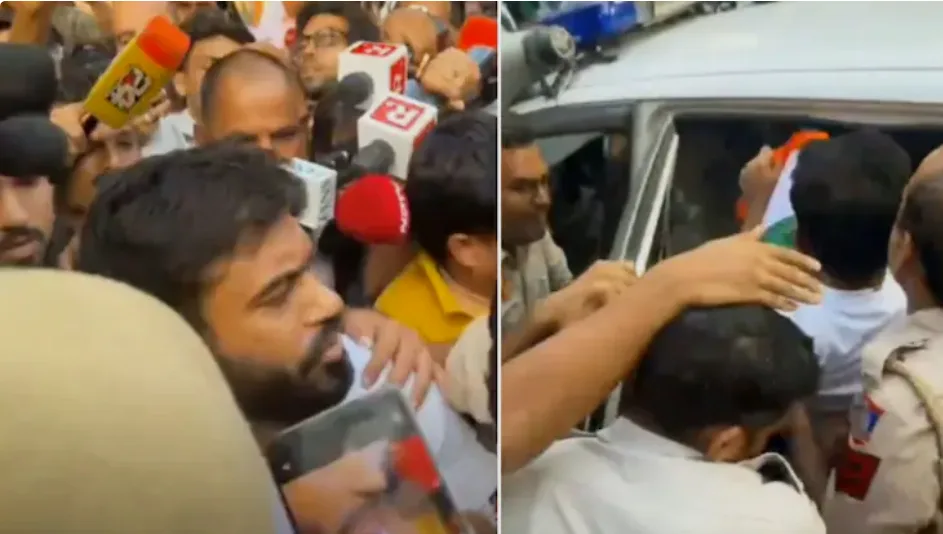
Trinamool Congress leader and Diamond Harbour MP Abhishek Banerjee on Tuesday said he would not bow to the BJP after spending nearly 11 hours being questioned by the Enforcement Directorate (ED) in connection with an ongoing investigation.

Speaking after the questioning, Banerjee alleged that central agencies were being used to target opposition leaders and asserted that he would continue his political fight despite what he described as sustained pressure.

The TMC leader has repeatedly maintained that investigations involving him are politically motivated, a charge he has made on several previous occasions while appearing before central agencies.

His appearance before the ED comes amid a period of heightened political activity and multiple investigations involving leaders in West Bengal. Recent days have also seen Banerjee face summons and questioning in separate matters by state investigative agencies.

After leaving the ED office, Banerjee reiterated that he would not be intimidated and said he remained committed to his political responsibilities. He also accused the BJP of attempting to weaken opposition parties through investigative action, an allegation that the BJP has rejected in the past.

The Enforcement Directorate has not publicly commented on Banerjee’s remarks. The investigation related to the questioning remains ongoing.

Continue Reading

Trending

© Copyright 2022 APNLIVE.com