
Top Stories
Fact Check: Goldy Brar’s recent photo with Punjab CM Bhagwant Mann goes viral | Who’s the real Goldy Brar?
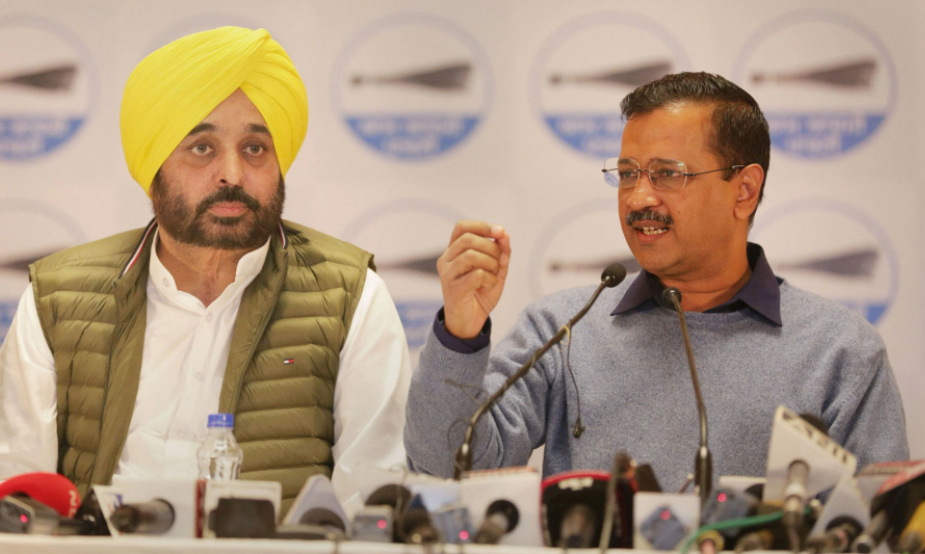
A photo of Goldy Brar with Punjab Chief Minister Bhagwant Mann is going viral on social media. The attack on Moosewala came a day after the Punjab government reduced his security detail by half.


A photo of Goldy Brar with Punjab Chief Minister Bhagwant Mann is going viral on social media. Now, people are claiming that the Aam Aadmi Party is linked to the murder of the Punjabi singer Sidhu Moosewala. The attack on Moosewala came a day after the Punjab government reduced his security detail by half.
Sidhu Moosewala was shot dead in Punjab’s Mansa district of Jawaharke village on Sunday by unidentified assailants. But later, gangster Goldy Brar released a statement on social media allegedly taking the responsibility for Sidhu’s murder. In a statement, Brar said that he, along with Sachin Bishnoi and Lawrence Bishnoi, were responsible for the murder of the 28-year-old singer.
Brar claimed that Sidhu was involved in the killing of Vicky Middhukhehra and was also behind the encounter of Ankit Badhu. He even alleged that Delhi Police had put his name in front of the media but still, by using his power, he was avoiding punishment and no action was taken against him.
Read Also: Sidhu Moosewala last rites: Singer’s mortal remains to be taken on his favorite tractor
Who’s the real Goldy Brar?

No, this is not gangster Goldy Brar who was photographed with Punjab CM. The man in the photo is a businessman from Mohali, Punjab with the same name as a gangster. Viral photos of a Punjabi businessman, Goldy Brar, standing with Mann have gone viral, with captions in Hindi saying the gangster has ties to the state’s Aam Aadmi Party government. The man in this photo standing close to Bhagwant Mann is Goldy Brar, who has claimed responsibility for killing Sidhu Moosewala, the captions said.
After surfing the social media, it was found that this is a picture of a person named Goldy Brar who is a businessman and is nowhere linked to gangster Goldy Brar. The viral photo of him posing with Mann was uploaded by the account on March 10, 2022, with the caption – Congratulations CM Saab.
Brar later uploaded a video appealing to people to not share his photo claiming him a gangster. He added that he is a businessman and has no connection to the gangster Goldy Brar who has been accused of murdering Sidhu Moosewala. He also said that he will take proper legal action against those people who are circulating his photo.
UP accident: Ambulance collides with truck, 7 dead, 6 of the same family dies






India News
Election Commission orders voter roll revision in 17 states, UTs
The Election Commission has ordered a Special Summary Revision of electoral rolls in 17 states and Union Territories. Draft rolls are scheduled for November 12, with final rolls due on January 4, 2027.

India News
India-US trade deal first phase finalised, drafting underway
The first phase of the India-US trade agreement has been finalised and is undergoing legal drafting, Commerce Minister Piyush Goyal said. The deal is expected to be operationalised once India secures a competitive advantage over peer countries.
India News
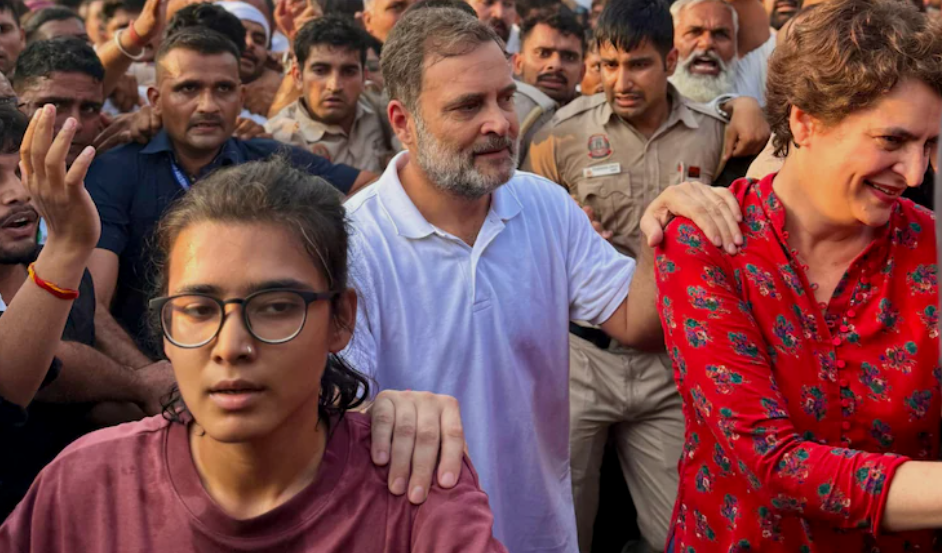
Nobody can browbeat judiciary, Chief Justice warns over Rahul Gandhi’s march
The Supreme Court issued notices to opposition leaders, including Rahul Gandhi and Akhilesh Yadav, over their march to the court on October 12 concerning irregularities in the Special Intensive Revision of electoral rolls.

Supreme Court questions EC over missing records in Sringeri election dispute

Dhruv Rathee gets fresh summons in 2018 BJP IT cell video case

Nobody can browbeat judiciary, Chief Justice warns over Rahul Gandhi’s march

India-US trade deal first phase finalised, drafting underway

Election Commission orders voter roll revision in 17 states, UTs

Delhi Police offers 11-person limit for CJP’s Connaught Place protest

Actor Imran Khan asked to leave India after CJP protest
Election Commission orders voter roll revision in 17 states, UTs
India-US trade deal first phase finalised, drafting underway
Nobody can browbeat judiciary, Chief Justice warns over Rahul Gandhi’s march

Afghan Men Try To Hang With The Jet Engine Of The Aircraft in Kabul- Afghanistan News – Kabul News
Trending Top 10 News: 10000 Crore Fine on Flipkart, Apple to Launch Unique Feature, Hdfc Bank Job Ad

Trending Top 10 News: Nokia 6310, Apple sales, Bachpan ka Pyar Video Kid, Dainik Bhaskar IT Raid

Trending Top 10 News: Canada bans Indian flights, Rain in Delhi NCR, AIMIM Twitter hacked, Raj Kundra case

Trending Top 10 News: Shein India, Apple New Service, Pocket Oxygen, Oppo Launched New Phone
-
 India News24 hours ago
Supreme Court questions EC over missing records in Sringeri election dispute
-
 India News12 hours ago
Dhruv Rathee gets fresh summons in 2018 BJP IT cell video case
-
 India News8 hours ago
Nobody can browbeat judiciary, Chief Justice warns over Rahul Gandhi’s march
-
 India News4 hours ago
India-US trade deal first phase finalised, drafting underway
-
 India News2 hours ago
Election Commission orders voter roll revision in 17 states, UTs
-
 India News1 hour ago
Actor Imran Khan asked to leave India after CJP protest
-
 India News5 mins ago
Delhi Police offers 11-person limit for CJP’s Connaught Place protest
