English हिन्दी
Connect with us

Latest business news

Amid fears over safety of bank deposits due to FRDI Bill, reports of corporate loan write offs

Published

on

Amid fears over safety of bank deposits due to FRDI Bill, reports of corporate loan write offs

If big corporate houses do not repay loans, will banks take over your money? It may seem ridiculous or outlandish, but there are fears that it may become a distinct possibility.

Amid fears over Financial Resolution and Deposit Insurance (FRDI) Bill, 2017 – expected to come up for passage in forthcoming winter session of Parliament – authorising take over of account holders’ control over their deposits in failing banks, came a report that banks have written off over a lakh of crores of loans.

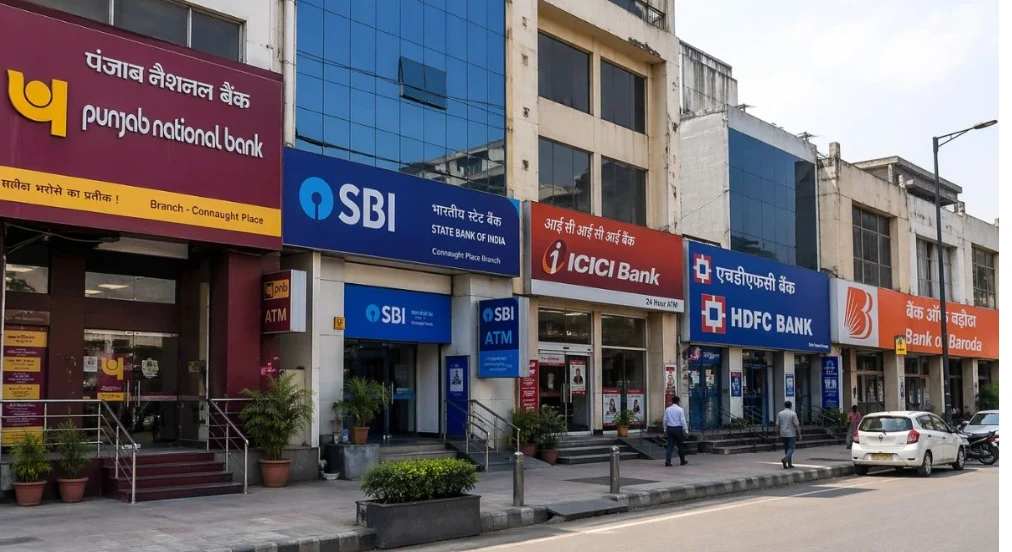
The public sector banks, that account for 63 per cent of investments made by people, have written off Rs 55,356 crore worth of loans in the first six months of fiscal 2017-18, said a repport in The Indian Express, quoting data compiled by credit rating agency ICRA.

This, said the report, was done under banks’ attempt to clean up their balance sheets after a string of defaults by firms and promoters in the wake of the economic slowdown.

The write-off in the last six months was 54 per cent higher than the Rs 35,985 crore written off in the same period last year. Banks are reportedly struggling to resolve many cases of repayment of loans and recover money stuck with corporate defaulters through insolvency proceedings.

Figures obtained by The Indian Express from the RBI through the Right to Information (RTI) Act for the last decade show that banks had written off  Rs 2,28,253 crore in nine years — from fiscal 2007-08 to 2015-16.

While the RBI did not provide data for the subsequent period, the ICRA, responding to a questionnaire, said that write-offs amounted to Rs 1,32,659 crore in 2016-17 and the first six months of 2017-18, said the IE report.

This means the total write-off in the last ten years is now over Rs 3,60,000 crore, the report said.

Banks were engaged in a massive write-off of loans over the years and the figure hit a high of Rs 77,123 crore during the year ended March 2017, against Rs 57,585 crore in fiscal 2015-16. Ten years ago, in 2007-08, loans written off by banks were just Rs 8,019 crore, the RBI said in its reply to an RTI query.

Gross non-performing assets (GNPA) are likely to peak at Rs 8,80,000-Rs 9,00,000 crore (10.0-10.2 per cent) by the end of FY2018 as against NPAs of 9.5 per cent (Rs 765,000 crore) as on March 31, 2017, said the IE report quoting ICRA group head Karthik Srinivasan.

“A substantial portion of this write-off is, however, technical in nature. It is primarily intended at cleansing the balance sheet and achieving taxation efficiency. In ‘Technically Written Off’ accounts, loans are written off from the books at the Head Office, without foregoing the right to recovery. Further, write-offs are generally carried out against accumulated provisions made for such loans. Once recovered, the provisions made for those loans flow back into the profit and loss account of banks,” the RBI had said in an explanatory note.

M Narendra, former chairman and MD of Indian Overseas Bank, said, “The write-off is just a technical book entry. Banks are not losing anything. It doesn’t mean banks are giving up those assets. They will continue with various recovery methods.”

However, a former RBI official quoted in the IE report said, “Technical write-off creates non-transparency, destroys the credit risk management system and brings all types of wrongdoings into the system.”

“I have nothing against a write-off but it has to be done scarcely and within a policy, with all efforts taken to recover the money. Any asset which is backed up by tangible asset is never written off. Secondly, you must be subject to scrutiny for these write-offs. There must be a policy. You ask any bankers. They have written off Vijay Mallya’s loan. Then how are they going to recover that money? Use it very sparingly and do it where it’s essential. If there’s asset, why are you writing it off?” the official said.

Significantly, the write-offs come amid government’s efforts to enable a clean-up of balance sheets of banks.

It is in this context that a bill was approved by the government in June 2017 for helping resolve problems of failing banks. Details of the bill, Financial Resolution and Deposit Insurance (FRDI) Bill, 2017, that came out in the media have given rise to deep fears among bank depositors. The Bill, at present before a Select Committee of the Parliament, was opposed by Bank unions who issued a joint statement last month saying that the proposed law will open up public sector banks for liquidation or amalgamation, which could put the deposits of customers under severe risk.

The bill also provides for a bail-in option, which means depositors could lose control of their money which could be converted into securities such as shares in the bank in case the bank’s financial situation deteriorates.

The “bail-in” powers would be exercised by a body called Resolution Corporation, proposed to be set up in Bill, for saving a bank which is on the verge of collapse.

The ‘bail-in’ is method used for rescuing a financial institution on the brink of failure by making its creditors and depositors take a loss on their share holdings or deposits. A bail-in is the opposite of a ‘bail-out’, which involves the rescue of a financial institution by external parties, typically governments using taxpayers’ money.

Governments usually resort to bail-outs rather than bail-ins, “but in recent years after massive bail-outs some governments now require the investors and depositors in the bank to take a loss before taxpayers,” according to a report.

Section 52 of the FRDI Bill gives the Resolution Corporation powers to cancel a liability of a bank. ‘Liability’ of a bank is the money in a savings or fixed deposit account that the bank owes to its customer. This means that the RC can declare the bank doesn’t owe you any money. It can also modify or change the form of liability, meaning if you have deposited money for using it for something after 5 years, the bank may instead convert it into a deposit with a lock-in of 15 years without your consent. The Bill also has a provision that allows the RC to exempt the failing bank for fulfilling its obligations under a contract or an agreement.

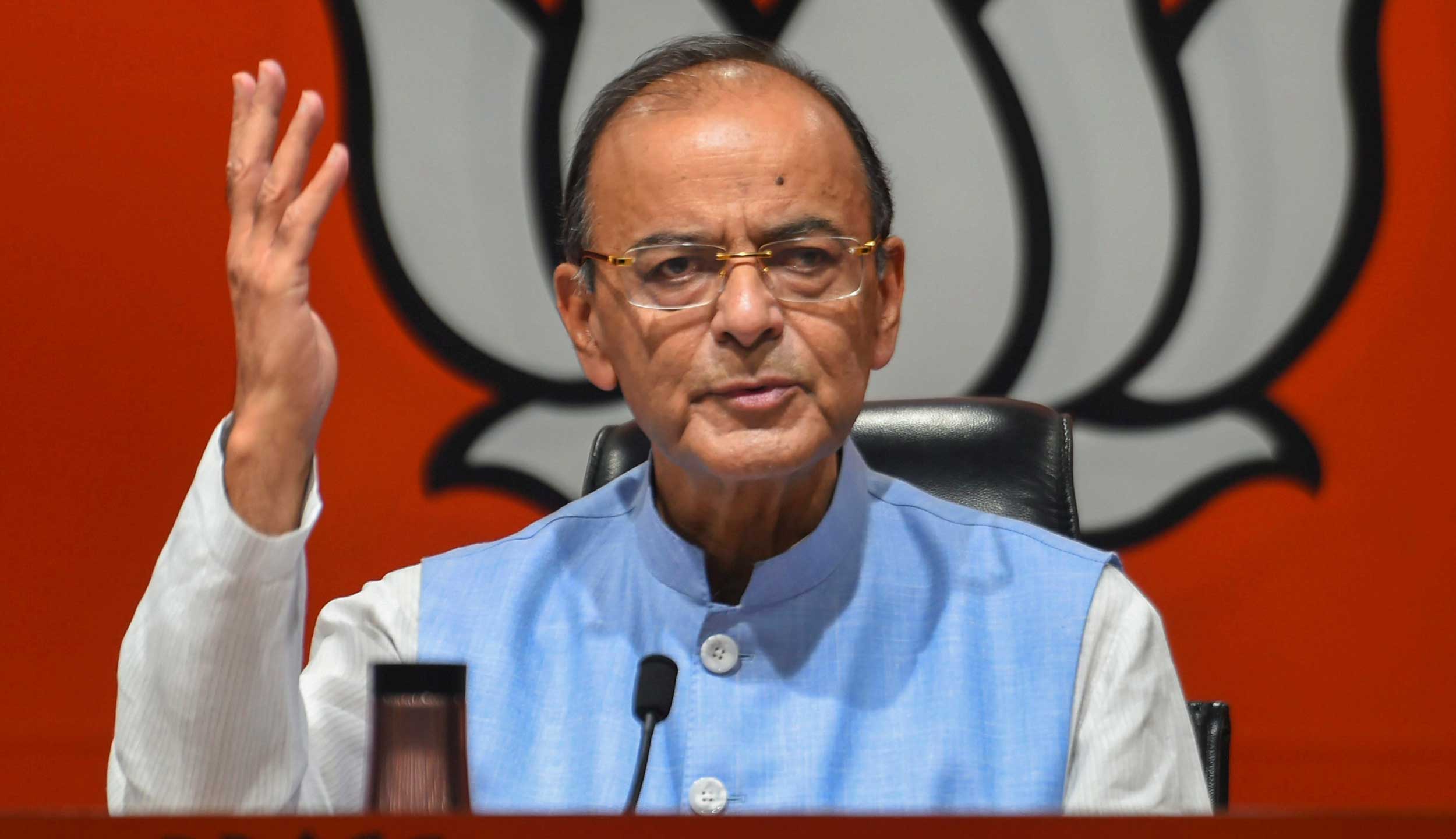
Seeking to allay fears, Finance and Corporate Affairs Minister Arun Jaitley has said the legislation is still at the drafting stage and could see several ‘corrections’ before its passage,

“The Bill still has to go through the overall drafting process. The Parliamentary committee can offer drafting suggestions. Thereafter it will go back to the Cabinet,” Jaitley said.

“The Cabinet will place the recommendations in the public domain and ask for feedback. So I think a lot of corrections will take place,” the Minister said.

India News

Union Budget 2026 highlights: Nirmala Sitharaman Raises Capex to Rs 12.2 Lakh Cr, West Bengal Gets Major Allocation

Finance Minister Nirmala Sitharaman is presenting the Union Budget 2026 in Parliament today. Follow this space for live updates, key announcements, and policy insights.

Published

on

Finance Minister Nirmala Sitharaman arrives to present Union Budget 2026

Finance Minister Nirmala Sitharaman will shortly present the Union Budget 2026 in the Lok Sabha, marking her ninth consecutive Budget. The annual financial statement is expected to outline the government’s policy priorities, reform agenda and spending plans for the coming year. Stay tuned for live updates, key announcements and immediate reactions as the Budget speech unfolds.

Finance Minister Nirmala Sitharaman tabled her ninth Union Budget today, beginning her speech at 11 am.

Nirmala Sitharaman is set to present her ninth Union Budget today, with the finance minister scheduled to begin her speech at 11 am.

Budget 2026 live updates: Presenting the Union Budget for 2026–27, Finance Minister Nirmala Sitharaman said the occasion coincided with Magh Purnima and the birth anniversary of Guru Ravidas. She noted that over the past 12 years, India’s economic journey has been defined by stability, fiscal discipline, sustained growth and moderate inflation.

The budgeted fiscal deficit for fiscal 2026 is estimated at 4.4 per cent of gross domestic product (GDP)

Planned capital expenditure this fiscal year Rs 11.2 lakh crore

Rare earth corrdiors in Odisha and Kerala

Hi-tech tool rooms to be set up by PSUs

Construction equipment scheme to be launched

Container manufacturing scheme for Rs 10,000 crore over 5 years

Rs 10,000 crore SME Growth Fund

Semi-conductor mission to get Rs 40,000 crore

Rs 12.2 lakh crores for infrastructure development

Dedicated RITES to repurpose land of Central PSUs

20 new waterways over next 5 years to be connected

7 high-speed corridors on rail

High-level committee on banking for next phase of Viksit Bharat

Capital expenditure hike of to ₹12.2 lakh crore in Budget 2026, with West Bengal receiving a significant share of allocations.

Mahatma Gandhi Gram Swaraj Initiative aimed at boosting the khadi, handloom, and handicrafts sectors.

High-speed rail corridors: Mumbai-Pune, Pune-Bengaluru, Hyderabad-Bengaluru, Chennai-Bengaluru, Delhi-Varanasi, Varanasi-Siliguri, Pune-Hyderabad

Five university campuses to be established near industrial corridors

Lakpati Didi program expanded in Budget 2026 to reach more beneficiaries across India.

Fiscal deficit for FY26 revised to 4.4%; Budget Estimate for FY27 set at 4.3%.

TCS on overseas tour packages cut to 2% to ease travel costs

Tax holiday to foreign companies that provide cloud services by setting up data centres in India till 2047

17 cancer drugs exempted from import duties

Continue Reading

India News

Union budget 2026 to be presented on Sunday with special trading session

The Union Budget 2026 will be presented on a Sunday for the first time in over two decades, with NSE and BSE announcing special trading sessions for the day.

Published

on

Nirmala Sitharaman

For the first time in more than two decades, the Union Budget will be presented on a Sunday. Finance Minister Nirmala Sitharaman is scheduled to table the Union Budget for 2026 in the Lok Sabha on February 1 at 11 am, even as the day is usually observed as a holiday for government offices and financial markets.

February 1 falls on a Sunday this year, raising questions about market operations and investor response. To ensure uninterrupted trading and immediate market reaction to budget announcements, stock exchanges have announced special arrangements for the day.

Markets to remain open on budget day

Both the National Stock Exchange and the Bombay Stock Exchange have confirmed that markets will remain open on February 1. The NSE has announced a special trading session, with the pre-open market scheduled from 9 am to 9:08 am, followed by normal trading hours from 9:15 am to 3:30 pm.

The BSE has also declared the day a special trading day, with regular market hours applicable. Trading is expected to continue across equity, derivatives, and futures and options segments.

What the Sunday budget means for investors

A weekend budget presentation is seen as offering certain advantages for market participants. With trading active on the same day, investors will be able to respond to policy announcements immediately rather than waiting for the next working day.

The Sunday timing also gives investors, analysts, and financial institutions additional time to go through detailed proposals, including tax changes, fiscal deficit targets, and sector-wise allocations. The extended window for analysis may help reduce sharp, headline-driven reactions and encourage more informed decision-making.

With fewer competing developments on a non-working day, budget announcements are also expected to receive more focused attention from markets and stakeholders.

Parliamentary schedule and key milestones

The Economic Survey is expected to be tabled on January 29, ahead of the budget presentation. The Budget Session of Parliament began on January 28 with the President’s address to a joint sitting of the Lok Sabha and Rajya Sabha.

The upcoming budget will mark Nirmala Sitharaman’s ninth consecutive Union Budget. It will also be India’s 80th budget since Independence. Since 2017, Union Budgets have been presented at 11 am on February 1, following a timing change introduced during the tenure of former finance minister Arun Jaitley.

Continue Reading

India News

Modi says right time to invest in Indian shipping sector; meets global CEOs

Published

on

PM Narendra Modi

Prime Minister Narendra Modi on Wednesday exhorted global investors to take bets on the Indian shipping sector, pointing out that this is the “right time” for such a move.

The Prime Minister also met a select chief executives of global majors, including DP World and APM, at a specially convened meeting on the sidelines of the India Maritime Week 2025 held here.

“For all of you hailing from different countries, this is the right time to work in the Indian shipping sector and also expand (your presence),” Modi said during a public address before the closed-door meeting with CEOs.

Modi listed several targets being chased by India in the maritime sector over the next few years, and underlined the importance of the global community in the same.

“You all are an important partner who will help us achieve all our aims. We welcome your ideas, innovations and investments,” Modi said.

He said that India allows 100 per cent foreign direct investment in the shipping and ports sector, and also provides incentives under the “Make In India, and Make For The World” vision.

Addressing an audience, including leaders of various companies, the Prime Minister affirmed India’s commitment to strengthening the supply chain resilience at a global level.

He also said that India is engaged in creating world-class mega ports, and cited the work undertaken on the Vadhavan Port to the north of the financial capital, which entered the top-10 firms in the world on the first day.

The government is also looking to grow the capacity at 12 major ports by four times and increase India’s share in containerised cargo at the global level.

Later, Modi held a meeting with top CEOs of shipping sector companies from across the world.

As per people in the know, he met AP Moller-Maersk Chairman Robert Maersk Uggla, DP World Group Chairman Sultan Ahmed bin Sulayem, Mediterranean Shipping Company Chief Executive Soren Toft, Adani Ports and SEZ Managing Director Karan Adani and French company CMA-CGM’s Senior Vice President Ludovic Renou.

The participation from over 85 countries in the IMW sends a strong message, Modi said, noting the presence of CEOs of major shipping giants, startups, policymakers, and innovators at the event.

The Prime Minister also thanked Port of Singapore (PSA) for the nearly Rs 8,000 crore investment in the Jawaharlal Nehru Port Authority’s fourth terminal, pointing out that this is also the largest FDI in the port sector in India.

Modi said more than 150 new initiatives have been launched under the ‘Maritime India Vision’, resulting in nearly doubling the capacity of major ports, a substantial reduction in turnaround time, and a new momentum in cruise tourism.

—PTI

Continue Reading

Trending

© Copyright 2022 APNLIVE.com