English हिन्दी
Connect with us

Latest world news

Lebanon: PM Hariri withdraws resignation, business back to normal

Published

on

Lebanon: PM Hariri withdraws resignation, business back to normal
[vc_row][vc_column][vc_column_text]Cabinet decided to dissociate from regional conflict

Lebanon’s Prime Minister Sa’ad Hariri has officially announced withdrawing his resignation, what he did while he was in Saudi Arabia on November 4. He announced his decision after Lebanon’s cabinet voted to affirm it’s disengagement from regional conflicts on Tuesday.

According to almanar.com, Hariri read the final statement after the cabinet meeting and asserted that Lebanon remains stick to the “dissociation policy and Taef Accord”.

“The government has unanimously approved a statement pledging compliance with a policy of dissociation, the president’s oath of office in terms of dissociating the country from regional conflicts and non-interference in the internal affairs of other countries,” he added.

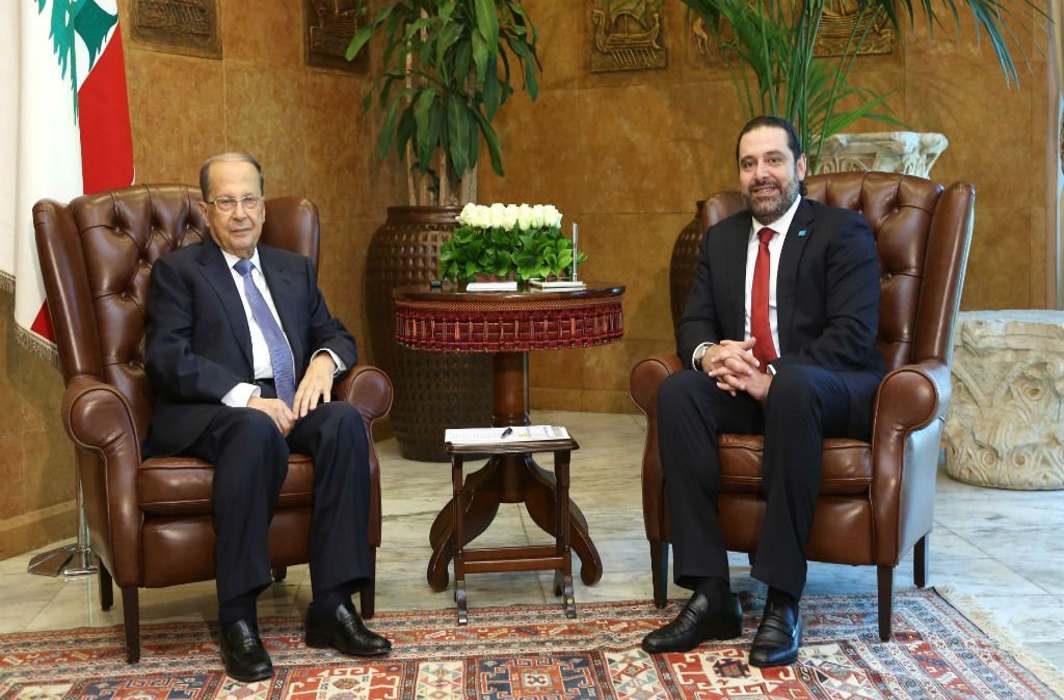
President Michel Aoun and PM Hariri held a closed door meeting before the cabinet meeting.

Taef  accord was reached in 1989 to provide “the basis for ending of civil war and the return to political normalcy in Lebanon.”  Rafik Hariri, former Lebanese PM and father of Sa’ad Hariri, was once Saudi diplomatic representative who played constructive role in formulating the agreement. Sa’ad Hariri enjoys dual citizenship of both the countries: Lebanon and Saudi Arabia.

The Taef accord covered political reform, ending of civil war, establishment of special relations between Syria and Lebanon and a framework for the beginning of complete Syrian withdrawal from Lebanon.

Sa’ad Hariri had suddenly announced his resignation on November 4 from Riyadh. According to earlier reports Hariri received a telephonic call from Riyadh on November 3 asking him to travel the Kingdom without aides.  On his arrival at Riyadh airport his mobile was confiscated and no official came to receive him. He read his resignation live on Saudi official TV.

At that time, he alleged Iran for interfering in Lebanon’s internal affairs and Hezbollah for its involvement in the regional conflicts. Hariri also cited “threats” against his life similar to his father Rafik Hariri who was killed in a bomb explosion in Beirut in 2005.

The resistance group Hezbollah  played important role in crushing IS terrorists in Syria and Iraq on the invitation of the respective governments. The governments of Iran, Iraq and Syria and Lebanon’s Hezbollah along with Russian air power defeated Daesh (IS) in both the countries.

So far, Hariri has not revealed the details of what he went through before announcing his resignation in Riyadh. After the resignation he had a short visit to Abu Dhabi to meet the Crown Prince Sheikh Mohammed bin Zayed Al Nahyan on November 7.

Lebanese President Michel Aoun had expressed fear of Hariri’s detention in Saudi Arabia. Reuters had confirmed on November 12 about the shocks Hariri went through immediately after his arrival in Riyadh. His location was kept secret that vindicated Aoun’s fear of Hariri being detained by Saudi authorities.

On November 13, Hariri chose to get himself interviewed by his party mouthpiece Future TV. Saudi authorities did not allow even Future TV crew to travel from Beirut to Riyadh for the conducting the interview. With crew and equipment from Saudi official TV, Hariri declared he was living free in Saudi Arabia. He explained that by resigning he “gave a positive shock” to protect his country from imminent danger and pledged to return to Beirut “within days”.

He travelled to France on November 18  to meet President Emmanuel Macron. He also met with Egyptian President Abdel Fettah el-Sisi  in Cairo  before returning to Beirut on November 21, one day before independence day celebrations on November 22.

However, on his first day in Beirut he met President Micheal Aoun and announced his intention to defer his resignation. He said, “Today, I presented my resignation to the president and he urged me to hold onto it for more dialogue about its reasons and its political underpinnings … and I accepted.”

According to Aljazeera, the Iranian-backed forces in Iraq, Yemen, and Syria are on the winning side of years-long conflicts against Saudi-backed armed groups. Hezbollah has been instrumental in assisting these forces, it said.

The reports also indicate that Hezbollah has agreed to the disassociation policy promising to withdraw its fighters from Iraq once the campaign against Daesh (IS) is declared over.

Recently Lebanese President Michel Aoun, had promised that Hezbollah fighters will return from neighbouring countries once IS was defeated. For now, these guarantees are enough to end Lebanon’s uncertainty, he said.

Aljazeera correspondent from Beirut Zeina Khodr says, “Clearly the political crisis is over. The cabinet met and it’s back in business and this country – which found itself in the middle of a Saudi-Iranian rivalry” is back to the political status quo before Hariri’s resignation.

Analysts believe that with Hariri’s decision to withdraw his resignation after Hezbollah’s commitment to return its fighters once war against Daesh (IS) is declared over, Saudi Arabia’s plot to ignite another war in Lebanon has failed.[/vc_column_text][/vc_column][/vc_row]

Latest world news

PM Modi receives Ethiopia’s highest civilian honour, first world leader to get award

PM Modi has become the first global leader to be awarded Ethiopia’s highest civilian honour for strengthening bilateral ties and global leadership.

Published

on

PM modi Ethiopias highest civillian award

Prime Minister Narendra Modi on Tuesday was conferred with ‘The Great Honour Nishan of Ethiopia’, the highest national award of the African nation, becoming the first head of government or state globally to receive the honour.

The award was presented during a special ceremony held at the Addis International Convention Centre, where Ethiopian Prime Minister Abiy Ahmed Ali honoured Modi for his role in strengthening bilateral relations between India and Ethiopia and for his leadership on global issues.

Recognition of India-Ethiopia partnership

According to an official statement, the honour recognises Prime Minister Modi’s contribution to deepening the long-standing partnership between the two countries and his engagement with issues concerning the Global South. The conferment is being seen as a milestone in India-Ethiopia relations and reflects the growing diplomatic and development cooperation between the two nations.

Prime Minister Modi acknowledged the award and dedicated it to the people of India. In a post on X, he said he was honoured to receive Ethiopia’s highest recognition and attributed it to the collective strength and aspirations of 140 crore Indians.

‘Accepted with humility and gratitude’

Speaking at the ceremony, Prime Minister Modi said it was a privilege to accept the honour from one of the world’s most ancient civilisations. He expressed humility and gratitude while thanking Prime Minister Abiy Ahmed and the people of Ethiopia for the recognition.

He also praised the Ethiopian Prime Minister’s leadership and initiatives aimed at promoting national unity, sustainability and inclusive development. Highlighting the role of knowledge and education in nation-building, Modi noted that Indian teachers have been contributing to Ethiopia’s progress for more than a century.

The Prime Minister dedicated the award to both Indians and Ethiopians who have nurtured bilateral ties over generations and conveyed appreciation on behalf of India’s population for the honour bestowed upon him.

Continue Reading

Latest world news

Trump administration expands US travel ban to 20 more countries, Palestinians also affected

The Trump administration has widened its travel ban, adding 20 more countries and fully restricting entry for Palestinians, citing security and vetting concerns.

Published

on

The Trump administration has widened its travel restrictions, adding 20 more countries to the existing list and imposing a complete ban on travel for people holding documents issued by the Palestinian Authority. The decision significantly expands the scope of the travel limits announced earlier this year and will come into force from January 1.

According to the proclamation issued on Tuesday, the latest move doubles the number of nations impacted by US travel and immigration restrictions. Five additional countries now face a full ban, while 15 others have been placed under partial restrictions. The administration said the measures apply to both visitors and those seeking to immigrate to the United States.

Countries facing full travel ban

The newly added countries under the full ban include Burkina Faso, Mali, Niger, South Sudan and Syria. In addition, people travelling on Palestinian Authority-issued passports or documents have been fully barred from entering or emigrating to the US. South Sudan had already been subject to significant restrictions before this announcement.

Earlier, the administration had imposed a complete ban on travellers from Afghanistan, Myanmar, Chad, the Republic of Congo, Equatorial Guinea, Eritrea, Haiti, Iran, Libya, Somalia, Sudan and Yemen.

15 countries under partial restrictions

The list of countries now facing partial travel restrictions includes Angola, Antigua and Barbuda, Benin, Ivory Coast, Dominica, Gabon, Gambia, Malawi, Mauritania, Nigeria, Senegal, Tanzania, Tonga, Zambia and Zimbabwe.

These join the earlier partially restricted countries such as Burundi, Cuba, Laos, Sierra Leone, Togo, Turkmenistan and Venezuela. The administration also said restrictions on Laos and Sierra Leone have been upgraded, while some limits on Turkmenistan have been eased after an improvement in vetting standards.

Who is exempt from the restrictions

The proclamation clarifies that certain categories of travellers are exempt. These include people who already hold valid US visas, lawful permanent residents, diplomats, athletes, and individuals whose entry is considered to be in the national interest of the United States.

Reasons cited by the administration

The US administration said many of the affected countries suffer from widespread corruption, unreliable civil documents and weak criminal record systems, making proper vetting difficult. It also pointed to high visa overstay rates, refusal by some governments to accept deported nationals, and broader concerns related to immigration enforcement, foreign policy and national security.

The expansion follows the arrest of an Afghan national accused in the shooting of two National Guard troops near the White House during the Thanksgiving weekend. The accused has pleaded not guilty to murder and assault charges.

Criticism and concerns over Afghan visas

The decision has drawn criticism from rights groups and immigration advocates, who argue that national security is being used to justify broad restrictions on entire populations. Concerns have also been raised over the removal of an exception for Afghans eligible for the Special Immigrant Visa, a category meant for those who assisted US forces during the war in Afghanistan.

Advocacy groups said these individuals undergo extensive vetting and that restricting their entry could undermine commitments made by the United States.

New restrictions on Palestinians

The full ban on people holding Palestinian Authority passports marks a further tightening of restrictions imposed earlier, which had already made it extremely difficult for Palestinians to travel to the US for work, education, business or tourism. The administration justified the move by citing the presence of US-designated terrorist groups in the West Bank and Gaza, as well as challenges in vetting due to ongoing conflict.

Governments of some newly affected countries said they were reviewing the decision and seeking clarity from US officials on the implications of the restrictions.

Continue Reading

Latest world news

Luthra brothers deported from Thailand in Goa nightclub fire case

The Luthra brothers, owners of the Goa nightclub where a fire killed 25 people, have been deported from Thailand and are returning to India.

Published

on

Saurabh and Gaurav Luthra, the owners of a Goa nightclub where a massive fire led to the deaths of 25 people, have been deported from Thailand and are on their way back to India. The two brothers boarded a flight to India after Thai authorities sent them back from Bangkok.

According to information available, the Luthra brothers had left the country within hours of the tragic incident and travelled to Thailand’s Phuket. At the time the fire broke out at the Goa nightclub, both Saurabh and Gaurav Luthra were in Delhi.

The fire at the club triggered widespread outrage and raised serious questions over safety measures at nightlife venues in Goa. The incident resulted in the deaths of 25 people, making it one of the deadliest nightclub fires in the state.

After their departure from India soon after the tragedy, the whereabouts of the club owners became a key focus of the investigation. Their deportation from Thailand and return to India is seen as a significant development in the case related to the deadly fire.

Continue Reading

Trending

© Copyright 2022 APNLIVE.com