English हिन्दी
Connect with us

Top Stories

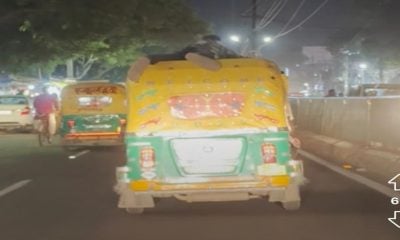
Auto-rickshaw, cab fares to rise in Delhi, base price to increase by Rs 5 and Rs 15 respectively

The Delhi government on Friday approved a proposal to hike auto-rickshaws and cab fares. In just over six months, the cost of CNG increased to Rs 75.61 per kg from Rs 52.01 which was on January 1.

Published

on

Auto-rickshaw, cab fares to rise in Delhi, base price to increase by Rs 5 and Rs 15 respectively
In just over six months, the cost of CNG increased to Rs 75.61 per kg from Rs 52.01 which was on January  1.

Delhiites will now have to pay higher amounts while travelling in auto-rickshaws and cabs. The Delhi government on Friday approved a proposal to hike auto-rickshaws and taxi fares. According to the proposal, the base price (meter down charges) of auto-rickshaws will be Rs 30 instead of Rs 25 and for taxis, the charges will be revised to Rs 40 instead of Rs 25.

The base price of auto rickshaws and cab fares have increased by Rs 5 and Rs 15 respectively. Along with the hike in meter down charges, the per kilometer charges have also been revised due to the hike in CNG rates.

For auto-rickshaws, the fare for every kilometer will go up by Rs 1.50; for non-AC taxis, the fare for every kilometer will be Rs 17 instead of Rs 14, while for AC taxis, the fare will be revised to Rs 20 from Rs 16.

Because of the hike in CNG and petrol prices in March and April, the auto-rickshaw drivers went on a strike and demanded to either reduce the CNG prices or increase the fares. The Delhi transport minister, Kailash Gahlot, stated that the government formed a 13-member fare revision committee in April and were planning to increase the fares.

He said app-based aggregators had already increased their prices, but the government-regulated prices for auto-rickshaws and taxis had not been revised.

The reports stated that the last time the taxi charges were revised was in 2013. The committee also considered the rise in the cost of vehicle parts over the previous nine years as well as the rising cost of CNG. Gahlot further said that the fare will be increased after cabinet approval.

In just over six months, the cost of CNG increased to Rs 75.61 per kg from Rs 52.01 which was on January  1.

India News

MNREGA may be renamed Pujya Bapu Gramin Rozgar Yojana, proposal sent to Cabinet

The Centre has proposed renaming MNREGA as Pujya Bapu Gramin Rozgar Yojana and increasing guaranteed employment to 125 days, with the proposal now before the Cabinet.

Published

on

The Central government has moved a proposal to rename the Mahatma Gandhi National Rural Employment Guarantee Scheme (MNREGA), one of the country’s largest social security programmes, with the matter now placed before the Union Cabinet for approval. As per the proposal, the scheme could be rebranded as Pujya Bapu Gramin Rozgar Yojana

Preparations are underway to roll out the restructured programme, which is expected to increase the guaranteed employment days for rural households to 125 days per year, up from the current provision of at least 100 days.

Higher allocation and expanded employment guarantee

According to the information shared, the government is working on allocating more than Rs 1.5 lakh crore for the revamped rural employment scheme. The proposed changes are aimed at strengthening income support for poor families living in rural areas.

MNREGA, enacted as a labour law and social security measure, provides unskilled manual work to eligible rural households and legally guarantees the right to employment. At present, around 154 million people are employed under the programme, with women accounting for nearly one-third of the beneficiaries.

Background of the scheme

The employment guarantee programme was launched during the Manmohan Singh-led government and was initially known as the National Rural Employment Guarantee Act. In 2009, it was renamed after Mahatma Gandhi.

A key feature of the scheme is its decentralised structure, with the Panchayati Raj institutions responsible for ensuring 50 per cent of the work. Another crucial provision mandates that if employment is not provided within 15 days of application, beneficiaries are entitled to an unemployment allowance.

The proposal to rename the flagship scheme and expand its scope is currently awaiting Cabinet consideration, after which a formal decision is expected.

Continue Reading

Cricket news

T20 2026 World Cup tickets go on sale with prices starting at Rs 100

Tickets for the 2026 T20 World Cup go on sale from December 11, with phase one prices starting at Rs100 in India.

Published

on

Ticket sales for the ICC Men’s T20 World Cup 2026 have been announced, with the first phase opening on December 11. The tournament will be hosted jointly by India and Sri Lanka, beginning February 7, and will feature 20 teams competing across 55 matches.

Affordable pricing in first phase

According to media, tickets in phase one will be available at highly accessible rates. Prices start from Rs100 at select venues in India, while tickets in Sri Lanka will be priced from LKR 1000. The ticket window opens at 6.45 pm IST and Sri Lanka time. Details for the second phase of ticket sales are expected to be announced at a later date.

Officials said the pricing strategy is aimed at ensuring wider access to the tournament for fans across different regions and income groups.

Tournament schedule and format

The 2026 edition of the T20 World Cup will follow the same format as the previous tournament. The 20 teams have been divided into four first-round groups, with the top two sides from each group advancing to the Super Eight stage.

Matches will be played in three time slots — morning, afternoon and evening — across venues in both host nations.

First-round groups

  • Group A: India, Pakistan, USA, Netherlands, Namibia
  • Group B: Sri Lanka, Australia, Ireland, Zimbabwe, Oman
  • Group C: England, West Indies, Bangladesh, Nepal, Italy
  • Group D: New Zealand, South Africa, Afghanistan, Canada, UAE

Super Eight and knockout stage

The Super Eight stage will consist of two groups of four teams each, based on first-round qualification. Each team will face the other three sides in its group, with the top two progressing to the semi-finals.

The semi-finals are scheduled for March 4 and March 5, while the final will be played on March 8. Venue arrangements for the knockout matches include Indian cities and Colombo, depending on team qualification scenarios.

Continue Reading

India News

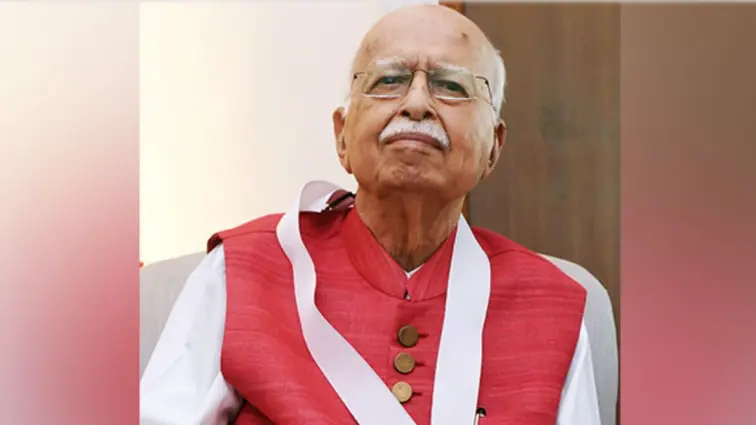
Former Lok Sabha Speaker Shivraj Patil passes away at 90

Former Lok Sabha Speaker and Union Home Minister Shivraj Patil passed away at his residence in Latur at the age of 90, following a brief illness.

Published

on

Shivraj Patil

Senior Congress leader and former Lok Sabha Speaker Shivraj Patil passed away on Friday morning at his residence in Latur, Maharashtra. He was 90. Family sources said Patil died at his home, ‘Devghar’, following a brief illness.

Patil is survived by his son Shailesh Patil, daughter-in-law Archana, who is associated with the BJP, and two granddaughters. His demise marks the end of a long political career that spanned several decades and key constitutional positions.

Long public life spanning legislature and governance

Born on October 12, 1935, Shivraj Patil began his political journey at the grassroots level as the municipal council chief of Latur. He entered the Maharashtra legislature as an MLA in the early 1970s before moving to national politics.

Patil went on to represent the Latur Lok Sabha constituency seven times. However, he faced defeat in the 2004 general elections when he lost the seat to BJP leader Rupatai Patil Nilangekar.

Between 1991 and 1996, Patil served as the 10th Speaker of the Lok Sabha, a role in which he earned wide respect for maintaining parliamentary decorum. He later held the crucial portfolio of Union Home Minister from 2004 to 2008.

Respected parliamentarian and constitutional expert

Apart from his legislative roles, Shivraj Patil also served as the Governor of Punjab and Administrator of the Union Territory of Chandigarh from 2010 to 2015. Party leaders recalled that he was known for his dignified conduct and restraint, rarely engaging in personal attacks either in public speeches or private interactions.

He was widely regarded as a scholar-politician, with a strong command over Marathi, English and Hindi. His deep understanding of constitutional matters and his articulate presentations in Parliament made him a respected figure across party lines.

Continue Reading

Trending

© Copyright 2022 APNLIVE.com