English हिन्दी
Connect with us

India News

Pakistan media appreciates PM Modi for change in tone

Published

on

Pakistan media appreciates PM Modi for change in tone

Dawn suggests practical move for positive results

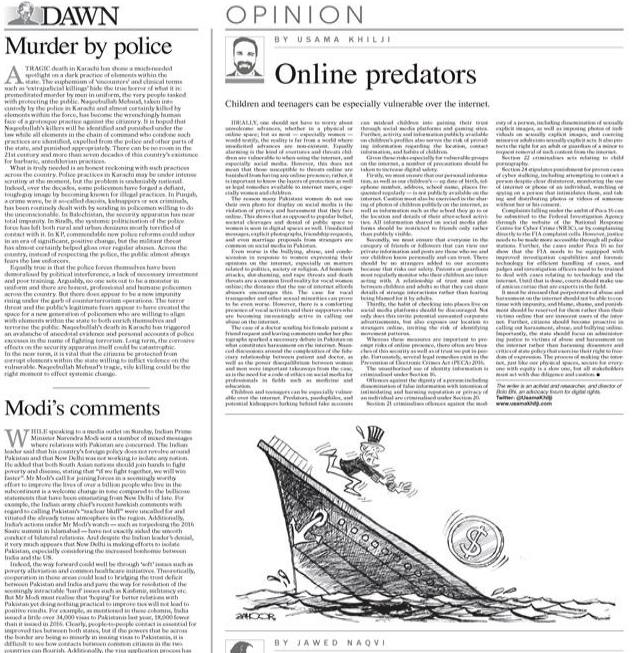
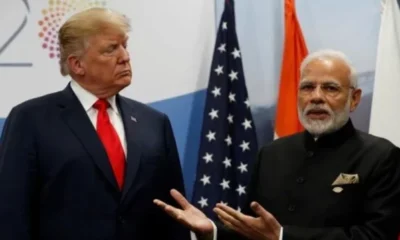
A major Pakistani newspaper has welcomed the “change in tone” of Prime Minister Narendra Modi for his recent remarks about India’s policy towards Pakistan and termed it “a seemingly worthy effort to improve the lives of over a billion people who live in the subcontinent”.

However, leading daily Dawn has suggested that “ Modi must realise that ‘hoping’ for better relations with Pakistan yet doing nothing practical to improve ties will not lead to positive results.”

The opinion was expressed in an editorial published on Tuesday. It said that Modi sent a number of mixed messages about relations with Pakistan. He said that his country’s foreign policy does not revolve around Pakistan and that New Delhi was not working to isolate any nation.

The daily said that Modi has reportedly said that both South Asian nations should join hands to fight poverty and disease, stating that “if we fight together, we will win faster”.

Moreover, the daily said that PM’s remarks were contrary to the bellicose statements that have been emanating from New Delhi of late. It said that recent hawkish remarks by Indian Army Chief Bipin Rawat calling Pakistan’s “nuclear bluff” were “uncalled for” and vitiated the already tense atmosphere in the region.

It also recalled India’s boycott of 2016 SAARC summit which was scheduled to be held in Islamabad.  It said that it “has not exactly aided the smooth conduct of bilateral relations.”

The daily was referring to Times of India report about PM’s interview with Times Now on Sunday. He had reportedly said that India is not working to isolate any nation, nor is the country’s foreign policy formulated around Pakistan.

Dawn further said that despite “Indian leader’s denial, it very much appears that New Delhi is making efforts to isolate Pakistan, especially considering the increased bonhomie between India and the US.”
Pakistan media appreciates PM Modi for change in tone

The newspaper asserted that “If Mr Modi is earnest in his desire to work with Pakistan, he must back up his rhetoric with practical steps.”

“There are major obstacles that stand in the way of normalisation, and these can only be removed through dialogue and confidence-building measures,” the Dawn siuggested.

Theoretically, cooperation in  “soft issues such as poverty alleviation and common health care initiatives” could lead to bridging the trust deficit between the two countries and “pave the way” for resolution of the seemingly intractable ‘hard’ issues such as Kashmir, the daily opined.

It recalled that India issued a little over 34,000 visas to Pakistanis last year, 18,000 fewer than it issued in 2016. The visa application process has been made “incredibly difficult”, discouraging many from applying for it.

Dawn is Pakistan’s oldest a and most widely read English newspaper. Based in Karachi, Dawn is a flagship of the Dawn Group of Newspapers, published by Pakistan Herald Publications. It was founded by Mohammad Ali Jinnah in Delhi in October 1941 as a mouthpiece of the Muslim League.

India News

Yogi Adityanath transfers over Rs. 148 crore to 4.60 lakh students

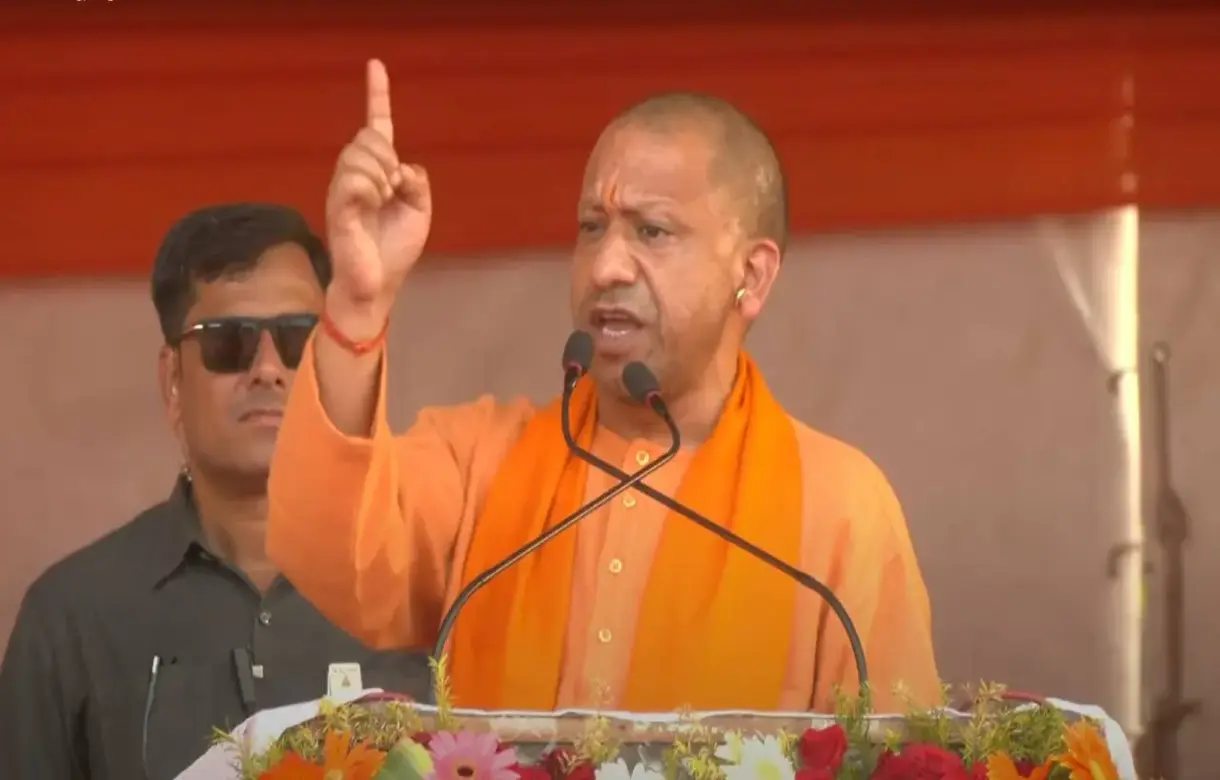
Uttar Pradesh Chief Minister Yogi Adityanath transferred over Rs. 148 crore to the bank accounts of more than 4.60 lakh students under the state’s scholarship and fee reimbursement programme.

Published

on

Yogi Adityanath

Uttar Pradesh Chief Minister Yogi Adityanath transferred more than Rs. 148 crore in scholarship and fee reimbursement funds to over 4.60 lakh students on Saturday, according to the report.

The funds were transferred to students through their bank accounts as part of the state’s scholarship and fee reimbursement programme.

The initiative covers students from different social and economic categories and is aimed at ensuring that financial difficulties do not prevent them from continuing their education.

Yogi Adityanath’s message to students

During the programme, the Uttar Pradesh Chief Minister said that no student should have to discontinue education because of a lack of funds.

He stressed the government’s commitment to providing students with equal opportunities to pursue their education and move forward in life.

The scholarship and fee reimbursement support is intended to provide financial assistance to eligible students while helping them continue their studies.

Scholarship support for UP students

The latest transfer covers more than 4.60 lakh students and involves over Rs. 148 crore in financial assistance. The programme includes scholarship and fee reimbursement support for eligible students.

Other reports on the October 3 distribution said the amount covered students belonging to the Other Backward Classes, Scheduled Castes, general category and minority communities.

The Uttar Pradesh government has also highlighted the use of automation in the scholarship distribution process, saying it has improved transparency and helped ensure timely payments to students.

Continue Reading

India News

Tariffs, export controls increasingly used for strategic purposes, says PM’s Principal Secretary

PM’s Principal Secretary P K Mishra said tariffs, export controls and other restrictions are increasingly being used for strategic purposes amid growing global economic uncertainty.
Published

on

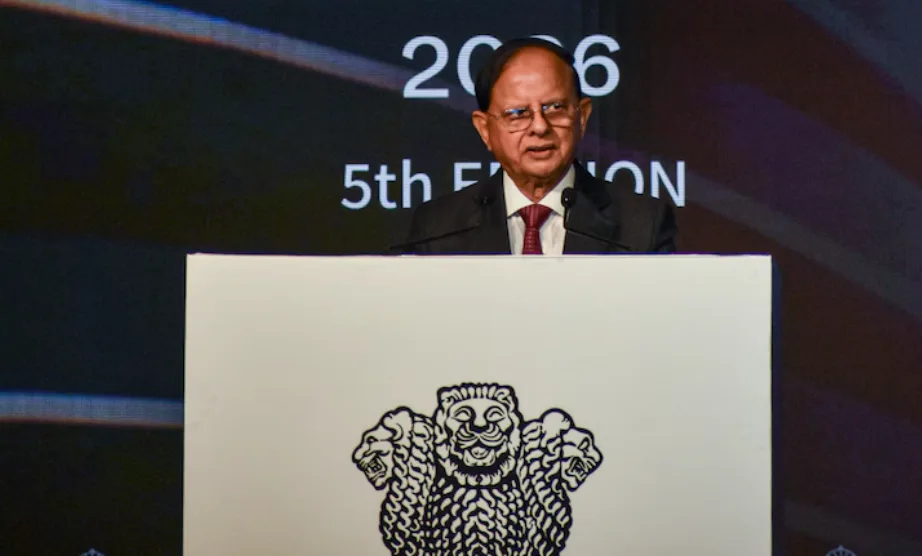
PM’s Principal Secretary P K Mishra has said tariffs, export controls and other restrictions are increasingly being deployed for strategic purposes as countries deal with greater economic uncertainty and disruptions to global supply chains.

Speaking at the Kautilya Economic Conclave in New Delhi on Saturday, Mr Mishra highlighted the changing nature of economic risks and the need for countries to build resilience without withdrawing from the global economy.

He said the distinction between conventional risks and uncertainty has become increasingly important for economic decision-making. While risks can generally be assessed in terms of probability, uncertainty makes it more difficult to determine the likelihood of different outcomes.

Tariffs and restrictions becoming strategic tools

Mr Mishra said economic disruptions are no longer limited to traditional market risks. Wars, interruptions to shipping routes and geographical choke points can affect food, energy and supply chains across countries.

Referring to such developments, he said tariffs can sometimes become instruments of weaponisation, while other restrictions are increasingly being used for strategic purposes.

He also said export restrictions, sanctions and tariffs can serve purposes beyond conventional commercial objectives, bringing geopolitical considerations more prominently into economic policymaking.

The comments came against the backdrop of discussions on economic resilience at the fifth Kautilya Economic Conclave, whose theme focuses on dealing with global shocks while preserving growth and openness.

India focuses on economic resilience

Mr Mishra said India’s economic strength is supported by its macroeconomic fundamentals and that the country has maintained a high level of growth despite global uncertainty.

He argued that resilience does not require choosing between complete self-sufficiency and globalisation. Instead, countries need to build domestic capabilities in strategically vulnerable areas, diversify sources of supply where concentration creates risks and remain open where global integration supports productivity and competitiveness.

India’s electronics sector, along with pharmaceuticals and semiconductors, provides examples of areas where domestic capabilities can help reduce vulnerability while remaining connected to global markets, he said.

Geography becomes an economic factor

Mr Mishra also pointed to the impact of disruptions around major shipping routes. He said geographical choke points can become sources of vulnerability, particularly for a country such as India that is a major energy importer.

He said India’s response has included maintaining stocks, increasing domestic production where possible and diversifying procurement and supply routes.

The broader issue, according to Mr Mishra, is how economies can preserve the gains of globalisation while becoming less vulnerable to shocks and excessive concentration in particular suppliers or geographical regions.

He said building resilience carries an economic cost, meaning governments need to assess where investment in resilience is justified by the potential economic and social impact of a disruption.

Continue Reading

India News

New UP Congress chief Aradhana Mishra backs stronger alliance with SP 

Newly appointed UP Congress chief Aradhana Mishra said the party would strengthen its alliance with the Samajwadi Party ahead of the 2027 Assembly election.
Published

on

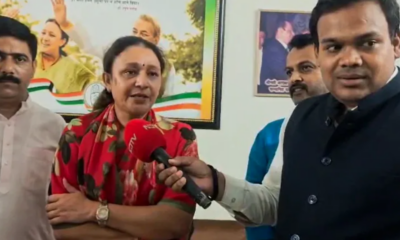
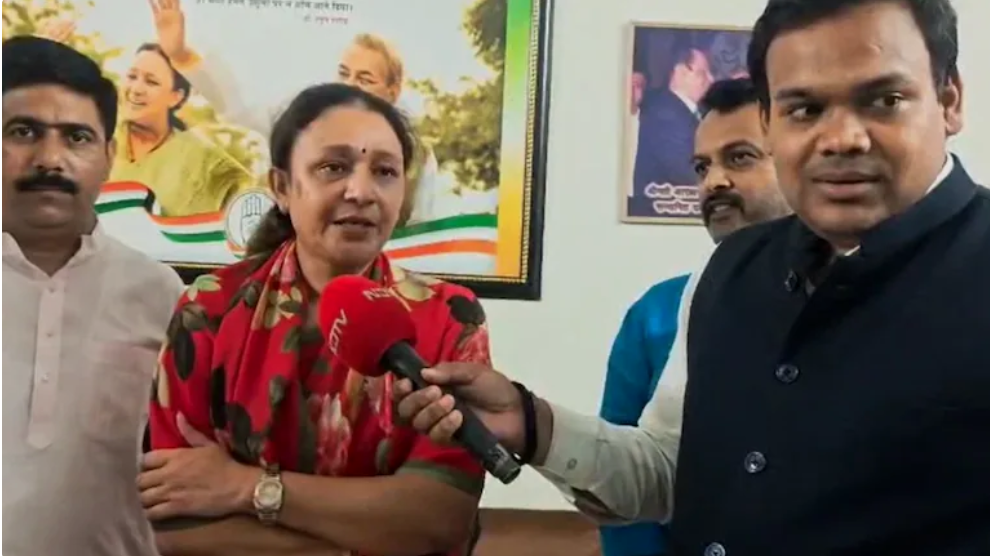
Newly appointed Uttar Pradesh Congress president Aradhana Mishra, also known as Mona, has said the party will take its alliance with the Samajwadi Party forward with full strength ahead of the 2027 Uttar Pradesh Assembly election.

Mishra, the daughter of Congress MP Pramod Tiwari, has been given the responsibility of leading the party’s state unit as Congress prepares for the assembly polls due in around six months, according to the report.

Speaking about Samajwadi Party chief Akhilesh Yadav, Mishra described the SP as a strong partner of the Congress in the INDIA bloc.

“The Samajwadi Party is a partner of ours in the INDIA bloc, and a strong one at that,” she said, while praising the way Akhilesh Yadav has strengthened his party.

Aradhana Mishra backs Congress-SP alliance

Mishra referred to the performance of the INDIA bloc in the 2024 Lok Sabha election in Uttar Pradesh while discussing the alliance’s prospects for the next assembly election.

The INDIA bloc won 43 of Uttar Pradesh’s 80 Lok Sabha seats in the 2024 election, according to the report.

Mishra said the alliance had stopped the BJP’s advance in Uttar Pradesh in the 2024 Lok Sabha election and expressed confidence that the partnership would produce results in the 2027 Assembly election.

“We will take this alliance forward with full strength,” she said.

The new state Congress chief will also have to advance seat-sharing discussions with the Samajwadi Party. The report said Congress wants a larger share of seats, while the SP has not indicated a willingness to give ground, arguing that it is in a stronger position in the state.

Congress announces new UP team

The leadership change is part of a wider organisational reshuffle by the Congress in Uttar Pradesh.

Along with appointing Mishra as state Congress president, the party named Rajya Sabha MP Imran Masood as working president. Chaudhary Virendra Singh was appointed Leader of the Congress Legislature Party.

Devinder Nishad and Alok Prasad were also appointed senior vice presidents of the Uttar Pradesh Congress Committee.

The new appointments bring different social groups into prominent positions in the state organisation. Mishra is a Brahmin, Masood is a Muslim and Rajendra Pal Gautam, the Congress’ AICC in-charge of Uttar Pradesh, is a Dalit, the report said.

Mishra, however, said the Congress does not practise caste or religion-based politics.

She said the party wanted to strengthen the country, protect the Constitution and build a strong alternative ahead of the 2027 election.

Mishra’s challenge ahead of 2027 polls

As the new Uttar Pradesh Congress chief, Mishra will be responsible for strengthening the party’s organisation in the state while also taking forward its alliance with the Samajwadi Party.

The Congress and SP are part of the INDIA bloc in Uttar Pradesh. With seat-sharing discussions ahead of the 2027 Assembly election, Mishra’s comments indicate that the Congress intends to continue working with the Samajwadi Party.

The appointment of Mishra comes alongside other organisational changes aimed at preparing the party for the upcoming assembly election.

Continue Reading

Trending

© Copyright 2022 APNLIVE.com