
Latest world news
Kabul Ambulance bomb toll reaches nearly 100, scores wounded


[vc_row][vc_column][vc_column_text]No damage to Indian mission reported
The death toll of the Saturday Kabul terror attack involving ambulance bomb has reached nearly 100 and scores wounded. Initially Kabul based Tolo News had reported of 17 deaths in the attack which took place little before 1 pm. The attack took place approximately 400 meters away from Indian mission, say and Indian expat.
Earlier it was reported that 40 people were killed and 140 were injured in the deadly attack. However the casualties rose with more deaths reported from the hospitals where injured were being treated.
There are reports of anger among the leadership as well residents of the capital Kabul.
US President Donald Trump has called for “decisive action” against the Taliban over the assault, the second attack after targeting Hotel Intercontinental killing more than twenty persons last week.
Taliban targeted innocent Afghans, brave police in Kabul today. Our thoughts and prayers go to the victims, and first responders. We will not allow the Taliban to win!
— Donald J. Trump (@realDonaldTrump) January 27, 2018
There are reports of people’s anger expressed on the social media at teh worsening security situation as Taliban and IS stepping up attacks on Kabul, making it most deadly place in the country.
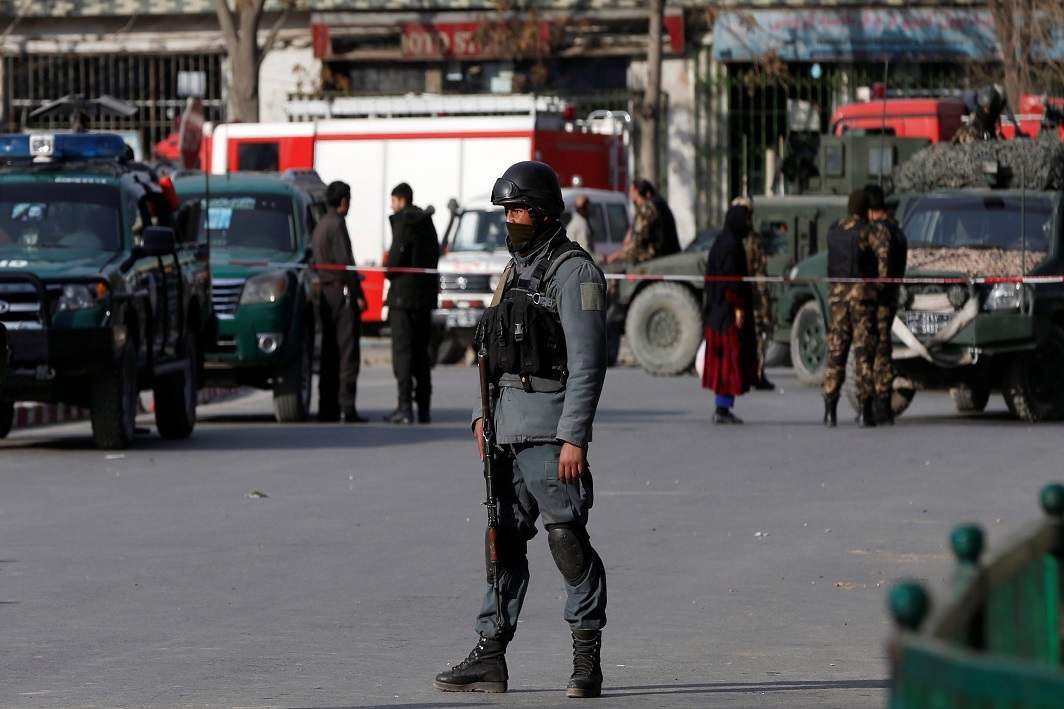 The attack took place not very far from Indian embassy. One Aditya Raj Kaul posted a message on her tweet:
#KabulAttack – Emergency Hospital coordinator Dejan Panic said on the facility’s twitter page after the attack “It’s a massacre”. At least 17 people are confirmed dead and over 110 wounded #Afghanistan.
— TOLOnews (@TOLOnews) January 27, 2018
Huge plumes of dark smoke were seen followed by at least three explosions. Emergency vehicles could be heard in the city centre.
The Tolo News reports that an explosive laden ambulance was detonated between two checkpoints outside the old Ministry of Interior building close to Sedarat Square. Most of the casualties are civilians. A journalist reporting from the ground zero said that he saw at least 20 ambulances racing away taking the casualties to the hospitals.
#KabulAttack – Emergency Hospital coordinator Dejan Panic said on the facility’s twitter page after the attack “It’s a massacre”. At least 17 people are confirmed dead and over 110 wounded #Afghanistan.
— TOLOnews (@TOLOnews) January 27, 2018
Public health ministry spokesman Mohammad Ismayeel Kawosi confirmed the casualty figures and said the wounded have been taken to different hospitals across the city.
The terror attack comes after a week of another attack on the most secured Intercontinental Hotel in the city, killing scores of people. The security forces continued their flush out operations for eighteen hours.
Al Jazeera’s Kabul correspondent Abdullah Shahood reports that the blast took place at lunchtime during a “relatively calm day”. “The city was jolted with a heavy explosion,” he said.
The Taliban terror group has claimed responsibility for the attack.[/vc_column_text][/vc_column][/vc_row]








Latest world news
Magnitude 7 earthquake strikes Russia’s Kamchatka Peninsula
A magnitude 7 earthquake struck Russia’s Kamchatka Peninsula region on Friday. The initial report placed the earthquake at a depth of 140 kilometres.


Latest world news
S Jaishankar says India is a natural option for Russia amid Europe tensions
External Affairs Minister S Jaishankar said India remained a natural option for Russia as Moscow increasingly turned towards Asia amid strained relations with Europe. He highlighted the continuity of India-Russia ties and their significance for the balance of power in Asia.

Latest world news
Putin praises PM Modi, says he has very good ideas on Ukraine war
Russian President Vladimir Putin has praised Prime Minister Narendra Modi for repeatedly raising the need to end the Ukraine war, describing his ideas for a settlement as “very good”.


India-US trade deal first phase finalised, drafting underway

Election Commission orders voter roll revision in 17 states, UTs

Actor Imran Khan asked to leave India after CJP protest

Delhi Police offers 11-person limit for CJP’s Connaught Place protest

Mallikarjun Kharge’s ‘Your Friends’ jab at Rahul Gandhi over congress exits

Magnitude 7 earthquake strikes Russia’s Kamchatka Peninsula

Delhi deploys 25,000 personnel, installs CCTV cameras ahead of CJP march
Mallikarjun Kharge’s ‘Your Friends’ jab at Rahul Gandhi over congress exits
Delhi Police offers 11-person limit for CJP’s Connaught Place protest
Actor Imran Khan asked to leave India after CJP protest

Afghan Men Try To Hang With The Jet Engine Of The Aircraft in Kabul- Afghanistan News – Kabul News
Trending Top 10 News: 10000 Crore Fine on Flipkart, Apple to Launch Unique Feature, Hdfc Bank Job Ad

Trending Top 10 News: Nokia 6310, Apple sales, Bachpan ka Pyar Video Kid, Dainik Bhaskar IT Raid

Trending Top 10 News: Canada bans Indian flights, Rain in Delhi NCR, AIMIM Twitter hacked, Raj Kundra case

Trending Top 10 News: Shein India, Apple New Service, Pocket Oxygen, Oppo Launched New Phone
-
 India News23 hours ago
India-US trade deal first phase finalised, drafting underway
-
 India News21 hours ago
Election Commission orders voter roll revision in 17 states, UTs
-
 India News20 hours ago
Actor Imran Khan asked to leave India after CJP protest
-
 India News19 hours ago
Delhi Police offers 11-person limit for CJP’s Connaught Place protest
-
 India News8 hours ago
Mallikarjun Kharge’s ‘Your Friends’ jab at Rahul Gandhi over congress exits
-
 India News7 hours ago
Delhi deploys 25,000 personnel, installs CCTV cameras ahead of CJP march
-
 Latest world news7 hours ago
Magnitude 7 earthquake strikes Russia’s Kamchatka Peninsula
