
Latest world news
Syrian President visits Eastern Ghouta frontline, civilians


In a major breakthrough in its fight against terror groups, Syrian President Bashar al-Assad visited front lines in Eastern Ghouta on Sunday and met army personnel deployed in a number of sites. He called the soldiers as heroes for their victories to end the suffering of Ghouta civilians who were being used by terrorists as human shields.
According to Syrian official news agency SANA, President affirmed to army’s heroes that the Syrian people were proud of every soldier who has carried the gun to defend his homeland, restore security and stability in the country and rescue the Syrian citizens from the claws of terrorism and its supporters.
“Every soldier, combatant or pilot who was carrying out the mission to whom he was charged, he changed the political map and the world balances with each village or city he has contributed to its liberation,” President al-Assad said.
The report further said that during the visit, President al-Assad also met a number of families who have succeeded in getting rid of terrorists and affirmed that all state institutions work to secure their needs.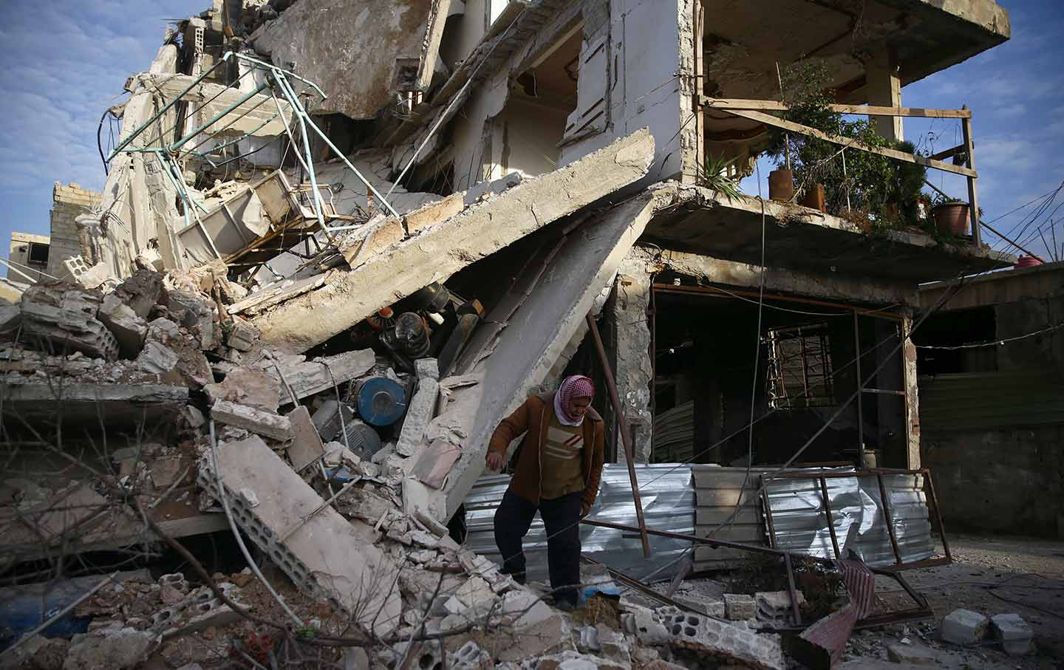
“The state is responsible for protecting Ghouta families and liberate them from the terrorists’ grip and restoring security and stability to them and to the region,” the President said.
Later, the President visited one of the operations’ rooms working in the region where he was briefed on the track of the battles and the upcoming plans set for continuing the military operation and expelling the terrorists from the whole area.
Syria and Russia have cornered foreign backed militants in the Eastern Ghouta as part of their campaign to liberate civilians holed up in the suburban area of Damascus. During the operations Syrian forces have found factories producing chemical weapons and intercepted several arms and ammunition cargoes heading to Eastern Ghouta.
Recently UN Security Council had passed a resolution asking all stake holders to observe 30-day ceasefire. However, Russia and Syria implemented five-hour daily ceasefire to evacuate civilians. This was criticised by US and its allies. Russia and Syria allege Israel, US, Turkey and some other regional countries for supporting Daesh (IS) and other terror groups creating havoc in the country.






Latest world news
S Jaishankar says India is a natural option for Russia amid Europe tensions
External Affairs Minister S Jaishankar said India remained a natural option for Russia as Moscow increasingly turned towards Asia amid strained relations with Europe. He highlighted the continuity of India-Russia ties and their significance for the balance of power in Asia.


Latest world news
Putin praises PM Modi, says he has very good ideas on Ukraine war
Russian President Vladimir Putin has praised Prime Minister Narendra Modi for repeatedly raising the need to end the Ukraine war, describing his ideas for a settlement as “very good”.

Latest world news
S Jaishankar calls Pakistan a “serial practitioner of terrorism” at UN
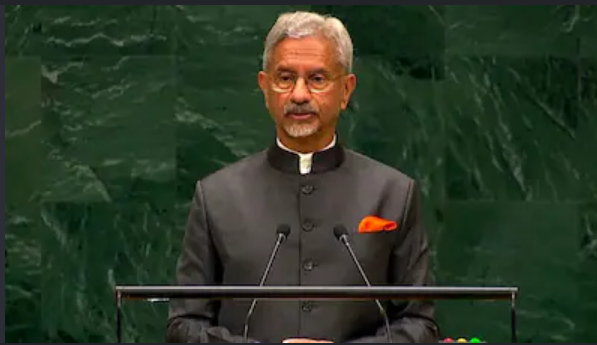
S Jaishankar criticised Pakistan at the UN General Assembly, referring to a “serial practitioner of terrorism” and warning against attempts to normalise terrorism.

CJP leaders Saurav Das, Ashutosh Ranka, Ajinkya Shinde sent to 5-day judicial custody

S Jaishankar says India is a natural option for Russia amid Europe tensions

PM Modi speaks to Mark Carney as India and Canada push to strengthen ties

Meerut murder: Muskaan Rastogi and Sahil Shukla get death sentence

Rahul Gandhi joins India Gate protest by Ankita Bhandari’s parents

Supreme Court questions EC over missing records in Sringeri election dispute
Rahul Gandhi joins India Gate protest by Ankita Bhandari’s parents
Meerut murder: Muskaan Rastogi and Sahil Shukla get death sentence
PM Modi speaks to Mark Carney as India and Canada push to strengthen ties
S Jaishankar says India is a natural option for Russia amid Europe tensions

Afghan Men Try To Hang With The Jet Engine Of The Aircraft in Kabul- Afghanistan News – Kabul News
Trending Top 10 News: 10000 Crore Fine on Flipkart, Apple to Launch Unique Feature, Hdfc Bank Job Ad

Trending Top 10 News: Nokia 6310, Apple sales, Bachpan ka Pyar Video Kid, Dainik Bhaskar IT Raid

Trending Top 10 News: Canada bans Indian flights, Rain in Delhi NCR, AIMIM Twitter hacked, Raj Kundra case

Trending Top 10 News: Shein India, Apple New Service, Pocket Oxygen, Oppo Launched New Phone
-
 India News22 hours ago
CJP leaders Saurav Das, Ashutosh Ranka, Ajinkya Shinde sent to 5-day judicial custody
-
 Latest world news22 hours ago
S Jaishankar says India is a natural option for Russia amid Europe tensions
-
 India News21 hours ago
PM Modi speaks to Mark Carney as India and Canada push to strengthen ties
-
 India News11 hours ago
Meerut murder: Muskaan Rastogi and Sahil Shukla get death sentence
-
 India News10 hours ago
Rahul Gandhi joins India Gate protest by Ankita Bhandari’s parents
-
 India News9 hours ago
Supreme Court questions EC over missing records in Sringeri election dispute
