
Latest world news
Syria demands Turkish forces’ withdrawal from Afrin


This is second Turkish military intervention on Syrian Soil since 2011
Syrian government has condemned the capture of Afrin by the Turkish military and called Ankara to “immediately” pull out its troops from the city. Damascus has affirmed that Turkish occupation of Afrin city was illegitimate act which contradicts with UN Charter, principles and international law.
According to Syrian official news agency SANA, the Foreign Ministry has voiced strong protest to Turkey’s “illegitimate” takeover of Afrin in two letters addressed to the United Nations on Monday.
The letter say, “Syria condemns the Turkish occupation of Afrin and the crimes it is committing there, and demands the invading forces immediately withdraw from the Syrian territory they occupied.”
 It further said, “Turkey’s behaviour and attacks do not only threaten citizens and the unity of Syria’s land and people — they also prolong the war on Syria as a service to terrorism and its supporters.”
The Syrian Ministry of Foreign And Expatriates affairs sent letters to UN Secretary General and Chairman of Security Council. “Head of the Turkish regime declared control of his invading forces over the Syrian city of Afrin on March 18th, 2018 which followed two-month aggression, claiming the lives and injuring of thousands of civilians in Afrin and its surroundings… this criminal act also led to the displacement of tens of thousands of the Syrians who suffered the plague of homelessness and deprivation of basic services,” the letter said.
Syrian government has been facing havoc created by terrorists since 2011. It is severely engaged in fighting the foreign backed groups in Eastern Ghouta. It believes that its sovereignty and territorial integrity was violated by Turkish forces by capturing Afrin town on Sunday.
The Ministry described the Turkish regime acts as war crimes and crimes against humanity. The letter further said, “As part of the crimes committed by the Turkish army forces, including the ethnic cleansing policy, the properties of the citizens have been looted, their homes destroyed and many of them were detained.”
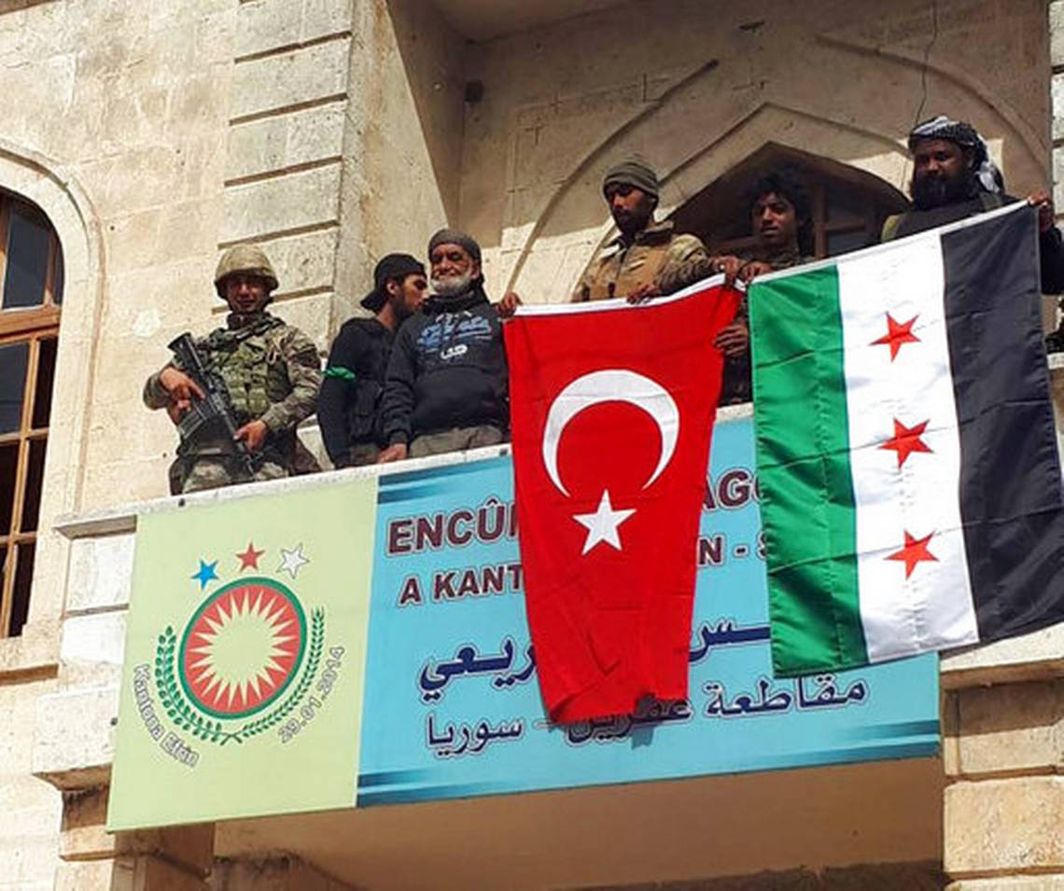
Syrian reaction came a day after Turkish soldiers, backed by members of Free Syrian Army (FSA) militia, captured the Afrin city from Kurdish militants belonging to People’s Protection Units (YPG). Turkey alleged that YPG was associated with outlawed Kurdistan Workers’ Party (PKK), demanding separate land in Turkey.
Read More:Syria: Turkish forces and anti Assad group capture Afrin
Damascus has on several occasions accused Turkey of supporting “terrorist” group and criticized for its military offensive on Syrian soil.
Turkey launched the so-called Operation Olive Branch in Syria’s Afrin on January 20 in a bid to eliminate the YPG.
According to Syrian Observatory for Human Rights (SOHR), over 280 civilians have lost their lives since the beginning of the offensive.
Turkish President Recep Tayyip Erdogan vowed on Monday to further expand military operations against Kurdish militants in Syria to its eastern parts such as Manbij and Ayn al-Arab or Kobani.
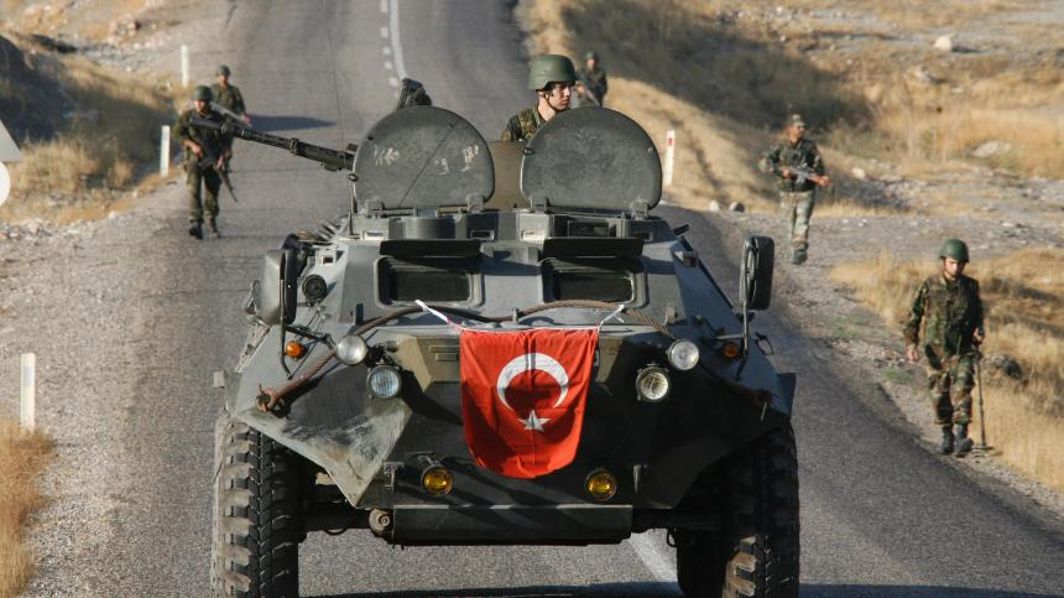 “Operation Olive Branch” is Turkey’s second major military intervention in Syria since 2011. In August 2016, Ankara began a unilateral military intervention “Operation Euphrates Shield” in northern Syria sending tanks and warplanes across the border.
On that occasion Ankara claimed that its military operation was aimed at pushing Daesh (IS) terrorists from its border with Syria and to stop the Kurdish militants’ advances.
Turkey ended its campaign against the terrorist groups in northern Syria in March 2017, but at the time did not rule out the possibility of yet another military offensive inside the country.







Latest world news
Magnitude 7 earthquake strikes Russia’s Kamchatka Peninsula
A magnitude 7 earthquake struck Russia’s Kamchatka Peninsula region on Friday. The initial report placed the earthquake at a depth of 140 kilometres.


Latest world news
S Jaishankar says India is a natural option for Russia amid Europe tensions
External Affairs Minister S Jaishankar said India remained a natural option for Russia as Moscow increasingly turned towards Asia amid strained relations with Europe. He highlighted the continuity of India-Russia ties and their significance for the balance of power in Asia.

Latest world news
Putin praises PM Modi, says he has very good ideas on Ukraine war
Russian President Vladimir Putin has praised Prime Minister Narendra Modi for repeatedly raising the need to end the Ukraine war, describing his ideas for a settlement as “very good”.


Magnitude 7 earthquake strikes Russia’s Kamchatka Peninsula

Mallikarjun Kharge’s ‘Your Friends’ jab at Rahul Gandhi over congress exits

Delhi deploys 25,000 personnel, installs CCTV cameras ahead of CJP march

Abhijeet Dipke detained ahead of CJP’s national flag march in Delhi

Mallikarjun Kharge seeks all-party meeting with PM Modi on delimitation

Centre sends 3 letters to Punjab government after anti-drug activist’s killing
Mallikarjun Kharge seeks all-party meeting with PM Modi on delimitation
Abhijeet Dipke detained ahead of CJP’s national flag march in Delhi
Magnitude 7 earthquake strikes Russia’s Kamchatka Peninsula
Delhi deploys 25,000 personnel, installs CCTV cameras ahead of CJP march

Afghan Men Try To Hang With The Jet Engine Of The Aircraft in Kabul- Afghanistan News – Kabul News
Trending Top 10 News: 10000 Crore Fine on Flipkart, Apple to Launch Unique Feature, Hdfc Bank Job Ad

Trending Top 10 News: Nokia 6310, Apple sales, Bachpan ka Pyar Video Kid, Dainik Bhaskar IT Raid

Trending Top 10 News: Canada bans Indian flights, Rain in Delhi NCR, AIMIM Twitter hacked, Raj Kundra case

Trending Top 10 News: Shein India, Apple New Service, Pocket Oxygen, Oppo Launched New Phone
-
 Latest world news18 hours ago
Magnitude 7 earthquake strikes Russia’s Kamchatka Peninsula
-
 India News18 hours ago
Mallikarjun Kharge’s ‘Your Friends’ jab at Rahul Gandhi over congress exits
-
 India News18 hours ago
Delhi deploys 25,000 personnel, installs CCTV cameras ahead of CJP march
-
 India News9 hours ago
Abhijeet Dipke detained ahead of CJP’s national flag march in Delhi
-
 India News8 hours ago
Mallikarjun Kharge seeks all-party meeting with PM Modi on delimitation
-
 India News7 hours ago
Centre sends 3 letters to Punjab government after anti-drug activist’s killing
