
Latest world news
Malala returns to Pakistan, meets PM Khaqan Abbasi


Details of her visit kept secret for security reasons
In a sudden development, Nobel peace laureate Malala Yousafzai returned to Pakistan, late Wednesday night, in her first visit since she was shot in the head by a Taliban gunman six years ago for advocating for girls’ education. She is accompanied by her parents.
According to The News International, Malala,20, arrived unannounced at Islamabad airport. Social media was flooded with people’s reaction: some appreciating her bravery while others says that her visit will foment dissent.
Malala, 20, is widely known as respected activist for women education and empowerment while conservatives view her as a Western agent on a mission to shame her country.
She came into prominence after surviving an attack on her life. A gunman boarded her school bus in Swat on October 9, 2012, asked “Who is Malala?” and shot her. She was sent to UK for treatment where she also completed her schooling.
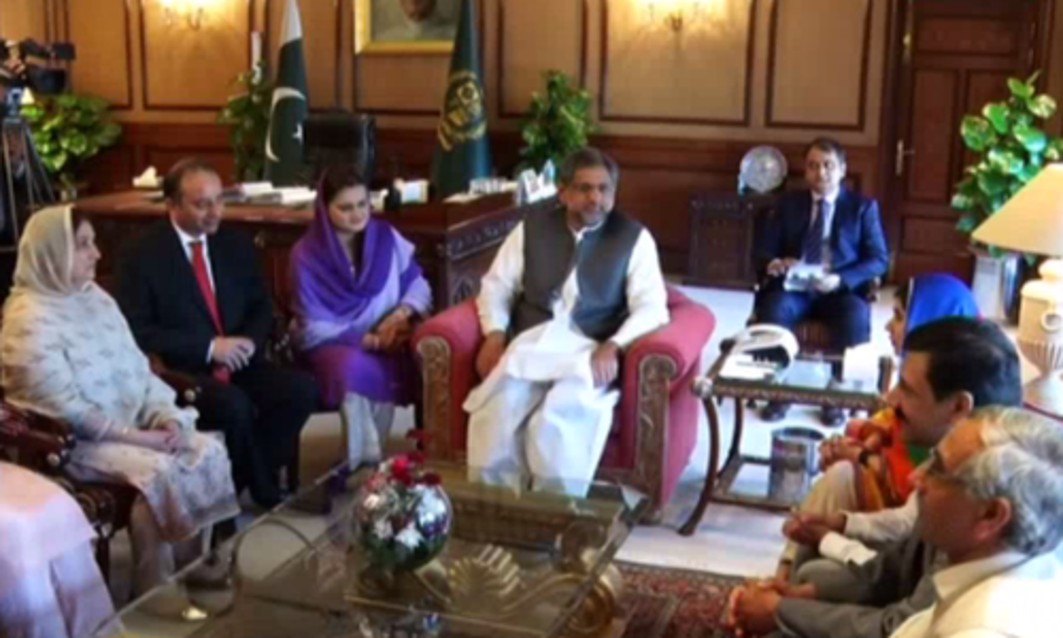 After her arrival in Islamabad on Thursday, Malala met with Prime Minister Shahid Khaqan Abbasi which set the tone of her engagements in her home country. However, details of her visit are being kept secret for her security. Earlier Malala met Abbasi during UN General Assembly meeting in New York last year when she advocated for improving education facilities for women.
However, Dawn reports that the 20-year-old Oxford University student is currently in Pakistan on a four-day visit.
After meeting PM Abbasi, Malala told media persons, “I continued my education there [in the United Kingdom], but I have always wanted to move freely in Pakistan. I want to invest in the education of children.Pakistan women should be empowered.”
PM Abbasi, while addressing the journalists after Yousafzai, Welcomed her and that said he was happy that a daughter of the nation has returned to her homeland.
“You were a 13-year-old girl when you left and now you are the most famous citizen of the country. The entire world gave you honour and respect and Pakistan will [also].It is your home. Now you are not an ordinary citizen, your security is our responsibility.”
He also described the details of Pakistan’s fight against terrorism after Malala was attacked. “After your departure, we have fought a difficult war in which 6,500 soldiers, 25,000 policemen, paramilitary forces and civilians embraced martyrdom. Terrorism has been eliminated and still, we are fighting a war against terrorism. Set aside what the world says about us, Pakistan is fighting the largest war against terror. More than 200,000 soldiers are engaged in the war,” he said.
Yousafzai, who belongs to Swat, has been living in the UK after surviving a Taliban attack in 2012, which necessitated her departure abroad for medical treatment.
Meanwhile, Muhammed Faisal, spokesman for the Foreign Office told media persons, “She will be meeting several people here but her itinerary is not being disclosed due to security reasons.”
“We welcome Malala…. She is back home. It is a positive development,” he said, calling her “one of our young and brilliant daughters” and adding that Pakistanis should respect her.
Pakistan welcomes “Gul Makai”to her home. We are proud of you. #malalacomeshome
— Dr Mohammad Faisal (@DrMFaisal) March 29, 2018
The youngest ever winner of the Nobel Peace Prize in 2014, Malala has continued to be a vocal advocate for girls´ education while pursuing her studies at Oxford University.
Hamid Mir, a leading Pakistani journalist has issued a plea for opposition politicians and commentators to exercise restraint when talking about the visit.”International media is highly focused on her return and this (bad language) will damage Pakistan´s image,” he said.
My dear @MichaelKugelman I told you last year that @Malala will come back to Pakistan this is her short visit she will come back permanently after completing her studies in UK pic.twitter.com/5OeOtSSXwv
— Hamid Mir (@HamidMirPAK) March 29, 2018
One of the twitter users Shahira Lashari wrote, “Dear Pakistanis! Malala is not your enemy. Your enemies were those monsters who shot her point blank on her way to school.”
Malala began her campaign for girl education at the age of just 11, when she started writing a blog — under a pseudonym — for the BBC´s Urdu service in 2009 about life under the Taliban in Swat, where they were banning girls´ education.
In 2007 the militants had taken over the area, which Malala affectionately called “My Swat”, and imposed a brutal, bloody rule. Brutal Taliban terrorists murdered their opponents, people were publicly flogged for supposed breaches of sharia law, women were banned from going to market, and girls were stopped from going to school.
Malala has got more than a million followers within eight months of opening a Twitter account on her last day of school in July 2017. “I know that millions of girls around the world are out of school and may never get the opportunity to complete their education,” Malala wrote at the time.
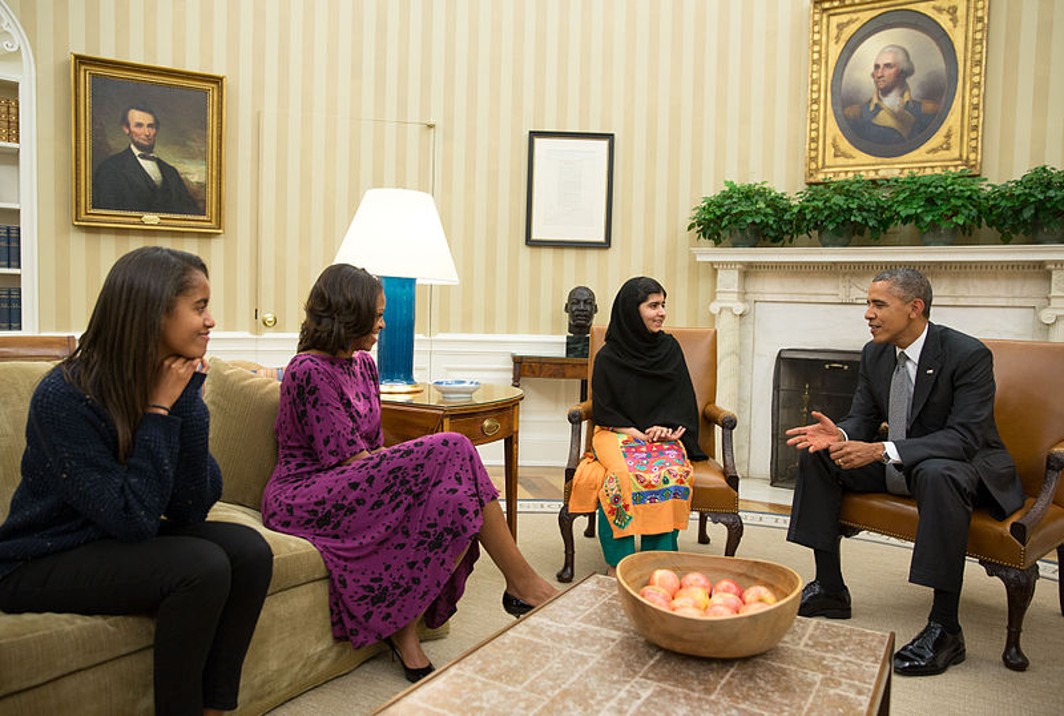 During a recent appearance at the World Economic Forum in Davos, Malala urged women to “change the world” without waiting for the help of men.
She said, “We won´t ask men to change the world, we´re going to do it ourselves. We´re going to stand up for ourselves, we´re going to raise our voices and we´re going to change the world.”
In March 2015, Malala Yousufazai and Indian child rights campaigner Kailash Satyarthi had received the Noble Peace Prize awards. The Noble committee described both laureates as “champions of peace”.






Latest world news
Magnitude 7 earthquake strikes Russia’s Kamchatka Peninsula
A magnitude 7 earthquake struck Russia’s Kamchatka Peninsula region on Friday. The initial report placed the earthquake at a depth of 140 kilometres.


Latest world news
S Jaishankar says India is a natural option for Russia amid Europe tensions
External Affairs Minister S Jaishankar said India remained a natural option for Russia as Moscow increasingly turned towards Asia amid strained relations with Europe. He highlighted the continuity of India-Russia ties and their significance for the balance of power in Asia.

Latest world news
Putin praises PM Modi, says he has very good ideas on Ukraine war
Russian President Vladimir Putin has praised Prime Minister Narendra Modi for repeatedly raising the need to end the Ukraine war, describing his ideas for a settlement as “very good”.


India-US trade deal first phase finalised, drafting underway

Election Commission orders voter roll revision in 17 states, UTs

Actor Imran Khan asked to leave India after CJP protest

Delhi Police offers 11-person limit for CJP’s Connaught Place protest

Mallikarjun Kharge’s ‘Your Friends’ jab at Rahul Gandhi over congress exits

Magnitude 7 earthquake strikes Russia’s Kamchatka Peninsula

Delhi deploys 25,000 personnel, installs CCTV cameras ahead of CJP march
Mallikarjun Kharge’s ‘Your Friends’ jab at Rahul Gandhi over congress exits
Delhi Police offers 11-person limit for CJP’s Connaught Place protest
Actor Imran Khan asked to leave India after CJP protest

Afghan Men Try To Hang With The Jet Engine Of The Aircraft in Kabul- Afghanistan News – Kabul News
Trending Top 10 News: 10000 Crore Fine on Flipkart, Apple to Launch Unique Feature, Hdfc Bank Job Ad

Trending Top 10 News: Nokia 6310, Apple sales, Bachpan ka Pyar Video Kid, Dainik Bhaskar IT Raid

Trending Top 10 News: Canada bans Indian flights, Rain in Delhi NCR, AIMIM Twitter hacked, Raj Kundra case

Trending Top 10 News: Shein India, Apple New Service, Pocket Oxygen, Oppo Launched New Phone
-
 India News23 hours ago
India-US trade deal first phase finalised, drafting underway
-
 India News21 hours ago
Election Commission orders voter roll revision in 17 states, UTs
-
 India News20 hours ago
Actor Imran Khan asked to leave India after CJP protest
-
 India News19 hours ago
Delhi Police offers 11-person limit for CJP’s Connaught Place protest
-
 India News8 hours ago
Mallikarjun Kharge’s ‘Your Friends’ jab at Rahul Gandhi over congress exits
-
 India News7 hours ago
Delhi deploys 25,000 personnel, installs CCTV cameras ahead of CJP march
-
 Latest world news7 hours ago
Magnitude 7 earthquake strikes Russia’s Kamchatka Peninsula
