English हिन्दी
Connect with us

Top Stories

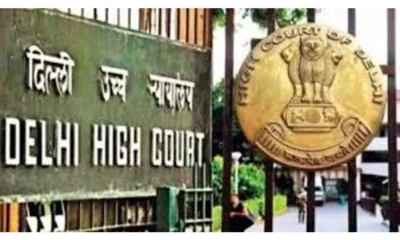
Delhi High Court gives permission to 33 weeks pregnant woman to undergo abortion

The court accepted the plea in light of the uncertainty concerning the quality of life and a mother’s choice as to whether or not to give birth to a child suffering from an abnormality.

Published

on

Delhi High Court

The Delhi High Court on Tuesday allowed a 33 weeks pregnant woman to go for medical termination of pregnancy. The woman approached the High Court for abortion due to the foetus suffering from a cerebral deformity.

The court accepted the plea in light of the uncertainty concerning the quality of life and a mother’s choice as to whether or not to give birth to a child suffering from an abnormality.
Justice Prathiba M. Singh granted the petition in light of the medical board’s assessment, which was unable to indicate the potential severity of the child’s condition.

The court said cases like these highlight the severe dilemma that a woman has to undergo. With the emergence of modern technology, the issues around abortion and termination are bound to become more difficult. The court further said that it is easy to detect a number of abnormalities in full-term pregnancy (like this case).

Read Also: Jharkhand: Man decapitated over property dispute, killer’s friends take selfie with severed head, 6 arrested

During the interaction with the petitioner, Justice Singh said she was able to determine that she was aware of the risks and psychological trauma that come with childbirth or child abortion.

Last week, the 26-year-old woman approached the high court after the GTB Hospital rejected her plea for pregnancy termination. According to the amended Medical Termination of Pregnancy Act, which took effect on September 24, 2021, the petitioner’s current gestational age exceeded the legal threshold of 24 weeks.

The medical board that Lok Nayak Jai Prakash Narayan (LNJP) Hospital appointed to investigate the case stated in its report that while the foetus, once born, would be compatible with life, the degree of any disability due to the abnormality cannot be predicted. In the end, the board decided against medically terminating the pregnancy in the given situation.

The doctors who were virtually present in court stated that the quality of life of the foetus cannot be judged and that surgery can be performed on the newborn.

The petitioner had stated on Friday that no abnormalities had been discovered in the foetus up until the 16th week of gestation, but the petitioner said an abnormality was noticed on November 12.

Himachal Pradesh exit polls: BJP may retain power, Congress a close second, AAP flops

India News

Repolling ordered at 15 booths in West Bengal after complaints of irregularities

Repolling will be held at 15 polling stations in West Bengal’s Magrahat Paschim and Diamond Harbour constituencies after complaints of irregularities.

Published

on

Fresh voting will be conducted in 15 polling stations across two assembly constituencies in West Bengal on May 2, following complaints of irregularities during the recent polling phase.

The Election Commission has declared the earlier voting at these booths void and ordered repolling to ensure fairness in the electoral process.

Where repolling will take place

The repoll will be held in the Magrahat Paschim and Diamond Harbour constituencies in South 24 Parganas district. Out of the 15 booths, 11 are located in Magrahat Paschim and 4 in Diamond Harbour.

Polling is scheduled to take place from 7 am to 6 pm.

Why repolling was ordered

The decision comes after complaints related to alleged irregularities, including concerns linked to electronic voting machines (EVMs). Authorities reviewed the situation and decided to nullify the earlier voting in these booths to maintain the integrity of the election.

Background of the election

The repoll follows the second phase of the West Bengal Assembly elections held on April 29, which covered 142 constituencies. The Election Commission has taken multiple steps during the election process to address complaints and ensure free and fair polling.

Continue Reading

India News

Pawan Khera gets pre-arrest bail from Supreme Court in case linked to Himanta Sarma’s wife

Supreme Court grants relief to Pawan Khera, protecting him from arrest in a politically sensitive defamation case.

Published

on

Congress leader Pawan Khera has been granted anticipatory bail by the Supreme Court of India in a case related to his remarks about Himanta Biswa Sarma’s wife, Riniki Bhuyan Sarma.

The top court’s decision provides Khera protection from arrest while the investigation continues in the matter, which includes allegations of defamation and forgery.

Case stems from remarks and allegations

The case originates from statements made by Khera during a press conference, where he alleged that the Assam Chief Minister’s wife held multiple foreign passports and had undisclosed assets abroad. These claims were strongly denied by both Sarma and his wife, who described them as false and politically motivated.

Following the remarks, a complaint was filed, leading to an FIR under various provisions, including defamation and related charges.

Legal journey before Supreme Court relief

Khera had earlier faced setbacks in lower courts, including the rejection of his anticipatory bail plea by the Gauhati High Court. He subsequently approached the Supreme Court seeking protection from arrest.

During the proceedings, Khera argued that arrest in the case was unnecessary and would amount to humiliation rather than justice.

What the court’s decision means

The Supreme Court’s order grants interim protection, ensuring that Khera cannot be arrested immediately while legal proceedings continue. The case will now proceed as per law, with investigations and hearings expected to continue in the coming weeks.

Continue Reading

India News

Karnataka clears internal quota for scheduled castes, cabinet approves revised formula

Karnataka has approved a new internal quota system for Scheduled Castes, redistributing the 15% reservation and enabling recruitment to resume.

Published

on

The Karnataka government has approved a revised internal reservation formula for Scheduled Castes (SCs), marking a significant policy decision aimed at ensuring fair distribution of benefits among sub-groups.

The decision was taken during a special cabinet meeting led by Chief Minister Siddaramaiah. The approved formula redistributes the existing 15% SC reservation into three internal categories.

Under the new structure, 5.25% reservation each has been allocated to the “left-hand” and “right-hand” SC groups, while 4.5% has been earmarked for other Scheduled Caste communities, including nomadic groups.

Recruitment to resume after policy clearance

With the cabinet giving its nod, the government is expected to restart long-pending recruitment processes. Officials indicated that fresh notifications will be issued under the revised quota system, allowing hiring to move forward.

The move is expected to unlock thousands of government job vacancies that had been on hold due to the absence of clarity on internal reservation.

Decision shaped by legal constraints

The revised quota formula has been structured to comply with the Supreme Court-mandated 50% ceiling on total reservations. Earlier, the state had proposed increasing the SC quota to 17% and Scheduled Tribes (ST) quota to 7%, but this could not be implemented due to legal limitations.

As a result, the government retained the SC reservation at 15% and proportionately adjusted the internal distribution among sub-categories.

Shift from earlier quota structure

The new formula replaces the earlier proposed 6:6:5 distribution model. The cabinet revised these figures proportionately to align with the 15% cap, resulting in the current 5.25:5.25:4.5 structure.

The classification divides SC communities into three groups to address disparities in access to reservation benefits across sub-castes.

Aim to ensure equitable representation

The government has said the decision is intended to bring more balance and fairness in reservation benefits among different SC communities. The categorisation is expected to improve representation of relatively underrepresented groups within the SC category.

The cabinet’s approval is seen as a key step in addressing long-standing demands for internal reservation among Scheduled Castes in the state.

Continue Reading

Trending

© Copyright 2022 APNLIVE.com