English हिन्दी
Connect with us

India News

Asaram gets life imprisonment for rape of minor girl in his ashram in 2013

Published

on

Asaram and two accomplices convicted for rape of minor girl in his ashram in 2013

A Jodhpur court today sentenced self-styled godman Asaram to life in prison and two of his accomplices to 20 years jail for raping a 16-year-old girl in his ashram near Jodhpur five years ago.

Last year in August, another self-proclaimed godman Gurmeet Ram Rahim was also convicted of sexual offence.

Special Judge (SC/ST court) Madhusudhan Sharma delivered the verdict in the Jodhpur Central jail premises on Wednesday, April 25. Two of four co-accused Shilpi and Sharat Chandra were also been convicted and awarded 20 years imprisonment each.

The girl from Shahajahanpur in Uttar Pradesh was studying at the godman’s ashram at Chhindwara in Madhya Pradesh. The victim had alleged that Asaram called her to his ashram in Manai area near Jodhpur and raped her on the night of August 15, 2013.

On August 20, the parents of the victim filed a complaint in Delhi and later the case was transferred to Jodhpur police.

On August 23, supporters of Asaram Bapu attacked Kamla Market police station in Delhi. Five days later, victim’s father demanded death for Asaram Bapu, while the godman’s son described the minor as mentally unstable.

The chargesheet against Asaram and four other co-accused Shiva, Shilpi, Sharad and Prakash was filed by the police on November 6, 2013 under various sections of the POSCO Act, Juvenile Justice Act and IPC.

The 77-year-old Asaram was arrested in Indore and brought to Jodhpur on September 1, 2013. He is under judicial custody since September 2, 2013. Asaram unsuccessfully moved 12 bail applications, of which six were rejected by the trial court, three by the Rajasthan high court and three by the Supreme Court.

Final arguments in the Asaram case were completed on April 7 and the court had kept the order reserved for April 25.

Arguments for the quantum of sentencing were going on inside the heavily fortified jail premises, where the trial court delivered its verdict in accordance with the directions of the Rajasthan High Court.

Asaram is also facing a rape case in Surat in Gujarat in which the Supreme Court earlier this month gave five weeks time to the prosecution to complete the trial. This case relates to the complaint of rape filed by two sisters from Surat on October 6, 2013 against Asaram and his son Narayan Sai. Apart from rape, he was also facing charges of murder, black magic, to name a few.

The elder sister, in her complaint against Asaram, had accused him of repeated sexual assaults between 2001 and 2006 when she was staying at his ashram near Ahmedabad.

“We had complete faith in the judiciary and are happy that we got justice,” her father told journalists after the verdict came in. The family, he said, had been living in constant terror and their business was hit.

Asaram had started off from a hut on the banks of the Sabarmati and went on to create a Rs 10,000 crore empire with 400 ashrams in India and other parts of the world in four decades.

Apprehending trouble from Asaram’s followers, security was stepped up in Jodhpur where prohibitory orders were imposed ahead of the verdict. The Centre had asked Rajasthan, Gujarat and Haryana governments to tighten security and deploy additional forces as the three states have a large number of Asaram followers.

The Union Home Ministry had sent an advisory fearing a repeat of the violence in Punjab and Haryana that followed the conviction of Gurmeet Ram Rahim in August last year, when 13 people were killed. He was convicted in a 2002 rape case and sentenced to 20 years in prison.

Reactions

Ashok Gehlot (Congress): The time has come when people should be able to differentiate between the actual saints and the frauds, as this creates a bad image of the country in the international arena.

Father of Shahjahanpur victim: Asaram is convicted, we have got justice. I want to thank everyone who supported us in this fight. Now I hope he will get strict punishment. I also hope the witnesses who were murdered or kidnapped get justice.

Neelam Dubey (Spokesperson for Asaram): We will discuss with our legal team and then decide our future course of action. We have confidence in our judiciary.

Former IPS officer and an acquitted accused in the Sohrabuddin case, DG Vanzara came out in support of rape convict Asaram. “There is no charge of rape. The charge is that he inappropriately touched the victim. I am a follower of Asaram,” said Vanzara.

Mahendra Chawla (main eyewitness in the Asaram’s son Narayan Sai’s sexual assault case): Though I have security, I request the Centre for additional security, my life, like other witnesses’, is constantly under threat.

India News

Jammu and Kashmir High Court rejects Mehbooba Mufti’s plea on undertrial prisoners, calls it politically motivated

The Jammu and Kashmir High Court has rejected Mehbooba Mufti’s PIL on undertrial prisoners, stating it was politically motivated and lacked factual basis.

Published

on

Mehbooba mufti

The Jammu and Kashmir High Court has dismissed a Public Interest Litigation (PIL) filed by People’s Democratic Party (PDP) president Mehbooba Mufti seeking the transfer of undertrial prisoners lodged in jails outside the Union Territory back to prisons within Jammu and Kashmir. The court termed the petition politically motivated, vague and unsupported by facts, observing that it was an attempt to derive political mileage rather than address a genuine public cause.

A bench headed by Chief Justice Arun Palli and Justice Rajnesh Oswal made it clear that public interest litigation cannot be used as a tool to advance political agendas or convert courts into platforms for electoral positioning.

Court says PIL cannot become a political platform

In its observations, the High Court said the plea appeared aimed at projecting the petitioner as a champion of justice for a specific section, rather than raising substantiated legal concerns. The bench underlined that while political parties are free to engage with voters through democratic means, the judiciary must remain insulated from political campaigns.

The court reiterated that PIL jurisdiction is meant to safeguard public interest and not to be misused for electoral gain or political leverage. It cautioned against attempts to draw the judiciary into political narratives.

Undertrials have legal remedies, says court

In the 15-page order passed on Tuesday, the High Court noted that the undertrial prisoners mentioned in the petition are already facing trial before competent courts. According to the bench, adequate judicial remedies are available to such undertrials to raise grievances related to their detention or place of incarceration.

The court further observed that the failure of the concerned undertrials to approach courts on their own indicated that they may not be genuinely aggrieved by their confinement in prisons outside the Union Territory.

No locus standi, petition dismissed

Dismissing the plea, the High Court held that Mehbooba Mufti was a third-party stranger to the cause and therefore lacked the locus standi to invoke the court’s jurisdiction in this matter. The petition was described as misconceived and was rejected accordingly.

Continue Reading

India News

Thackeray cousins reunite for Mumbai civic polls, announce Shiv Sena UBT–MNS alliance

Uddhav and Raj Thackeray have reunited after two decades, announcing a Shiv Sena–MNS alliance for the upcoming BMC elections with a focus on Marathi identity.

Published

on

Shiv sena ubt mns alliance

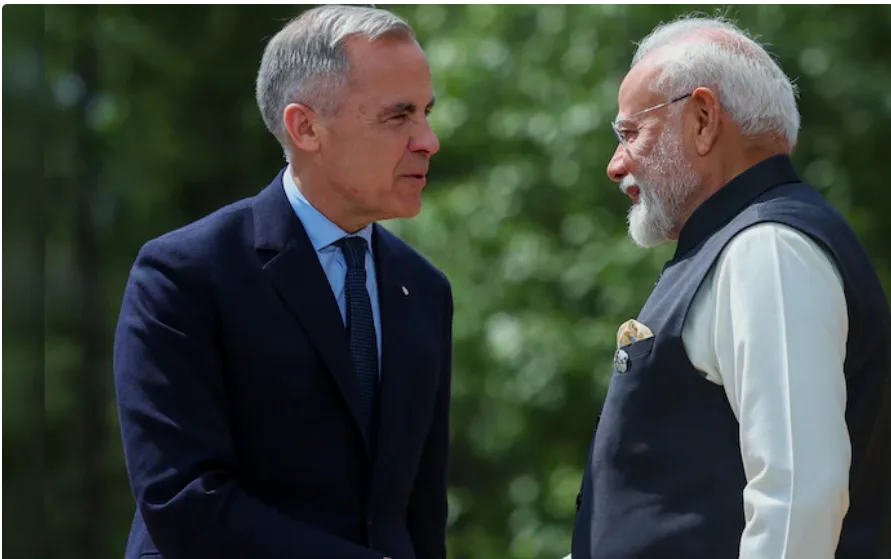
The long political estrangement between Uddhav Thackeray and Raj Thackeray has ended, with the cousins formally announcing an alliance for the upcoming Brihanmumbai Municipal Corporation (BMC) elections. The joint decision marks a significant shift in Mumbai’s civic politics, placing Marathi identity at the centre of the campaign.

At a joint press conference, Raj Thackeray declared that the Shiv Sena and Maharashtra Navnirman Sena (MNS) would contest the local body elections together. He asserted that Mumbai would get a Marathi mayor, adding that the mayor would come from the Shiv Sena–MNS alliance. Uddhav Thackeray, seated alongside him, echoed the confidence, stating that Mumbai would remain with them “come what may”.

Focus on unity and Marathi identity

Uddhav Thackeray underlined the importance of unity, invoking the slogan “batenge toh katenge” to warn against division. Raj Thackeray said the alliance would work to ensure that Marathi people get what they want, reinforcing the emphasis on regional identity that once defined the politics shaped by Shiv Sena founder Bal Thackeray.

The cousins, who have come together after nearly two decades, also appealed to leaders and workers unhappy with the Shiv Sena faction aligned with the BJP to join their front. The message was aimed at consolidating forces opposed to the ruling coalition in the state.

Seat-sharing and poll preparations

Elections to the BMC are due within a month, with voting scheduled for January 15. Political parties have already begun preparations for a high-intensity campaign to gain control of the country’s richest municipal body.

Uddhav Thackeray said that seat-sharing arrangements for Mumbai, Nashik and other municipal bodies have been finalised, though details were not disclosed. Sources indicated that the Shiv Sena faction led by Uddhav Thackeray could contest around 145–150 seats, while the MNS may field candidates in 65–70 seats. The remaining seats are expected to be contested by allies, including a faction of the NCP.

Strategic reunion against rivals

The alliance shifts the political narrative from disputes over the “real Sena” to a united front led by the Thackeray family, signalling continuity with Bal Thackeray’s legacy. Party leaders described the reunion as a moment of significance for Marathi voters and Maharashtra.

The combination brings together Uddhav Thackeray’s support among traditional Sena loyalists and Raj Thackeray’s appeal among younger voters, positioning the alliance as a key challenger in the civic polls. Raj Thackeray’s return to the fold is also expected to consolidate the Marathi vote bank that had earlier moved towards the MNS, impacting rival formations in Mumbai.

Continue Reading

India News

Nitin Gadkari flags Delhi air pollution, says two-day stay causes infection

Union minister Nitin Gadkari says spending two days in Delhi leads to infection, flags fossil fuel use as a major cause of pollution and calls for alternative energy solutions.

Published

on

Union Minister Nitin Gadkari

Delhi’s worsening air quality has drawn sharp criticism from within the ruling BJP, with Union minister Nitin Gadkari saying that even a brief stay in the national capital affects his health.

Speaking at a public event in Delhi, Gadkari remarked that spending just two days in the city results in an infection, raising questions over why the capital continues to struggle with severe pollution levels. His comments come at a time when the Air Quality Index has remained in the ‘very poor’ and ‘severe’ categories for weeks.

The Union minister, who handles the road transport and highways portfolio, acknowledged that the transport sector plays a major role in pollution. He said around 40 per cent of pollution is linked to fossil fuel usage and pointed out that India spends nearly Rs 22 lakh crore on importing fossil fuels, which also contributes to environmental damage.

Gadkari pushes for alternative fuels and exports

Gadkari stressed that promoting alternative fuel and biofuel technologies should be seen as a form of true nationalism. He argued that reducing imports and increasing exports would strengthen the country economically while also addressing pollution. According to him, resistance to eco-friendly technologies remains a major hurdle despite their long-term benefits.

Remarks on communal issues and secularism

During the same address, Gadkari said it was incorrect to label every Muslim as a terrorist, emphasising that there are varying degrees of extremism. He cited former President A P J Abdul Kalam as a national icon and underlined the importance of education, especially among marginalised sections.

He further claimed that Hindu-Muslim tensions in the country are a result of vote bank politics pursued by the Congress. Defining secularism as “justice for all”, Gadkari said policies driven by electoral considerations had created divisions. He asserted that Indian culture is neither communal nor casteist and described Hindutva as tolerant and inclusive.

Reiterating views earlier expressed by former prime minister Atal Bihari Vajpayee, Gadkari said India was, is, and will remain a secular country, rooted in its cultural traditions that advocate welfare for all.

Political reactions over pollution issue

The BJP-led governments at the Centre and in Delhi have faced criticism over their handling of air pollution. Congress leader Imran Masood responded to Gadkari’s remarks by saying that the minister had at least acknowledged the seriousness of the problem. He added that pollution cannot be attributed only to vehicles, noting that similar vehicles operate outside Delhi as well.

Continue Reading

Trending

© Copyright 2022 APNLIVE.com