
Latest world news
Book Ringside Seats For May 15 Post Poll Poker In Bengaluru


~By Saeed Naqvi
On May 15, when the Karnataka election results are announced, and the Congress, BJP and Deve Gowda’s JDS find themselves in an almighty scrum bargaining for power, a certain mysterious lady will be watching the proceedings from her suite in the country’s most luxurious, seven star Leela hotel on Bengaluru’s old airport road.
The hijab clad, 45 year old, Nowhera Shaik, President of the All India Mahila (Women’s) Empowerment Party (MEP) is fielding candidates in all the 224 assembly seats. It is a mistake to regard MEP as a woman only party. “A woman has a brother, father, son”, she says. Moreover, there is no taboo on men seeking MEP tickets.
Her hijab is a far cry from a docile acceptance of male oppression. It is an assertion of feminine independence. She is CEO of Hyderabad based Heera Group of companies, dealing with a wide range of commodities across the globe – building material, gold and diamond. The last mentioned, happens to be something of an obsession with her. Heera, name of her company, means diamond. Her election symbol is Diamond. Who knows her name Nowhera may be a contortion of Nav Heera, which means “novel diamond”.
In the Sherlock Holmes classic, mystery deepens when the dog “does not” bark. In Ms. Shaik’s case the deathly silence of politicians and the media at the high voltage election debut is as intriguing.

There are all sorts of ironies involved. The latest congress policy towards Muslims is based on the appraisal that the BJP’s shrill allegation, that the party appeases Muslims, has begun to affect the majority community. The Hindu increasingly sees the Congress as a “Muslim Party”. How should a party which is greedy for Hindu as well as Muslim votes, cope with the predicament.
It was to meet this situation that the new “cloak and dagger” policy towards Muslims was enunciated. The party will distance itself from Muslims to prevent a hemorrhage of Hindu votes. But by hint and gesture the Muslim voter will be persuaded that this “distancing” is only a tactic in the Muslim interest. The Muslim must not leap into the Congress lap in full public view, but, with expert slyness, sneak towards the Congress polling agent.
The game acquires a touch of situation comedy when an audacious, hijab wearing lady, with wealth beyond measure, a credible image of a philanthropist, jumps into the electoral fray. The Congress cannot throw up its hands and scream, “Help, help, she is nibbling away at Muslim pockets in a close election where even a few hundred votes matter.”
Nor can the BJP be ecstatic: “Welcome dear Begum Sahiba; go, damage the Congress.”
Unobtrusively, she just may end up marginally harming the Congress. If each one of her 224 candidates is pillowed with cash, the law of averages may return two, three or five winners. This may give her a hand to play in post poll poker. Her ambitions for 2019 leave one gasping.
If the Congress loses the Karnataka election, it will be difficult for the party to escape the label the opposition is in gleeful readiness to paste on the Congress forehead: P2, a party confined to Punjab and Pondicherry.
While nobody is conceding outright victory to the Congress, punters are willing to give it the largest single party status and therefore hope for coming state elections.
A representative group of eight senior journalists and political activists (including two having deep links with Communists and RSS) pondered over the election scene in my Bengaluru drawing room. There was no great difference of opinion on the way the cookie was expected to crumble on May 15. Congress, BJP and Deve Gowda led (JDS) Janata Dal Secular were expected to poll 95 to 100, 85 to 95 and 35 to 40 seats respectively. A hung house will enable the JDS to play a leading role in the post poll poker.
Let us pick up the narrative in 2010 when Siddaramaiah, then in the opposition, chastised the infamous Reddy Brothers (more popularly known in Karnataka as the Bellary mining mafia) on the floor of the state assembly.
The Reddy’s promptly dared him to repeat his charges in Bellary where, they threatened, he “would be finished”. Siddaramaiah took up the challenge. He undertook a 200 mile padyatra to Bellary. The voter, desperately searching for something he can respect, spotted a touch of heroism in “Siddaramaiah”.
There are now three principal caste groups (hundreds of smaller ones) in the contest:
Siddaramaiah with his diligently consolidated Kuruba caste; Deve Gowda, something of a Vokkaliga stalwart and B.S. Yedurappa the tallest Lingayat who had almost been ruled out by the BJP because of a jail term for massive corruption. His powerful caste Lingayat, has trumped all negative considerations.
Siddaramaiah is not a classical Congressman. Rather, his background should be a cause for concern for the Congress: there is in his DNA a trace of Lohia Socialist. This is what kept him in the JDS for 35 years. But his parting with Deve Gowda was so bitter that theirs is now a blood feud. Deve Gowda would rather jump in front of a train than allow Siddaramaiah a second term in Bengaluru.
Yedurappa poses the Lingayat challenge. This has propelled Siddaramaiah towards an audacious gamble. An old demand by a section of Lingayats seeking a status outside the Hindu structure has been dusted up by him. Yes, he says, Lingayats will be outside the Hindu fold. This is far reaching, tearing into Veer Shaivaite – Lingayat divide.
Trust a Lohiaite to have played this hand. There are echoes of V.P. Singh’s implementation of the Mandal Commission report. V.P. Singh himself was not a beneficiary of his machinations. But the post Mandal tumult brought to the fore Mayawati, Mulayam Singh, Lalu Prasad, Rath yatra to Ayodhya and so much mayhem. Let’s see how Siddaramaiah’s gamble plays itself out.







Latest world news
Magnitude 7 earthquake strikes Tibet after floods
A magnitude 7 earthquake struck northern Tibet on Thursday, October 22. The tremor came weeks after deadly flash floods and landslides hit the mountainous region near the Nepal-China border. Initial reports did not confirm casualties or damage from the earthquake.

Latest world news
Macron rejects Trump’s immigration claims over France riots
French President Emmanuel Macron criticised Donald Trump and other foreign leaders over their comments on France’s recent unrest. Macron rejected claims that the country was being overrun by migrants and Islamists, calling such assertions false.

Latest world news
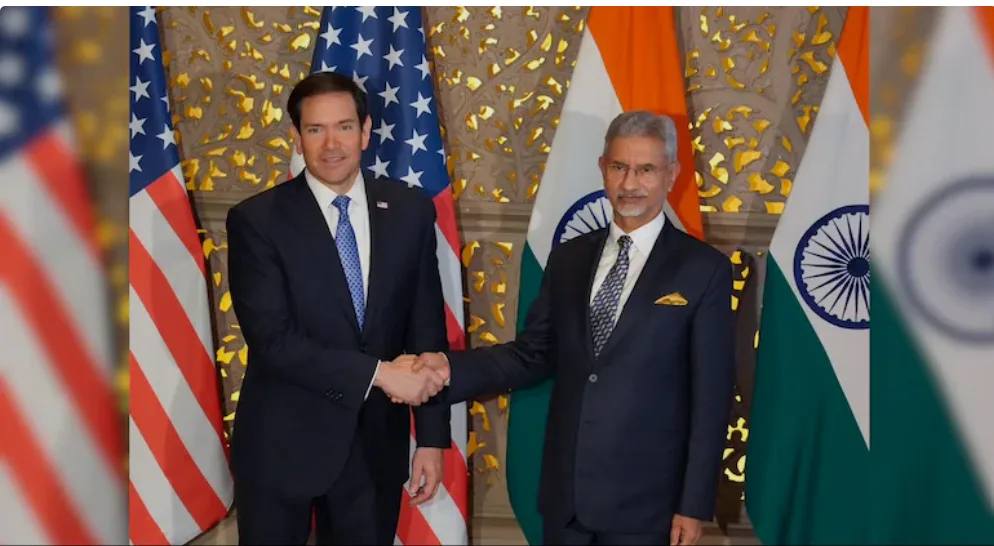
Marco Rubio says India and US share extraordinary alignment on key issues
US Secretary of State Marco Rubio said India and the United States share an extraordinary alignment on core issues, even though disagreements between the two countries may arise.
Farooq Abdullah’s Kashmir remark wrong, says Ghulam Nabi Azad
Delhi’s non-BS-VI vehicle ban from November 1 to hit NCR commuters

BJP to hold nationwide protests over Mallikarjun Kharge’s remarks on PM Modi

DMK ex-Minister arrested, TVK mocks Stalin with Bengal Monitor Lizard jab

Rahul Gandhi’s convoy cars collide with ambulance in UP, several injured
DMK ex-Minister arrested, TVK mocks Stalin with Bengal Monitor Lizard jab
Rahul Gandhi’s convoy cars collide with ambulance in UP, several injured
Farooq Abdullah’s Kashmir remark wrong, says Ghulam Nabi Azad
BJP to hold nationwide protests over Mallikarjun Kharge’s remarks on PM Modi
Delhi’s non-BS-VI vehicle ban from November 1 to hit NCR commuters

Afghan Men Try To Hang With The Jet Engine Of The Aircraft in Kabul- Afghanistan News – Kabul News
Trending Top 10 News: 10000 Crore Fine on Flipkart, Apple to Launch Unique Feature, Hdfc Bank Job Ad

Trending Top 10 News: Nokia 6310, Apple sales, Bachpan ka Pyar Video Kid, Dainik Bhaskar IT Raid

Trending Top 10 News: Canada bans Indian flights, Rain in Delhi NCR, AIMIM Twitter hacked, Raj Kundra case

Trending Top 10 News: Shein India, Apple New Service, Pocket Oxygen, Oppo Launched New Phone
-
India News17 hours ago
Farooq Abdullah’s Kashmir remark wrong, says Ghulam Nabi Azad
-
India News18 hours ago
Delhi’s non-BS-VI vehicle ban from November 1 to hit NCR commuters
-
 India News17 hours ago
BJP to hold nationwide protests over Mallikarjun Kharge’s remarks on PM Modi
-
 India News7 hours ago
DMK ex-Minister arrested, TVK mocks Stalin with Bengal Monitor Lizard jab
-
 India News8 hours ago
Rahul Gandhi’s convoy cars collide with ambulance in UP, several injured
