English हिन्दी
Connect with us

India News

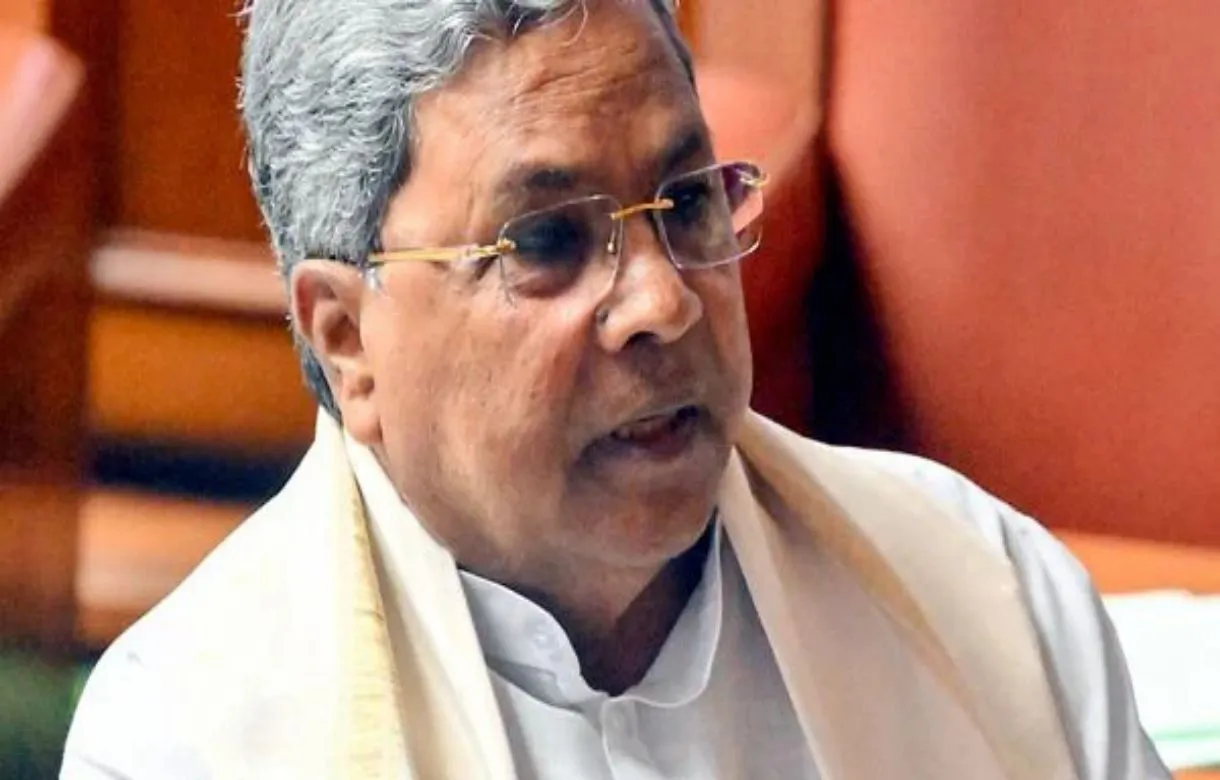
Siddaramaiah presents record 17th Karnataka budget with Rs 4.48 lakh crore spending plan

Karnataka CM Siddaramaiah presented his record 17th budget, outlining a Rs4.48 lakh crore spending plan for 2026–27 with focus on infrastructure, welfare and technology.

Published

on

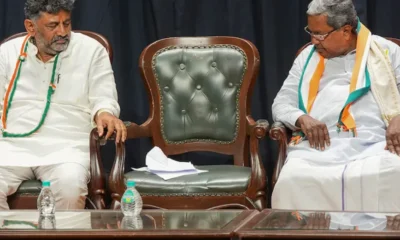
Chief Minister Siddaramaiah on Friday presented his 17th State Budget, the highest number delivered by any Karnataka chief minister, outlining a Rs 4.48 lakh crore spending plan for the financial year 2026–27.

The budget indicates that the state will continue to run a revenue deficit for the third consecutive year, even as the government focuses on welfare programmes, infrastructure development and technology investments.

According to the budget estimates, total revenue receipts are projected at Rs3,15,050 crore. This includes Rs 2,20,000 crore from the state’s own tax revenue, Rs16,000 crore from non-tax revenue, and Rs79,050 crore in transfers from the Government of India.

The government has also projected gross borrowings of Rs 1,32,000 crore and non-debt capital receipts of Rs190 crore, taking total receipts to Rs 4,47,240 crore for the fiscal year.

Meanwhile, overall expenditure is estimated at Rs 4,48,004 crore, divided into Rs 3,38,007 crore in revenue expenditure, Rs 74,682 crore in capital expenditure, and Rs 35,316 crore towards loan repayments.

The state has projected a revenue deficit of Rs 22,957 crore, while the fiscal deficit is estimated at Rs97,449 crore, which equals 2.95% of the Gross State Domestic Product (GSDP).

Total liabilities by the end of the year are expected to reach Rs 8,24,389 crore, accounting for 24.94% of the state’s GSDP. The government said both deficit levels remain within limits set under the Karnataka Fiscal Responsibility Act, indicating adherence to fiscal discipline.

Mekedatu project and student protection law

The government said a revised Detailed Project Report for the Mekedatu Dam Project will soon be submitted to the Centre along with a request for forest clearance. The project is intended to improve drinking water supply for Bengaluru but has faced opposition from Tamil Nadu in the past.

Another major announcement was the proposed Rohith Vemula Act, which aims to prevent caste-based discrimination and atrocities against students in government, private and deemed universities across the state.

Welfare and infrastructure focus

Under tribal welfare initiatives, the government will construct the Sri Maharshi Valmiki Administrative Soudha in Bengaluru’s Sumanahalli at an estimated cost of Rs 50 crore. The building will house offices of the Scheduled Tribes Welfare Department.

The budget also proposed the development of Waqf properties located in prime commercial areas through a Public-Private Partnership model, aiming to unlock their economic potential.

For urban infrastructure, Rs 1,255 crore has been allocated for ward-level road and infrastructure projects across five city corporations in Bengaluru.

The government also plans to develop 100 Miyawaki urban forests, which use dense plantations of native species to create green spaces in urban areas.

Push for technology and innovation

To encourage investment and improve ease of doing business, the state launched a unified investment portal developed with the support of Microsoft, providing more than 100 services across 30 departments for investors.

The Indian Institute of Science will host the Bangalore Robotics and AI Innovation Zone (BRAIN) under ARTPARK in collaboration with the Indian Space Research Organisation and Karnataka State Electronics Development Corporation Limited.

Additionally, a drone testing and performance evaluation facility will be established in Chikkaballapur to support the state’s growing drone technology ecosystem.

Mysuru to be developed as second IT hub

The government also announced plans to develop Mysuru as Karnataka’s second IT hub, aiming to reduce congestion in Bengaluru while promoting technology-driven growth in other regions of the state.

India News

Delhi government announces two work-from-home days weekly for offices after PM Modi’s fuel-saving appeal

Delhi government employees will work from home twice a week under a new fuel conservation initiative announced by Chief Minister Rekha Gupta following Prime Minister Narendra Modi’s appeal for energy-saving measures.

Published

on

Rekha Gupta cm

Delhi Chief Minister Rekha Gupta on Thursday announced that government offices in the national capital will observe two work-from-home days every week as part of a broader fuel conservation campaign launched after Prime Minister Narendra Modi urged citizens to reduce fuel consumption amid global economic uncertainty.

The measures, which will take effect from Friday, are part of the Delhi government’s “Mera Bharat Mera Yogdan” campaign aimed at promoting sustainable practices, reducing fuel usage and improving energy efficiency across departments.

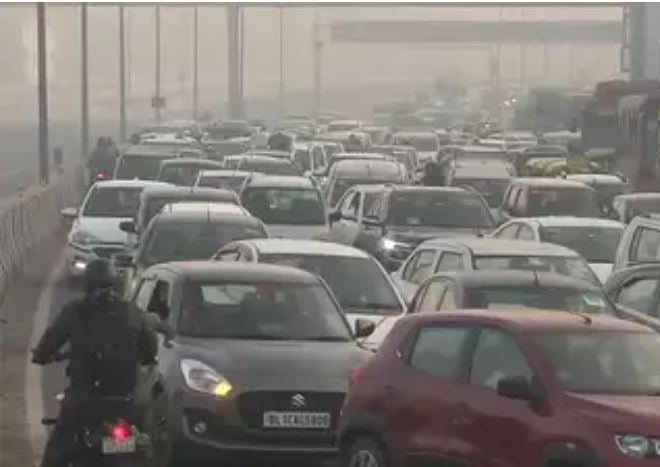
Under the new policy, ministers, officers and government employees will also participate in a “Monday Metro” initiative, encouraging the use of public transport instead of private vehicles. Citizens have additionally been urged to observe one “No Vehicle Day” every week.

The Delhi government said no new petrol, diesel or electric vehicles would be purchased for the next six months. Officials also announced a one-year halt on official foreign travel for ministers and officers as part of the austerity measures.

The Chief Minister’s convoy has also been reduced to four vehicles, including two electric vehicles, in a move the government described as an effort to encourage cleaner mobility and lower fuel use.

Additional measures include increasing transport allowance for employees by 10%, installing master switches in government offices to reduce electricity wastage, and fixing air-conditioner temperatures between 24 and 26 degrees Celsius.

The government has also requested universities and educational institutions to conduct non-practical classes online to cut travel-related fuel consumption.

Prime Minister Modi had recently appealed to citizens to conserve fuel, use public transport, adopt carpooling and revive work-from-home arrangements wherever possible due to concerns over global supply disruptions and rising fuel prices linked to tensions in West Asia.

Continue Reading

India News

India bans sugar exports till September 2026 amid domestic supply concerns

India has banned sugar exports with immediate effect until September 2026 or until further orders to stabilise domestic supply and control prices.

Published

on

The Indian government has banned the export of sugar with immediate effect until September 30, 2026, or until further orders, in a move aimed at addressing domestic supply concerns and stabilising local prices.

According to an order issued by the Directorate General of Foreign Trade (DGFT) under the Ministry of Commerce and Industry, the restriction applies to raw, white and refined sugar shipments.

The policy shift effectively changes the export status from “restricted” to “prohibited,” marking a significant tightening of India’s sugar export regime.

Shift from earlier export allowance

India had previously permitted limited sugar exports based on expectations of surplus production. However, the latest decision reverses that stance amid evolving supply conditions.

The move is intended to ensure sufficient domestic availability of sugar and control price pressures in the local market.

Key impact on trade and shipments

The ban will apply to all new export consignments of sugar categories covered under the order. However, exemptions may apply for shipments already in the pipeline, depending on compliance with specified conditions set by authorities.

The restriction is expected to significantly impact sugar trade flows, given India’s position as one of the world’s largest sugar producers and exporters.

Continue Reading

India News

Congress ends Kerala suspense, VD Satheesan to be CM

Congress has named V D Satheesan as the next chief minister of Kerala, concluding its internal deliberations over the state leadership.

Published

on

VD Satheesan

The Congress party has announced that V D Satheesan will be the next Chief Minister of Kerala, ending days of speculation over the leadership choice following the United Democratic Front’s (UDF) recent electoral victory.

The decision was taken by the party leadership after internal discussions and comes amid intense lobbying among senior leaders for the top post.

Leadership decision after prolonged suspense

According to reports, the announcement was made after a series of meetings within the Congress high command, which had been deliberating between multiple contenders for the chief minister’s post.

Satheesan, who currently serves as the Leader of the Opposition in the Kerala Legislative Assembly, emerged as the final choice after discussions involving senior party leadership in Delhi.

Who is V D Satheesan

V D Satheesan is a senior Congress leader from Kerala and has been one of the party’s most prominent faces in the state. He has served as Leader of the Opposition in the Kerala Assembly since 2021 and has represented the Paravur constituency multiple times.

He is widely seen as a key strategist within the Congress-led UDF in Kerala.

Internal competition within Congress

The selection process had reportedly seen competition among several senior leaders, including K C Venugopal and Ramesh Chennithala, before the party finalized Satheesan’s name.

The delay in announcing the chief minister had led to speculation and political debate within Kerala’s political circles.

UDF returns to power in Kerala

The announcement follows the United Democratic Front’s electoral victory in the state, which ended the Left Democratic Front’s (LDF) tenure in Kerala politics.

The new government formation is expected to take place soon after the formal swearing-in process is completed.

Continue Reading

Trending

© Copyright 2022 APNLIVE.com