
Latest world news
Russian helicopter crashes in Eastern Syria, 2 pilots killed


In another jolt to Russian forces in Syria, a Ka-52 helicopter has been crashed, while it was on a routine flight in eastern Syria on Monday killing both the pilots.
According to TASS news agency, Russian Defence Ministry has, in statement, said, “A Russian helicopter Ka-52 crashed while on a routine flight over eastern regions of the Syrian Arab Republic. Both pilots were killed.”
The ministry has also said that a search and rescue team has taken the bodies to the home airfield. “According to early information, the incident may have been due to a technical malfunction,” it said.
Read More: Russian fighter jet crashed in Syria, falls in Mediterranean
The Russian helicopter was crashed within days after it lost Su-30SM fighter jet that crashed over the Mediterranean Sea on May 3, while moving upwards after taking off from the Khmeimim airbase. Both pilots died in that accident as well. Russian defence ministry had stated that the accident might have been caused by a bird hit and clarified it was not shot down.
 TASS, while describing the details of the ill feted helicopter, said that the Ka-52 ‘Alligator’ reconnaissance and combat helicopter is designed to destroy tanks, manpower, helicopters and other hostile aircraft on the frontline and in tactical depth.
The Ka-52 is powered by two gas-turbine engines which provide a flight altitude of more than 5,000 m. It is fitted with a 2A42-1 gun of 30mm calibre and is capable of carrying up to 2,500 kg of weapon payload.
Read More: Russia loses 39 military personnel in Syria air-crash
Russia began its military intervention in Syria in September 2015 after an official request by the Bashar al-Assad government for military aid against IS and other anti-Assad groups. It was initially consisted of air strikes fired by Russian aircraft stationed in the Khmeimim base at targets in north-western Syria.
Besides, Russian military advisors and special operations forces are also stationed in Syria. Prior to the military intervention, Russian role was mainly confined to supplying arms to the Syrian forces.
Read More: Russia-US conflicting perception on Syria cause more deaths








Latest world news
S Jaishankar says India is a natural option for Russia amid Europe tensions
External Affairs Minister S Jaishankar said India remained a natural option for Russia as Moscow increasingly turned towards Asia amid strained relations with Europe. He highlighted the continuity of India-Russia ties and their significance for the balance of power in Asia.


Latest world news
Putin praises PM Modi, says he has very good ideas on Ukraine war
Russian President Vladimir Putin has praised Prime Minister Narendra Modi for repeatedly raising the need to end the Ukraine war, describing his ideas for a settlement as “very good”.

Latest world news
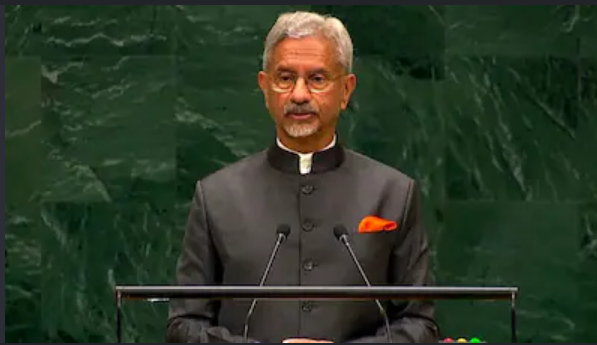
S Jaishankar calls Pakistan a “serial practitioner of terrorism” at UN
S Jaishankar criticised Pakistan at the UN General Assembly, referring to a “serial practitioner of terrorism” and warning against attempts to normalise terrorism.

Dhruv Rathee gets fresh summons in 2018 BJP IT cell video case

Nobody can browbeat judiciary, Chief Justice warns over Rahul Gandhi’s march

India-US trade deal first phase finalised, drafting underway

Election Commission orders voter roll revision in 17 states, UTs

Actor Imran Khan asked to leave India after CJP protest

Delhi Police offers 11-person limit for CJP’s Connaught Place protest
Actor Imran Khan asked to leave India after CJP protest
Election Commission orders voter roll revision in 17 states, UTs
India-US trade deal first phase finalised, drafting underway
Nobody can browbeat judiciary, Chief Justice warns over Rahul Gandhi’s march

Afghan Men Try To Hang With The Jet Engine Of The Aircraft in Kabul- Afghanistan News – Kabul News
Trending Top 10 News: 10000 Crore Fine on Flipkart, Apple to Launch Unique Feature, Hdfc Bank Job Ad

Trending Top 10 News: Nokia 6310, Apple sales, Bachpan ka Pyar Video Kid, Dainik Bhaskar IT Raid

Trending Top 10 News: Canada bans Indian flights, Rain in Delhi NCR, AIMIM Twitter hacked, Raj Kundra case

Trending Top 10 News: Shein India, Apple New Service, Pocket Oxygen, Oppo Launched New Phone
-
 India News16 hours ago
Dhruv Rathee gets fresh summons in 2018 BJP IT cell video case
-
 India News13 hours ago
Nobody can browbeat judiciary, Chief Justice warns over Rahul Gandhi’s march
-
 India News8 hours ago
India-US trade deal first phase finalised, drafting underway
-
 India News6 hours ago
Election Commission orders voter roll revision in 17 states, UTs
-
 India News5 hours ago
Actor Imran Khan asked to leave India after CJP protest
-
 India News4 hours ago
Delhi Police offers 11-person limit for CJP’s Connaught Place protest
