
Latest world news
Yemen’s Houthi condemn Saudi Arabia for hitting Presidential Office


Hadi’ government in exile in Riyadh still recognised by international community
Houth led government in Yemen as condemned Saudi Arabia for “crime of targeting” the presidential office in capital Sana’a on Monday killing at least six people and wounding 90 others.
According to Al-Maseerah TV, the Human Rights Ministry, the National Rescue Government, the House of Representatives and Ministry of Public Health have condemned the attack by the Saudi-led aggression.
Yemeni news agency SABA, quoting a statement issued by Human Rights Ministry said that the non-distinction between civilian and military targets is a war crime and a crime against humanity.
Read More: Yemen: Cracks in anti-Houthi Coalition, fears rise of Iran influence
The House of Representatives has also asserted that the “crimes of aggression” will not weaken the morale of the people, its army and popular committees, but rather increase their strength and determination.
Yemen’s Ministry of Health said that the crime resulted in 6 martyrs and 90 wounded, including students, considering these crimes confirm that this “aggression continues its crimes because of the silence of the United Nations”.
Qatar based Al-Jazeera, quoting medical sources and eyewitnesses, reports that fighter jets bombed Sana’a several times at midday on Monday.
Read More: Houthi warns: US and Saudi Arabia will regret in Yemen
The residents have reportedly said they heard two explosions hit the building, which is located near a hotel, a bank and several shops, and not far from the central bank.
The Presidential office is currently being used by Houthi administration, which is normally bustling with employees.
Read More: Saudi Arabia attacks Yemeni capital airport, target drones
Ahmed Dehashir, who works near the Presidential office, told AFP, “We were working next door to the presidential offices and heard a plane, and then an explosion. Some people rushed to the scene and saw the destruction and people caught under the rubble. We tried to dig out the dead and wounded from under the debris, and then there was a second strike.” He also said that “There are a lot of people trapped under the rubble.”
The Saudi-led coalition launched a military intervention in Yemen in 2015 with an objective of re-installing the ousted government headed by Abd Rabbuh Mansour Hadi. Riyadh claims that Houthi Ansarullah rebels were being supported by Iran.
Read More: Saudi warship attacked by Yemen’s Houthis near Hudaydah
Hadi is heading a government in exile based in Riyadh. International community, including United Nations still recognise his government. However, Houthis claim of holding elections for the House of Representatives had have been running the day-to-day administration.
Meanwhile, Saudi-led coalition spokesperson Turki al-Malki has said that the attacks on Presidential Office in Sana’a came hours after Saudi Arabia’s air defence systems intercepted two ballistic missiles launched by the Houthi Ansarullah towards the south of the kingdom on Sunday.
Read More: Saudi Arabia claims intercepting Yemen’s Houthi missiles
He said the rockets were launched from northern Yemen towards “populated areas” of Saudi Arabia but were intercepted overnight without any casualties or damage. Since November 2017 Houthi Ansarullah movement has intensified missile attacks into Saudi Arabia.
Since March 2015, the Saudi-led military campaign against Yemen has left nearly 10,000 people dead, tens of thousands wounded, and millions on the brink of famine in what the UN has called the “world’s worst humanitarian crisis”.

Meanwhile, residents of Yemen’s strategic Socotra island have on Monday staged a protest against UAE for “meddling in their domestic affairs” by deploying military forces there.
Earlier this month Abu Dhabi had deployed some 300 soldiers, along with tanks and artillery in the island amidst widening divisions within the Riyadh supported forces loyal to Abd Rabbuh Mansour Hadi.
Read More: Iran to continue support to people in Syria and Yemen
Socotra Island, home to some 60,000 people, is situated at the entrance of Gulf of Aden, where shipping traffic passes by on the way to the Bab al-Mandab Strait and Suez Canal, an important rout for reaching Mediterranean sea.







Latest world news
S Jaishankar says India is a natural option for Russia amid Europe tensions
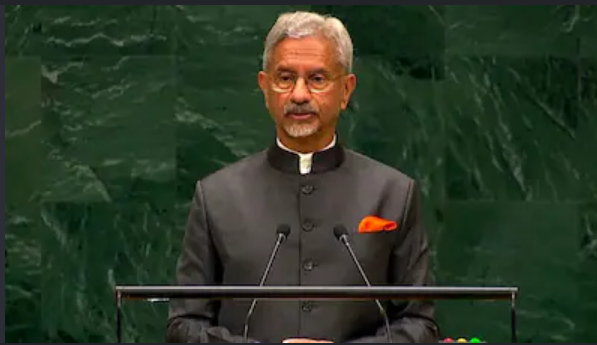
External Affairs Minister S Jaishankar said India remained a natural option for Russia as Moscow increasingly turned towards Asia amid strained relations with Europe. He highlighted the continuity of India-Russia ties and their significance for the balance of power in Asia.


Latest world news
Putin praises PM Modi, says he has very good ideas on Ukraine war
Russian President Vladimir Putin has praised Prime Minister Narendra Modi for repeatedly raising the need to end the Ukraine war, describing his ideas for a settlement as “very good”.

Latest world news
S Jaishankar calls Pakistan a “serial practitioner of terrorism” at UN
S Jaishankar criticised Pakistan at the UN General Assembly, referring to a “serial practitioner of terrorism” and warning against attempts to normalise terrorism.

S Jaishankar says India is a natural option for Russia amid Europe tensions

PM Modi speaks to Mark Carney as India and Canada push to strengthen ties

Rahul Gandhi joins India Gate protest by Ankita Bhandari’s parents

Meerut murder: Muskaan Rastogi and Sahil Shukla get death sentence

Supreme Court questions EC over missing records in Sringeri election dispute
Supreme Court questions EC over missing records in Sringeri election dispute
Rahul Gandhi joins India Gate protest by Ankita Bhandari’s parents
Meerut murder: Muskaan Rastogi and Sahil Shukla get death sentence
PM Modi speaks to Mark Carney as India and Canada push to strengthen ties
S Jaishankar says India is a natural option for Russia amid Europe tensions

Afghan Men Try To Hang With The Jet Engine Of The Aircraft in Kabul- Afghanistan News – Kabul News
Trending Top 10 News: 10000 Crore Fine on Flipkart, Apple to Launch Unique Feature, Hdfc Bank Job Ad

Trending Top 10 News: Nokia 6310, Apple sales, Bachpan ka Pyar Video Kid, Dainik Bhaskar IT Raid

Trending Top 10 News: Canada bans Indian flights, Rain in Delhi NCR, AIMIM Twitter hacked, Raj Kundra case

Trending Top 10 News: Shein India, Apple New Service, Pocket Oxygen, Oppo Launched New Phone
-
 Latest world news24 hours ago
S Jaishankar says India is a natural option for Russia amid Europe tensions
-
 India News24 hours ago
PM Modi speaks to Mark Carney as India and Canada push to strengthen ties
-
 India News12 hours ago
Rahul Gandhi joins India Gate protest by Ankita Bhandari’s parents
-
 India News13 hours ago
Meerut murder: Muskaan Rastogi and Sahil Shukla get death sentence
-
 India News12 hours ago
Supreme Court questions EC over missing records in Sringeri election dispute
