English हिन्दी
Connect with us

Latest world news

Trump’s announcement is awaited Tuesday on Iran n-deal

Published

on

Trump’s announcement is awaited Tuesday on Iran n-deal

vc_row][vc_column][vc_column_text]Iranian President says his country will overcome any problems

Major capitals around the world remained engaged in formulating their response to US President Donald Trump’s announcement regarding multilateral Iran nuclear deal on Tuesday. US President is poised to announce his decision whether to withdraw or stay in the Iran nuclear deal at 2 pm Washington time. By that time night will fall in most of the Asian countries.

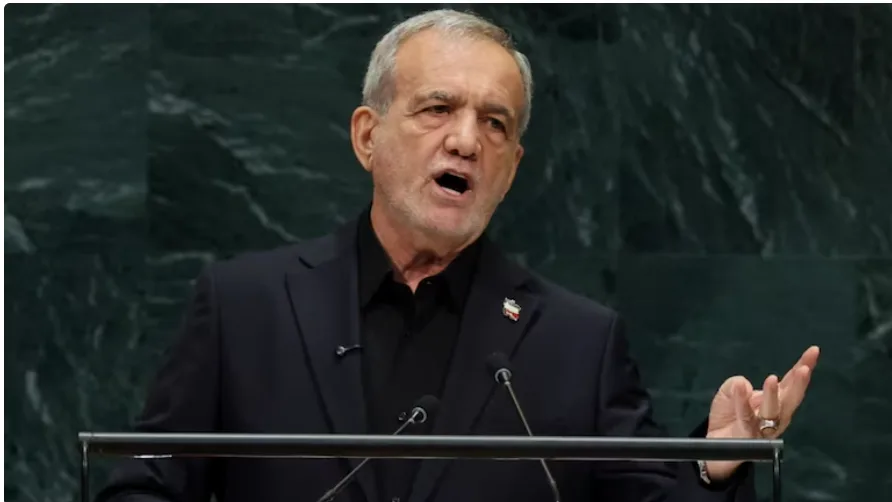
However, the Iranian President Hassan Rouhani has, while speaking at Petroleum Conference in Tehran, said that his country “will overcome” any “problems” it could face in the coming months. This was the first official Iranian reaction to US President Donald Trump’s overnight tweet that he would make an announcement on the deal Tuesday.

Read More: Russia, China to Continue Support Iran Nuclear Deal

In a social media post late on Monday, Trump said he will make an announcement on Tuesday afternoon on the future of the 2015 agreement.[/vc_column_text][vc_raw_html]JTNDYmxvY2txdW90ZSUyMGNsYXNzJTNEJTIydHdpdHRlci10d2VldCUyMiUyMGRhdGEtbGFuZyUzRCUyMmVuJTIyJTNFJTNDcCUyMGxhbmclM0QlMjJlbiUyMiUyMGRpciUzRCUyMmx0ciUyMiUzRUklMjB3aWxsJTIwYmUlMjBhbm5vdW5jaW5nJTIwbXklMjBkZWNpc2lvbiUyMG9uJTIwdGhlJTIwSXJhbiUyMERlYWwlMjB0b21vcnJvdyUyMGZyb20lMjB0aGUlMjBXaGl0ZSUyMEhvdXNlJTIwYXQlMjAyJTNBMDBwbS4lM0MlMkZwJTNFJTI2bWRhc2glM0IlMjBEb25hbGQlMjBKLiUyMFRydW1wJTIwJTI4JTQwcmVhbERvbmFsZFRydW1wJTI5JTIwJTNDYSUyMGhyZWYlM0QlMjJodHRwcyUzQSUyRiUyRnR3aXR0ZXIuY29tJTJGcmVhbERvbmFsZFRydW1wJTJGc3RhdHVzJTJGOTkzNTYyMjQyMTI0ODY1NTM2JTNGcmVmX3NyYyUzRHR3c3JjJTI1NUV0ZnclMjIlM0VNYXklMjA3JTJDJTIwMjAxOCUzQyUyRmElM0UlM0MlMkZibG9ja3F1b3RlJTNFJTBBJTNDc2NyaXB0JTIwYXN5bmMlMjBzcmMlM0QlMjJodHRwcyUzQSUyRiUyRnBsYXRmb3JtLnR3aXR0ZXIuY29tJTJGd2lkZ2V0cy5qcyUyMiUyMGNoYXJzZXQlM0QlMjJ1dGYtOCUyMiUzRSUzQyUyRnNjcmlwdCUzRSUwQQ==[/vc_raw_html][vc_column_text]Rouhani told that “it is possible that we could face some problems in the coming two to three months, but we will overcome this”.

He also stressed that Iran wants to keep “working with the world and constructive engagement with the world.” That appeared to be positive sign for European signatories of the JCPOA, which have struck a series of business deals with Iran since its implementation began in January 2016.

Read More: If US pull out of nuclear deal, Iran would also go back

Meanwhile, Iran’s Parliament Speaker Ali Larijani also said on Tuesday that Trump’s decision will only serve to unite the country to walk “on the path of the Islamic Revolution fully behind the leadership of the Supreme Leader”.

Earlier on Monday, President Hassan Rouhani had said that the nuclear deal would be “even better” without the participation of the US and indicated its willingness to stay in the deal with Europe, Russia and China, if its “expectations” are met.

US’ allies in Europe have also been trying to convince Trump to remain with JCPOA, which has limited Iran’s nuclear capabilities.  On Monday, UK Foreign Secretary Boris Johnson appealed to Trump not to walk away from the deal during his visit to the US capital.

Read More: Iran Receives G-77 Support against US Tirade on Nuclear Deal

During Fox News television interview Johnson urged the US president “not to throw the baby out with the bathwater”.

While in Washington, Johnson also met new US Secretary of State Mike Pompeo and discussed the future of the deal.

Earlier French President Emanuel Macron and German Chancellor Angela Markel have met Trump in White House and held detailed discussion on the subject. A group of US Democrats have also urged Donald Trump to let America remain a part of the deal.

Read More: Rouhani: US to face “historic regret” for pulling out of n-deal

Under the JCPOA signed in Vienna in 2015, Iran scaled back its uranium enrichment programme and promised not to pursue nuclear weapons. In exchange, international sanctions were lifted, allowing it to sell its oil and gas worldwide. However, secondary US sanctions remain.

However, Donald Trump has taken several steps to block the deal. In October, he refused to certify that Iran was implementing the accord. He also targeted several Iranian businesses and individuals with new sanctions.

Read More: Trump’s pull out of Iran N-deal may escalate oil prices

On January 12, Trump announced he was waiving the US sanctions for the “last time” and asked European signatories to “fix the deal” within 120 days otherwise he will withdraw from the multilateral agreement on or before May 12.[/vc_column_text][/vc_column][/vc_row]

Latest world news

Trump says Iran getting more serious in talks, no decision yet on major strikes

Donald Trump says Iran is becoming more serious in negotiations with the US but insists no decision has been taken on launching major military strikes against Tehran.

Published

on

Donald Trump

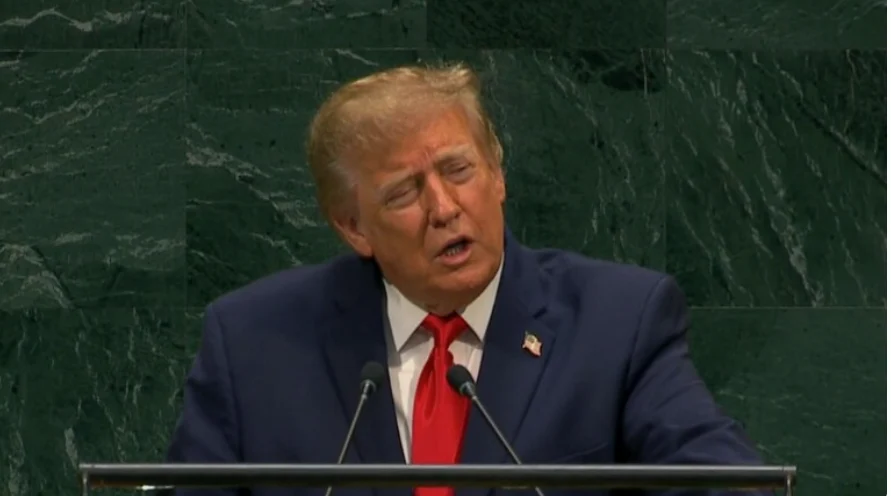
US President Donald Trump has said he has not yet decided whether to authorise major military strikes against Iran, stating that Tehran has become “more serious” in its negotiations with Washington even as tensions between the two countries remain high.

Speaking to reporters in the Oval Office on Friday, Trump said discussions with Iran were continuing and suggested diplomatic efforts were showing signs of progress.

“We’re talking to them right now. I think they’re getting more and more serious as the days go by,” Trump said, adding that no final decision had been taken on launching military action.

Trump says diplomacy remains an option

Trump said the United States remained prepared for military action if required but indicated that ongoing talks could still lead to an agreement.

“We’re locked and loaded and ready to go. But we’re talking to them, so I think while we’re talking, we’ll see what comes of it. I believe they’re very serious. They should be,” he said.

The US President also warned that Iran would face a “much higher level” of strikes if negotiations failed, while reiterating that preventing Tehran from developing a nuclear weapon remained his key red line.

The United States has said its military operations are aimed at preventing Iran from closing the strategically important Strait of Hormuz. Iran, meanwhile, has carried out retaliatory strikes on US bases, with four American service members reported killed.

Reports claim Trump discussed large-scale military operation

Trump’s remarks came after media reports suggested he met senior advisers to discuss the possibility of a large-scale military operation against Iran. Another report said he was considering a “massive attack”, although Trump did not confirm those reports during his interaction with journalists.

He also acknowledged that the prolonged conflict, which he had earlier expected to last only a few weeks, was approaching its fifth month and had become a political challenge ahead of the US midterm elections scheduled for November.

Trump issues warning over support for Iran

Trump also addressed reports claiming that Russia and China were providing intelligence or military support to Iran. He said both Chinese President Xi Jinping and Russian President Vladimir Putin had assured him they would not arm Tehran.

“I think they wouldn’t want to have me disappointed,” Trump said.

In a separate post on his Truth Social platform, Trump warned Moscow and Beijing against supplying weapons to Iran, saying such a move would not be in their interests.

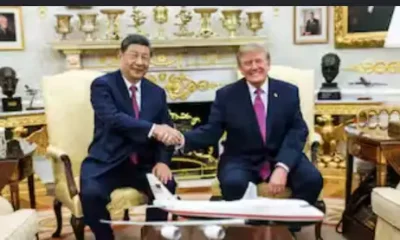
He further stated that Xi had assured him during their meeting in Beijing in May that China would not provide weapons to Iran, while Putin had conveyed a similar position despite the ongoing war in Ukraine.

Continue Reading

India News

For second time, US strikes ship with Indian crew near Strait of Hormuz

Published

on

By

Strait of Hormuz

The United States Central Command (CENTCOM) has said that an oil tanker carrying Indian crew was drifting with its engine switched off near the Strait of Hormuz before it was struck by US forces.

A CENTCOM spokesperson said the vessel had stopped due to engine failure and was drifting after its crew repeatedly sought additional time to carry out repairs. US officials said the tanker was struck only after it failed to comply with directives issued by US forces enforcing a blockade on vessels allegedly transporting Iranian oil. The military said the strike was aimed at disabling the ship by targeting its engine room rather than sinking it.

The incident involved a tanker carrying Indian seafarers near the Gulf of Oman, close to the Strait of Hormuz, one of the world’s busiest maritime trade routes. The strike triggered a fire onboard, prompting rescue efforts by Omani authorities and maritime agencies. Indian authorities closely monitored the situation and coordinated with local officials regarding the welfare of the crew members.

The incident has drawn concern in India, with the government emphasising the safety of Indian nationals working aboard commercial vessels in the conflict-hit region. The Ministry of External Affairs has remained in touch with the authorities concerned as tensions between the United States and Iran continue to pose risks to international shipping.

In June, three Indian sailors were killed in a US strike on another oil tanker. The Strait of Hormuz handles a significant share of the word’s oil trade, and the latest incident has renewed concerns over the security of merchant vessels operating in the region. Maritime experts have warned that escalating hostilities could further disrupt commercial shipping and endanger civilian crews navigating one of the world’s most strategically important waterways.

Continue Reading

Latest world news

Trump announces phased tariff of up to 200% on generic drug imports, India may face impact

US President Donald Trump has announced a phased tariff plan on imported generic medicines, raising duties to 200% after three years, a move that could affect India’s pharmaceutical exports.

Published

on

Donald Trump

The United States has announced a phased tariff plan for imported generic medicines that could have implications for pharmaceutical exporters, including India. US President Donald Trump said the policy is intended to encourage companies to shift generic drug manufacturing to the United States by imposing steep tariffs after a two-year transition period.

The announcement is particularly important for India, one of the world’s largest suppliers of affordable generic medicines and a major exporter to the US market.

Trump outlines phased tariff plan

In a post on his Truth Social platform, President Trump said the new policy will take effect from August 1, 2026. Under the plan, imported generic medicines will continue to attract zero tariffs for the first two years.

Beginning in the third year, the tariff will increase to 100%, before rising further to 200% thereafter.

Trump said the measure is designed to encourage pharmaceutical companies to establish manufacturing facilities in the United States instead of relying on imports.

He added that companies choosing not to invest in US-based production during the transition period would face the higher tariff rates. According to Trump, the existing policy governing patented, branded and innovative medicines will remain unchanged.

Why India could be affected

India is widely regarded as the “pharmacy of the world” because of its large-scale production and export of generic medicines.

Indian generic drugs account for nearly 40% of the US generic medicine market by volume. According to a Global Trade Research Initiative (GTRI) report, India exported pharmaceutical products worth USD 9.7 billion to the United States during the 2024-25 financial year, representing around 38% of the country’s total pharmaceutical exports of USD 25.8 billion.

However, the immediate impact of the newly announced tariff policy on Indian pharmaceutical companies remains uncertain.

Existing trade agreement and industry concerns

India and the United States struck a trade pact in February that states India would receive negotiated outcomes regarding generic pharmaceuticals and pharmaceutical ingredients.

Despite that provision, previous tariff threats by Trump had already raised concerns within the pharmaceutical industry over the future of affordable medicine exports from India.

Indian pharmaceutical companies supply a wide range of generic medicines used to treat conditions including hypertension, diabetes, depression, cancer, infectious diseases and mental health disorders.

According to a Financial Post report cited in the source material, around 65% of birth control pill prescriptions in the United States during 2024 were manufactured by two India-based companies — Glenmark Pharmaceuticals Ltd. and Lupin Ltd.

Continue Reading

Trending

© Copyright 2022 APNLIVE.com