English हिन्दी
Connect with us

India News

Kairana LS bypoll: united opposition faces determined BJP

Published

on

Kairana LS bypoll: united opposition faces determined BJP

Following the reverses it suffered in by-elections for Gorakhpur and Phulpur Lok Sabha seats, the BJP is taking no chances in Kairana.

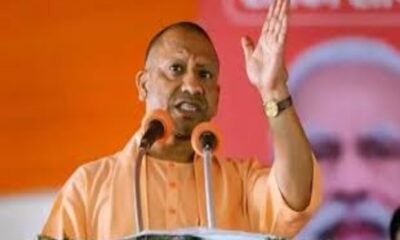
UP chief minister Yogi Adityanath, who had the mortification of seeing his home constituency of Gorakhpur won by a joint opposition candidate, has stepped up campaigning and is addressing public meetings on almost a daily basis.

Kairana Lok Sabha constituency, along with the Assembly seat of Noorpur, will have election on May 28.

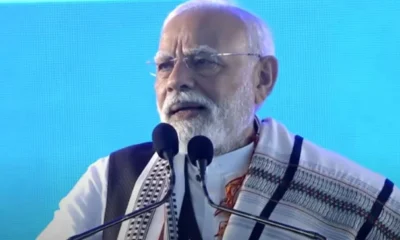
The CM’s campaign will be topped by a meeting by Prime Minister Narendra Modi himself. Just a day before voting takes place, after the campaigning comes to a halt on May 26, PM Modi will address a meeting in Baghpat nearby, while inaugurating the Eastern peripheral expressway. The poll code does not apply in Baghpat and opposition’s objections to Modi’s program have been dismissed.

BJP’s candidate for Kairana is Mriganka Singh, whose father Hukum Singh’s death has led to this bypoll. Apart from Adityanath and his deputy, the BJP has thrown in at least five other state ministers into the fight for Kairana: Dharam Singh Saini (minister of state for Ayush), Suresh Rana (Sugarcane Development) Anupama Jaiswal (Basic Education) Surya Pratap Shahi (Agriculture) and Laxmi Narayan (Religious Affairs, Culture, Minority Welfare, Muslim Waqf and Haj).

Dharam Saini and Rana are MLAs from Nakur and Thana Bhawan assembly segments of the constituency. Anupama Jaiswal is the minister in charge of Shamli district, while Surya Pratap Shahi is the minister in charge of Saharanpur. “Laxmi Narayan Chaudhary has been roped in, since he hails from a farming background,” media reports quoted a senior UP BJP leader as saying.

Apart from this, BJP MPs Sanjiv Baliyan, Raghav Lakhan Pal, Vijay Pal Singh Tomar and Kanta Kardam are also actively campaigning for Mriganka Singh.

Opposition parties too are going all out for victory. Efforts are on to present a larger united front on a national level against the BJP for the 2019 Lok Sabha polls, an exercise that received a boost after the Congress-JD(S) alliance in Karnataka.

In the 2014 parliamentary elections, Hukum Singh bagged 5,65,909 votes, defeating SP’s Nahid Hasan who got 3,29,081 votes. In the 2017 UP Assembly elections, Nahid Hasan defeated Mriganka by 21,162 votes.

Now, all eyes are on these by-polls. The joint opposition candidate in Kairana is Rashtriya Lok Dal’s (RLD) Tabassum Hasan. Her party’s national vice-president Jayant Chaudhary has been regularly visiting the constituency since the announcement of the polls and is likely to remain in Kairana for the remaining few days till the end of the campaign.

Tabassum, wife of former BSP MP Munawwar Hasan, is being backed by the Samajwadi Party, Bahujan Samaj Party (BSP), Congress and Nishad Party to take on the Bharatiya Janata Party (BJP) in Kairana.

On Thursday, May 24, the opposition got a boost when Lok Dal candidate Kanwar Hasan, who was contesting against his sister-in-law and RLD nominee Tabassum Hasan, withdrew from the contest. Kanwar Hasan also announced his support for the Tabassum.

This could help unite the minority vote in favour of the RLD, could make the going tough for Mriganka Singh, the BJP candidate.

While the BJP has thrown in a host of leaders and ministers into the campaign, the opposition is projecting this as a sign of the jitters in the ruling party, which recently lost Gorakhpur Lok Sabha seat vacated by Yogi Adityanath himself when he became chief minister.

“By sending so many ministers to a parliamentary constituency during a bypoll, the BJP has clearly displayed its nervousness,” SP spokesperson Sunil Singh Sajan said. “Samajwadi Party president Akhilesh Yadav is likely to hold one election meeting during the bye-elections, and his one meeting will prove to be quite enough for the BJP,” he boasted, according to a media report.

Apart from Akhilesh Yadav, SP’s UP chief Naresh Uttam is extensively touring the constituency. “The party has deputed leaders and workers up to the booth level in these bye-elections,” Sajan said.

UP Congress spokesperson Ashok Singh also took potshots at the BJP over the party’s deployment for the campaign. “Sending five ministers for campaigning in a single parliamentary constituency during the bye-elections only display a lack of confidence among the BJP leaders and workers ahead of the election,” he said.

“I feel that a strong anti-BJP message will go to the entire country from here for the 2019 Lok Sabha polls,” he added.

Reports from the ground in Kairana says communal polarisation is palpable in the area where BJP ran a campaign alleging mass exodus of Hindus due to Muslim aggression, a charge refuted by several independent reports.

Historically, caste and farmer’s mandate have been the two main factors impacting Kairana’s electoral outcome.  A media report estimated that of nearly 16 lakh voters in the constituency, 5.5 lakh are Muslims, 2.5 lakh are Dalits (mostly Jatavs), 1.5 lakh are Jats, 2 lakh are Kashyaps, 1.4 lakh are Gujjars, 1.2 lakh are Saini and the remaining are constituted by voters from the communities of Brahmins, Banias and Rajputs.

The BJP is aiming for the upper castes — the vote banks of Brahmins, Banias and Rajputs and the wider ‘Hindutva’ vote.

Give the BJP’s track record in fomenting communal riots in the region, the Muslims could choose against the BJP.

Sugarcane prices and farmers’ dues from sugar mills are a major issue. The opposition parties are alleging that the government failed to clear the pending farmer’s dues with the sugar mills: the six sugar mills in the constituency, which reportedly bought sugarcane worth Rs 1,778.49 crore at the UP government’s State Advised Price (SAP) of Rs 315-325 per quintal, have pending arrears of Rs 807.22 crore, as of 18 May, according to media reports.

With Lok Sabha polls due next year, the winning candidate would serve as MP for less than a year. Yet, the electoral outcome here is seen as crucial in the build-up for the main battle.

India News

Harivansh set to be elected Rajya Sabha Deputy Chairperson unopposed

Harivansh is set to be elected unopposed as Rajya Sabha Deputy Chairman after no opposition nominations were filed before the deadline.

Published

on

Former Rajya Sabha Deputy Chairman Harivansh is set to be re-elected to the same post unopposed in the election due to be held later today.
The date has been fixed by the Chairman under the relevant rules governing the conduct of business in the Upper House.
According to sources, the deadline for submitting motions for the election was 12 noon on April 16. A total of five notices were received within the stipulated time, all proposing Harivansh for the post.

Multiple nominations, single candidate
The motions were submitted by members across parties, including Jagat Prakash Nadda, Nitin Nabin, Nirmala Sitharaman, Sanjay Kumar Jha, and Jayant Chaudhary, each backed by seconding members.
All five motions explicitly state that Harivansh be chosen as the Deputy Chairman of the Rajya Sabha.

No opposition nomination filed

Notably, no motion was submitted by the Opposition before the deadline. This effectively clears the path for a unanimous election, as there is no contest for the position.
As per parliamentary procedure, motions will be taken up one by one. Once any one motion is adopted by the House, the remaining motions will not be put to vote.

Likely to be elected by voice vote
In line with established practice, the first motion — expected to be moved by Nadda — may be adopted through a voice vote. Following this, the Chairman will formally declare Harivansh as elected Deputy Chairman.
After the declaration, Harivansh will be escorted to the Chair by members from both the Treasury and Opposition benches, adhering to parliamentary convention.

Continue Reading

India News

Amit Shah counters delimitation concerns, says southern states to gain Lok Sabha seats

Amit Shah assures Parliament that southern states will gain Lok Sabha seats after delimitation, countering opposition criticism during the women’s reservation debate.

Published

on

Amit Shah

Union Home Minister Amit Shah on Thursday addressed concerns over the proposed delimitation exercise, asserting in the Lok Sabha that southern states will not lose representation but instead see an increase in their number of seats.

His remarks came during a heated debate linked to the implementation of women’s reservation, where opposition parties have raised fears that population-based delimitation could reduce the political weight of southern states.

Shah rejected these claims, calling them misleading, and said the proposed framework ensures fairness while expanding the overall strength of the Lok Sabha.

Seat count to rise with expansion of Lok Sabha

The government has indicated that the total number of Lok Sabha seats could increase significantly as part of the delimitation process. In this expanded House, the combined representation of southern states is expected to rise from 129 seats at present to around 195 seats.

Shah emphasised that no state will lose seats in absolute terms, and the exercise is designed to reflect population changes while maintaining balance across regions.

State-wise projections shared in Parliament

During his address, Shah also provided indicative figures for individual southern states, suggesting notable increases in representation. According to the projections:

  • Tamil Nadu could see its seats rise substantially
  • Kerala, Telangana, and Andhra Pradesh are also expected to gain additional seats
  • Karnataka’s representation may increase as well

These figures were presented to counter the argument that delimitation would disproportionately favour northern states.

Political debate intensifies over linkage with women’s quota

The delimitation exercise has been closely linked to the rollout of women’s reservation, which proposes one-third seats for women in Parliament and state assemblies.

Opposition leaders have questioned this linkage, arguing that tying reservation to delimitation could delay its implementation and raise federal concerns. Some leaders have also warned that the move could impact national unity if apprehensions among states are not addressed.

The government, however, maintains that the reforms are necessary to ensure equitable representation and to align the electoral system with demographic realities.

Centre dismisses ‘false narrative’ on southern states

Shah reiterated that concerns about southern states losing influence are unfounded. He said the delimitation process will increase representation across regions and described the criticism as a “false narrative” aimed at creating confusion.

The issue is expected to remain a key flashpoint as Parliament continues discussions on the women’s reservation framework and related legislative changes.

Continue Reading

India News

PM Modi assures no discrimination in women’s quota, delimitation debate intensifies in Parliament

PM Narendra Modi has assured that women’s reservation will be implemented without discrimination, amid a heated debate over delimitation in Parliament.

Published

on

PM modi

Prime Minister Narendra Modi has assured that there will be no discrimination in the implementation of women’s reservation, as Parliament witnessed a sharp debate over the proposed linkage between the quota and delimitation exercise.

During the ongoing special session, the government reiterated its commitment to ensuring fair representation while addressing concerns raised by opposition parties regarding the timing and structure of the legislation.

The proposed framework aims to reserve 33 percent of seats for women in the Lok Sabha and state assemblies. However, its implementation is tied to a fresh delimitation exercise, which is expected after the next census.

Opposition questions timing and intent

Opposition leaders have raised concerns that linking the women’s quota to delimitation could delay its implementation. They argue that the process of redrawing constituencies may push the actual rollout further into the future.

The issue has triggered a broader political confrontation, with multiple parties questioning whether the move could alter representation across states.

Some critics have also alleged that the delimitation exercise could disproportionately benefit certain regions based on population, a charge the government has rejected.

Government reiterates commitment to fair implementation

Responding to these concerns, the Centre has maintained that the reforms are necessary to ensure accurate and updated representation based on population data.

Leaders from the ruling side have repeatedly emphasized that the process will be carried out transparently and without bias. The assurance that there will be “no discrimination” is aimed at addressing fears among states and opposition parties.

The debate marks a key moment in Parliament, with both sides engaging in intense exchanges over one of the most significant electoral reforms in recent years.

Continue Reading

Trending

© Copyright 2022 APNLIVE.com