
India News
Congress leader Tharoor gets regular bail in Sunanda death case


In a major relief Congress leader Shashi Tharoor was granted regular bail by a Delhi court in a four year old case related to his wife Sunanda Pushkar’s death on Saturday.
Former Union Minister and MP from Thiruvananthapuram was summoned as an accused in the case. He appeared before the court and informed it that he had already been granted anticipatory bail by a sessions court on July 5.
On Thursday, a sessions court granted anticipatory bail to Tharoor on surety of Rs one lakh on two conditions that he cannot travel abroad without prior permission of the court and he could not temper with the evidence and witnesses.
Additional Chief Metropolitan Magistrate Samar Vishal then directed him to furnish a bail bond of Rs one lakh and one surety of like amount as directed by the sessions court and converted the interim relief to a regular bail. The Congress leader had moved the court for anticipatory bail apprehending arrest.
Tharoor was summoned in court after a 3000-page chargsheet was filed against him by the SIT probing the case.

Sunanda Pushkar was found dead in a suite of Leela luxury hotel situated in capital’s diplomatic enclave in January 2014. The couple was staying in the hotel, as the official bungalow was being renovated.
The court today handed over a copy of the charge sheet and the documents filed along with it to Tharoor and posted the matter for scrutiny on July 26. Delhi Police and the counsel appearing for Tharoor have also opposed BJP leader Subramanian Swamy’s plea seeking the court’s consent to assist it in the case.
While Tharoor said Swamy had no locus and he was a stranger to the case, the Delhi Police said the application was not maintainable.
Read More: Shashi Tharoor Made Accused in Sunanda Death Case
The sessions court had observed that the prosecution’s apprehensions that Shashi Tharoor may flee offshore or influence witnesses were “without any basis”.
Certain conditions were also imposed on him, including that he would not tamper with the evidence or leave the country without obtaining court permission.”
The court had noted that Tharoor had joined the investigation as and when called by the police. He has not been arrested by the probe agency so far.
Tharoor is a sitting member of the Lok Sabha and was Minister of State for External Affairs in the United Progressive Alliance (UPA) government.
In his plea for anticipatory bail, Tharoor had submitted that the charge sheet was filed and the SIT had categorically stated that the probe was concluded and his custodial interrogation was not required.
Read More: Report on Sunanda case but respect Shashi Tharoor’s silence: Delhi HC to Arnab
He was summoned by the court as an accused in the case on June 5, asking him to appear before it Saturday, observing there was sufficient ground to proceed against him. He has been charged under sections 498A (husband or his relative subjecting a woman to cruelty) and 306 (abetment of suicide) of the Indian Penal Code (IPC).
Tharoor, however dismissed the chargesheet filed as “preposterous”. He was quoted saying, “I will continue to vigorously contest these charges and maintain my steadfast conviction that ultimately truth will prevail through the judicial system that we have privileged to have in our country.”





India News
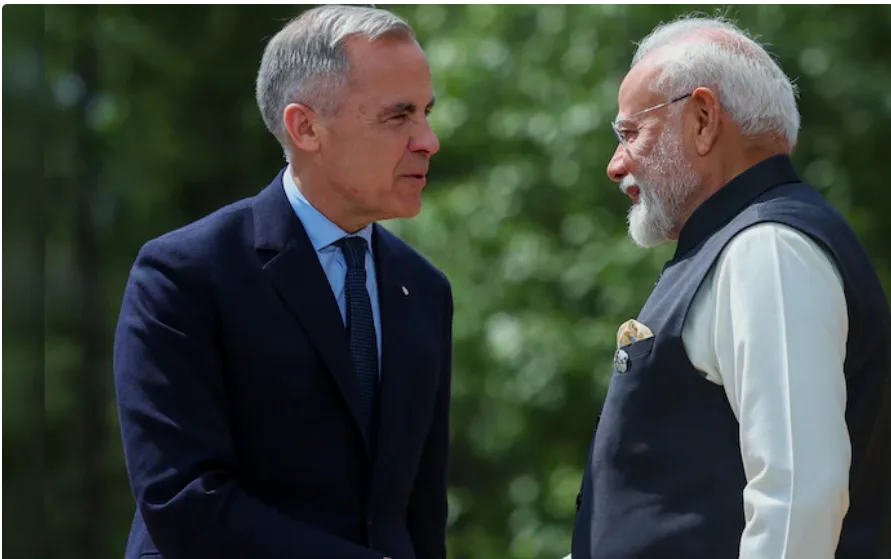
PM Modi speaks to Mark Carney as India and Canada push to strengthen ties
Prime Minister Narendra Modi held a telephone conversation with Canadian Prime Minister Mark Carney on October 13, with both leaders agreeing to strengthen India-Canada ties and pursue concrete outcomes across key areas of their strategic partnership.

India News
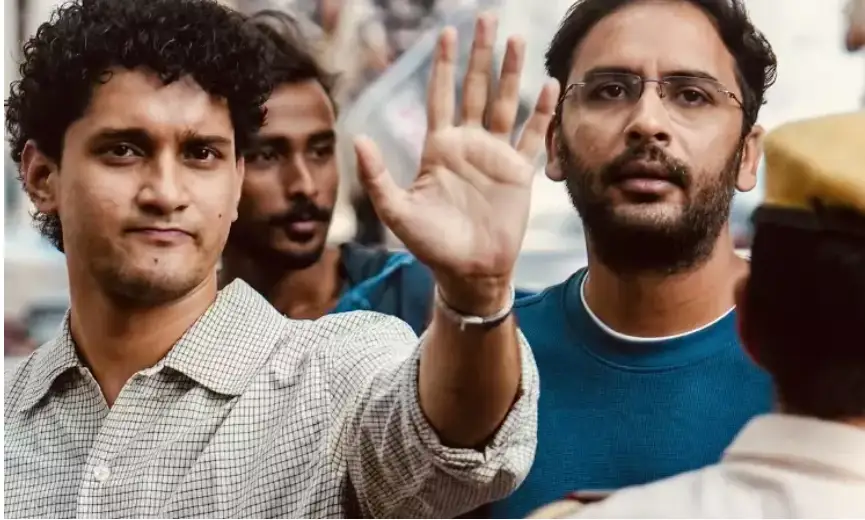
CJP leaders Saurav Das, Ashutosh Ranka, Ajinkya Shinde sent to 5-day judicial custody
Three CJP leaders, Saurav Das, Ashutosh Ranka and Ajinkya Shinde, were placed under preventive arrest following a protest at Delhi’s Jantar Mantar over Chief Election Commissioner Gyanesh Kumar.
India News
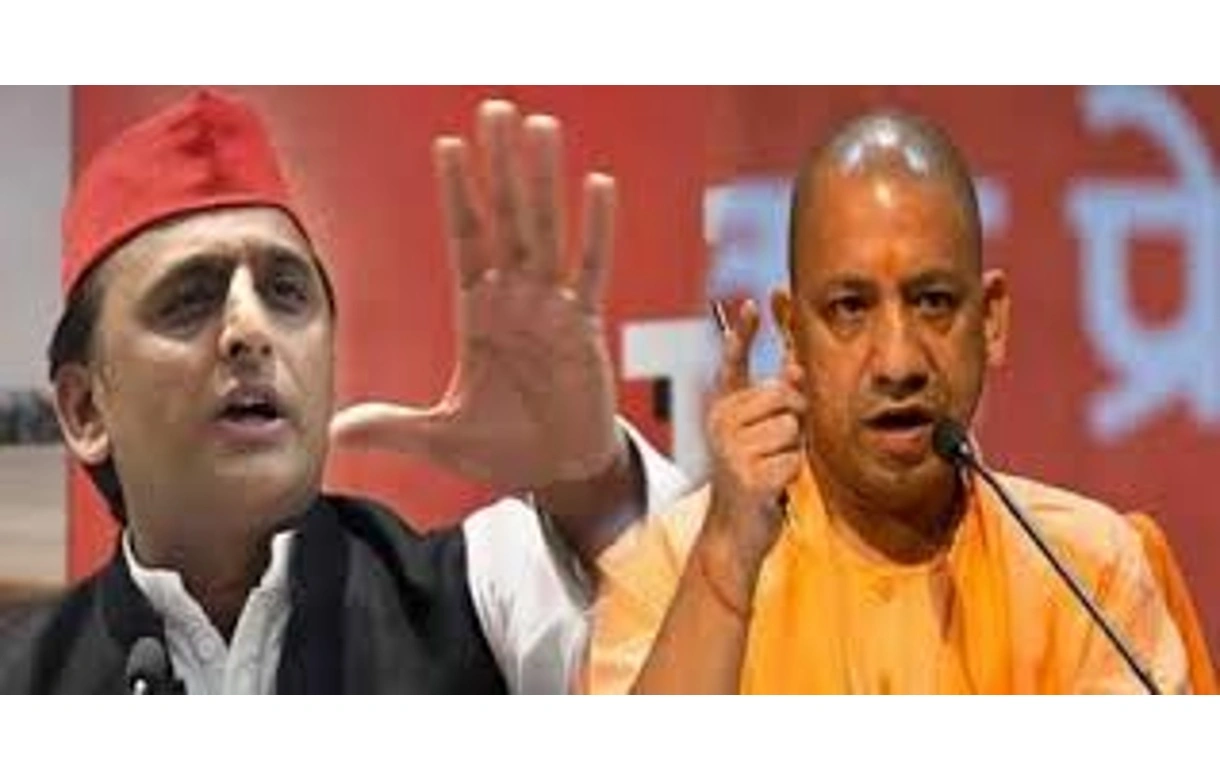
BJP focuses on religion as opposition pushes BDM strategy in UP
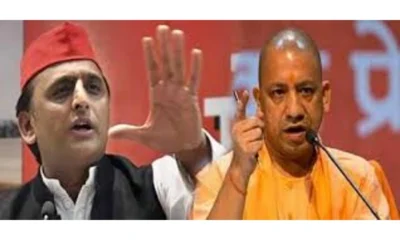
The BJP is emphasising religious issues ahead of the Uttar Pradesh Assembly elections, while opposition parties are seeking to consolidate Backward, Dalit and Minority voters. Recent exchanges involving Yogi Adityanath, Akhilesh Yadav and Asaduddin Owaisi have added to the political contest over the state’s electoral narrative.

Supreme Court stays defamation case against Rahul Gandhi over PM Modi remarks

Rahul Gandhi hosts high tea for INDIA bloc after Gyanesh Kumar protests

L Murugan quits Union ministry to strengthen BJP in Tamil Nadu

Amit Shah attacks Rahul Gandhi over Congress poll losses, questions SIR row

BJP focuses on religion as opposition pushes BDM strategy in UP

PM Modi speaks to Mark Carney as India and Canada push to strengthen ties

S Jaishankar says India is a natural option for Russia amid Europe tensions

CJP leaders Saurav Das, Ashutosh Ranka, Ajinkya Shinde sent to 5-day judicial custody
BJP focuses on religion as opposition pushes BDM strategy in UP
L Murugan quits Union ministry to strengthen BJP in Tamil Nadu

Afghan Men Try To Hang With The Jet Engine Of The Aircraft in Kabul- Afghanistan News – Kabul News
Trending Top 10 News: 10000 Crore Fine on Flipkart, Apple to Launch Unique Feature, Hdfc Bank Job Ad

Trending Top 10 News: Nokia 6310, Apple sales, Bachpan ka Pyar Video Kid, Dainik Bhaskar IT Raid

Trending Top 10 News: Canada bans Indian flights, Rain in Delhi NCR, AIMIM Twitter hacked, Raj Kundra case

Trending Top 10 News: Shein India, Apple New Service, Pocket Oxygen, Oppo Launched New Phone
-
 India News22 hours ago
Supreme Court stays defamation case against Rahul Gandhi over PM Modi remarks
-
 India News14 hours ago
Rahul Gandhi hosts high tea for INDIA bloc after Gyanesh Kumar protests
-
 India News13 hours ago
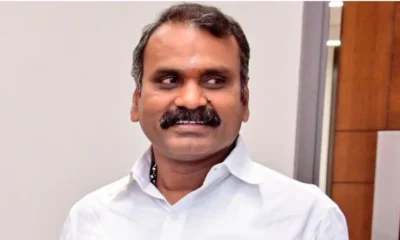
L Murugan quits Union ministry to strengthen BJP in Tamil Nadu
-
 India News14 hours ago
Amit Shah attacks Rahul Gandhi over Congress poll losses, questions SIR row
-
 India News12 hours ago
BJP focuses on religion as opposition pushes BDM strategy in UP
-
 India News2 hours ago
CJP leaders Saurav Das, Ashutosh Ranka, Ajinkya Shinde sent to 5-day judicial custody
-
 Latest world news1 hour ago
S Jaishankar says India is a natural option for Russia amid Europe tensions
-
 India News1 hour ago
PM Modi speaks to Mark Carney as India and Canada push to strengthen ties
