
Latest world news
US Challenges ICJ Jurisdiction on Iran’s Petition Against Sanctions


In a major turn of event in the US-Iran tangle, the US administration has challenged the UN’s top court’s jurisdiction to rule on Iran’s demand for the suspension of recently re-imposed nuclear-related sanctions on the country.
Responding to Iran’s allegations of US breaching 1955 treaty with its decision to re-impose sanctions after withdrawal from the multilateral nuclear agreement, US State department lawyer Jennifer Newstead argued that the International Court of Justice (ICJ) in The Hague “lacks prima facie jurisdiction to hear Iran’s claims.”
“This case is entirely about an attempt to compel the US by order of this court to resume” the 2015 nuclear deal, Newstead said.
Earlier on Monday, Iran argued that US President Donald Trump breached a 1955 treaty with his decision to re-impose sanctions after withdrawing from the landmark 2015 nuclear deal with world powers. Iran’s lawyers said the sanctions were threatening the welfare of its citizens and disrupting tens of billions of dollars worth of business deals.
Iran’s lead representative in the case, Mohsen Mohebi, branded the sanctions “naked economic aggression” saying, “The United States is publicly propagating a policy intended to damage as severely as possible Iran’s economy and Iranian nationals and companies.”
He vowed that “Iran will put up the strongest resistance to the US economic strangulation by all peaceful means.”
Newstead said the US has the right to protect its national security and other interests. She said that the treaty “cannot, therefore, provide a basis for this court’s jurisdiction” in the case. She held Iran to blame for its economic woes saying, they have “deep roots in the Iranian government’s mismanagement of its own economy and repression of its own population.”
 On Monday US Secretary of State Mike Pompeo, said in a statement that “Iran’s filing with the ICJ is an attempt to interfere with the sovereign rights of the United States to take lawful actions, including re-imposition of sanctions, which are necessary to protect our national security. The proceedings instituted by Iran are a misuse of the Court.”
Sanctions on Iran were lifted in January 2016 under the 2015 multilateral nuclear accord generally known as Joint Comprehensive Plan of Action (JCPOA) and signed by five permanent members of the UN Security Council plus Germany P5+1. In return, Iran committed not to develop nuclear weapons.
However, Trump, while campaigning for 2016 Presidential elections and also after assuming office reiterated that the deal did not do enough to curb the alleged threat from Iran. He pulled the US out of the accord in May this year and began re-imposing sanctions earlier this month. Second phase of sanctions will be imposed in November.
Iran will respond to US arguments on Wednesday. The ICJ is expected to take several weeks to decide whether to grant Tehran’s request. A final decision could take years. Its judgments are binding, final and without appeal, however, it has no power to enforce its decisions.
 US and Iran do not have diplomatic relations. The US embassy building in Tehran was stormed by revolutionary students post 1979 Islamic revolution making diplomats hostages for 444 days. At present the US embassy building has been converted into a museum generally known as “Den of Spies”.




Latest world news
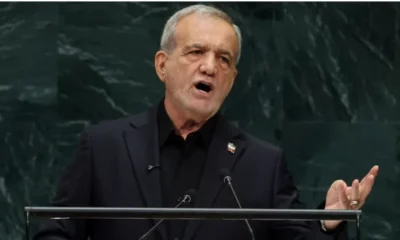
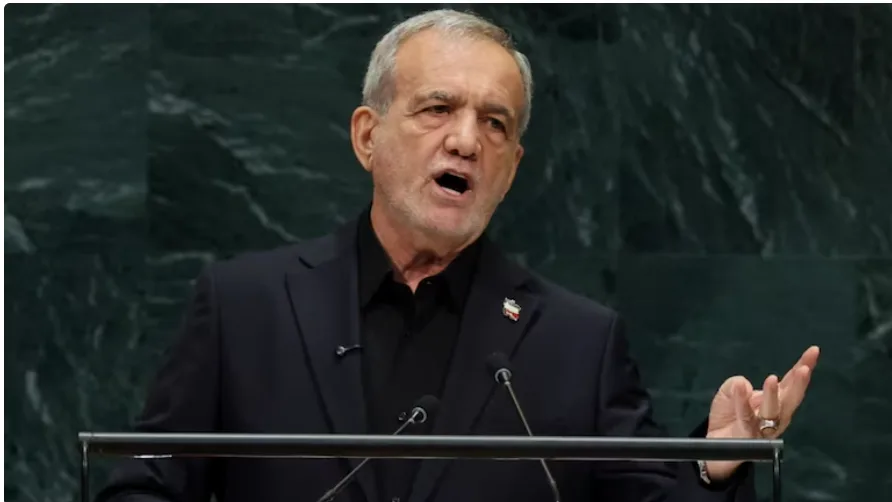
Iranian President Pezeshkian at UN says Iranians have been victims of US terrorism
Iranian President Masoud Pezeshkian said at the UN General Assembly that Iranians had been victims of US terrorism and insisted that Iran had acted in self-defence.

Latest world news
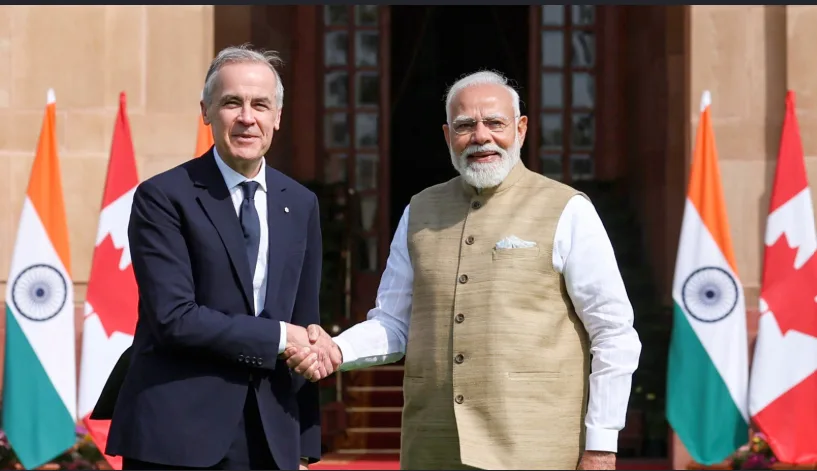
PM Modi’s Canada visit could help wrap trade talks, says Canada PM Mark Carney
Canadian PM Mark Carney said he is looking forward to hosting PM Narendra Modi, with both countries aiming to conclude their ongoing trade negotiations.
Latest world news
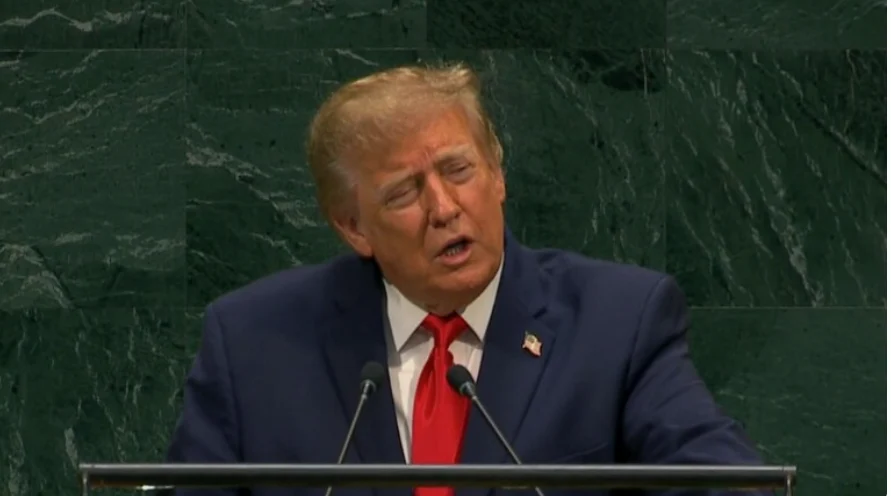
Trump issues fresh Iran warning at UN General Assembly, signals deal after midterms
US President Donald Trump issued a fresh warning to Iran during his UN General Assembly address, saying he faces a choice between a deal and further escalation.

9 Killed, several injured as tourist bus catches fire in Greater Noida

Ram Temple donation theft case chargesheet filed, trustees not named

Veteran actor Mushtaq Khan, known for Welcome and Hera Pheri, dies at 56

Cockroach Janta Party gives CEC Gyanesh Kumar 48 hours to resign, warns of nationwide protests

Rahul Gandhi attacks CEC Gyanesh Kumar, says vote chori leads to kanoon chori

Asian Games 2026: Gurindervir Singh, Animesh Kujur lead India athletics campaign
Cockroach Janta Party gives CEC Gyanesh Kumar 48 hours to resign, warns of nationwide protests
Veteran actor Mushtaq Khan, known for Welcome and Hera Pheri, dies at 56
Rahul Gandhi attacks CEC Gyanesh Kumar, says vote chori leads to kanoon chori
Ram Temple donation theft case chargesheet filed, trustees not named

Afghan Men Try To Hang With The Jet Engine Of The Aircraft in Kabul- Afghanistan News – Kabul News
Trending Top 10 News: 10000 Crore Fine on Flipkart, Apple to Launch Unique Feature, Hdfc Bank Job Ad

Trending Top 10 News: Nokia 6310, Apple sales, Bachpan ka Pyar Video Kid, Dainik Bhaskar IT Raid

Trending Top 10 News: Canada bans Indian flights, Rain in Delhi NCR, AIMIM Twitter hacked, Raj Kundra case

Trending Top 10 News: Shein India, Apple New Service, Pocket Oxygen, Oppo Launched New Phone
-
 India News16 hours ago
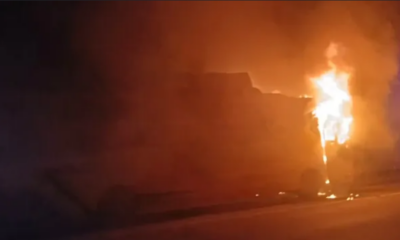
9 Killed, several injured as tourist bus catches fire in Greater Noida
-
 India News16 hours ago
Ram Temple donation theft case chargesheet filed, trustees not named
-
 Entertainment6 hours ago
Veteran actor Mushtaq Khan, known for Welcome and Hera Pheri, dies at 56
-
 India News6 hours ago
Cockroach Janta Party gives CEC Gyanesh Kumar 48 hours to resign, warns of nationwide protests
-
 India News6 hours ago
Rahul Gandhi attacks CEC Gyanesh Kumar, says vote chori leads to kanoon chori
-
 LATEST SPORTS NEWS5 hours ago
Asian Games 2026: Gurindervir Singh, Animesh Kujur lead India athletics campaign
