
India News
BJP rules out alliance with TRS in Telangana polls


Amit Shah launches election campaign in Hyderabad
In a major policy announcement BJP President Amit Shah has, on Saturday, ruled out any alliance with the ruling Telangana Rashtra Samithi (TRS) for the coming state assembly polls and said that the TRS owed an explanation to the people for imposing additional expenditure by going for early elections.
Responding to a question at a press conference in Hyderabad, Shah, said PM Narendra Modi’s praise of Chief Minister K Chandrashekar Rao during his speech in Parliament was in a different context and it cannot be interpreted as an understanding between the two parties. Shah was in town to launch the party’s election campaign.
Read More: KCR dissolves Telangana assembly 8 months before full term to have polls by year-end
He thwarted allegations that the BJP was hand-in-glove with the TRS, instead he alleged that it was the TRS and Majlis-e-Ittehadul Muslimeen (MIM) which were engaged in “shadow boxing”.
Shah wanted to know as to why TRS imposed early polls when the Lok Sabha and state assembly elections are slated to be held nine months later. Chief Minister Rao had initially supported Modi’s idea of “one nation one election” but he was surprised when he suddenly changed his stand.
He alleged that “Rao and TRS have forced a small state to bear expenditure of two elections. BJP believes that TRS has put an additional burden of crores of rupees on people to further its political interests.”
Read More: Election Commission condemn Telangana CM’s election schedule remarks
Shah said that the BJP was ready to give a tough fight to TRS and Congress in every constituency. He was confident that his party will emerge as a strong and decisive force after the polls and ruled out possibility of TRS getting a fresh mandate.
 Meanwhile, Shah also dared the TRS to name a Dalit as its chief ministerial candidate. He recalled that KCR had promised before the 2014 elections that a Dalit would be made the Chief Minister but when TRS won the elections, he took the post for himself. He was quoted saying, “I want to ask KCR, will you fulfil this promise at least this time or will make your son as the Chief Minister?”
Shah criticised Rao and said,”If the TRS government comes back to power, it will continue its politics of appeasement.” He slammed the passing of a resolution to provide 12% reservation to Muslims and sending it to the Centre for its approval.
Read More: Telangana: Opposition unites against TRS, demand President’s rule
He claimed that Modi government showed no discrimination towards any state and provided Rs.2.3 lakh crore to Telangana state during last four years while only Rs 15,000 crore were given during the Congress rule. He said that BJP was opposed to the politics of appeasement.
He said that Rahul Gandhi, the Congress president, is daydreaming to form the next government in Telangana. He listed the states where Congress lost the elections since 2014. He claimed that people of Telangana have not forgotten the treatment meted out to former Prime Minister PV Narasimha Rao and former Chief Minister T Anjaiah by the Congress.
On September 6, Telangana chief minister K Chandrashekhar Rao dissolved the state assembly and announced the list of his party’s candidates for the assembly elections. Experts had speculated that the move shows his desire to fight a possible Congress-TDP alliance in the state and his growing closeness to the BJP.






India News
Centre sends 3 letters to Punjab government after anti-drug activist’s killing
The Centre has sought reports from the Punjab government on three incidents linked to allegations surrounding drug-related activities, including the killing of anti-drug activist Parvinder Singh Jhota.

India News
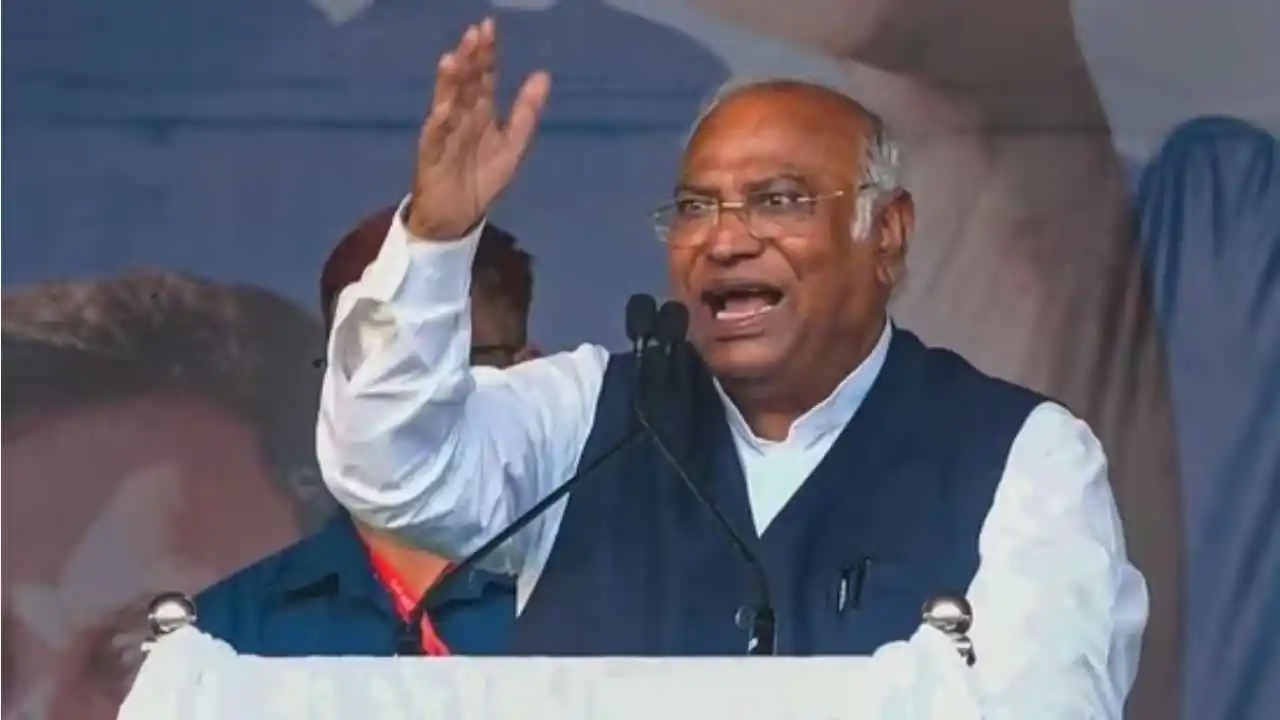
Mallikarjun Kharge seeks all-party meeting with PM Modi on delimitation
Congress president Mallikarjun Kharge has written to Prime Minister Narendra Modi for the fourth time, seeking an all-party meeting on delimitation. He also flagged the 64-day delay in proroguing Parliament’s Monsoon Session.
India News
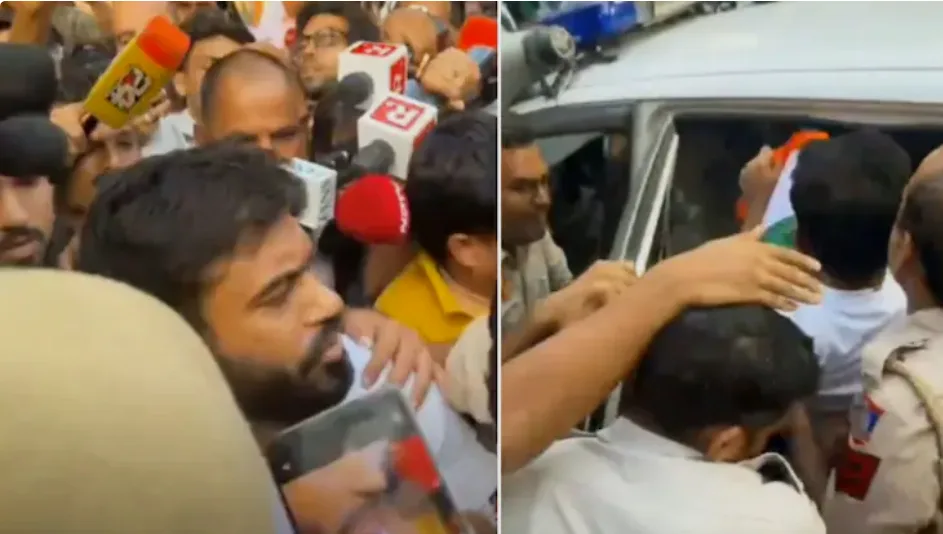
Abhijeet Dipke detained ahead of CJP’s national flag march in Delhi
Cockroach Janta Party founder Abhijeet Dipke was detained by Delhi Police on October 16, 2026, shortly before a planned national flag march. The proposed rally followed the judicial custody of two CJP members who had waved the Tricolour at Jantar Mantar.

Mallikarjun Kharge’s ‘Your Friends’ jab at Rahul Gandhi over congress exits

Magnitude 7 earthquake strikes Russia’s Kamchatka Peninsula

Delhi deploys 25,000 personnel, installs CCTV cameras ahead of CJP march

Abhijeet Dipke detained ahead of CJP’s national flag march in Delhi

Mallikarjun Kharge seeks all-party meeting with PM Modi on delimitation

Centre sends 3 letters to Punjab government after anti-drug activist’s killing
Mallikarjun Kharge seeks all-party meeting with PM Modi on delimitation
Abhijeet Dipke detained ahead of CJP’s national flag march in Delhi
Magnitude 7 earthquake strikes Russia’s Kamchatka Peninsula
Delhi deploys 25,000 personnel, installs CCTV cameras ahead of CJP march

Afghan Men Try To Hang With The Jet Engine Of The Aircraft in Kabul- Afghanistan News – Kabul News
Trending Top 10 News: 10000 Crore Fine on Flipkart, Apple to Launch Unique Feature, Hdfc Bank Job Ad

Trending Top 10 News: Nokia 6310, Apple sales, Bachpan ka Pyar Video Kid, Dainik Bhaskar IT Raid

Trending Top 10 News: Canada bans Indian flights, Rain in Delhi NCR, AIMIM Twitter hacked, Raj Kundra case

Trending Top 10 News: Shein India, Apple New Service, Pocket Oxygen, Oppo Launched New Phone
-
 India News12 hours ago
Mallikarjun Kharge’s ‘Your Friends’ jab at Rahul Gandhi over congress exits
-
 Latest world news12 hours ago
Magnitude 7 earthquake strikes Russia’s Kamchatka Peninsula
-
 India News12 hours ago
Delhi deploys 25,000 personnel, installs CCTV cameras ahead of CJP march
-
 India News3 hours ago
Abhijeet Dipke detained ahead of CJP’s national flag march in Delhi
-
 India News2 hours ago
Mallikarjun Kharge seeks all-party meeting with PM Modi on delimitation
-
 India News47 mins ago
Centre sends 3 letters to Punjab government after anti-drug activist’s killing
