
Latest world news
Yemen; Children Face Death, Malnutrition, forced to eat wax leaves


Amidst ongoing Saudi-led aggression on Yemen, a photo of a father from Sa’ada province sitting next to the dead bodies of his two children, killed in the air raids became viral through social media platforms. The heart rendering scene showing helpless father who probably become immune to the daily killings around him has raised a great public interaction.
Meantime, Associated Press reports of the immense hunger among the Yemeni civilians. Many Yemeni families have nothing to eat but leaves as a humanitarian crisis reaches a critical stage.
Journalists of the agency visited Aslam district situated in Yemen’s north-western Hajjah province where they witnessed the worsening hunger. Families with starving children have nothing to eat but the leaves of local vine, known as Halas in Arabic or Arabian Waz Leaf in English, boiled into a sour and made acidic green paste.
 The agency reports that the main health centre was flooded with dozens of emaciated children. It said, “Excruciatingly thin toddlers, eyes bulging, sat in a plastic washtub used in a make-shift scale as nurses weighed each one. Their papery skin was stretched tight over pencil-like limbs and knobby knees. Nurses measured their forearms, just a few centimetres in diameter, marking the worst stages of malnutrition”.
Read More: Houthi warns: US and Saudi Arabia will regret in Yemen
Aslam district recorded one of Hajjah’s highest jumps in the number of malnourished children, from 384 cases being treated in January- an additional 1,319 more came in over the next six months.
Adding to the woes for the victims of Saudi-led coalition, Aslam’s main health centre has no paediatricians, electricity, oxygen cylinders and fuel for generators.
 Saleh al-Faqih, a worker in a mobile Health Ministry clinic has told that “Aslam is just another picture of Somalia.”
A malnourished mother in al-Mashrada village, having a seven-month old girl in her lap said, “Since the day she was born, I have not had the money to buy her milk or buy her medicine.” The mother feeds her whole family with Halas mush.
 In January this year, London based The Guardian reported that war in Yemen has killed or injured more than 5000mchildren and left another four lakh severely malnourished and fighting for their lives.
UNICEF report unveiled that nearly 2 million Yemeni children were out of school, a quarter of them since the conflict escalated with Saudi-led coalition intervention in March 2015.
Read More: Saudi Arabia hits MSF Cholera center in Yemen
The Saudi Arabia led coalition launched a brutal war, known as “Operation Decisive Storm” against Yemen in March 2015. The move was aimed to reinstall ousted pro-Saudi former president Abd Rabbuh Mansur Hadi and crush the Ansarullah movement of Houthis, branded as pro-Iranian group.
The offensive initially consisted of a bombing campaign, but was later coupled with a naval blockade and the deployment of ground forces in the country. The blockade has halted humanitarian deliveries of food and medicine.







Latest world news
S Jaishankar defends Russian oil imports, says it won’t end Ukraine war
S Jaishankar defended India’s Russian oil purchases, saying the Ukraine war can only be resolved through dialogue, diplomacy and negotiations


Latest world news
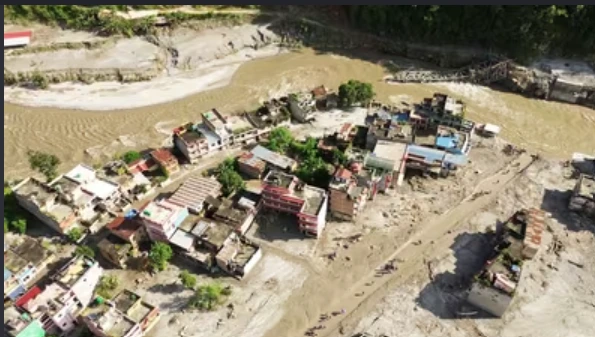
Nepal seeks climate compensation from India, China and US for deadly floods
Nepal has sought climate compensation from India, China and the US after a devastating flash flood killed more than 1,100 people and left nearly 4,500 missing.
Latest world news
Bank of America VP Erin Piacenti killed in New York stabbing
Bank of America vice-president Erin Piacenti, 32, was fatally stabbed in an apparently random attack in New York’s Times Square.


PM Modi returns to SRCC after 13 years, revisits 2013 glass full speech
India Metro Rail Network May Overtake US in 2 Years

PM Modi takes aim at critics with Dimagi Naxal remark at SRCC centenary address

Irfan Pathan takes dig at Pakistan after India’s seven-wicket Asia Cup win
Irfan Pathan takes dig at Pakistan after India’s seven-wicket Asia Cup win
PM Modi takes aim at critics with Dimagi Naxal remark at SRCC centenary address
India Metro Rail Network May Overtake US in 2 Years
PM Modi returns to SRCC after 13 years, revisits 2013 glass full speech

Supreme Court judge calls police assault on CJP protesters very distressing

Afghan Men Try To Hang With The Jet Engine Of The Aircraft in Kabul- Afghanistan News – Kabul News
Trending Top 10 News: 10000 Crore Fine on Flipkart, Apple to Launch Unique Feature, Hdfc Bank Job Ad

Trending Top 10 News: Nokia 6310, Apple sales, Bachpan ka Pyar Video Kid, Dainik Bhaskar IT Raid

Trending Top 10 News: Canada bans Indian flights, Rain in Delhi NCR, AIMIM Twitter hacked, Raj Kundra case

Trending Top 10 News: Shein India, Apple New Service, Pocket Oxygen, Oppo Launched New Phone
-
 India News21 hours ago
PM Modi returns to SRCC after 13 years, revisits 2013 glass full speech
-
India News21 hours ago
India Metro Rail Network May Overtake US in 2 Years
-
 India News6 hours ago
PM Modi takes aim at critics with Dimagi Naxal remark at SRCC centenary address
-
 Cricket news6 hours ago
Irfan Pathan takes dig at Pakistan after India’s seven-wicket Asia Cup win
