English हिन्दी
Connect with us

India News

Money laundering case: CJI DY Chandrachud refuses to postpone hearing on bail request for Satyendar Jain

On medical reasons, Satyendar Jain, who had petitioned the supreme court for bail, is presently being held on interim bail.

Published

on

Chief Justice of India DY Chandrachud today declined to postpone the hearing on AAP leader Satyendar Jain’s bail request in a money laundering case assigned to a different bench presided over by Justice Bela M. Trivedi, saying that the relevant judge will make the final judgement.

Senior lawyer Abhishek Singhvi, standing on behalf of Jain, who is out on interim bail, urged a bench made up of Justice Trivedi, Justice JB Pardiwala, and Justice Manoj Misra to postpone the planned hearing on his appeal.

Singhvi explained that the case has been referred to a bench that does not include Justice AS Bopanna after the bench made up of Justice Trivedi and Justice Bopanna heard extensive arguments in the case.

The senior lawyer responded, they are requesting a postponement. If you (the CJI) could kindly see the case papers once, he added.

I won’t interfere with the judge in question’s decision-making over the case that is on the schedule. The decision will be made by the judge assigned to the case. I am unable to. I’m unable to answer calls, the CJI replied.

On medical reasons, Satyendar Jain, who had petitioned the supreme court for bail, is presently being held on interim bail.
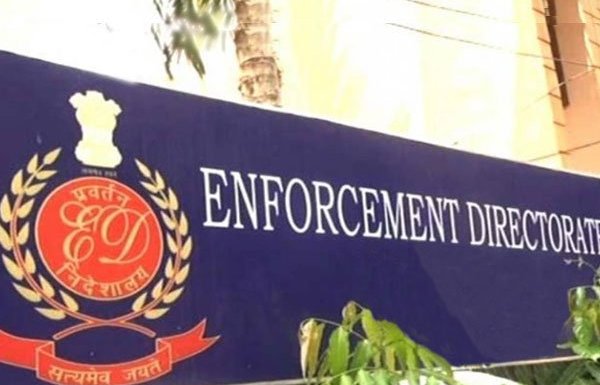
The AAP leader was detained by the ED in May 2022 on suspicion of money laundering through businesses connected to him. The supreme court gave Jain a grace period in May of this year so that he could have spine surgery for six weeks.

The former Delhi minister was granted temporary bail on May 26 by the top court for a period of six weeks due to medical reasons; this parole has since been periodically extended.

The case was scheduled for hearing before the bench of Justice Satish Chandra Sharma and Justice Trivedi.

India News

PM Narendra Modi to address nation at 8:30 pm today, suspense over agenda

Prime Minister Narendra Modi will address the nation at 8:30 pm today, with no official details yet on the topic of his speech.

Published

on

PM Modi

Prime Minister Narendra Modi is set to address the nation at 8:30 pm on Saturday, April 18, in a development that has drawn significant attention across political and public circles.

According to official information, there is no clarity yet on the subject of the address. The Prime Minister’s Office has not disclosed the agenda, leading to speculation about the key issues that may be discussed.

The announcement comes shortly after a major legislative development in Parliament, where a proposed constitutional amendment linked to the women’s quota law failed to pass the Lok Sabha following a division of votes.

Earlier, the Prime Minister had appealed to Members of Parliament to support the amendment, emphasising that millions of women across the country were closely watching the proceedings and decisions taken by lawmakers.

While the timing of the address has been confirmed, officials have not indicated whether the speech will focus on political developments, governance issues, or broader national concerns.

The Prime Minister’s national addresses are typically used to communicate key policy decisions or respond to important developments, making this announcement one to watch closely.

Continue Reading

India News

Priyanka Gandhi alleges conspiracy to rule forever after women’s quota bill fails Lok Sabha test

Priyanka Gandhi termed the failure of the women’s quota bill a victory for democracy while alleging it was a political strategy by the Centre.

Published

on

Congress leader Priyanka Gandhi Vadra on Friday sharply criticised the Centre after the women’s quota amendment bill failed to pass in the Lok Sabha, alleging it was part of a “conspiracy to rule forever.”

Addressing a press conference, she claimed the government had attempted to use the legislation for political advantage rather than genuine women’s empowerment. According to her, the strategy was designed in a way that the ruling side would benefit regardless of the outcome.

She argued that if the bill had been passed, the government would have claimed credit, and if it failed, it would portray opposition parties as being against women’s rights.

Calling the development a “victory for democracy,” she said the failure of the constitutional amendment stopped what she described as an attempt to weaken democratic institutions and alter the federal structure.

The bill required a two-thirds majority to pass but fell short in the Lok Sabha, with 298 members voting in favour and 230 against.

The proposed amendment was linked to broader changes, including delimitation of constituencies, which became a key point of contention between the government and opposition parties. Critics argued that tying women’s reservation to delimitation raised concerns about political advantage and representation balance.

Priyanka Gandhi also described the day as a setback for the ruling alliance, saying it reflected resistance from opposition parties and highlighted concerns over the bill’s structure and intent.

Despite opposing the amendment in its current form, she reiterated support for women’s reservation and called for its implementation without conditions that could delay or complicate the process.

Continue Reading

India News

Opposition made a mistake: PM Modi on women’s reservation bill setback

PM Modi hits out at opposition after women’s quota bill fails to pass in Parliament, says they “made a mistake” and will face consequences. #WomensReservation #Politics

Published

on

Prime Minister Narendra Modi has sharply criticised opposition parties after the women’s reservation bill failed to pass the parliamentary test, saying they “made a mistake” and would face consequences for their stand.

Reacting to the development, the Prime Minister said the opposition had acted against the interests of women and that their position would not be forgotten. He indicated that the issue would be taken to people across the country, suggesting it would be raised widely in public outreach.

The proposed legislation aimed to provide 33 per cent reservation for women in Parliament and state assemblies. However, it failed to secure the required majority needed for passage, leading to a political confrontation between the government and opposition.

The government has maintained that the bill represents a significant step toward women’s empowerment and accused opposition parties of blocking a key reform. According to the Prime Minister, the opposition’s stance has disappointed women and reflects a missed opportunity to advance their representation in legislatures.

On the other hand, opposition parties have continued to raise concerns over the structure and implementation of the bill. They have argued that certain aspects of the proposal require further consideration, which led them to oppose it during the vote.

The failure of the bill has intensified political tensions, with both sides presenting sharply different narratives. While the government has framed it as a setback caused by opposition resistance, opposition leaders have defended their position, saying their objections were based on substantive concerns.

The issue is now expected to remain a key political talking point, as the government signals its intention to highlight the opposition’s role in the bill’s failure across the country.

Continue Reading

Trending

© Copyright 2022 APNLIVE.com