English हिन्दी
Connect with us

India News

Dubai court allows extradition of Christian Michel, middleman in VVIP chopper scam

Published

on

Dubai court allows extradition of Christian Michel, middleman in VVIP chopper scam

Michel, along with former Air Chief Marshal SP Tyagi and others, is a key accused in the Rs 3700 AgustaWestland chopper scandal, he was arrested in UAE last year

In a major boost for the Narendra Modi government, a court in Dubai has given its nod for the extradition of Christian Michel, the British middleman in the AgustaWestland chopper scandal of 2007.

Though the Indian government is yet to receive any official communication from authorities concerned in the UAE government regarding the extradition, sources say that the investigative agencies in New Delhi have accessed a copy of the Dubai court’s order and are getting it translated from Arabic to English. The investigative agencies are expected to take up the matter with the authorities concerned in the Indian external affairs ministry as well as with the Prime Minister’s Office and press for urgent action.

Michel had been arrested in the UAE last year and was facing extradition proceedings in the country. He is wanted in India for allegedly organising bribes in exchange for a contract for VVIP helicopters. Former Air Chief Marshal SP Tyagi and several of his relatives are, alongwith Michel, named as the key accused in the high-profile defense sector scandal that had broken out during the UPA regime. Tyagi had recently been granted bail in the case by a Delhi court.

The AgustaWestland case involves a 2007 contract signed by the UPA government for the purchase of 12 luxury helicopters for use by top leaders, including the President, Prime Minister and former prime ministers of India. In 2014, the UPA government had scrapped the contract amid allegations that the supplier AgustaWestland, whose parent company Finmeccanica ran into allegations of bribe-giving in Italy, had paid kickbacks in India.

According to a report in The Hindu, the Dubai court found merit in the arguments made in favour of India’s request for Michel’s extradition, disallowing the defence’s contentions on various counts. The agencies are, however, yet to completely examine the court order.

Michel, a British national, is alleged to have received Euro 30 million (around Rs 225 crore) from AgustaWestland for his role as the middleman entrusted with ensuring that the VVIP chopper deal was executed without any hurdles. He is said to have influenced the decision to reduce the service ceiling of helicopters from 6,000 metres to 4,500 metres in 2005, which had made AgustaWestland eligible for the contract with the Indian government.

The Central Bureau of Investigation and the Enforcement Directorate had earlier filed charge sheets in the AgustaWestland VVIP chopper scam, naming Michel as one of the alleged middlemen through whom bribes were paid by AgustaWestland to bag the deal for supply of 12 helicopters to India. The ED charge sheet reportedly alleges that remittances made by Michel through his Dubai-based firm Global Services FZE to a media firm in Delhi, floated by him along with two Indians, were from the funds received from AgustaWestland.

It may be recalled that former Air Chief Tyagi was arrested in 2016 over allegations that he accepted bribes to tailor specifications at the instance of his cousins. He became the first ever military chief – former or current – to be arrested. The BJP has, however, maintained that the scam was executed at the highest levels of the UPA government, which had been battling a series of scams through its second term in office between 2009 and 2014, and that Tyagi was only being made a scapegoat to shield top Congress leaders.

Earlier in July this year, the Michel’s lawyer had said he was being pressured by Indian agencies to frame former Congress president Sonia Gandhi in the case in return for exoneration from criminal proceedings. The CBI had predictably refuted the allegation.

India News

Dead frog found in Gwalior school meal sparks probe into hygiene lapses

A dead frog discovered in a Mid-Day Meal at a Gwalior school has led to a district investigation following earlier complaints of poor food quality.

Published

on

A disturbing incident at a government primary school in Gwalior has triggered an official inquiry after a dead frog was found in food prepared under the Mid-Day Meal scheme. The discovery has renewed concerns over food safety standards in schools across Madhya Pradesh.

Viral image prompts swift action by district authorities

A photo circulating online showed a dead frog in a cooked vegetable dish reportedly served at the Government Primary School in Gokulpura. The incident came to light when teachers noticed the contamination before lunchtime. They recorded a video, alerted authorities and pointed out that complaints about foul smell, insects and poor-quality food had been raised earlier as well.

The uproar prompted immediate intervention from the District Panchayat. The Chief Executive Officer ordered a detailed probe, directing District Education Officer Hariom Chaturvedi to verify the video’s authenticity and review how the contamination occurred.

Separately, senior officials, including Collector Ruchika Chauhan, have sought reports from the school administration and the Mid-Day Meal provider. Authorities have stated that strict disciplinary action will follow if negligence is confirmed.

Renewed scrutiny of the Mid-Day Meal programme

This incident adds to ongoing concerns about hygiene and monitoring under the meal scheme, which is meant to improve child nutrition and encourage school attendance. Despite being a key welfare initiative, repeated lapses in food quality have been reported in the state, raising questions about oversight and accountability.

Continue Reading

India News

Delhi records sharp early December temperature dip as cold wave threat grows

Delhi recorded its lowest early December minimum in more than a decade as IMD warns of an approaching cold wave.

Published

on

Delhi started the month on an unexpectedly cold note, with temperatures dropping much lower than what the capital typically experiences in early December. The India Meteorological Department (IMD) reported a minimum of 5.7°C on December 1 — the lowest first-week December reading in more than a decade.

Unusual chill grips the capital

IMD data shows that early December temperatures in Delhi usually remain between 7°C and 11°C. Instances of colder starts have been rare, with only a few years — such as 2012 and 2017 — recording single-digit lows around this period. In recent years, the mercury has seldom dipped below 8°C at the beginning of the month, making this year’s drop particularly notable.

IMD anticipates that the cold spell may continue, with parts of Delhi likely to meet cold wave criteria. Typically, the capital slides below 5°C only after December 10. Last year, temperatures reached 4.9°C by December 11, while in 2023, the minimum fell below 5°C on December 15. In 2022, the lowest was 5°C recorded on December 25.

Delhi’s all-time December minimum remains 0°C, recorded on December 27, 1930.

Winter forecast indicates longer, stronger cold spells

IMD’s seasonal projection for December 2025 to February 2026 suggests normal to below-normal temperatures across central and northwest India, while southern states and the Northeast may witness warmer-than-usual minimum temperatures. Parts of Rajasthan near the border are also expected to experience above-normal nighttime temperatures.

Delhi is already close to entering a cold wave phase — defined as a minimum below 10°C and 4.5°C or more below normal at two or more stations. The last time the capital recorded a December cold wave was in 2021, spanning four days.

IMD also predicts 2–5 additional cold wave days in Madhya Pradesh, Uttar Pradesh, and Bihar this season. Meanwhile, regions such as Rajasthan, Punjab, and the Northeast may see fewer cold wave days, indicating a stronger winter in central India and milder spells in some northwestern and northeastern areas.

Continue Reading

India News

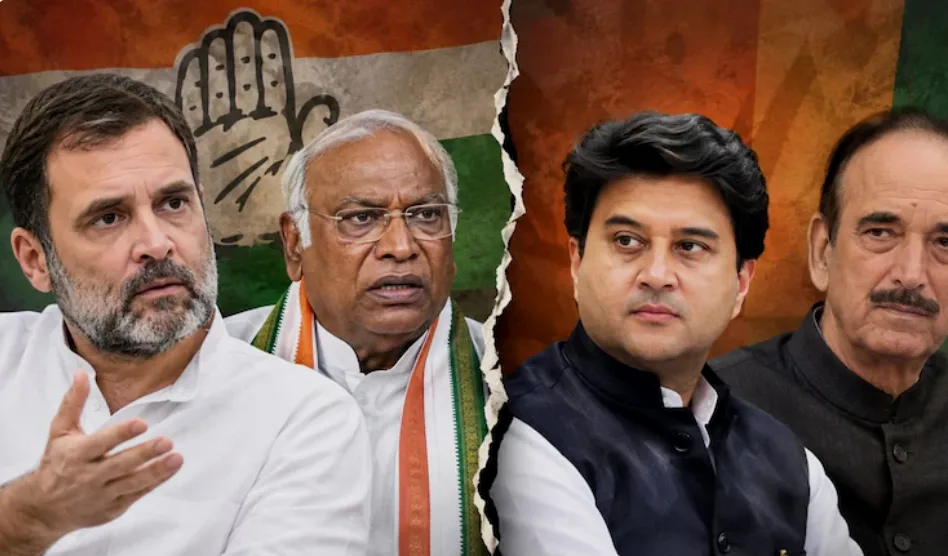
Sanchar Saathi not mandatory, clarifies Jyotiraditya Scindia amid privacy outrage

Communications Minister Jyotiraditya Scindia has clarified that the Sanchar Saathi app is not mandatory on new phones and can be deleted, countering Opposition claims of surveillance.

Published

on

Jyotiraditya Scindia

Amid the growing political storm over the Centre’s directive asking mobile phone makers to pre-install the Sanchar Saathi app on all new devices, Communications Minister Jyotiraditya Scindia has clarified that the app is not mandatory and users are free to delete it if they choose.

Minister says app is optional, aims to protect users

Responding to concerns flagged by the Opposition over alleged surveillance risks, Scindia said users will have full control over the app. He compared it to other pre-installed apps that users can choose to keep or remove.

“Don’t activate it. If you want to keep it in your phone, keep it. If you want to delete it, do so,” he said, adding that the app will remain dormant if not used.

The minister emphasised that Sanchar Saathi is designed to safeguard citizens against cyber fraud. “This is a matter of customer protection. There is nothing mandatory. If you do not want to register it, don’t. And if you want to delete it, delete it,” he said, noting that many people are unaware such a tool exists.

Opposition flags privacy concerns, calls move “surveillance”

Congress leaders have accused the government of enabling intrusive monitoring.

  • KC Venugopal said the decision was “beyond unconstitutional”, citing the fundamental right to privacy.
  • Priyanka Gandhi Vadra called Sanchar Saathi a “snooping app”, saying citizens’ privacy was under threat.
  • Priyanka Chaturvedi termed it “another surveillance moment”.
  • Karti Chidambaram alleged the move mirrored actions in authoritarian regimes.

Government rejects criticism, cites rising cyber fraud

Countering Opposition remarks, Scindia said the government was attempting to clear misconceptions. He stated that cyber fraud worth ₹22,800 crore took place in 2024, and Sanchar Saathi was developed to help citizens report fraud, track lost phones, and prevent misuse of telecom resources.

“When we are giving Sanchar Saathi to the common citizen, they are saying it is Pegasus. We cannot show truth to those who don’t want to see it,” Scindia said.

Continue Reading

Trending

© Copyright 2022 APNLIVE.com