English हिन्दी
Connect with us

India News

Rahul Gandhi Attacks Centre over G RAM G bill, calls it an attack on MGNREGA’s core principles

Rahul Gandhi has strongly opposed the G RAM G bill, accusing the Modi government of undermining MGNREGA and shifting the financial burden of rural employment schemes onto states.

Published

on

Rahul-Gandhi

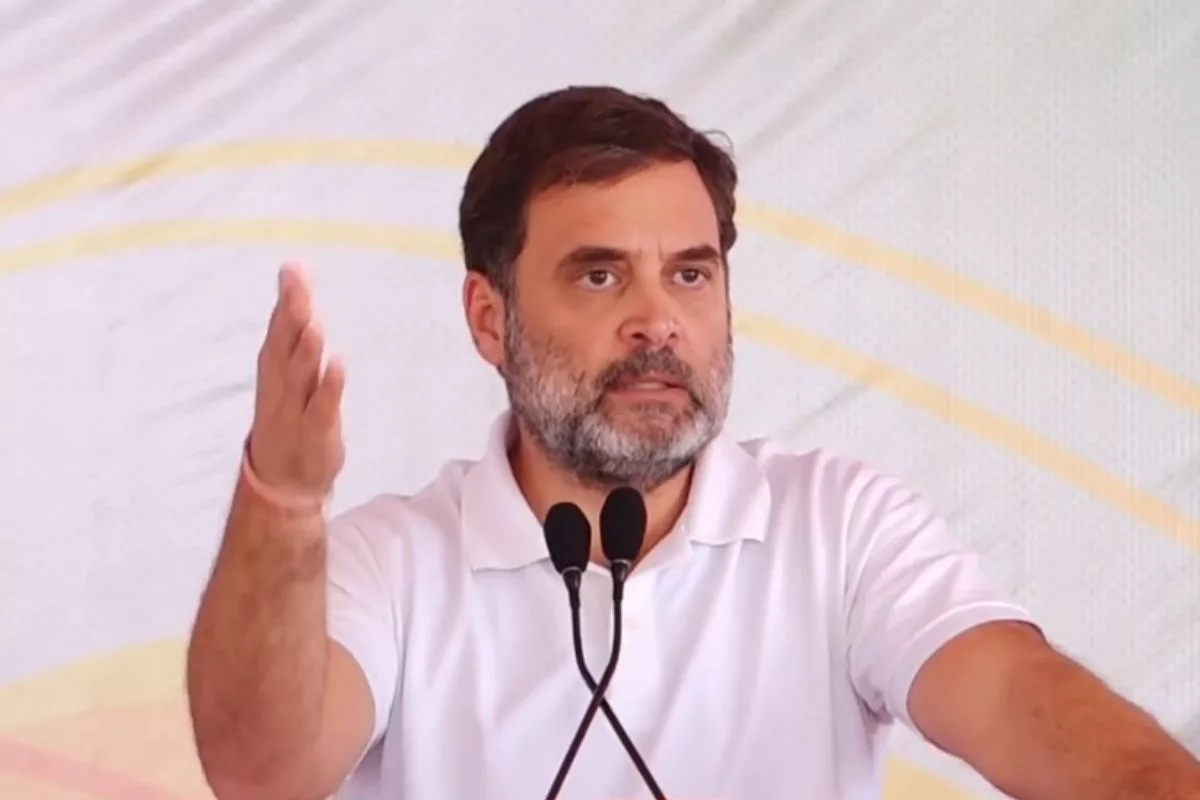
Congress MP and Leader of the Opposition Rahul Gandhi on Monday sharpened his attack on the Centre over the introduction of the G RAM G bill in the Lok Sabha, alleging that the proposed law weakens the foundations of the Mahatma Gandhi National Rural Employment Guarantee Act (MGNREGA) and undermines the rights of the rural poor.

The bill, formally titled the Viksit Bharat Guarantee for Rozgar and Ajeevika Mission (Gramin) Bill, 2025, has been brought in to replace MGNREGA, which was enacted in 2005 under the UPA government.

Reacting to the move, Rahul Gandhi described the legislation as an “insult to the ideals of Mahatma Gandhi” and accused the Narendra Modi-led government of attempting to dismantle a scheme that guarantees livelihood security to millions of rural households.

Rahul Gandhi’s sharp criticism of the G RAM G bill

In a post on X, Gandhi alleged that Prime Minister Modi has consistently opposed the ideas associated with Mahatma Gandhi and has been trying to weaken MGNREGA since coming to power in 2014. He asserted that the Congress would oppose any attempt to dilute or dismantle the employment guarantee framework.

“Modiji has a deep hatred for two things – the ideas of Mahatma Gandhi and the rights of the poor,” Gandhi said, calling MGNREGA a living embodiment of Gandhi’s vision of village self-rule. He also highlighted the role of the scheme as an economic shield for rural India, particularly during the COVID period.

According to Gandhi, the Centre is now “determined to wipe out MGNREGA completely” by replacing it with a new framework that centralises power and alters the funding structure.

Opposition protests in Parliament

The introduction of the G RAM G bill triggered protests from several opposition MPs inside and outside Parliament. Congress MPs, including Priyanka Gandhi Vadra and Shashi Tharoor, raised objections to key provisions of the bill, particularly the removal of Mahatma Gandhi’s name from the scheme.

Opposition leaders argued that MGNREGA is rooted in the right to employment, decentralised decision-making by villages, and a funding structure where the Centre bears the full wage cost and most of the material expenses.

How G RAM G differs from MGNREGA

Rahul Gandhi pointed out that under MGNREGA, the Centre pays 100 per cent of wages for unskilled workers and 75 per cent of material costs, ensuring steady employment based on demand.

The new G RAM G bill proposes a shift to normative funding, under which states will have to bear 40 per cent of the overall costs. Gandhi claimed this would reduce work availability once budgets are exhausted or during crop harvest seasons, leaving rural workers without employment for extended periods.

The funding ratio for northeastern and Himalayan states has been set at 90:10, while union territories will be fully funded by the Centre. Of the estimated annual expenditure of Rs 1.51 lakh crore, the central government’s share is projected at Rs 95,692 crore.

Leaders from several opposition parties, including those from a key BJP ally, have also expressed concerns over the increased financial burden on states.

Government’s defence of the bill

Government sources have maintained that the G RAM G bill aligns with the broader ‘Viksit Bharat 2047’ vision. According to them, the shift from a demand-based to a normative funding model brings the scheme in line with budgeting practices followed for other central government programmes.

However, the sharp political pushback indicates that the replacement of MGNREGA is set to remain a major flashpoint in Parliament in the coming days.

India News

EC issues notice to Mallikarjun Kharge over terrorist remark against PM Modi

The Election Commission has issued a notice to Mallikarjun Kharge over his remark on PM Modi, asking for a response within 24 hours amid a growing political controversy.

Published

on

mallikarjun-kharge

The Election Commission has issued a notice to Congress president Mallikarjun Kharge over his controversial remark referring to Prime Minister Narendra Modi as a “terrorist” during an election campaign.

Taking serious note of the statement, the poll body has asked Kharge to submit his response within 24 hours, highlighting concerns over the language used in public campaigning.

BJP complaint triggered action

The development comes after the Bharatiya Janata Party approached the Election Commission, alleging that the remark violated the Model Code of Conduct. The party described the comment as derogatory and sought strict action against the Congress leader.

A delegation of BJP leaders also met the poll panel, stressing that such statements undermine the standards of political discourse during elections.

Kharge’s clarification

Following the controversy, Kharge clarified that his remarks were being misinterpreted. He said he did not intend to call the Prime Minister a terrorist but was referring to what he described as “terrorising” political opponents through the use of central agencies.

Rising political tensions

The episode has further escalated tensions between the ruling party and the opposition amid an ongoing election season. Leaders across the political spectrum have reacted strongly, with criticism and counter-criticism intensifying the debate around campaign rhetoric.

The Election Commission’s intervention underscores its attempt to maintain decorum and enforce campaign norms as political activity intensifies across states.

Continue Reading

India News

Noida workers protest under probe as X Storm social media group comes under scanner

Probe into Noida workers protest highlights suspected role of ‘X Storm’ social media group and digital coordination behind the unrest.

Published

on

Authorities have intensified their investigation into the recent workers’ protest in Noida, with a social media network known as “X Storm” now emerging as a key focus in the probe.

The unrest, which began as a demonstration over wage-related concerns, escalated into violence in parts of the industrial hub, prompting a wider inquiry into the factors behind the mobilisation of large groups of workers.

According to officials, investigators are examining how digital platforms may have been used to coordinate the protests. Preliminary findings suggest that multiple online groups and accounts played a role in rapidly mobilising participants and spreading messages related to the agitation.

The role of social media has come under particular scrutiny, with authorities looking into whether organised efforts were made to amplify tensions. Officials are also probing the origin of messages circulated online and the possible involvement of coordinated networks.

Recent findings indicate that such protests may not have been entirely spontaneous. Investigations in similar cases have revealed the use of newly created social media accounts, messaging platforms, and closed groups to mobilise crowds quickly and maintain anonymity.

Additionally, concerns have been raised about external elements potentially influencing the protests. Earlier reports have pointed to the involvement of non-worker participants and coordinated digital campaigns that may have contributed to the escalation of violence.

The Noida protest is part of a broader wave of labour unrest driven by demands for higher wages and improved working conditions. The demonstrations turned violent in some areas, with incidents of stone pelting, arson, and clashes with police reported during the peak of the agitation.

Authorities are now focusing on tracing digital footprints, identifying administrators of online groups, and determining whether there was any larger network orchestrating the unrest.

The investigation remains ongoing, with officials stating that appropriate action will be taken based on the findings.

Continue Reading

India News

Rahul Gandhi’s Bengal poll visit cancelled amid permission row, Congress targets Trinamool

Rahul Gandhi’s Bengal visit was cancelled after authorities did not grant permission, triggering a political row between Congress and Trinamool.

Published

on

Rahul-Gandhi

Congress leader Rahul Gandhi’s scheduled visit to West Bengal for election campaigning has been cancelled after the party failed to secure the required administrative permission for public events.

The visit, planned for April 23, was called off after the party waited until the evening for clearance but did not receive approval in time to make necessary arrangements.

Congress leaders have alleged that the local administration, under the influence of the ruling Trinamool Congress, did not grant permission for the rally. The party claimed that despite waiting until around 6 pm, the approval did not come through, forcing them to cancel the programme.

Trinamool response

The Trinamool Congress rejected the allegations, stating that all political parties must follow established procedures for holding public meetings. A party minister said applications must be submitted through the designated system within a specified time frame before events.

The Trinamool also indicated that the state government is currently in a caretaker role during the election period, suggesting that questions regarding permissions fall under the purview of the Election Commission.

Fresh dates likely

Congress sources said the party is still keen for Rahul Gandhi to campaign in the state and may seek fresh permission for a visit on April 25 or 26.

Political context

The development comes amid heightened political activity ahead of the 2026 West Bengal Assembly elections, where multiple parties are campaigning aggressively. The Congress and Trinamool Congress, despite being part of broader opposition alignments at the national level, remain direct rivals in the state.

Recent reports also indicate that permission-related issues have affected campaign events in the state, with some rallies being cancelled due to lack of police clearance.

Continue Reading

Trending

© Copyright 2022 APNLIVE.com